2.1 Clinical Landscape and the Rationale for Nanoscale Intervention
TNBC's heterogeneity is, in a sense, the whole problem in miniature. As already noted, it comprises multiple molecularly distinct intrinsic subtypes (Raj et al., 2026; Saifullah et al., 2026), and its lack of a single dominant receptor target leaves systemic chemotherapy as the default option across primary, adjuvant, and metastatic settings (Catalano et al., 2022). Intrinsic and acquired multidrug resistance, mediated by ABC efflux transporters, enhanced DNA repair, and epithelial-to-mesenchymal transition, erodes the durability of that chemotherapy fairly reliably (Gote et al., 2021; Nedeljković & Damjanović, 2019), and the selective survival of chemoresistant cancer stem cells under cytotoxic pressure helps explain why relapse remains common even after apparent initial response (Gote et al., 2021; Mediratta et al., 2020; St-Denis-Bissonnette et al., 2022).
2.2 Biological Microenvironmental Barriers and the Delivery Efficiency Gap
The physical architecture of the TNBC tumor microenvironment does much of the damage before a drug ever reaches its target (Figure 1). Dense desmoplastic stroma, built by hyperactivated cancer-associated fibroblasts and excess collagen deposition, raises solid stress, compresses microvasculature, and elevates interstitial fluid pressure — conditions that, together, actively resist convective drug transport (Luo et al., 2026; Saifullah et al., 2026). An immune-excluded microenvironment, rich in M2-like tumor-associated macrophages, myeloid-derived suppressor cells, and regulatory T cells, compounds this by blunting cytotoxic T-cell infiltration and limiting the efficacy of checkpoint inhibition (Luo et al., 2026; Saifullah et al., 2026). For the substantial minority of patients who develop brain metastases, the blood–brain barrier adds yet another layer, excluding more than 98% of systemic small-molecule therapeutics from intracranial lesions (St-Denis-Bissonnette et al., 2022).
Nanomedicine emerged, in this context, as a way of engineering around rather than through these obstacles (Arshad et al., 2022; Gote et al., 2021; Saifullah et al., 2026), and the EPR effect long served as its conceptual foundation, with nanocarriers extravasating through leaky tumor vasculature and accumulating passively due to poor lymphatic clearance (Navarro-Real et al., 2026). But the numbers tell an uncomfortable story: systematic
Table 1. Architectural Classification and Physicochemical Properties of Advanced Nanocarrier Platforms in TNBC Therapy. This table organizes the principal organic, inorganic, and biomimetic nanocarrier platforms investigated in TNBC research by composition, key biological advantage, representative payload/outcome, and supporting reference. It complements the classification shown in Figure 2 and is cited throughout Sections 2.3 and 4.1.
|
Platform
|
Composition & Key Advantage
|
Representative Payload / Outcome
|
Reference
|
|
Polymeric NPs & micelles
|
PLGA, PCL, chitosan, PEG-PLGA; controlled degradation, high loading
|
PTX/DOX + siRNA co-delivery; suppresses efflux, reverses MDR
|
Bhayo et al., 2026; Gote et al., 2021
|
|
Solid lipid NPs / NLCs
|
Solid lipids (Precirol, GMS) + surfactants; solvent-free, PEGylatable
|
Docetaxel, erlotinib encapsulation; overcomes P-gp efflux
|
Llaguno-Munive et al., 2024
|
|
Liposomes / nanoemulsions
|
PEGylated phospholipid bilayers; stealth circulation
|
Doxil®, liposomal paclitaxel; improved tumor accumulation
|
Fraguas-Sánchez & Torres-Suárez, 2020; Gote et al., 2021
|
|
Inorganic / metallic NPs
|
AuNPs, AgNPs, SPIONs, quantum dots; optoelectronic/magnetic
|
AgNPs induce selective lipid peroxidation; AuNPs/SPIONs enable PTT & MRI
|
Lunca et al., 2026; Snyder et al., 2024
|
|
Biomimetic carriers & EVs
|
Erythrocyte/M1-macrophage/TNBC membrane cloaks; exosomes
|
Immune evasion, homotypic targeting; BBB crossing
|
Luo et al., 2026; Shao et al., 2026; St-Denis-Bissonnette et al., 2022
|
|
Dendrimers
|
PAMAM; highly branched, multivalent surface
|
siRNA complexation (TWIST, MUC1-C); gene silencing
|
Gote et al., 2021; Saifullah et al., 2026
|
|
Carbon-based nanostructures
|
CNTs, nanodiamonds, oxidized mesoporous carbon
|
Resveratrol/DOX/PTX delivery; reverses MDR, targets CSCs
|
Arshad et al., 2022; Gadag et al., 2020
|
Table 2. Active Receptor-Targeting Biomarkers and Ligand Functionalization Strategies. This table summarizes the principal overexpressed TNBC biomarkers exploited for active targeting, the corresponding ligand or functional moiety, and the biological effect achieved upon receptor engagement, complementing the mechanism illustrated in Figure 3.
|
Biomarker
|
Targeting Ligand
|
Cellular/Antitumor Effect
|
Reference
|
|
MUC1 (90–94% of cases)
|
Aptamer 5TR1, anti-MUC1 antibody
|
Receptor-mediated endocytosis; depletes CSCs, downregulates PD-L1
|
Raj et al., 2026
|
|
CD44
|
Hyaluronic acid, anti-CD44 antibody
|
Reverses BCSC-mediated MDR; enhanced internalization
|
Gote et al., 2021; Llaguno-Munive et al., 2024
|
|
EGFR (~60–89%)
|
Cetuximab, anti-EGFR aptamer
|
Inhibits RAS/RAF/MEK, PI3K/AKT; nuclear payload delivery
|
Medina et al., 2020; Singh & Yadav, 2021
|
|
Trop-2
|
Anti-Trop-2 antibody/fragment
|
High-affinity binding; ADC-based genotoxic payload delivery
|
Saifullah et al., 2026; Yang et al., 2026
|
|
αvβ3/αvβ6 integrins
|
RGD/cRGD peptides
|
Receptor-mediated transcytosis; suppresses pulmonary metastasis
|
Gote et al., 2021; Llaguno-Munive et al., 2024
|
|
CXCR4
|
AMD3100 (Plerixafor)
|
Localizes to CXCR4+ metastatic lesions; inhibits dissemination
|
Gote et al., 2021; Lunca et al., 2026
|
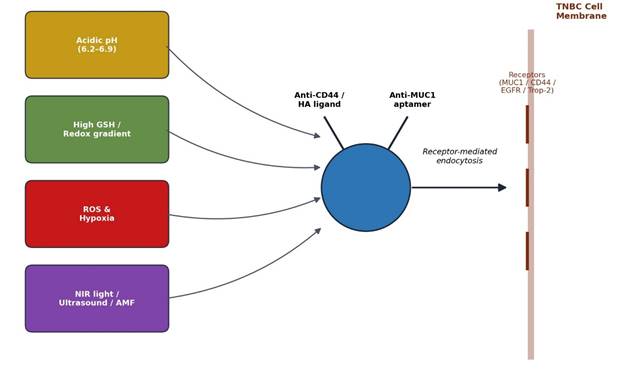
Table 3. Stimuli-Responsive (“Smart”) Drug Delivery Systems. This table details endogenous and exogenous triggers exploited by stimuli-responsive TNBC nanocarriers, the associated chemical/physical mechanism, and the resulting drug-release outcome, corresponding to the schematic in Figure 3.
|
Trigger
|
Mechanism / Linker
|
Release Outcome
|
Reference
|
|
pH (6.2–6.9 / 4.5–5.5)
|
Acid-labile bonds; protonatable PBAE/PDPA
|
Proton sponge effect, endosomal escape
|
Bhayo et al., 2026
|
|
Redox (GSH gradient)
|
Disulfide/diselenide linkages
|
Cytosolic disassembly, reversal of P-gp efflux
|
Bhayo et al., 2026; Gote et al., 2021
|
|
ROS / hypoxia
|
Thioketal, boronic ester, azobenzene linkers
|
ROS-amplified apoptosis; HIF-1α downregulation
|
Bhayo et al., 2026
|
|
Enzyme (MMP-2/9, FAP-α)
|
Enzyme-cleavable peptide substrates
|
Size-shrinkage for deep stromal penetration
|
Saifullah et al., 2026
|
|
Ultrasound / NIR light
|
Microbubble cavitation; photosensitizer activation
|
Sonoporation; PDT/PTT cytotoxic ROS generation
|
Edwards et al., 2023; Shao et al., 2026
|
|
Magnetic field / heat
|
PNIPAM LCST transition; SPION heating
|
Phase transition, AMF-guided localized hyperthermia
|
de la Fuente-Jiménez et al., 2023; Llaguno-Munive et al., 2024
|
meta-analysis puts median tumor accumulation at only ~0.7% of the injected dose (Navarro-Real et al., 2026), a figure driven by the sequential losses illustrated in Figure 1 — opsonization and protein-corona formation, mononuclear phagocyte system clearance in liver and spleen, and, for whatever survives that, poor extravasation through heterogeneous, high-pressure tumor tissue (Raj et al., 2026; Saifullah et al., 2026).
As shown in Table 1, closing this gap has pushed the field toward far more rationally engineered platforms. Controlling hydrodynamic diameter within roughly 10–100 nm limits both renal filtration and mononuclear phagocyte uptake, and maintaining a near-neutral or slightly negative surface charge helps prolong systemic circulation (Llaguno-Munive et al., 2024; Raj et al., 2026).
2.3 Architectural Spectrum of Advanced Nanocarrier Platforms
Researchers have, over roughly the last decade, developed a genuinely broad spectrum of organic, inorganic, and biomimetic nanostructures for TNBC therapy (Figure 2; Table 1; Saifullah et al., 2026). Polymeric nanoparticles and micelles built from biodegradable materials such as PLGA, PCL, chitosan, or amphiphilic block copolymers (e.g., PEG-PLGA) offer high payload capacity, tunable degradation, and controlled intracellular release (Bhayo et al., 2026; Saifullah et al., 2026); when these micelles co-encapsulate a hydrophobic chemotherapeutic alongside an siRNA, paclitaxel with a Bcl-2- or survivin-targeting sequence, for instance, they can suppress efflux transporters and resistance pathways more or less simultaneously (Gote et al., 2021). Dendrimers, PAMAM structures especially, bring a highly branched, well-defined architecture that supports dense surface functionalization for multidrug or gene delivery (Gote et al., 2021; Saifullah et al., 2026).
Solid lipid nanoparticles and nanostructured lipid carriers offer a solvent-free alternative, built from biocompatible lipids stabilized by surfactants (Llaguno-Munive et al., 2024). They protect both lipophilic and hydrophilic agents from degradation and sustain release without the organic-solvent burden that polymeric systems sometimes carry; PEGylation further minimizes opsonization, while cationic variants can electrostatically complex nucleic acids such as miR-200c for combined chemo-gene delivery (Llaguno-Munive et al., 2024).
Inorganic and hybrid nanostructures add capabilities that organic carriers largely cannot (Arshad et al., 2022; Lunca et al., 2026). Gold nanoparticles, nanostars and nanocages included, support photothermal therapy, radiosensitization, and CT contrast owing to strong plasmon resonance and high atomic number. Silver nanoparticles exploit what appears to be a genuine biological vulnerability in mesenchymal and claudin-low TNBC subtypes, inducing lipid peroxidation and proteotoxic stress at concentrations far lower than those toxic to normal mammary epithelium (Snyder et al., 2024; Swanner et al., 2015). Superparamagnetic iron oxide nanoparticles and zinc ferrite hybrids, meanwhile, double as MRI contrast agents and as thermal mediators under an alternating magnetic field (de la Fuente-Jiménez et al., 2023).
Biomimetic carriers, cloaked in erythrocyte, M1-macrophage, or cancer-cell membranes, extend circulation time, reduce immunogenicity, and enable homotypic tumor targeting with unusually deep stromal penetration (Luo et al., 2026; Shao et al., 2026). Cell-derived extracellular vesicles push this further still, functioning as natural delivery vehicles capable of crossing intact biological boundaries, including, notably, the blood–brain barrier, which makes them a particularly promising option for intracranial metastases (St-Denis-Bissonnette et al., 2022).
2.4 Active Ligand Targeting of TNBC Biomarkers
Overcoming the low efficiency of passive accumulation (again, ~0.7%) has pushed much of the field toward ligand-based active targeting (Table 2; Navarro-Real et al., 2026; Raj et al., 2026; Saifullah et al., 2026). Tumor-associated Mucin 1, overexpressed and abnormally underglycosylated in roughly 90–94% of TNBC cases, is probably the most extensively studied target; conjugating MUC1-specific aptamers such as 5TR1, or monoclonal antibodies, to nanocarrier surfaces drives receptor-mediated endocytosis and concentrates cytotoxic payload in malignant tissue while sparing normal cells (Raj et al., 2026). Hyaluronic acid functionalization, aimed at CD44, works similarly, targeting a receptor that is enriched on both bulk tumor cells and breast cancer stem cells and thereby helping to reverse stemness-associated resistance (Gote et al., 2021; Llaguno-Munive et al., 2024). EGFR, overexpressed in an estimated 60–89% of TNBC tumors, offers another route, with anti-EGFR antibodies or aptamers guiding nanocarriers toward downstream RAS/RAF/MEK and PI3K/AKT survival
Table 4. Multimodal Combination Therapies and Translational Bottlenecks. This table synthesizes multimodal nanomedicine strategies integrating chemotherapy with immunotherapy, phototherapy, or radiosensitization, alongside the principal translational hurdles limiting each approach's progression toward clinical trials, as discussed in Sections 4.4 and 5.
|
Strategy
|
Mechanism / Outcome
|
Translational Hurdle
|
Reference
|
|
Biomimetic nano-chemo-immunotherapy
|
M2→M1 repolarization; 71.4% tumor inhibition, 88.2% metastasis suppression
|
Risk of immune-related adverse events; early-phase trials only
|
Luo et al., 2026
|
|
Photo-immunotherapy / chemo-PDT
|
Immunogenic cell death; DAMP release, systemic immune memory
|
Limited light penetration in deep-seated lesions
|
Shao et al., 2026; Vellingiri, 2021
|
|
Nanoparticle radiosensitization / X-PDT
|
High-Z dose amplification; ROS generation under low-dose X-rays
|
Discrepancy between preclinical and fractionated clinical protocols
|
Lunca et al., 2026; Zhang et al., 2026
|
|
Gene-chemo combination
|
Efflux transporter silencing; 4-fold drug retention, 8-fold tumor reduction
|
Rapid nucleic acid degradation in circulation
|
Gote et al., 2021
|
|
Theranostic platforms
|
Simultaneous imaging (MRI/CT) and therapy tracking
|
Complex synthesis; batch variability under GMP
|
Arshad et al., 2022; Saifullah et al., 2026
|
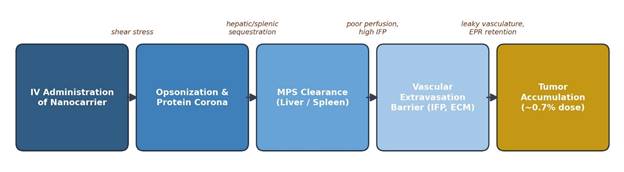
Figure 1. The systemic delivery efficiency gap in TNBC nanomedicine. Schematic cascade from intravenous nanocarrier administration through opsonization, mononuclear phagocyte system clearance, and vascular extravasation barriers, culminating in a median tumor accumulation of only ~0.7% of the injected dose. Each transition represents a distinct physiological loss mechanism identified across preclinical pharmacokinetic studies (Navarro-Real et al., 2026; Raj et al., 2026; Saifullah et al., 2026).
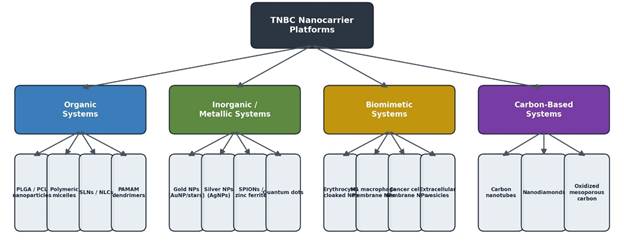
Figure 2. Structural classification of nanocarrier platforms evaluated for TNBC drug delivery. Organic, inorganic/metallic, biomimetic, and carbon-based nanostructures are grouped by composition, each offering distinct physicochemical properties and biological advantages summarized in Table 1 (Arshad et al., 2022; Bhayo et al., 2026; Llaguno-Munive et al., 2024; Saifullah et al., 2026).
signaling (Medina et al., 2020; Singh & Yadav, 2021). Trop-2, ICAM-1, CXCR4, and αvβ3 integrins round out the panel of biomarkers currently exploited for active targeting, each carrying its own particular advantages for antibody–drug conjugate design, receptor-mediated transcytosis, or organ-specific metastasis control (Arshad et al., 2022; Gote et al., 2021; Lunca et al., 2026; Yang et al., 2026).
2.5 Stimuli-Responsive (“Smart”) Release and Multimodal Combination Therapy
Beyond targeting where a carrier goes, considerable effort has gone into controlling when it releases its payload (Figure 3; Table 3). Endogenous triggers exploit the TNBC microenvironment's own biochemical abnormalities: extracellular acidosis (pH 6.2–6.9) and endo-lysosomal acidity cleave acid-labile linkages or protonate charge-reversing polymers, triggering the so-called proton sponge effect and endosomal escape (Bhayo et al., 2026); the sharp gradient between intracellular (~10 mM) and extracellular (~2 μM) glutathione allows disulfide- or diselenide-linked carriers to remain stable in circulation yet disassemble rapidly once inside a cell (Bhayo et al., 2026; Gote et al., 2021); and elevated reactive oxygen species or hypoxic conditions can cleave thioketal, boronic ester, or azobenzene linkages to release cargo selectively within pathological tissue. External physical triggers, ultrasound-induced cavitation, near-infrared light for photothermal or photodynamic activation, and alternating magnetic fields for localized hyperthermia, add a further, operator-controlled layer of spatiotemporal precision (Bhayo et al., 2026; Edwards et al., 2023; Llaguno-Munive et al., 2024).
These mechanisms rarely operate in isolation in the more advanced platforms now emerging (Table 4). Nano-chemo-immunotherapy, combining cytotoxic payload with checkpoint inhibitors, STING agonists, or TLR7/8 agonists, can repolarize immunosuppressive M2 macrophages toward an anti-tumor M1 phenotype, deactivate cancer-associated fibroblasts, and increase CD8+ T-cell infiltration (Cao et al., 2021; Luo et al., 2026; Zhang et al., 2026). Phototherapy and radiosensitization strategies, pairing nanocarriers with near-infrared light or ionizing radiation, induce immunogenic cell death, releasing damage-associated molecular patterns that can generate a degree of systemic antitumor immune memory (Lunca et al., 2026; Shao et al., 2026; Vellingiri, 2021).
2.6 Translational Bottlenecks: From Bench to Bedside
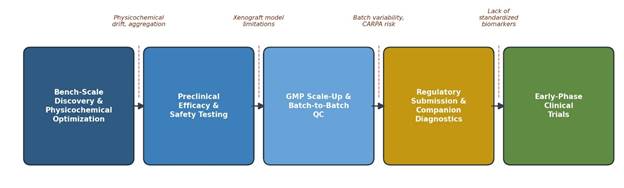
None of this preclinical progress translates automatically into clinical benefit, and Figure 4 outlines where the process tends to stall. Complex, multi-component, or aptamer-functionalized nanostructures are often genuinely difficult to manufacture reproducibly under Good Manufacturing Practice conditions, and batch-to-batch variability can meaningfully alter pharmacokinetics (Raj et al., 2026; Saifullah et al., 2026). Systemic administration carries its own safety considerations, including complement activation-related pseudoallergy and the potential for long-term hepatic or renal accumulation (Saifullah et al., 2026). Standard subcutaneous rodent xenografts, meanwhile, tend to underrepresent human TNBC stromal density, vascular architecture, and immune complexity, which tends to inflate preclinical efficacy estimates relative to what is later observed in patients (Arshad et al., 2022; Lunca et al., 2026). And regulatory frameworks still lack standardized quality metrics and widely adopted companion diagnostics, tMUC1, CD44, or PD-L1 expression among the candidates, that would allow clinicians to identify which patients are most likely to benefit from a given targeted nanotherapy (Raj et al., 2026; Saifullah et al., 2026).