Integrative Biomedical Research

Integrative Biomedical Research (Journal of Angiotherapy) | Online ISSN  3068-6326
463
Citations
1.9m
Views
779
Articles
Your new experience awaits. Try the new design now and help us make it even better
Switch to the new experience
Figures and Tables
REVIEWS   (Open Access)

Oral Insulin and GLP-1 Receptor Agonist Delivery Technological Advances and Physiological Barriers Toward Non-Invasive Diabetes Therapeutics

Gnanasekaran Ashok 1*, Diksha D Shroff 2, Lubna Shirin 3, Pugazhandhi Bakthavatchalam 4


+ Author Affiliations

Integrative Biomedical Research 10 (2) 1-8 https://doi.org/10.25163/biomedical.10210939

Submitted: 11 September 2026 Revised: 01 November 2026  Published: 10 November 2026 


Abstract

Subcutaneous injection still dominates insulin and glucagon-like peptide-1 receptor agonist (GLP-1RA) therapy, and honestly, it shows: needle-related pain, lipodystrophy, and non-adherence continue to blunt the real-world benefit of otherwise excellent molecules. This review asks a fairly simple question with a stubbornly complicated answer — can these biologics be swallowed instead of injected, and if so, how close are we? We synthesized recent formulation, device, and clinical literature (2023-2026) describing oral and transmucosal delivery of insulin and GLP-1RAs. Across the gastrointestinal tract, peptides confront a near-continuous gauntlet: gastric acid and pepsin, pancreatic and brush-border proteases, a viscoelastic mucus mesh, tight-junction-sealed epithelium, and, for whatever survives, hepatic first-pass extraction — together limiting unformulated bioavailability to well under 1%. Four broad engineering responses have emerged. Chemical permeation enhancers such as salcaprozate sodium (SNAC) and ionic liquids transiently fluidize membranes, underpinning the only currently approved product, oral semaglutide (Rybelsus®), though its bioavailability remains near 1% and its chronic gut-microbiota effects warrant continued scrutiny. Lipid, polymeric, zwitterionic, and transporter-targeted nanocarriers push relative bioavailability toward the 4-27% range in preclinical models. Ingestible micro-injectors (SOMA, LUMI), buccal and sublingual films, and engineered probiotic secretory depots bypass the gut lumen almost entirely. Meanwhile, non-peptide small-molecule GLP-1RAs sidestep the degradation problem altogether, reaching 20-30% oral bioavailability without enhancers. Taken together, the field has moved from proof-of-concept toward genuinely translatable platforms, though variable inter-subject absorption, excipient safety, and manufacturing scalability remain open questions. We argue that no single strategy is likely to “win” outright; rather, combinatorial and indication-specific approaches will probably define the next generation of non-invasive diabetes biologics.

Keywords: Oral insulin delivery; GLP-1 receptor agonists; peptide permeation enhancers; nanocarrier drug delivery; gastrointestinal barriers; oral bioavailability; diabetes mellitus

1. Introduction

Diabetes mellitus is, by now, an almost unavoidable phrase in global health reporting — and for good reason. It remains one of the most consequential chronic metabolic diseases worldwide, driving health expenditures that, by recent estimates, exceed USD 1 trillion annually and placing sustained strain on health systems across income levels (Rabbani et al., 2026). Type 2 diabetes mellitus (T2DM) accounts for roughly 90–95% of diagnosed cases and is characterized by progressive peripheral insulin resistance layered on top of declining pancreatic β-cell function, whereas type 1 diabetes mellitus (T1DM) arises from frank autoimmune β-cell destruction (Nabi-Afjadi et al., 2024). Different mechanisms, admittedly, but a shared downstream reality: both forms ultimately depend on exogenous peptide therapy — insulin, GLP-1 receptor agonists, or both — to hold glycemia within a survivable range and to slow the drift toward macrovascular and microvascular complications.

Exogenous insulin does its job by enhancing peripheral glucose disposal and suppressing hepatic gluconeogenesis; GLP-1 and its analogs work somewhat differently, potentiating glucose-dependent insulin secretion, restraining postprandial glucagon, slowing gastric emptying, and curbing appetite (Beloqui, 2024). These are, without much exaggeration, some of the more elegant molecules in modern pharmacology. And yet almost all of them are still given by subcutaneous injection — a route that, while effective, was never really designed with long-term daily comfort in mind (Al Tahan et al., 2025). Injection-site pain, local inflammation, lipodystrophy, needle phobia, and the everyday friction of adherence all chip away at real-world effectiveness (Al Tahan et al., 2025). There is also a subtler physiological cost: peripheral subcutaneous dosing cannot reproduce the pulsatile, first-pass portal exposure of endogenous insulin, which tends to produce peripheral hyperinsulinemia and raises hypoglycemia risk (Wong et al., 2025).

Given all this, the appeal of an oral tablet is not hard to understand. A non-invasive route promises better acceptability, a delivery pattern closer to normal physiology, and, plausibly, a lighter long-term disease-management burden (Wong et al., 2025). What has changed in the past few years is not the appeal — that has always been obvious — but the plausibility. New permeation-enhancer chemistries, nanocarrier architectures, ingestible micro-devices, and even engineered probiotics have collectively narrowed a gap that, a decade ago, looked almost unbridgeable (Rabbani et al., 2026). Still, it would be overselling things to say the problem is solved. The regulatory approval of oral semaglutide (Rybelsus®) is a genuine milestone, yet its bioavailability sits below 1%, which tells us the underlying gastrointestinal barriers have been worked around more than they have been removed (Al Tahan et al., 2025).

This review, then, sets out to do something fairly deliberate: trace the physiological and physicochemical obstacles that make oral peptide delivery so difficult, map the technological responses that have emerged against each obstacle, and weigh what the pharmacokinetic and translational evidence actually tells us — as opposed to what press releases sometimes imply.

Specifically, this review aims to: Characterize the physiological, anatomical, and enzymatic barriers within the gastrointestinal tract that restrict oral absorption and systemic bioavailability of insulin and GLP-1 biologics (Nabi-Afjadi et al., 2024; Wong et al., 2025); To evaluate recent formulative advances, including chemical permeation enhancers, ionic liquids, lipid nanocarriers, polymeric and zwitterionic nanoparticles, aerogels, and transporter-targeted nanomicelles (Abdullahi et al., 2026; Beloqui, 2024; Rebollo et al., 2025; Subedi et al., 2025, 2026); To examine emerging non-intestinal and mechanical strategies, including sublingual/buccal films, ingestible microneedle applicators, and recombinant probiotic secretion platforms (Chen et al., 2026; Pantazoglou et al., 2026; Wang et al., 2023; Huang et al., 2026); To assess pharmacokinetic and pharmacodynamic outcomes and biological safety across preclinical and early clinical data (Ariaee et al., 2026; Qi et al., 2025; Su et al., 2024); and To Identify translational hurdles and future directions needed to move these platforms from bench to bedside (Rabbani et al., 2026).
2. Oral Delivery of Peptide Therapeutics for Diabetes: Overcoming Gastrointestinal Barriers

2.1 Epidemiological and Clinical Rationale for Non-Invasive Peptide Therapy

It is worth pausing on the scale of the problem before turning to the chemistry. Hundreds of millions of adults now live with diabetes or impaired glucose tolerance, and the trajectory, depending on which model you trust, is not obviously bending downward (Rabbani et al., 2026). Long-term glycemic control depends on peptide and protein biologics — insulin and GLP-1RAs chief among them — and these drugs work; the limiting factor is increasingly not efficacy but delivery (Nabi-Afjadi et al., 2024). Poor adherence to injectable regimens is not a minor footnote in this story — it is arguably the single largest modifiable driver of suboptimal outcomes in both T1DM and T2DM populations (Al Tahan et al., 2025).

2.2 Physiological and Enzymatic Barriers Along the Gastrointestinal Tract

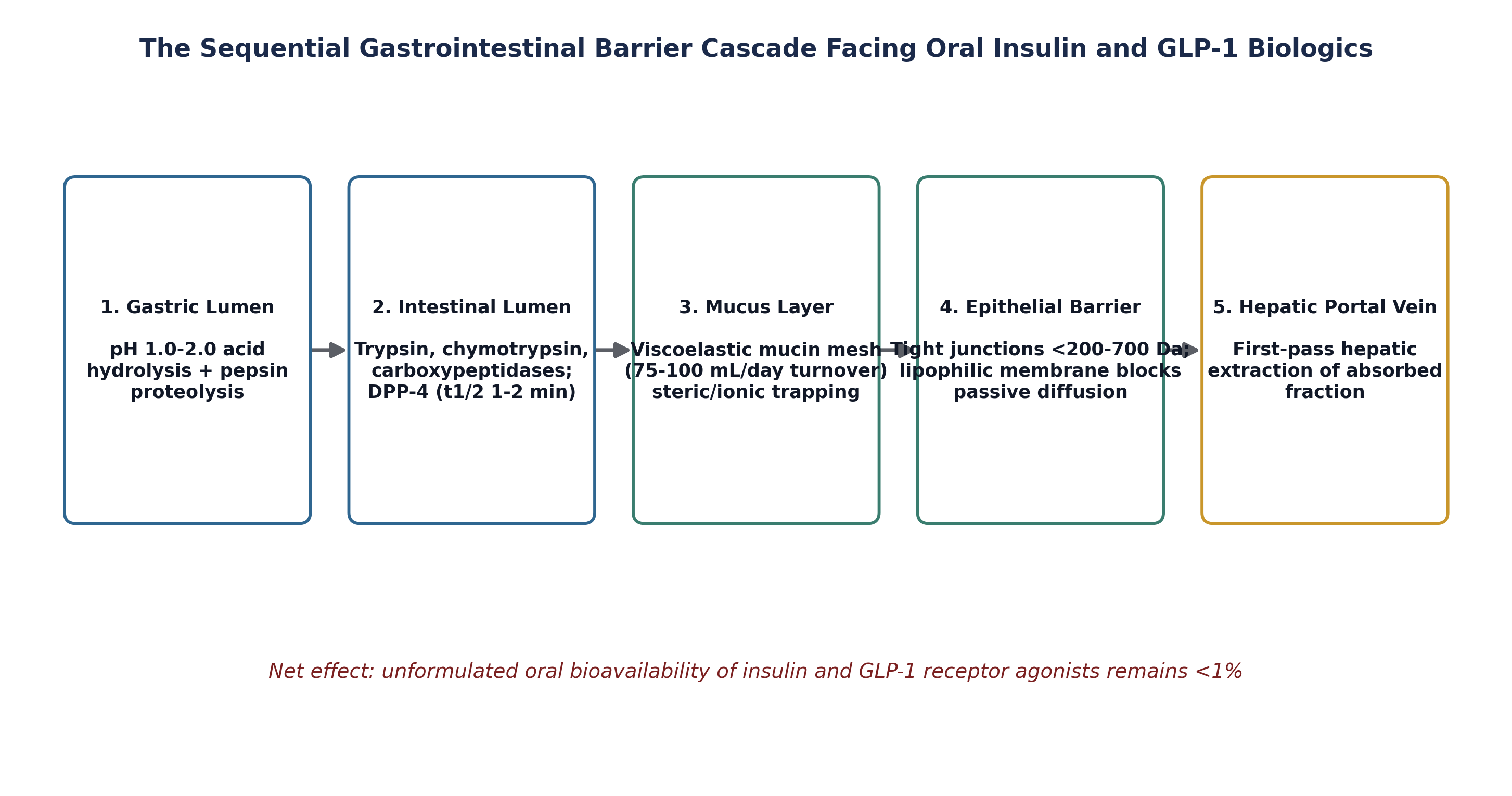
Insulin is a 51-amino-acid, ~5.8 kDa hormone; GLP-1RAs run somewhat smaller, around 4.0–4.1 kDa — both comfortably within the size range that the gut is, evolutionarily speaking, extremely good at destroying (Wong et al., 2025). The obstacles arrive in sequence rather than all at once, which is part of why formulation science has had to become so layered (Figure 1). Gastric acidity (pH 1.0–2.0) denatures tertiary peptide structure and drives non-enzymatic hydrolysis, while pepsin begins proteolytic cleavage almost immediately (Al Tahan et al., 2025). Anything that survives the stomach then meets pancreatic serine proteases — trypsin, chymotrypsin, carboxypeptidases — and brush-border peptidases in the small intestine; native GLP-1, for its part, is cleared by dipeptidyl peptidase-4 (DPP-4) with a plasma half-life of only one to two minutes (Nabi-Afjadi et al., 2024).

Peptides that somehow escape enzymatic destruction still have to cross a continuous, cross-linked mucus layer that turns over at roughly 75–100 mL per day, trapping larger or more hydrophobic carriers through steric and ionic interactions (Wong et al., 2025). Below that sits the epithelium itself: tight junctions built from claudins and ZO-1 restrict paracellular passage to molecules under roughly 200–700 Da, which rules out intact insulin or GLP-1RA molecules by a comfortable margin (Nabi-Afjadi et al., 2024). And even the small fraction that does get absorbed is not quite home free — it still has to survive first-pass hepatic extraction before reaching systemic circulation (Wong et al., 2025). Table 1 summarizes these barriers alongside the formulation strategies now being deployed against each one.

2.3 Chemical Permeation Enhancers and Ionic-Liquid Systems

Chemical permeation enhancers remain, at least commercially, the most mature category. Salcaprozate sodium (SNAC) and sodium caprate transiently increase epithelial membrane fluidity and locally buffer gastric pH, protecting peptides against peptic degradation long enough for a fraction to cross the epithelium (Rebollo et al., 2025). This chemistry underlies oral semaglutide (Rybelsus®), the field's sole FDA-approved product — an achievement that should not be undersold, even though its absolute bioavailability of roughly 0.4–1.0% makes clear how much room for improvement remains (Rabbani et al., 2026). Newer ionic-liquid formulations, such as choline salcaprozate (CHONAC), and bile-acid derivatives like sodium deoxycholate improve solubilization and proteolytic protection further (Rebollo et al., 2025). One finding that deserves more attention than it currently gets: repeated high-dose SNAC exposure has been shown to perturb distal gut microbiota in rodent models, depleting key saccharolytic fermenters and elevating inflammatory cytokines such as TNF-α (Ariaee et al., 2026) — a reminder that permeation enhancement is not a free lunch.

2.4 Nanocarrier Engineering: Lipid, Polymeric, and Transporter-Targeted Platforms

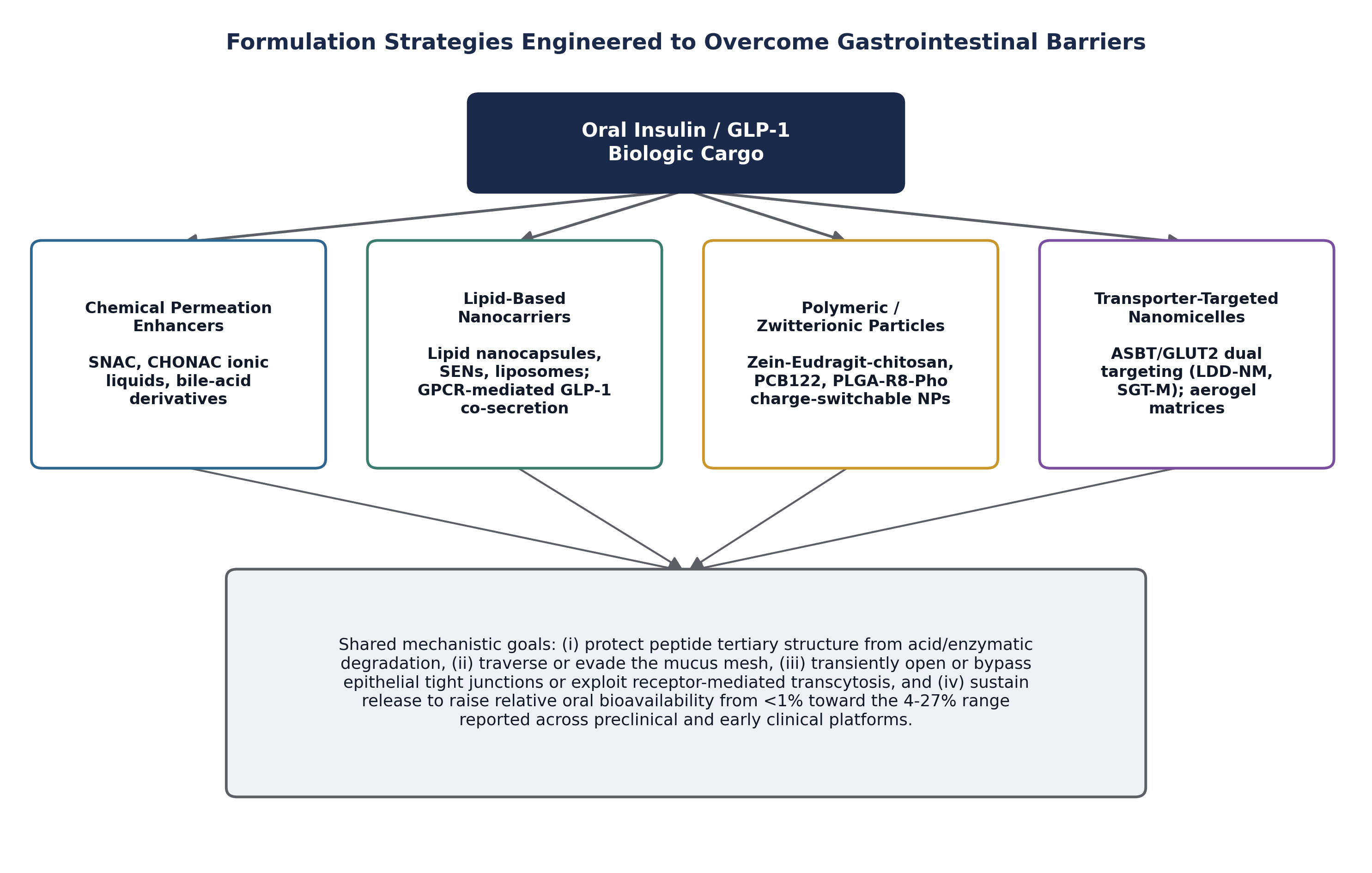
Where permeation enhancers work at the membrane surface, nanocarriers take a more architectural approach — encapsulating the peptide entirely and engineering the shell to survive the gut before releasing its cargo (Figure 2). Lipid-based systems, including lipid nanocapsules and self-emulsifying nanoemulsions, shield hydrophilic peptides within a lipophilic core; notably, exenatide-loaded lipid nanocapsules also appear to stimulate endogenous GLP-1 secretion from enteroendocrine L-cells via GPCR activation, achieving 4.32% relative bioavailability in diabetic rodent models (Beloqui, 2024). Polymeric and zwitterionic nanoparticles add a further layer of biomimicry: zwitterionic polycarboxybetaine (PCB122) and virus-mimetic PLGA-R8-Pho constructs stay electrically neutral while transiting the mucus mesh, then expose cationic cell-penetrating peptides once intestinal alkaline phosphatase cleaves a masking phosphate group — a design that reportedly reaches ~27% oral insulin bioavailability (Abdullahi et al., 2026). Hybrid zein-Eudragit-chitosan nanoparticles co-encapsulating insulin and liraglutide restrict gastric leakage to under 15% while enabling sustained biphasic release (Ziebarth et al., 2026).

Transporter-targeted nanomicelles push the logic one step further by hijacking active transport rather than relying on passive or facilitated diffusion. LDD-NM nanomicelles engage the apical sodium-dependent bile acid transporter (ASBT), achieving 5.14% liraglutide bioavailability and meaningful reductions in HbA1c and HOMA-IR over twelve weeks (Subedi et al., 2025); the dual-transporter SGT-M platform pairs glucosamine and taurolithocholate to engage both ASBT and GLUT2 simultaneously, reaching 4.62% relative bioavailability alongside

Table 1: Physiological, Enzymatic, and Physicochemical Barriers Restricting Oral and Mucosal Delivery of Insulin and GLP-1 Biologics. This table maps each sequential gastrointestinal barrier — gastric acidity, luminal/brush-border proteolysis, the mucus layer, epithelial tight junctions, and hepatic first-pass clearance — to its mechanistic impact on peptide bioactivity and the formulation strategies currently used to counteract it. Citations indicate the primary supporting sources for each barrier-strategy pairing. See also Figure 1 for a schematic cascade of these barriers.

Barrier Category

Mechanism / Location

Impact on Biologics

Mitigating Strategies

Citation

Acidic gastric environment

pH 1.0–2.0 induces peptide denaturation and non-enzymatic hydrolysis.

Rapid loss of tertiary structure and bioactivity before reaching the small intestine.

Enteric coatings (HPMC-AS, Eudragit), pH-buffering enhancers (SNAC), aerogels/hydrogels.

Nabi-Afjadi et al., 2024; Rabbani et al., 2026; Wong et al., 2025

Luminal & brush-border proteolysis

Pepsin, trypsin, chymotrypsin, elastase, and brush-border peptidases.

Native insulin/GLP-1 half-lives reduced to minutes in the GI lumen.

Protease inhibitors, lipid/polymeric encapsulation, acylation or amino-acid substitution.

Al Tahan et al., 2025; Nabi-Afjadi et al., 2024; Wong et al., 2025

Mucus layer & glycocalyx

Cross-linked mucin network (~75–100 mL/day turnover) sterically traps particles >500 nm.

Prevents peptide/nanoparticle diffusion to the absorptive epithelial surface.

PEGylation, zwitterionic coatings (PCB), mucolytic excipients, charge-reversible NPs.

Abdullahi et al., 2026; Al Tahan et al., 2025; Wong et al., 2025

Epithelial tight junctions

ZO-1/claudin junctions restrict paracellular transport >200–700 Da.

Insulin (~5.8 kDa) and GLP-1RAs (~4.0–4.1 kDa) cannot passively diffuse (<1% native bioavailability).

Transient junction openers (chitosan, fatty acids, bile salts), CPPs, transporter ligands.

Al Tahan et al., 2025; Nabi-Afjadi et al., 2024; Wong et al., 2025

First-pass hepatic clearance

Extensive hepatic extraction following portal venous absorption.

Limits systemic circulation time and duration of therapeutic effect.

Fatty-acid acylation for albumin binding, lymphatic transport, sublingual/buccal routes.

Chen et al., 2026; Rabbani et al., 2026; Wong et al., 2025

Table 2: Polymer-, Lipid-, and Surfactant-Based Nanoformulations Engineered for Oral Biologic Delivery. This table compares six nanocarrier classes — permeation-enhancer ionic liquids, lipid nanocapsules, zwitterionic/charge-switchable particles, zein-Eudragit-chitosan composites, transporter-targeted nanomicelles, and core-shell aerogels — by key materials, absorption mechanism, and quantitative in vitro/in vivo outcomes, including relative and absolute oral bioavailability. See also Figure 2 for a schematic classification of these platforms and Figure 4 for comparative bioavailability.

Platform Class

Key Materials

Mechanism

Outcomes / Bioavailability

Citation

SNAC / ionic liquids

SNAC, choline salcaprozate (CHONAC); non-covalent peptide association.

Buffers gastric pH, neutralizes pepsin, transiently fluidizes epithelial membranes.

Rybelsus®: ~0.4–1.0% absolute bioavailability; CHONAC gives rapid gastric absorption.

Al Tahan et al., 2025; Rebollo et al., 2025; Subedi et al., 2026

Lipid nanocapsules / SENs

Medium-chain triglycerides, Solutol HS15, ~200 nm reverse micellar core.

Protects from proteolysis; stimulates enteroendocrine L-cell GLP-1 secretion.

Exenatide-LNC: 4.32% relative bioavailability, potent glycemic control.

Beloqui, 2024; Wong et al., 2025

Zwitterionic / charge-switchable NPs

PCB122, PLGA-R8-Pho, virus-mimetic silica (~80–250 nm).

Neutral surface avoids mucin entrapment; alkaline phosphatase exposes cationic CPPs.

PCB122/insulin: ~27% oral bioavailability, sustained hypoglycemia.

Abdullahi et al., 2026

Zein-Eudragit-chitosan composites

Hybrid Z-ERS-CS/I-LIRA nanoparticles (~230 nm).

Electrostatic protection from gastric breakdown; mucoadhesive transit enhancement.

<15% gastric release; biphasic sustained release; reduced glucose in zebrafish.

Ziebarth et al., 2026

Transporter-targeted nanomicelles

SGT-M, LDD-NM using glucosamine/bile-acid derivatives (~65–76 nm).

Dual ASBT/GLUT2 targeting enables receptor-mediated endocytosis.

SGT-M: 4.62% bioavailability; LDD-NM: 5.14% bioavailability, improved HbA1c/HOMA-IR.

Subedi et al., 2025, 2026

Core-shell polysaccharide aerogels

Alginate beads dried via supercritical CO2.

Core-shell architecture shields insulin in gastric fluid, sustains intestinal release.

53% encapsulation efficiency; 30% gastric release vs 60% intestinal release at 1h.

Ozesme Taylan et al., 2025

Figure 1. The sequential gastrointestinal barrier cascade facing orally administered insulin and GLP-1 biologics, from gastric acid/enzymatic degradation through mucus entrapment, tight-junction exclusion, and hepatic first-pass clearance. Each stage compounds peptide loss, together limiting unformulated oral bioavailability to well under 1% (Al Tahan et al., 2025; Nabi-Afjadi et al., 2024; Wong et al., 2025). 

Figure 2. Four principal nanocarrier and permeation-enhancer strategies engineered to overcome the barrier cascade shown in Figure 1, together with their shared mechanistic objectives of protecting peptide structure, traversing mucus, and enabling epithelial uptake. Bioavailability figures reflect preclinical outcomes reported across the cited studies (Abdullahi et al., 2026; Beloqui, 2024; Ozesme Taylan et al., 2025; Subedi et al., 2025, 2026).

substantial weight and glucose reductions in obese mice (Subedi et al., 2026). Porous core-shell alginate aerogels, produced by supercritical CO2 drying, offer a complementary matrix-based approach, achieving 53% encapsulation efficiency and a favorable release profile that limits gastric loss while sustaining intestinal release (Ozesme Taylan et al., 2025).

2.5 Mechanical Micro-Injectors, Transmucosal Films, and Engineered Probiotic Depots

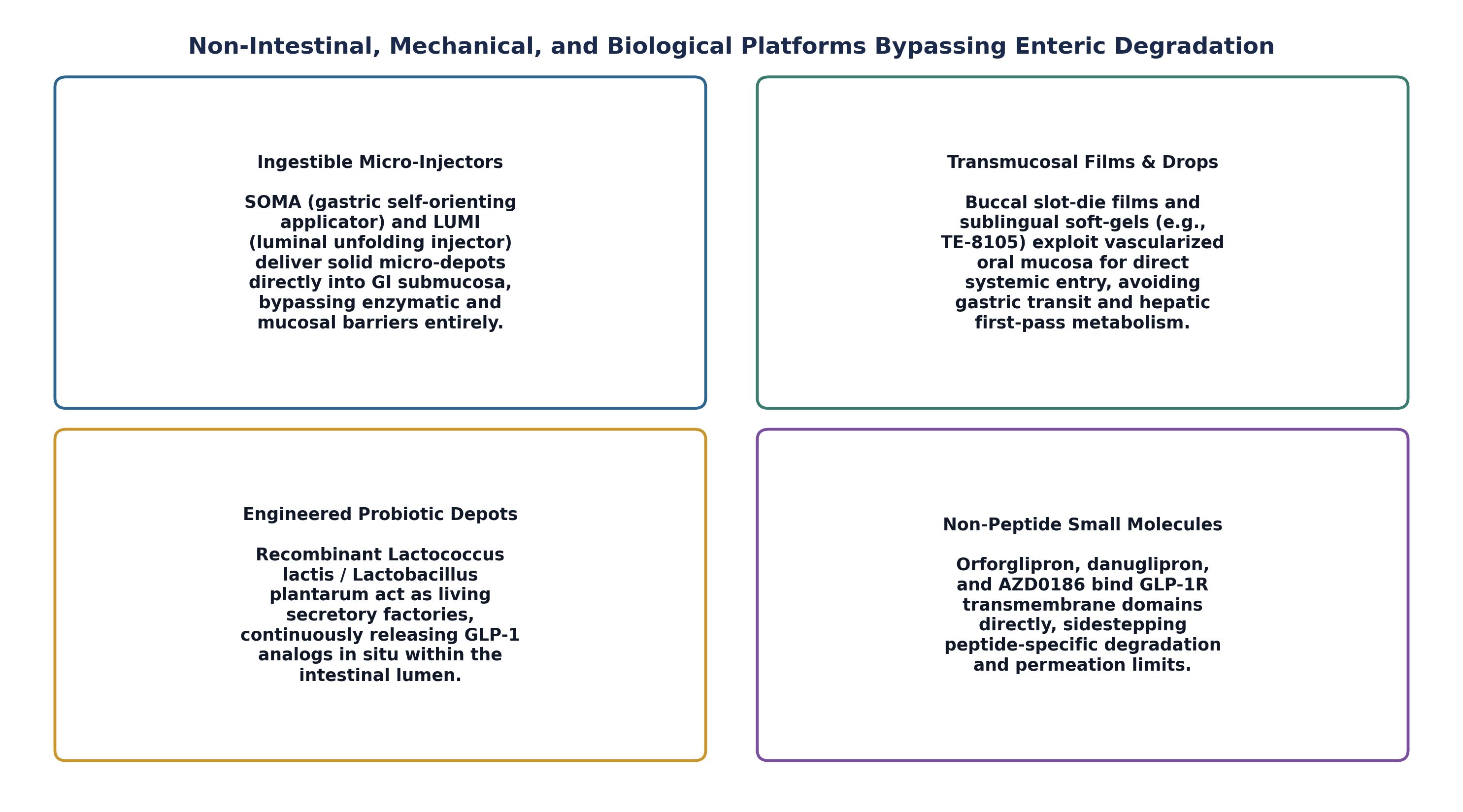
Perhaps the most conceptually radical strategies simply avoid the gastrointestinal lumen's chemistry altogether (Figure 3). Ingestible mechanical devices — the self-orienting applicator (SOMA) and the luminal unfolding microneedle injector (LUMI) — physically insert peptide micro-depots into the gastric or intestinal submucosa, achieving pharmacokinetics that approach subcutaneous injection without triggering pain sensation, since the submucosa itself is relatively insensate (Al Tahan et al., 2025). Transmucosal platforms take a gentler but related approach: multilayer buccal films sequence a bile-salt enhancer layer ahead of the active GLP-1RA layer to prime mucosal lipids before peptide diffusion (Pantazoglou et al., 2026), while sublingual formulations of dual fatty acid-conjugated GLP-1RA TE-8105 achieve roughly 7% potency relative to subcutaneous dosing, sufficient to support once-every-two-days administration (Chen et al., 2026).

A rather different, almost biological, solution comes from engineered probiotics. Food-grade Lactococcus lactis and Lactobacillus plantarum strains, modified for constitutive or inducible GLP-1 analog secretion, function as in-situ production factories within the gut lumen, restoring pancreatic islet architecture and promoting β-cell proliferation in diabetic mouse models (Huang et al., 2026; Wang et al., 2023). It is an elegant idea — turning the gut microbiome itself into the drug-manufacturing plant — though regulatory pathways for living therapeutics remain considerably less well trodden than those for small molecules or conventional biologics.

2.6 Non-Peptide Small-Molecule GLP-1 Receptor Agonists

Finally, an entirely different philosophy sidesteps the peptide-degradation problem by abandoning peptides altogether. Small-molecule, non-peptide GLP-1RAs — orforglipron, danuglipron, and AZD0186 among them — bind transmembrane receptor domains directly rather than the extracellular domains that peptide agonists require, making them intrinsically resistant to luminal proteolysis (Qi et al., 2025; Su et al., 2024). These compounds report oral bioavailabilities in the 20–30% range without any permeation enhancer, and dosing is unconstrained by the fasting protocols that current peptide products demand (Rabbani et al., 2026). Whether they ultimately match peptide GLP-1RAs on efficacy and long-term safety is still an open, and clinically important, question. Table 2, Table 3, and Table 4 consolidate the formulation, device, and clinical-translation evidence discussed across this section.

3. Methods

3.1 Review Design

This manuscript follows a structured narrative review design rather than a formal systematic review with meta-analysis, reflecting the heterogeneity of study types — in vitro permeability assays, rodent pharmacokinetic studies, and early-phase human trials — that characterize this rapidly moving field. Where relevant, we followed reporting conventions consistent with PRISMA-style transparency (identification, screening, eligibility, inclusion) to make the search process reproducible for future updates, even though a formal PRISMA flow diagram was not the primary deliverable of this narrative synthesis.

3.2 Information Sources and Search Strategy

We searched PubMed/MEDLINE, ScienceDirect, and Scopus for records published between January 2023 and 2026, reflecting the timeframe over which most of the nanocarrier, ionic-liquid, and mechanical-device literature synthesized here was published. Search strings combined controlled vocabulary and free-text terms across four conceptual blocks, joined with Boolean operators: (1) “oral insulin” OR “oral GLP-1” OR “oral peptide delivery”; (2) “permeation enhancer” OR “SNAC” OR “ionic liquid” OR “nanocarrier” OR “nanomicelle” OR “aerogel”; (3) “buccal” OR “sublingual” OR “ingestible device” OR “microneedle” OR “probiotic”; and (4) “bioavailability” OR “pharmacokinetics” OR “clinical trial”. Reference lists of retrieved articles were hand-searched for additional eligible studies (backward citation chasing).

3.3 Eligibility Criteria

Included records were peer-reviewed original research articles, preclinical pharmacokinetic studies, or early-phase clinical trials reporting formulation composition, mechanism of absorption enhancement, and at least one quantitative outcome (bioavailability, HbA1c, HOMA-IR, or an equivalent pharmacodynamic endpoint) for oral, buccal, or sublingual insulin or GLP-1RA delivery. Conference abstracts without peer-reviewed full text, purely computational/in silico studies without experimental validation, and articles unrelated to insulin/GLP-1 biologics (e.g., unrelated peptide classes) were excluded.

3.4 Data Extraction and Synthesis

For each eligible study, we extracted formulation or device class, key excipients or structural components, proposed mechanism of mucosal/epithelial traversal, reported bioavailability or relative potency, pharmacodynamic outcomes, and developmental stage (preclinical, Phase 1/2, or approved). Extracted data were organized thematically into four comparative tables spanning physiological barriers (Table 1), nanoformulation platforms (Table 2), mechanical and transmucosal devices (Table 3), and clinical/translational status (Table 4), allowing cross-platform comparison of relative bioavailability and developmental maturity. Given the narrative synthesis design, no formal risk-of-bias scoring or meta-analytic pooling was performed; instead, findings were qualitatively triangulated across independent studies reporting convergent mechanisms or outcomes.

3.5 Reproducibility Statement

To support reproducibility consistent with PubMed indexing conventions, all cited primary sources are indexed with their respective digital object identifiers (DOIs) in the reference list (Section 7), and search terms are reported verbatim in Section 3.2, enabling future reviewers to independently re-execute and update the search strategy.

4. Synthesis of Findings Across Oral and Transmucosal Delivery Platforms

4.1 Overcoming the Gastrointestinal Gatekeepers: Physiological and Enzymatic Barriers

Across the retrieved literature, one figure recurs with almost stubborn consistency: unformulated oral bioavailability for insulin (~5.8 kDa) and GLP-1RAs (~4.0–4.1 kDa) sits well under 1% (Al Tahan et al., 2025; Nabi-Afjadi et al., 2024; Wong et al., 2025). Ingested peptides first meet gastric acidity (pH 1.0–2.0), which triggers irreversible tertiary denaturation and acid hydrolysis, compounded by pepsin, trypsin, chymotrypsin, and carboxypeptidase activity that reduces native peptide half-lives to a matter of minutes (Al Tahan et al., 2025; Nabi-Afjadi et al., 2024; Wong et al., 2025). Peptides that survive this gauntlet then meet a continuous mucus layer turning over at roughly 75–100 mL per day, which sterically and electrostatically excludes particles above ~500 nm (Wong et al., 2025), and tight-junction complexes (ZO-1, claudins) that restrict paracellular diffusion to molecules under 200–700 Da (Nabi-Afjadi et al., 2024; Wong et al., 2025). Whatever fraction is finally absorbed then undergoes extensive first-pass hepatic extraction before reaching systemic targets (Wong et al., 2025) (Table 1; Figure 1).

4.2 Polymer, Lipid, and Transporter-Targeted Nanoarchitectures

Formulation science has responded to this cascade with increasingly sophisticated nanoarchitectures (Table 2; Figure 2). Chemical permeation enhancers such as SNAC and the ionic liquid CHONAC associate non-covalently with GLP-1 analogs, buffering local pH and fluidizing gastric epithelial membranes (Rebollo et al., 2025; Rabbani et al., 2026). Lipid nanocapsules formulated with medium-chain triglycerides and polyoxyethylene surfactants achieved 4.32% relative bioavailability for oral exenatide, alongside a roughly four-fold rise in endogenous GLP-1 via enteroendocrine L-cell stimulation (Beloqui, 2024). Zwitterionic PCB122 nanoparticles and virus-mimetic PLGA-R8-Pho constructs decoupled mucus traversal from epithelial uptake, reaching oral insulin bioavailabilities of approximately 27% without permanent tight-junction disruption (Abdullahi et al., 2026), while hybrid zein-Eudragit-chitosan nanoparticles restricted gastric leakage to under 15% and produced significant glucose normalization in diabetic zebrafish (Ziebarth et al., 2026).

Active transporter-targeting extended this trend further: LDD-NM nanomicelles engaging the ASBT achieved 5.14% liraglutide bioavailability (a 4.63-fold gain over free drug) with sustained HbA1c and HOMA-IR improvement over twelve weeks (Subedi et al., 2025), while the dual-targeted SGT-M platform, engaging both ASBT and GLUT2, enhanced Caco-2/HT-29 permeability 28.8-fold and produced a 30.3% reduction in body weight alongside a 65.6% reduction in fasting glucose in diet-induced obese mice (Subedi et al., 2026). Core-shell alginate aerogels dried under supercritical CO2 achieved 53% encapsulation efficiency, limiting gastric insulin release to 30% while permitting 60% sustained intestinal release within one hour (Ozesme Taylan et al., 2025).

Table 3: Mechanical Devices, Transmucosal Patches, and Biocontainer/Probiotic Platforms Bypassing Enteric Degradation. This table summarizes five non-conventional delivery systems — ingestible micro-injectors (SOMA, LUMI), buccal films, sublingual formulations, and recombinant probiotic depots — detailing structural design, targeted anatomical site, and reported biological outcomes. See also Figure 3 for a schematic overview of these platforms.

System

Design

Route / Target

Key Outcomes

Citation

Self-Orienting Applicator (SOMA)

Tortoise-shell capsule with spring-loaded insulin-loaded biopolymer needle.

Gastric mucosa; independent of gastric emptying.

Self-rights in gastric fluid; systemic levels comparable to SC injection.

Al Tahan et al., 2025; Rabbani et al., 2026

Luminal Unfolding Injector (LUMI)

Enteric-coated capsule with three expandable PVP microneedle arms.

Small intestine; activated at pH >5.5.

Dissolves to deploy microneedle arms for pain-free mucosal insertion.

Al Tahan et al., 2025

Multilayer slot-die buccal films

Triple-layer film: backing, active GLP-1RA, mucoadhesive GDC layer.

Buccal mucosa; bypasses hepatic first-pass.

Sequential bile-salt priming enhances ex vivo mucosal permeation.

Pantazoglou et al., 2026

Mucoadhesive sublingual formulations

Liquid/gel/tablet with phenol, mannitol, peppermint oil.

Sublingual mucosa; jugular venous access.

TE-8105: ~7% potency vs SC; supports once-every-2-days dosing.

Chen et al., 2026

Recombinant probiotic delivery

Engineered L. lactis / L. plantarum secreting GLP-1/EX4.

Intestinal lumen; in situ secretion.

Restores islet structure, promotes β-cell proliferation, lowers fasting glucose.

Huang et al., 2026; Wang et al., 2023

Table 4: Comparative Clinical and Translational Profile of Approved Versus Emerging Oral and Transmucosal Biologics. This table benchmarks five representative formulations — spanning the one FDA-approved product (Rybelsus®) through preclinical nanomicelle, aerogel, sublingual, and small-molecule candidates — by active ingredient, delivery vehicle, dosing regimen, and current developmental/regulatory status. See also Figure 4 for a quantitative bioavailability comparison across these and related platforms.

Formulation

Active Ingredient

Vehicle / Enhancer

Status & Bioavailability

Citation

Rybelsus® (Novo Nordisk)

Semaglutide (GLP-1RA).

300 mg SNAC.

FDA-approved; ~0.4–1.0% bioavailability; robust HbA1c and weight reduction.

Al Tahan et al., 2025; Rabbani et al., 2026; Rebollo et al., 2025

Oral liraglutide nanomicelles

Liraglutide (acylated GLP-1RA).

Bile-acid/cyclodextrin nanomicelles (LDD-NM).

Preclinical; 5.14% bioavailability; reduced HbA1c, HOMA-IR, adiposity.

Subedi et al., 2025

Sublingual TE-8105 (Immunwork)

Dual fatty acid-conjugated GLP-1RA.

Liquid/gel/tablet with phenol, mannitol, peppermint oil.

Phase 1/2a (SC); sublingual prototype ~7% relative potency.

Chen et al., 2026

Aerogel oral insulin

Human regular insulin.

Supercritical CO2-dried alginate core-shell aerogel.

Preclinical; 53% encapsulation efficiency; sustained intestinal release.

Ozesme Taylan et al., 2025

Orforglipron / danuglipron / AZD0186

Small-molecule non-peptide GLP-1RAs.

Direct synthesis; no carrier required.

Phase 2/3; ~20–30% oral bioavailability; flexible dosing.

Qi et al., 2025; Rabbani et al., 2026; Su et al., 2024

Figure 3. Non-intestinal, mechanical, and biological delivery platforms that bypass gastrointestinal enzymatic and mucosal degradation entirely, spanning ingestible micro-injectors, transmucosal films, engineered probiotic depots, and non-peptide small-molecule agonists (Al Tahan et al., 2025; Chen et al., 2026; Huang et al., 2026; Pantazoglou et al., 2026; Qi et al., 2025; Wang et al., 2023).


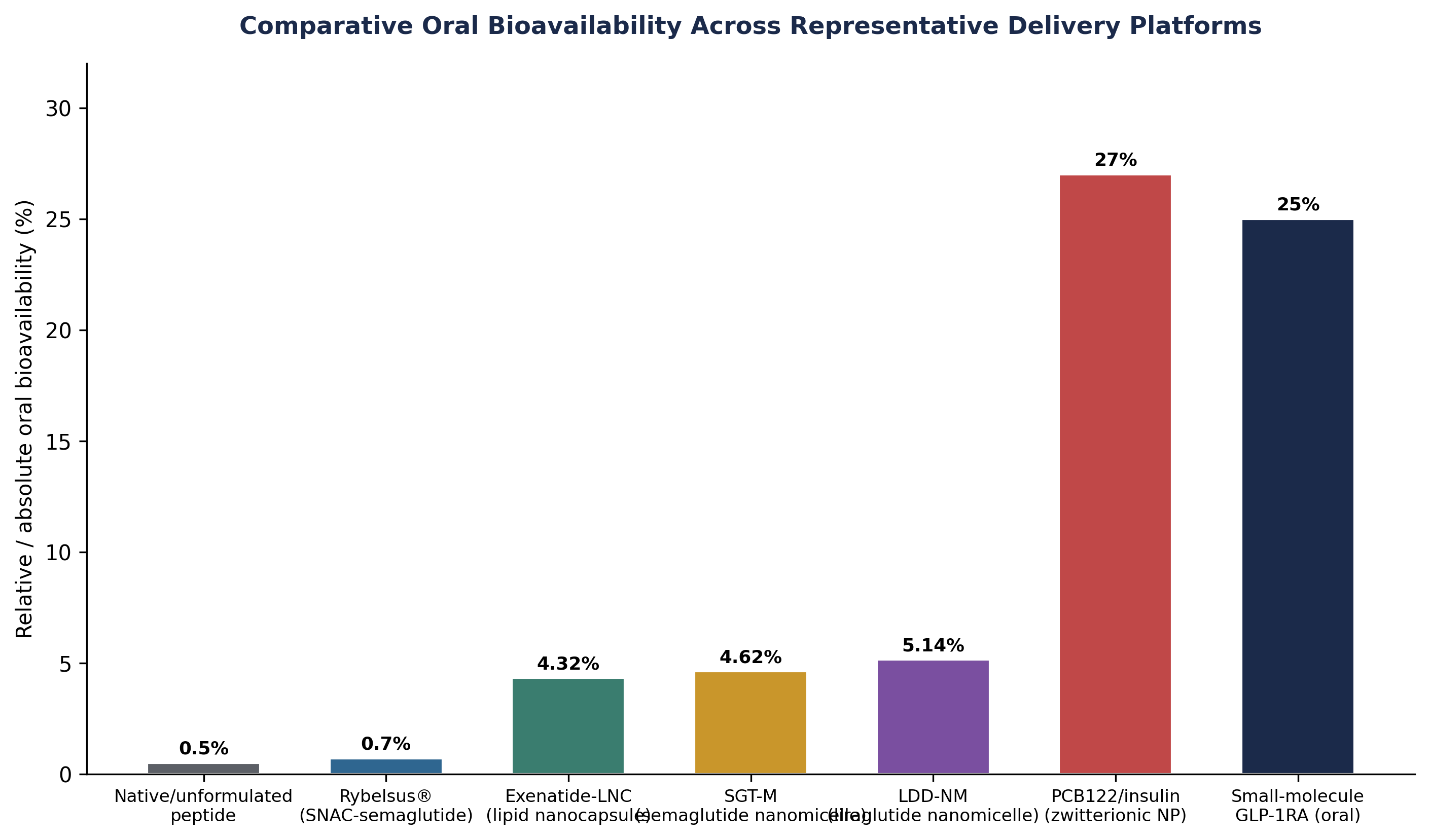
Figure 4. Comparative relative or absolute oral bioavailability across representative delivery platforms discussed in this review, ranging from unformulated native peptide (<1%) to zwitterionic nanoparticle and small-molecule GLP-1RA platforms (20–27%). Values are drawn from the individual preclinical and clinical studies cited in Tables 2 and 4 (Abdullahi et al., 2026; Beloqui, 2024; Qi et al., 2025; Rebollo et al., 2025; Subedi et al., 2025, 2026). 

4.3 Mechanical Devices, Transmucosal Patches, and Engineered Probiotic Depots

A separate cluster of strategies bypasses enzymatic and mucosal barriers by physically or anatomically avoiding them (Table 3; Figure 3). The self-orienting applicator (SOMA) self-rights within gastric fluid and actuates a spring-loaded biopolymer needle, achieving plasma pharmacokinetics comparable to subcutaneous administration (Al Tahan et al., 2025; Rabbani et al., 2026); the luminal unfolding injector (LUMI) dissolves its enteric coating above pH 5.5 in the small intestine and deploys expandable microneedle-laden arms for pain-free mucosal insertion (Al Tahan et al., 2025). Multilayer buccal films sequence a bile-salt enhancer ahead of active GLP-1RA release to prime mucosal lipids (Pantazoglou et al., 2026), and sublingual TE-8105 formulations achieved ~7% relative potency to subcutaneous dosing with once-every-two-days dosing durability (Chen et al., 2026). Engineered Lactococcus lactis and Lactobacillus plantarum strains, secreting GLP-1 analogs (LGLP, EX4) in situ, restored pancreatic islet morphology and improved glucose tolerance in db/db diabetic mice (Huang et al., 2026; Wang et al., 2023).

4.4 Clinical Translation and the Emergence of Non-Peptide Agonists

Only one oral peptide biologic has, to date, reached clinical approval: Rybelsus® (oral semaglutide co-formulated with 300 mg SNAC), which despite meaningful HbA1c and weight reductions still carries an absolute bioavailability of only ~0.4–1.0% and requires strict empty-stomach dosing with a mandatory 30-minute fast (Al Tahan et al., 2025; Rabbani et al., 2026; Rebollo et al., 2025) (Table 4). Notably, repeated high-dose SNAC exposure has been shown to deplete key saccharolytic gut fermenters (Muribaculaceae by −62%; Bacteroidaceae by −77%) and elevate circulating TNF-α in rodent models, raising questions about chronic dosing safety (Ariaee et al., 2026). Non-peptide small-molecule GLP-1RAs — orforglipron, danuglipron, and AZD0186 — sidestep this ceiling entirely, binding transmembrane receptor domains directly and achieving 20–30% oral bioavailability without permeation enhancers or dosing restrictions (Qi et al., 2025; Rabbani et al., 2026; Su et al., 2024) (Figure 4).

5. Toward a Rational, Multi-Pronged Path to Non-Invasive Biologic Therapy

5.1 No Single Platform Currently “Wins”

Looking across Tables 1 through 4, a fairly clear pattern emerges: every platform buys bioavailability at the cost of something else — manufacturing complexity, excipient safety, device engineering burden, or regulatory novelty. Permeation enhancers are simple and already approved, but their bioavailability ceiling (Table 4) appears close to fundamental, given how modest the gains have been even with newer ionic-liquid chemistries (Rebollo et al., 2025). Nanocarriers and transporter-targeted micelles push bioavailability several-fold higher (Table 2), yet nearly all supporting data remain preclinical, and scale-up of multi-component nanoparticle synthesis is not a trivial manufacturing problem (Subedi et al., 2025, 2026). Mechanical devices such as SOMA and LUMI arguably solve the bioavailability problem most convincingly, since they avoid the gut lumen altogether (Al Tahan et al., 2025), but device cost, patient acceptability of swallowing a rigid capsule daily, and long-term GI safety remain comparatively under-studied.

5.2 The Microbiome Question Deserves More Weight

One point that, in our reading of the literature, has been somewhat underweighted relative to its clinical importance: permeation enhancers do not act in isolation from the gut ecosystem. The finding that chronic SNAC exposure measurably depletes saccharolytic fermenters and raises inflammatory cytokines (Ariaee et al., 2026) is not, on its own, disqualifying — but it does suggest that long-term surveillance of gut microbiota composition should probably become a standard component of oral peptide drug development, rather than an afterthought raised only when adverse events accumulate.

5.3 Living Therapeutics and Non-Peptide Agonists as Divergent but Complementary Futures

Engineered probiotic depots (Huang et al., 2026; Wang et al., 2023) and non-peptide small-molecule GLP-1RAs (Qi et al., 2025; Su et al., 2024) represent, in a sense, opposite philosophies — one leans further into biological complexity, the other abandons peptide chemistry altogether — yet both sidestep the core degradation problem rather than fighting it directly. It is tempting to frame these as competitors to nanocarrier and device platforms; we would argue they are more plausibly complementary, likely to serve different patient populations, indications, or cost tiers rather than displacing one another outright.

5.4 Translational and Regulatory Considerations

Several recurring translational hurdles cut across nearly every platform reviewed here: variable inter-subject bioavailability (a particular concern for enhancer- and nanocarrier-based systems, where food, gastric pH, and motility all introduce variability), excipient and device biocompatibility over chronic daily use, and the sheer manufacturing complexity of multi-component nanoparticle or mechanical systems relative to conventional tablet production (Rabbani et al., 2026). Regulatory pathways for engineered living therapeutics (Huang et al., 2026; Wang et al., 2023) in particular remain comparatively undefined, which may slow their clinical translation even where preclinical efficacy looks promising.

5.5 Limitations of This study

This synthesis is narrative rather than systematic, and most quantitative outcomes summarized here derive from preclinical rodent or in vitro models rather than large, adequately powered human trials; head-to-head comparisons across platforms are essentially absent from the current literature, limiting the strength of any relative-efficacy claims. We have tried to flag preclinical-only evidence explicitly throughout Section 4, but readers should weigh these findings accordingly.

6. Conclusion

Oral delivery of insulin and GLP-1 biologics has moved from a largely theoretical goal to a field with real, if still partial, clinical traction. Gastric acid, luminal proteases, the mucus mesh, tight junctions, and hepatic first-pass metabolism together explain why unformulated bioavailability stays below 1%, and why every successful strategy — permeation enhancers, nanocarriers, mechanical micro-injectors, transmucosal films, engineered probiotics, and non-peptide agonists — targets a different link in that chain. Rybelsus® proves the concept is commercially viable even at modest bioavailability, while newer platforms reaching 4–27% bioavailability in preclinical models suggest meaningfully higher ceilings are achievable. The most realistic path forward is probably combinatorial rather than singular: pairing permeation chemistry with nanocarrier protection, or mechanical devices with refined biocompatible materials, while keeping gut-microbiome safety and manufacturing scalability firmly in view.

References


Abdullahi, A. D., Ibrahim, M. A., & Serem, J. C. (2026). Peptide delivery in the management of diabetes: Exploring bioinspired nanoarchitectures using stimuli-responsive materials and supramolecular depots. International Journal of Pharmaceutics, 701, Article 127169. https://doi.org/10.1016/j.ijpharm.2026.127169

Al Tahan, M. A., Al-Khattawi, A., & Russell, C. (2025). Oral peptide delivery systems: Synergistic approaches using polymers, lipids, nanotechnology, and needle-based carriers. Journal of Drug Delivery Science and Technology, 112, Article 107205. https://doi.org/10.1016/j.jddst.2025.107205

Ariaee, A., Noueihad, K., Hunter, A., Wignall, A., Wardill, H. R., Davies, M., Prestidge, C. A., & Joyce, P. (2026). The degree of inulin polymerization is important for short-term amelioration of high-fat diet (HFD)-induced metabolic dysfunction and gut microbiota dysbiosis in rats. Journal of Controlled Release, 392, Article 114711. https://doi.org/10.1016/j.jconrel.2026.114711

Beloqui, A. (2024). Gut hormone stimulation as a therapeutic approach in oral peptide delivery. Journal of Controlled Release, 373, 31–37. https://doi.org/10.1016/j.jconrel.2024.07.007

Chen, C.-J., Wong, M.-T., Yu, Y.-H., Chu, H.-M., Lim, C., & Chang, T. W. (2026). Optimized sublingual delivery of dual fatty acid–conjugated GLP-1 receptor agonist TE-8105 produces durable efficacy in diabetic mice. International Journal of Pharmaceutics, 694, Article 126752. https://doi.org/10.1016/j.ijpharm.2026.126752

Huang, Y., Lin, X., Deng, M., Tang, Y., Li, S., Xu, B., Zeng, W., Chen, Z., Hou, X., Lin, Z., Meng, X., Bai, Y., Fan, H., & Zeng, W. (2026). Oral delivery of GLP-1 analogues by recombinant Lactococcus lactis restores pancreatic islet structure through intestinal mucosal absorption in diabetic mice. eBioMedicine, 124, Article 106141. https://doi.org/10.1016/j.ebiom.2026.106141

Nabi-Afjadi, M., Ostadhadi, S., Liaghat, M., Pasupulla, A. P., Masoumi, S., Aziziyan, F., Zalpoor, H., Abkhooie, L., & Tarhriz, V. (2024). Revolutionizing type 1 diabetes management: Exploring oral insulin and adjunctive treatments. Biomedicine & Pharmacotherapy, 176, Article 116808. https://doi.org/10.1016/j.biopha.2024.116808

Ozesme Taylan, G., Illanes-Bordomás, C., Guven, O., Erkan, E., Çikrikci Erünsal, S., Oztop, M. H., & García-González, C. A. (2025). Core-shell aerogel design for enhanced oral insulin delivery. International Journal of Pharmaceutics, 669, Article 125038. https://doi.org/10.1016/j.ijpharm.2024.125038

Pantazoglou, E., Bahuon, F., Andresen, A. K., Tollemeto, M., Zhang, Z., Tzitzigiannis, I., Ezazi, N. Z., Sacramento, M. M. A., Mano, J. F., Untracht, G. R., Andersen, P. E., van de Weert, M., Berthelsen, R., Buckley, S. T., Hosta-Rigau, L., Jacobsen, J., & Nielsen, L. H. (2026). Layer-by-layer polymeric films for buccal GLP-1 delivery. Cell Reports Physical Science, 7, Article 103410. https://doi.org/10.1016/j.xcrp.2026.103410

Qi, W., Boca, S. M., Boianelli, A., Fredberg, M., Lundqvist, S., Davies, G., Field, J., Brighton, C. A., Snijder, A., Grundevik, P., Eckernäs, D., Träff, A. M., Polla, M., Pettersen, D., Omar, S., Hansen, L., Janzén, D., Melin, J., van Zuydam, N., Logue, J., & Wallenius, K. (2025). Preclinical evaluation and first-in-human phase 1 trial of AZD0186, a novel, oral small molecule glucagon-like peptide-1 receptor agonist. The Journal of Pharmacology and Experimental Therapeutics, 392, Article 103683. https://doi.org/10.1016/j.jpet.2025.103683

Rabbani, S. A., Saini, M., El-Tanani, M., Kumar, R., Matalka, I., El-Tanani, Y., Sharma, S., & Rizzo, M. (2026). Oral GLP-1-based therapeutics in the obesity–metabolic syndrome–diabetes continuum: Translational advances, clinical barriers, and emerging strategies. Pharmaceuticals, 19(5), Article 732. https://doi.org/10.3390/ph19050732

Rebollo, R., Xiao, Z., Blaabjerg, L., La Zara, D., Juel, T., Pedersen, H. D., Andersson, V., Benova, M., Krogh, C., Pons, R., Holm, T. P., Wahlund, P.-O., Fan, L., Wang, Z., Kennedy, A., Kuhre, R. E., Christophersen, P., Bardonnet, P.-L., & Sassene, P. J. (2025). Salcaprozate-based ionic liquids for GLP-1 gastric delivery: A mechanistic understanding of in vivo performance. Journal of Controlled Release, 377, 267–276. https://doi.org/10.1016/j.jconrel.2024.11.036

Su, J., Xu, J., Hu, S., Ye, H., Xie, L., & Ouyang, S. (2024). Advances in small-molecule insulin secretagogues for diabetes treatment. Biomedicine & Pharmacotherapy, 178, Article 117179. https://doi.org/10.1016/j.biopha.2024.117179

Subedi, L., Bamjan, A. D., Kim, E., Phuyal, S., Sapkota, B., Kim, K.-T., Cho, S.-S., Shim, J.-H., Seo, J. B., & Park, J. W. (2026). Dual-transporter-targeted oral semaglutide nanomicelles enable enhanced intestinal absorption and metabolic reprogramming in obesity and diabetes. Journal of Controlled Release, 399, Article 115297. https://doi.org/10.1016/j.jconrel.2026.115297

Subedi, L., Bamjan, A. D., Phuyal, S., Shim, J.-H., Cho, S.-S., Seo, J. B., Chang, K.-Y., Byun, Y., Kweon, S., & Park, J. W. (2025). An oral liraglutide nanomicelle formulation conferring reduced insulin-resistance and long-term hypoglycemic and lipid metabolic benefits. Journal of Controlled Release, 378, 637–655. https://doi.org/10.1016/j.jconrel.2024.12.039

Wang, Q., Guo, H., Mao, W., Qian, X., & Liu, Y. (2023). The oral delivery system of modified GLP-1 by probiotics for T2DM. Pharmaceutics, 15(4), Article 1202. https://doi.org/10.3390/pharmaceutics15041202

Wong, C. Y. J., Baldelli, A., Tietz, O., Leite, E., Ong, H. X., & Traini, D. (2025). Delivery of insulin via the intranasal route: Advantages, barriers, and formulation strategies. International Journal of Biological Macromolecules, 332, Article 148663. https://doi.org/10.1016/j.ijbiomac.2025.148663

Ziebarth, J., Babinski, T. P., Moreira, F. F., Tartari, A. P. S., Zago, A., da Costa, S. P., Pinheiro, M. F., & Mainardes, R. M. (2026). Preparation, characterization and in vitro evaluation of hybrid zein-Eudragit RS100-chitosan nanoparticles for the co-delivery of insulin and liraglutide (Z-ERS-CS/I-LIRA). International Journal of Biological Macromolecules, 375, Article 153507. https://doi.org/10.1016/j.ijbiomac.2026.153507


Article metrics
View details
0
Downloads
0
Citations
28
Views

View Dimensions


View Plumx


View Altmetric


0
Save
0
Citation
28
View
0
Share