1.Introduction
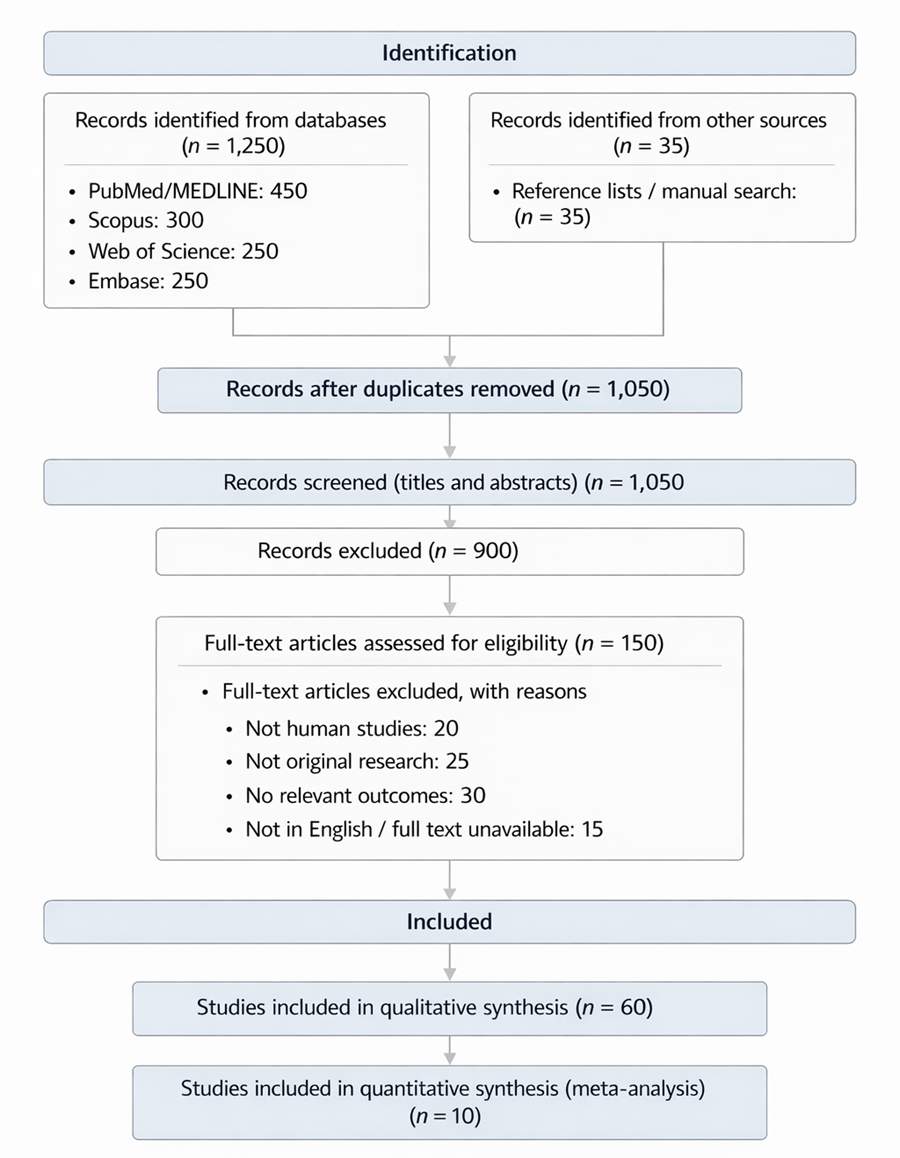
Contemporary production and innovation systems are operating under unprecedented pressure. Rapid globalization, increasingly fragmented supply chains, environmental degradation, public health crises, and repeated failures of institutional trust have collectively exposed deep structural weaknesses across industrial, agricultural, biomedical, and design sectors. Consumers, regulators, and policymakers now demand not only higher performance and economic efficiency but also transparency, traceability, sustainability, and accountability throughout the full lifecycle of products and services (Lv et al., 2023; Saberi et al., 2019). Against this backdrop, a growing body of interdisciplinary research has converged on advanced technological and methodological frameworks capable of restoring trust while supporting innovation. This systematic review–informed introduction synthesizes evidence across four interrelated domains—agricultural traceability, bioactive pharmaceutical compounds, sustainable materials, and bio-inspired design—to contextualize the rising importance of blockchain-based traceability (BBT) as part of a broader transformation toward intelligent and sustainable systems (Wang et al., 2019; Tribis et al., 2018).
Food safety represents one of the most urgent and widely documented global challenges driving this transformation. Unsafe food continues to impose a heavy burden on public health systems and national economies worldwide. Systematic evidence demonstrates that foodborne risks emerge not only from biological contamination but also from chemical misuse, fraudulent labeling, and information asymmetry along extended supply chains (Aung & Chang, 2014; Bosona & Gebresenbet, 2013). Traditional agricultural logistics and traceability systems, largely based on centralized databases and paper-based documentation, have repeatedly failed to provide rapid, reliable, and verifiable provenance information during crises (Bosona & Gebresenbet, 2013). Meta-analytic and systematic insights across food safety incidents indicate that delayed trace-back, data tampering, and incomplete records significantly amplify both economic losses and public harm (Aung & Chang, 2014).
These systemic failures have eroded consumer trust and intensified demand for demonstrable integrity and transparency in food systems (Lv et al., 2023; Gupta & Shankar, 2023). Large-scale food safety scandals and recurring disputes over labeling and production practices have reinforced public skepticism toward industry self-regulation. Evidence synthesized from regulatory and market studies shows that consumers are increasingly willing to pay price premiums for products that provide verifiable traceability and safety assurances (Gupta & Shankar, 2023). However, conventional traceability technologies, such as barcodes, RFID, and isolated databases, have proven insufficient to guarantee consistent information flow across complex, multi-actor supply networks (Kelepouris et al., 2007; Aung & Chang, 2014).
Within this context, blockchain technology has emerged as a promising infrastructural response to long-standing traceability limitations. Blockchain is defined as a decentralized, distributed ledger system characterized by immutability, cryptographic security, and shared consensus mechanisms (Wang et al., 2019; Kumar et al., 2020). Systematic reviews of blockchain applications in agriculture and food systems consistently highlight its capacity to create permanent, non-tamperable records for each transaction stage, from raw material sourcing to final consumption (Lv et al., 2023; Duan et al., 2020). Unlike centralized systems, blockchain-based traceability distributes data storage across multiple nodes, significantly reducing the risk of single-point failure, unauthorized modification, or data loss (Tribis et al., 2018; Iftekhar et al., 2020). Comparative analyses between traditional and blockchain-enabled systems further demonstrate improvements in transparency, recall efficiency, and cross-institutional trust when blockchain architectures are employed (Saberi et al., 2019; Gupta & Shankar, 2023).
The growing emphasis on transparency and data integrity in agriculture mirrors parallel developments in pharmaceutical and biomedical research, where precise molecular understanding and reproducibility are increasingly central concerns. Natural bioactive compounds, including polyphenols and phytochemicals such as curcumin, genistein, and tanshinone IIA, have attracted sustained attention due to their antioxidant, anti-inflammatory, and metabolic regulatory properties (Atanasov et al., 2015; Deng et al., 2025). Systematic reviews and meta-analyses indicate that these compounds may play protective roles in chronic metabolic disorders, including cardiovascular disease and other metabolic conditions (Deng et al., 2025). However, translating these findings into clinical or industrial applications requires rigorous traceability of sourcing, processing, and formulation to ensure reproducibility, safety, and regulatory compliance (Atanasov et al., 2015).
Emerging evidence suggests that selective modulation of molecular pathways using plant-derived bioactive compounds offers promising therapeutic potential. Yet, variability in raw material quality, extraction methods, and supply chain opacity continues to undermine confidence in natural product–based interventions (Atanasov et al., 2015). These challenges further reinforce the relevance of traceability infrastructures capable of documenting and verifying complex value chains beyond agriculture, extending into nutraceutical and pharmaceutical production systems.
Sustainability considerations add another critical layer to this discussion. Across industries, sustainable development is now widely understood as a multidimensional balance between environmental responsibility, economic viability, and functional performance (Kostakis & Tsagarakis, 2022; Saberi et al., 2019). The apparel and advanced materials sectors, particularly those involving smart textiles and polymer-based products, exemplify the difficulty of achieving this balance. Systematic reviews reveal that non-biodegradable materials, energy-intensive manufacturing, and insufficient recycling infrastructures significantly undermine sustainability claims in these industries (Kostakis & Tsagarakis, 2022; Niinimäki et al., 2020). Compounding these challenges, widespread greenwashing has diluted consumer trust and highlighted the absence of standardized, verifiable sustainability metrics (Delmas & Burbano, 2011).
Here again, transparent and tamper-resistant data systems are increasingly viewed as essential enablers of credible sustainability governance. Blockchain-supported lifecycle tracking has been proposed as a mechanism to authenticate environmental claims, document material flows, and enforce accountability across product lifecycles (Kouhizadeh et al., 2021; Saberi et al., 2019). Evidence from pilot studies and conceptual frameworks suggests that such systems can reduce information asymmetry and better align corporate practices with sustainability commitments (Kouhizadeh et al., 2021).
Finally, advances in bio-inspired design methodologies further illustrate the convergence of technology, sustainability, and system intelligence. Bionics and biomimicry leverage principles derived from biological systems to enhance structural efficiency, resilience, and environmental integration in engineering and design applications (Vincent et al., 2006). Systematic design frameworks, including multi-criteria decision analysis and the Analytical Hierarchy Process, are increasingly applied to reduce subjectivity and improve decision quality in complex engineering contexts (Saaty, 2008). These approaches reflect a broader epistemic shift toward systems thinking, where performance, sustainability, and trust are addressed simultaneously rather than in isolation.
Taken together, the evidence synthesized across these domains underscores a unifying conclusion: modern production systems require robust, decentralized, and transparent infrastructures supported by methodical, data-driven processes. Blockchain-based traceability emerges not as a standalone solution but as a foundational technology capable of reinforcing trust, safety, and sustainability across agriculture, biomedical innovation, materials science, and design (Lv et al., 2023; Wang et al., 2019). By situating BBT within this interdisciplinary landscape, the present review establishes a comprehensive conceptual foundation for evaluating its effectiveness, limitations, and future potential through systematic review and meta-analytic lenses.