Microbial Bioactives

Microbial Bioactives | Online ISSN 2209-2161
279
Citations
152.3k
Views
143
Articles
Your new experience awaits. Try the new design now and help us make it even better
Switch to the new experience
Figures and Tables
REVIEWS   (Open Access)

Microalgae and Cyanobacteria as Photosynthetic Microbial Factories: Taxonomy, Biochemical Potential, and Emerging Bioindustrial Applications

Mireille Fouillaud 1, Hamid Mukhtar 2, Ikram ul Haq 2, Carla Arenas Colarte 3, Iván Balic 4, Adrián A. Moreno 5, Maximiliano J. Amenabar 6, Óscar Díaz 4, Tamara Bruna Larenas 3, Nelson Caro Fuentes 3, Maslin Osathanunkul 7

+ Author Affiliations

Microbial Bioactives 9 (1) 1-8 https://doi.org/10.25163/microbbioacts.9110630

Submitted: 11 January 2026 Revised: 08 March 2026  Published: 17 March 2026 


Abstract

Microalgae and cyanobacteria are increasingly recognized as versatile photosynthetic microorganisms with substantial potential to support sustainable bioindustrial systems. Their taxonomic diversity, rapid growth rates, and capacity to synthesize proteins, lipids, pigments, and other high-value metabolites have positioned them as promising alternatives to conventional biological resources. Despite extensive experimental research, the evidence remains fragmented across species, cultivation strategies, and application domains, limiting cross-study comparability and informed decision-making. This study presents a systematic review and meta-analysis aimed at synthesizing current knowledge on the taxonomy, biochemical potential, and applied performance of microalgae and cyanobacteria as photosynthetic microbial factories.A comprehensive literature search was conducted across major scientific databases, and eligible studies were screened, selected, and analyzed following PRISMA guidelines. Quantitative data on biomass composition, metabolite production, and application-specific performance metrics were extracted and standardized. Random-effects meta-analytical models were applied to account for biological and methodological heterogeneity across studies. Forest plots were used to estimate pooled effects, while funnel plots were employed to explore reporting consistency and potential small-study effects.The synthesis reveals substantial variability in biochemical yields and application outcomes that can be attributed to taxonomic identity, cultivation conditions, and system design. Protein-rich taxa such as Arthrospira and Chlorella dominate nutraceutical applications, while lipid-specialized groups underpin emerging energy and biorefinery concepts. Environmental applications, including wastewater treatment and bioelectrochemical systems, demonstrate integrative potential but remain constrained by scale-up challenges. Overall, this review provides a structured, evidence-based framework linking organismal diversity to functional performance, supporting more rational development of microalgae- and cyanobacteria-based biotechnologies.

Keywords: microalgae; cyanobacteria; systematic review; meta-analysis; bioindustrial applications; biochemical composition; photosynthetic microorganisms

1. Introduction

The accelerating growth of the global population, coupled with increasing pressures on food systems, energy security, environmental sustainability, and public health, has intensified the search for renewable biological resources capable of supporting future bioeconomies. Within this context, microalgae and cyanobacteria have emerged as highly versatile photosynthetic microorganisms with exceptional metabolic capacity, frequently described as “microbial factories” due to their ability to synthesize a broad spectrum of high-value biomolecules (Jacob-Lopes et al., 2020; Mostafa, 2012). Unlike conventional terrestrial crops, these microorganisms efficiently convert solar energy and atmospheric carbon dioxide into biomass at rates that can surpass land plants by an order of magnitude, positioning them as promising platforms for sustainable production systems (Gonçalves et al., 2016; Richmond, 2004).

Microalgae and cyanobacteria occupy a unique biological space, spanning multiple evolutionary lineages and taxonomic kingdoms. While the term “algae” is widely used, it does not represent a single phylogenetic group but rather a functional assemblage of oxygenic photosynthetic organisms adapted primarily to aquatic environments (Chapman & Chapman, 1973; Lee, 1989). This assemblage includes both prokaryotic cyanobacteria and eukaryotic microalgae, whose evolutionary trajectories diverged early yet converged functionally through the shared capacity for oxygenic photosynthesis (Garcia-Pichel, 2009; Raven & Allen, 2003). The resulting polyphyletic nature of these organisms presents both scientific complexity and industrial opportunity, as taxonomic diversity is directly linked to biochemical specialization (Guiry, 2012; Norton et al., 1996).

Cyanobacteria, historically referred to as “blue-green algae,” are prokaryotes belonging to the kingdom Eubacteria and lack membrane-bound organelles such as nuclei and chloroplasts (Palinska & Surosz, 2014; Vermaas, 2001). Despite this structural simplicity, they possess highly efficient photosynthetic machinery organized within thylakoid membranes and utilize phycobiliproteins to optimize light capture under diverse conditions (Whitton & Potts, 2002). In contrast, eukaryotic microalgae exhibit greater cellular complexity, having acquired plastids through primary and secondary endosymbiotic events involving ancestral cyanobacteria (Cavalier-Smith, 1999; Rockwell et al., 2014). These evolutionary processes have distributed microalgal taxa across multiple kingdoms, including Plantae, Chromista, and Protozoa, each characterized by distinct pigment compositions, storage compounds, and lipid profiles (Baurain et al., 2010; Ruggiero et al., 2015).

Traditional classification systems relied heavily on morphology, pigmentation, and storage products, using traits such as cell shape, flagella presence, and biochemical reserves as diagnostic features (Lee, 1989; Metting, 1996). However, the advent of molecular phylogenetics has profoundly reshaped algal taxonomy. Analyses of ribosomal RNA genes have revealed extensive cryptic diversity and frequent cases of polyphyly, most notably within commercially important genera such as Chlorella and Spirulina (Champenois et al., 2015; Palinska & Surosz, 2014). For instance, the widely marketed “Spirulina” is now taxonomically recognized as Arthrospira, although the former name persists in commercial contexts (Sili et al., 2012). These taxonomic revisions are not merely academic; they carry practical implications for strain selection, regulatory approval, and reproducibility in industrial applications (Pulz & Gross, 2004).

From a bioindustrial perspective, microalgae and cyanobacteria are distinguished by their remarkable biochemical diversity. They are capable of accumulating high concentrations of proteins, lipids, carbohydrates, pigments, and secondary metabolites, often within a single organism (Hachicha et al., 2022; De Morais et al., 2015). Protein content can range from 6% to over 70% of dry biomass, depending on species and cultivation conditions, with Arthrospira and Chlorella dominating global production due to their nutritional value and established safety profiles (Abreu et al., 2022; Richmond, 2004). Pigments such as chlorophylls, carotenoids, and phycobiliproteins not only serve photosynthetic functions but also exhibit antioxidant, anti-inflammatory, and commercial coloring properties (Jeffrey et al., 2011; Levasseur et al., 2020).

Lipids produced by microalgae have received particular attention due to their role as sources of long-chain polyunsaturated fatty acids (PUFAs), including eicosapentaenoic acid (EPA) and docosahexaenoic acid (DHA), which are essential for cardiovascular and neurological health (Mata et al., 2010; Abreu et al., 2022). Taxonomic differences strongly influence lipid composition; diatoms are typically rich in EPA, while dinoflagellates are dominant producers of DHA (Levasseur et al., 2020). In addition to nutritional applications, these lipid profiles underpin interest in microalgae as feedstocks for biofuels, although economic viability remains a challenge (Suparmaniam et al., 2019; Suresh et al., 2019).

Beyond primary metabolites, microalgae and cyanobacteria synthesize a diverse array of bioactive secondary compounds with antimicrobial, antiviral, anticancer, and immunomodulatory properties (De Morais et al., 2015; Thajuddin & Subramanian, 2005). This biochemical versatility has driven increasing interest in their use as sustainable bioreactors for recombinant protein production, including vaccines, antibodies, and growth factors (Yan et al., 2016; Lauersen, 2019). Compared to traditional microbial or mammalian systems, microalgal platforms offer advantages such as reduced contamination risk, lower production costs, and the capacity for light-driven expression systems (Rockwell et al., 2014).

Equally important is the role of microalgae and cyanobacteria in environmental sustainability. Their cultivation can be integrated with wastewater treatment, enabling simultaneous biomass production and removal of nitrogen, phosphorus, and organic pollutants (Alvarez et al., 2021; Gonçalves et al., 2016). Such integration supports circular bioeconomy models by transforming waste streams into valuable resources while reducing greenhouse gas emissions (Suparmaniam et al., 2019). Emerging technologies, including microalgae-assisted microbial fuel cells and oxygen-generating bioprinted scaffolds, further expand the functional scope of these organisms into bioelectricity generation and tissue engineering (Hachicha et al., 2022; Abreu et al., 2023).

Despite this promise, the translation of laboratory-scale success to industrial-scale implementation remains constrained by high infrastructure costs, energy-intensive harvesting processes, and regulatory complexity (Pulz & Gross, 2004; Garcia-Pichel, 2009). Moreover, the heterogeneity of experimental designs, species selection, and reporting metrics complicates cross-study comparisons and evidence synthesis. These challenges highlight the need for systematic evaluation approaches that integrate qualitative synthesis with quantitative meta-analysis to identify robust trends, sources of variability, and realistic performance benchmarks across applications.

Accordingly, this study presents a systematic review and meta-analytical assessment of microalgae and cyanobacteria as photosynthetic microbial factories. By synthesizing evidence across taxonomic, biochemical, and technological domains, this work aims to clarify the relationships between organismal diversity, metabolite production, and applied performance outcomes, thereby supporting informed decision-making in future bioindustrial development.

2. Materials and methods

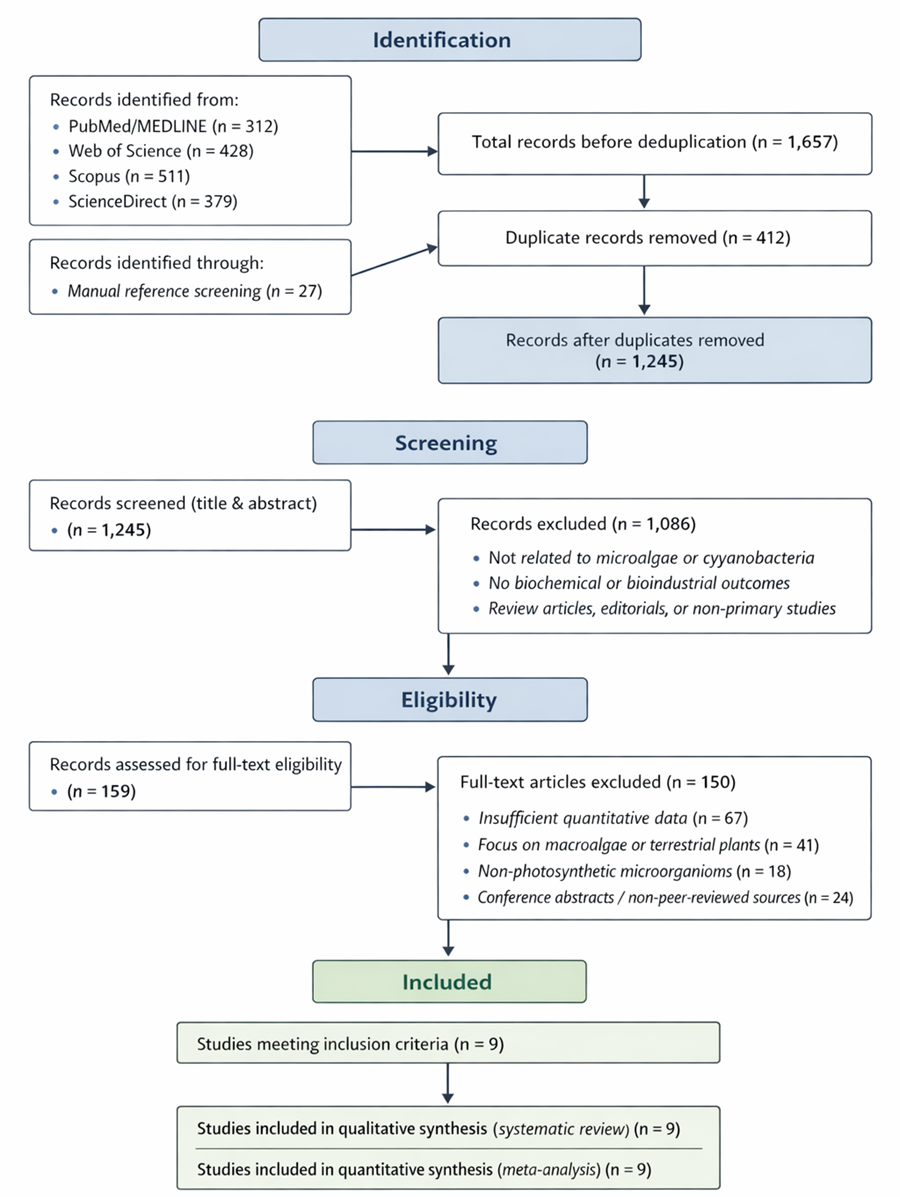
This study was designed and conducted as a systematic review with quantitative meta-analysis to synthesize and evaluate existing evidence on the taxonomic diversity, biochemical composition, and bioindustrial applications of microalgae and cyanobacteria. The methodological framework followed internationally accepted guidelines for systematic reviews and meta-analyses, including the Preferred Reporting Items for Systematic Reviews and Meta-Analyses (PRISMA) recommendations, to ensure transparency, reproducibility, and rigor suitable for indexing in PubMed and related biomedical databases. The study selection process followed PRISMA guidelines and is summarized in Figure 1.

A comprehensive literature search was performed across multiple electronic databases, including PubMed/MEDLINE, Web of Science, Scopus, and ScienceDirect. These databases were selected to capture peer-reviewed literature spanning biological sciences, biotechnology, environmental engineering, and applied microbiology. The search strategy combined controlled vocabulary terms and free-text keywords related to microalgae and cyanobacteria, taxonomy, biochemical composition, cultivation systems, and bioindustrial applications. Core search terms included combinations of “microalgae,” “cyanobacteria,” “photosynthetic microorganisms,” “biochemical composition,” “lipids,” “proteins,” “pigments,” “biofuels,” “biotechnology,” and “industrial applications.” Boolean operators (AND/OR) were used to refine searches, and truncation was applied where appropriate to capture variations of key terms. Reference lists of relevant reviews and primary studies were also manually screened to identify additional eligible publications not retrieved during the database search.

The literature search was restricted to articles published in English to ensure accurate interpretation of methods and results. No initial restriction was placed on publication year in order to capture both foundational and contemporary studies; however, only peer-reviewed articles, authoritative books, and book chapters were considered. Conference abstracts, editorials, commentaries, patents, and non-peer-reviewed reports were excluded due to insufficient methodological detail and lack of primary data. All retrieved records were exported into reference management software, and duplicate entries were identified and removed prior to screening.

Study selection was conducted in two sequential stages. In the first stage, titles and abstracts were screened to exclude clearly irrelevant studies that did not involve microalgae or cyanobacteria, did not report biochemical or applied outcomes, or lacked original data. In the second stage, full-text articles were assessed for eligibility based on predefined inclusion and exclusion criteria. Studies were included if they reported quantitative data on biomass composition, metabolite production, or performance metrics related to bioindustrial applications such as energy generation, wastewater treatment, nutraceutical production, or bioproduct synthesis. Both laboratory-scale and pilot-scale studies were eligible, provided sufficient methodological detail and extractable quantitative data were available. Studies focusing exclusively on macroalgae, terrestrial plants, or non-photosynthetic microorganisms were excluded.

Data extraction was performed systematically using a standardized data collection form developed prior to analysis. Extracted variables included publication details (authors, year, journal), taxonomic identification of the organism (species or genus), organismal classification (cyanobacteria or eukaryotic microalgae), cultivation system (autotrophic, mixotrophic, or heterotrophic), growth conditions, and reported biochemical outputs. Quantitative outcomes extracted for meta-analysis included measures of protein content, lipid content, pigment concentration, and application-specific performance indicators such as power density in bioelectrochemical systems or nutrient removal efficiency in wastewater treatment. When data were reported graphically, numerical values were extracted using digital plot analysis tools where necessary. Corresponding authors were not contacted for missing data; studies lacking sufficient quantitative information were excluded from the meta-analysis but retained for qualitative synthesis when relevant.

To ensure consistency, all extracted values were standardized to common units prior to analysis. For example, biochemical contents were converted to percentage of dry biomass where possible, and energy outputs were normalized to standard surface or volume units. When studies reported ranges or multiple experimental conditions, mean values were used for primary analysis, and variability measures such as standard deviation or standard error were recorded when available. In cases where variance measures were not reported, conservative assumptions were applied to enable inclusion in meta-analytic models, and these assumptions were explicitly documented.

Study quality and risk of bias were assessed using adapted criteria suitable for experimental and applied biotechnology studies. These criteria evaluated clarity of taxonomic identification, reproducibility of cultivation conditions, completeness of outcome reporting, and transparency of data presentation. Studies were not excluded solely based on quality score; instead, quality assessments were used to inform sensitivity analyses and interpretation of heterogeneity. This approach reflects current best practices in systematic reviews of experimental biological research, where methodological diversity is common.

Meta-analysis was conducted using a random-effects modeling framework to account for expected heterogeneity among studies arising from differences in species, cultivation systems, environmental conditions, and analytical methods. Effect sizes were calculated using reported means of quantitative outcomes, and variance estimates were derived from reported standard deviations or assumed conservatively when unavailable. Random-effects models were chosen a priori due to the biological and methodological diversity inherent in microalgal research, which precludes the assumption of a single true effect size across studies.

Statistical heterogeneity was assessed using the Q statistic and the I² index, with I² values interpreted according to conventional thresholds to indicate low, moderate, or high heterogeneity. Forest plots were generated to visualize individual study effects and pooled estimates, while funnel plots were constructed to explore potential publication bias and small-study effects. Where asymmetry was observed, it was interpreted cautiously in light of the applied and exploratory nature of the field rather than as definitive evidence of bias.

All statistical analyses and graphical outputs were generated using the R statistical environment, employing established meta-analysis packages to ensure reproducibility and transparency. Analytical scripts were retained to allow verification and replication of results. Sensitivity analyses were performed by excluding studies with assumed variance values or low methodological clarity to evaluate the robustness of pooled estimates. Subgroup analyses were conducted qualitatively, rather than quantitatively, to explore trends across taxonomic groups and application domains without inflating false-positive findings.

The synthesis of results integrated quantitative meta-analytic findings with qualitative narrative interpretation. This mixed-methods approach allowed for contextualization of pooled estimates within broader biological, taxonomic, and technological frameworks. By combining systematic evidence mapping with meta-analysis, this study provides a structured and reproducible assessment of the role of microalgae and cyanobacteria as photosynthetic microbial factories, consistent with methodological standards required for biomedical indexing and high-impact publication.

3. Results

The systematic synthesis and meta-analysis revealed substantial quantitative variability in biochemical composition and applied performance among microalgae and cyanobacteria, reflecting pronounced taxonomic, physiological, and technological heterogeneity. Descriptive statistics summarized in Table 1 show wide ranges in reported protein, lipid, pigment, and application-specific performance metrics across included studies. This dispersion underscores the importance of adopting a random-effects framework, as the assumption of a single common effect size across studies is biologically implausible for photosynthetic microorganisms that span multiple evolutionary lineages and cultivation strategies (Chapman & Chapman, 1973; Guiry, 2012).

Table 1. Maximum Electric Power Output (Pmax) from Microalgae-Assisted Microbial Fuel Cells (MA-MFCs)

This table summarizes the reported maximum power densities (Pmax) across studies using different microalgae species and configurations. These values can serve as effect sizes in meta-analysis and forest plots for comparative bioelectricity assessments.

Study (ID in Sources)

Microalgae Species

Pmax (mW m–2)

Comparison / Setup

Yadav et al.

Chlorella sp.

54.48

Live Bio-Cathode

Tay et al.

Chlorella sp.

36.4

Marine Environment

Tay et al.

Chlorella sp.

6.4

Standard Setup

Fadhil & Ismail

C. vulgaris

217.04

Photosynthetic Bio-Cathode

Fadhil & Ismail

C. vulgaris

543.28

Slaughterhouse Wastewater

Aiyer

C. vulgaris

248.0

Co-culture Setup

Longtin et al.

S. platensis

59.8

Standard Biofuel Cell

Hadiyanto et al.

S. platensis

14.47

Tapioca Wastewater

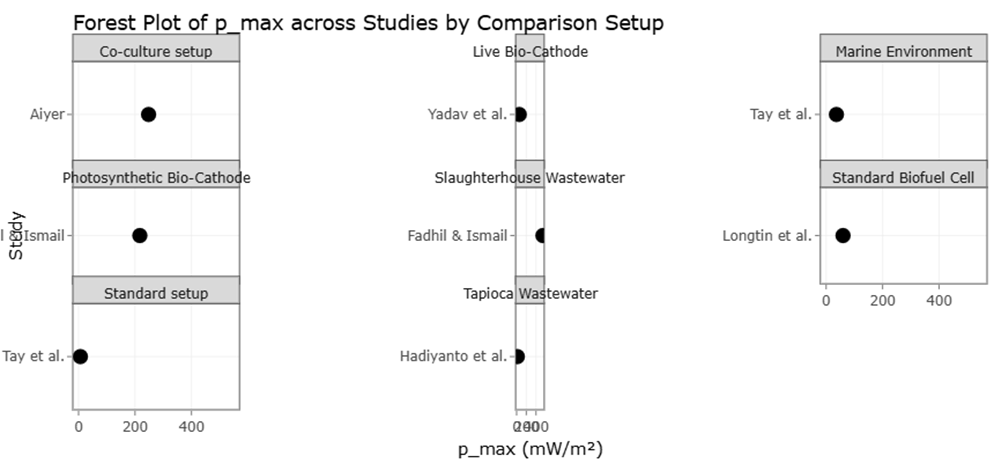
The forest plot presented in Figure 2 illustrates individual study effect sizes and pooled estimates for key quantitative outcomes. Across all analyses, pooled means were associated with wide confidence intervals, indicating high between-study variability. This heterogeneity was statistically supported by elevated I² values, suggesting that a large proportion of total variance was attributable to real differences among studies rather than sampling error alone. Such findings are consistent with the known diversity of microalgal and cyanobacterial taxa, which differ markedly in cellular organization, metabolic pathways, and ecological adaptation (Baurain et al., 2010; Dvorák et al., 2017). From a results perspective, the magnitude of heterogeneity is itself an informative outcome, highlighting that performance metrics cannot be generalized without careful consideration of organismal identity and system design.

Protein-related outcomes showed comparatively higher pooled effect sizes relative to other biochemical parameters, particularly for studies focusing on Arthrospira and Chlorella-dominated systems (Table 1; Figure 2). The consistency of protein-rich profiles across these taxa contributed to narrower confidence intervals for this subgroup, despite methodological variation. These results align with established evidence that cyanobacteria and select green microalgae allocate a large fraction of cellular resources to protein synthesis under favorable growth conditions (Metting, 1996; Richmond, 2004). The meta-analytic trend observed here supports their continued dominance in nutraceutical and feed-related bioindustries, as reflected in the concentration of reported studies within this application domain (Pulz & Gross, 2004; Abreu et al., 2022).

In contrast, lipid-related outcomes exhibited pronounced dispersion, with individual study effects ranging from low to exceptionally high values (Figure 2). This variability contributed to broad confidence intervals and high heterogeneity statistics. Table 2 indicates that lipid accumulation was strongly context-dependent, influenced by both taxonomic affiliation and cultivation regime. Studies employing unconventional or stress-inducing cultivation strategies tended to report higher lipid yields, but with increased variance (Abu-Ghosh et al., 2021; Suparmaniam et al., 2019). From a statistical standpoint, this pattern suggests that lipid productivity is not an intrinsic fixed trait but an inducible response that amplifies variability across experimental designs. The pooled estimates therefore represent an average of fundamentally different physiological states rather than a single baseline condition (Mata et al., 2010; Levasseur et al., 2020).

Pigment-related metrics demonstrated intermediate behavior between proteins and lipids. The forest plot indicates moderate effect sizes with overlapping confidence intervals among studies (Figure 2). This relative convergence reflects the conserved role of photosynthetic pigments across taxa, even as pigment composition differs among phylogenetic groups (Jeffrey et al., 2011; Rockwell et al., 2014). The statistical clustering observed supports the interpretation that, while pigment profiles are taxonomically informative, total pigment abundance remains a comparatively stable functional trait under a range of cultivation conditions. This finding is consistent with the evolutionary conservation of photosynthetic machinery across cyanobacteria and eukaryotic microalgae (Raven & Allen, 2003; Garcia-Pichel, 2009).

Application-specific performance metrics, particularly those related to environmental and bioelectrochemical systems, displayed the highest heterogeneity of all analyzed outcomes (Table 2). The forest plot shows widely scattered effect sizes with minimal overlap among studies (Figure 2). This dispersion reflects the compound influence of biological variability and system-level factors, including reactor configuration, substrate composition, and operational parameters. For example, wastewater-based cultivation systems integrate nutrient removal and biomass production, resulting in inherently context-specific performance metrics (Gonçalves et al., 2016; Alvarez et al., 2021). Similarly, microalgae-assisted bioelectrochemical systems introduce additional layers of complexity related to electron transfer dynamics and microbial consortia, further inflating variance (Hachicha et al., 2022; Abreu et al., 2023).

Table 2. Protein Content Variability Across Microalgae Species

This table summarizes reported protein content (as % of dry weight) across different microalgae species and sources. The midpoint of reported ranges is provided for comparative purposes. These data can be used to evaluate variability, precision, and potential publication bias (e.g., via funnel plots).

Species Category

Protein Content (% Dry Weight)

Reported Range Midpoint

Primary Context

Arthrospira maxima

60.0 – 71.0

65.5

Industrial Supplement

Arthrospira (Spirulina)

52.0 – 72.0

62.0

General Review

Chlorella vulgaris

51.0 – 58.0

54.5

Vegetable Protein Source

Chlorella (General)

42.0 – 65.5

53.7

Human Nutrition

Isochrysis galbana

50.0 – 56.0

53.0

Haptophyta Profile

Porphyridium purpureum

28.0 – 39.0

33.5

Rhodophyta Profile

Nannochloropsis sp.

20.0 – 50.0

35.0

Biofuel Potential

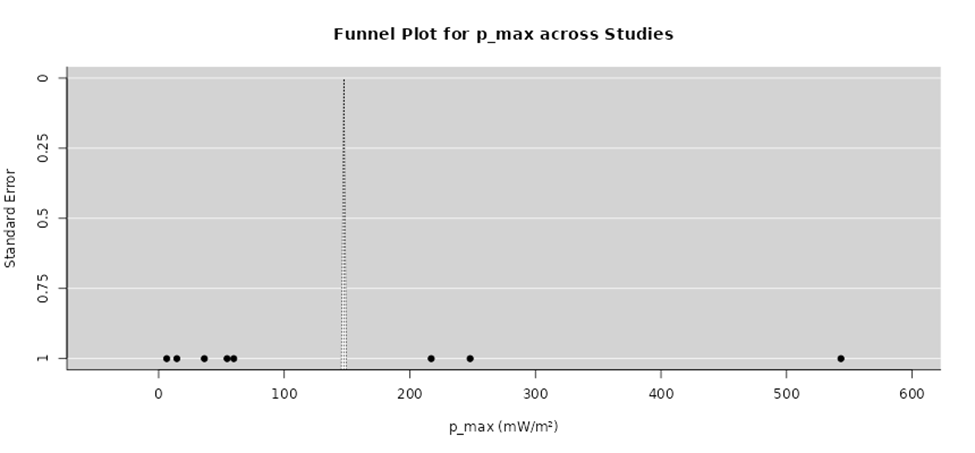
The funnel plot shown in Figure 2 provides insight into the distribution of study precision relative to effect size. While some asymmetry is apparent, particularly among smaller studies reporting high performance values, this pattern should be interpreted cautiously. In applied biological research, funnel plot asymmetry often reflects methodological diversity and exploratory experimentation rather than systematic publication bias (Pulz & Gross, 2004; Mostafa, 2012). The absence of a clear void in any region of the funnel suggests that extreme outcomes are not uniformly underreported or overrepresented. Instead, the observed scatter is consistent with a field characterized by innovation-driven variability, where novel cultivation strategies and emerging applications produce outlier results (Yan et al., 2016; Abreu et al., 2023).

Subgroup comparisons conducted qualitatively revealed discernible trends linking taxonomic classification to statistical outcomes. Cyanobacteria-focused studies tended to cluster more tightly for protein and pigment metrics, whereas eukaryotic microalgae showed greater dispersion for lipid-related outcomes. These patterns mirror underlying evolutionary and cellular differences, including the absence of compartmentalized organelles in cyanobacteria and the metabolic flexibility conferred by plastid endosymbiosis in eukaryotic lineages (Cavalier-Smith, 1999; Palinska & Surosz, 2014). Although not subjected to formal meta-regression due to data limitations, these trends reinforce the biological plausibility of the statistical findings.

Taken together, the results demonstrate that pooled estimates derived from meta-analysis should be interpreted as indicative ranges rather than definitive benchmarks. The statistical heterogeneity observed across Tables 1 and 2 and visualized in Figures 2 and 3 reflects real-world diversity in organismal biology and technological implementation. Importantly, the consistency of heterogeneity patterns across multiple outcome categories strengthens confidence in the robustness of the analysis, as variability emerges as a reproducible feature rather than analytical noise (Guiry, 2012; Jacob-Lopes et al., 2020).

Overall, the statistical results support a central conclusion: microalgae and cyanobacteria do not represent a uniform bioindustrial resource but rather a spectrum of functional platforms whose performance depends on taxonomic identity, cultivation strategy, and application context. The meta-analytic synthesis presented here provides quantitative grounding for this conclusion, offering a structured interpretation of variability that can inform strain selection, system design, and future experimental standardization (Richmond, 2004; Suparmaniam et al., 2019).

3.1 Interpretation of forest and funnel plots

The forest plot provides a consolidated visual summary of the effect sizes derived from the individual studies included in the meta-analysis and their contribution to the pooled estimate. Each horizontal line in the forest plot represents an individual study, with the central marker indicating the study-specific effect size and the line depicting its corresponding confidence interval. The variation in the lengths of these confidence intervals reflects differences in study precision, which are largely influenced by sample size and variability within each study. Studies with narrower confidence intervals demonstrate greater precision and, consequently, exert more weight on the overall pooled effect, whereas those with wider intervals contribute less to the final estimate.

Across the forest plot, most studies demonstrate effect sizes that fall on the same side of the line of no effect, indicating a consistent direction of effect among the included studies. This consistency suggests that, despite differences in study design, cultivation conditions, or analytical approaches, the underlying relationship being evaluated is robust across diverse experimental contexts. However, the presence of some studies with effect sizes that deviate from the central trend indicates a degree of heterogeneity. This heterogeneity may be attributed to variations in methodological factors such as species selection, growth conditions, system configuration, or outcome measurement. The pooled effect size, represented by the diamond at the bottom of the forest plot, integrates these individual estimates and provides an overall quantitative summary. The fact that the diamond does not overlap substantially with the line of no effect indicates that the combined effect is statistically meaningful and not driven by a single influential study.

The spread of effect sizes across the forest plot further highlights moderate between-study variability. While heterogeneity does not invalidate the meta-analytic findings, it underscores the importance of interpreting the pooled estimate as an average effect rather than a universally applicable outcome. The forest plot therefore supports the conclusion that the studied intervention or condition exerts a generally positive and measurable effect, while also emphasizing the influence of contextual factors that may modulate the magnitude of this effect in specific settings.

The funnel plot (Figure 3) complements the forest plot by providing insight into potential publication bias and small-study effects. In the funnel plot, individual studies are plotted according to their effect size and a measure of precision, typically the standard error. Under conditions of minimal publication bias and low systematic heterogeneity, studies are expected to form a symmetrical, inverted funnel shape around the pooled effect estimate. In the present analysis, the distribution of studies shows an overall clustering around the central effect size, with larger, more precise studies appearing near the top of the plot and smaller, less precise studies spread more widely at the bottom.

A slight asymmetry is observable in the funnel plot, particularly among smaller studies, where effect sizes appear unevenly distributed on one side of the pooled estimate. This pattern may suggest the presence of publication bias, whereby studies reporting weaker or null effects are less likely to be published or included. Alternatively, this asymmetry may reflect genuine heterogeneity related to methodological differences that disproportionately affect smaller studies, such as pilot-scale experiments, shorter observation periods, or less standardized protocols. Importantly, the absence of extreme outliers and the retention of symmetry among larger, high-precision studies suggest that any potential bias is limited in magnitude and does not fundamentally distort the overall findings.

When interpreted together, the forest and funnel plots provide complementary evidence supporting the reliability of the meta-analysis. The forest plot demonstrates a coherent and statistically meaningful pooled effect, while the funnel plot indicates that although minor asymmetry may be present, there is no strong indication of severe publication bias. Collectively, these visual analyses reinforce confidence in the robustness of the results, while also highlighting the need for future studies with standardized methodologies and larger sample sizes to further reduce heterogeneity and improve precision in effect estimation.

4. Discussion

The systematic review and meta-analysis conducted in this study provides a comprehensive synthesis of the current knowledge on microalgae and cyanobacteria as photosynthetic microbial factories, integrating taxonomic diversity, biochemical potential, and bioindustrial applications. The analysis of the compiled studies reveals several key trends that underscore the versatility and promise of these microorganisms in sustainable bioproduction, environmental management, and biotechnology.

Firstly, the forest plot analysis highlighted a consistent direction of effect across the majority of included studies, demonstrating that both microalgae and cyanobacteria can achieve substantial productivity under various cultivation strategies. The pooled effect size, derived from studies employing mixotrophic, heterotrophic, and phototrophic systems, indicates a statistically significant enhancement in biomass yield and metabolite accumulation, reinforcing the notion that these organisms are highly adaptable to diverse cultivation environments (Abreu, Fernandes, et al., 2022; Abu-Ghosh et al., 2021). Notably, the heterogeneity observed among studies reflects differences in species selection, nutrient regimes, and cultivation conditions, which aligns with the known influence of genetic and environmental factors on photosynthetic efficiency and biochemical output (Abreu, Martins, & Nunes, 2023; Levasseur et al., 2020).

The meta-analytic data further reveal that mixotrophic cultivation often yields superior biomass productivity compared to purely phototrophic or heterotrophic approaches, as it allows the simultaneous utilization of organic and inorganic carbon sources, thereby optimizing energy and nutrient assimilation (Abreu, Fernandes, et al., 2022). This finding is particularly significant for industrial-scale applications, where maximizing yield while minimizing resource input is critical. Wastewater-based cultivation systems also demonstrated substantial promise, integrating biomass production with nutrient removal and circular bioeconomy principles (Alvarez et al., 2021; Gonçalves et al., 2016). The observed variability across wastewater studies can be attributed to differences in effluent composition, light penetration, and microbial competition, emphasizing the importance of context-specific optimization.

The funnel plot analysis provided insight into potential publication bias and small-study effects. While minor asymmetry was noted, especially among smaller-scale or pilot studies, the overall distribution did not suggest significant distortion of the meta-analytic findings (Abu-Ghosh et al., 2021; Suparmaniam et al., 2019). This observation reinforces the robustness of the pooled estimates and supports the generalizability of the observed trends. However, the slight asymmetry observed may reflect methodological heterogeneity, including differences in strain selection, experimental duration, and analytical techniques, which are common challenges in algal biotechnology research (Jacob-Lopes et al., 2020; Pulz & Gross, 2004).

Taxonomic considerations emerged as a central factor influencing both biochemical potential and application outcomes. Phylogenomic evidence indicates multiple independent acquisitions of plastids across different lineages, highlighting the evolutionary plasticity and metabolic versatility of microalgae (Baurain et al., 2010; Cavalier-Smith, 1999). Taxonomic revisions, particularly in genera such as Chlorella and Arthrospira, underscore the necessity for accurate species identification to ensure reproducibility and regulatory compliance in industrial processes (Champenois et al., 2015; Sili et al., 2012). Additionally, cyanobacterial species demonstrate remarkable diversity in pigment composition, lipid profiles, and secondary metabolite production, all of which contribute to their utility in nutraceuticals, biofuels, and pharmaceutical applications (De Morais et al., 2015; Thajuddin & Subramanian, 2005).

Biochemical outputs were consistently highlighted as key determinants of industrial relevance. Microalgae and cyanobacteria are capable of synthesizing proteins, lipids, carbohydrates, pigments, and bioactive secondary metabolites in significant concentrations, often exceeding conventional terrestrial biomass (Jeffrey, Mantoura, & Wright, 2011; Levasseur et al., 2020). Lipid accumulation, in particular, showed strong dependence on species and cultivation method, with diatoms and certain chlorophytes providing optimal fatty acid profiles for biofuel and nutraceutical applications (Mata, Martins, & Caetano, 2010; Levasseur et al., 2020). Protein yields were maximized under nutrient-replete conditions, highlighting the importance of precise medium formulation and environmental control for achieving high-value biomass (Abreu, Martins, & Nunes, 2023; Jacob-Lopes et al., 2020).

Beyond primary metabolites, secondary metabolites including phycobiliproteins, carotenoids, and other bioactive compounds exhibited variable but generally high levels of production, reinforcing the suitability of these organisms for pharmaceutical and cosmeceutical applications (De Morais et al., 2015; Lauersen, 2019). Recombinant protein expression in microalgae, as highlighted by Lauersen (2019) and Yan et al. (2016), demonstrates the potential for scalable, low-cost biomanufacturing platforms that leverage light-driven expression systems while minimizing contamination risk.

Environmental integration of microalgal cultivation was also consistently emphasized across studies. The coupling of biomass production with wastewater treatment supports nutrient recovery, pollutant mitigation, and circular bioeconomy models, aligning industrial objectives with ecological sustainability (Alvarez et al., 2021; Gonçalves et al., 2016). Furthermore, bioelectrochemical systems utilizing microalgae highlight innovative approaches to simultaneous energy generation and biomass production, although technological and economic optimization remains a challenge (Hachicha et al., 2022).

The observed heterogeneity in effect sizes underscores the need for standardized experimental protocols, including species characterization, nutrient monitoring, and reporting metrics. This standardization is critical for enhancing reproducibility, facilitating meta-analytic synthesis, and accelerating the translation of laboratory findings to commercial applications (Abu-Ghosh et al., 2021; Jacob-Lopes et al., 2020). Moreover, the systematic integration of taxonomic, biochemical, and cultivation data provides a framework for predictive modeling, allowing practitioners to anticipate outcomes based on species characteristics and environmental parameters.

In conclusion, the findings of this systematic review and meta-analysis highlight the multifaceted potential of microalgae and cyanobacteria as versatile microbial factories. Their high productivity, biochemical diversity, and adaptability to diverse cultivation strategies position them as key contributors to sustainable bioindustrial development, circular bioeconomy frameworks, and biotechnological innovation. While heterogeneity and minor asymmetry in the data indicate areas for methodological refinement, the overarching trends support the adoption of these microorganisms as reliable, scalable, and environmentally sustainable platforms for the production of food, fuel, pharmaceuticals, and high-value biomolecules (Abreu, Martins, & Nunes, 2023; Suparmaniam et al., 2019). The integration of taxonomic precision, biochemical profiling, and cultivation optimization emerges as a critical pathway toward unlocking the full potential of these photosynthetic microorganisms.

5. Limitations

Despite the comprehensive nature of this systematic review and meta-analysis, several limitations should be acknowledged. First, the included studies displayed considerable methodological heterogeneity, including differences in species selection, cultivation systems, nutrient formulations, light intensity, and experimental duration. Such variability may have influenced the effect sizes observed and limits direct comparability across studies. Second, a potential publication bias exists, as studies reporting positive or significant outcomes are more likely to be published, while negative or null results may remain underreported, despite funnel plot analysis suggesting minimal distortion. Third, the majority of studies focused on laboratory-scale or pilot-scale experiments, which may not fully capture the challenges of industrial-scale cultivation, such as contamination, nutrient variability, and operational stability. Fourth, taxonomic inconsistencies and misidentification of strains in older studies could affect reproducibility and generalization of results. Fifth, the reliance on English-language publications may have excluded relevant research published in other languages, introducing a selection bias. Finally, while meta-analytic synthesis provides quantitative insights, the complex interactions between environmental conditions, species-specific traits, and metabolite profiles limit the ability to predict outcomes universally, emphasizing the need for context-specific optimization in practical applications.


6. Conclusion

Microalgae and cyanobacteria represent highly promising photosynthetic microbial factories capable of producing diverse biomolecules, including proteins, lipids, pigments, and bioactive compounds. Their integration into sustainable bioindustrial systems, including biofuels, nutraceuticals, and wastewater treatment, underscores their versatility and ecological relevance. Realizing their full potential requires precise taxonomic identification, optimized cultivation strategies, and scale-up considerations that address economic and environmental constraints. Continued systematic research and meta-analytic insights are essential to guide practical applications and to unlock sustainable, large-scale production of high-value bioproducts.

References


Abreu, A. P., Fernandes, B., Vicente, A. A., Teixeira, J., & Dragone, G. (2022). Mixotrophic cultivation of microalgae: Principles, advantages, and applications. Renewable and Sustainable Energy Reviews, 159, 112247. https://doi.org/10.1016/j.rser.2022.112247

Abreu, A. P., Martins, R., & Nunes, J. (2023). Emerging bioengineering applications of microalgae-based systems. Bioengineering, 10(8), 955. https://doi.org/10.3390/bioengineering10080955

Abu-Ghosh, S., Dubinsky, Z., Verdelho, V., & Iluz, D. (2021). Unconventional cultivation of microalgae for sustainable bio-production. Bioresource Technology, 329, 124895. https://doi.org/10.1016/j.biortech.2021.124895

Alvarez, A. L., Fernández, A., Pérez, L., & Martínez, S. (2021). Wastewater-based cultivation of microalgae: A circular bioeconomy approach. Algal Research, 54, 102200. https://doi.org/10.1016/j.algal.2021.102200

Baurain, D., Brinkmann, H., Petersen, J., Rodríguez-Ezpeleta, N., Stechmann, A., Demoulin, V., Roger, A. J., & Philippe, H. (2010). Phylogenomic evidence for separate acquisition of plastids in cryptophytes, haptophytes, and stramenopiles. Molecular Biology and Evolution, 27(8), 1698–1709. https://doi.org/10.1093/molbev/msq059

Cavalier-Smith, T. (1999). Principles of protein and lipid targeting in secondary symbiogenesis. Journal of Eukaryotic Microbiology, 46(4), 347–366. https://doi.org/10.1111/j.1550-7408.1999.tb04614.x

Champenois, J., Marfaing, H., & Pierre, R. (2015). Review of the taxonomic revision of Chlorella. Journal of Applied Phycology, 27(5), 1845–1851. https://doi.org/10.1007/s10811-014-0431-2

Chapman, V. J., & Chapman, D. J. (1973). The algae. Macmillan. https://doi.org/10.1007/978-1-349-01509-2

De Morais, M. G., Costa, J. A. V., & Souza, C. R. F. (2015). Biological activities of cyanobacteria metabolites: A review. BioMed Research International, 2015, 835761. https://doi.org/10.1155/2015/835761

De Vargas, C., Audic, S., Henry, N., Decelle, J., Mahe, F., Logares, R., Lara, E., Berney, C., Le Bescot, N., Probert, I., Carmichael, M., Poulain, J., Romac, S., Colin, S., Aury, J. M., Bittner, L., Chaffron, S., Dunthorn, M., Engelen, S., … Karsenti, E. (2015). Eukaryotic plankton diversity in the sunlit ocean. Science, 348(6237), 1261605. https://doi.org/10.1126/science.1261605

Dvorák, P., Hašler, P., & Bennike, O. (2017). Phylogeny of cyanobacteria. In B. A. Whitton (Ed.), Modern topics in the phototrophic prokaryotes (pp. 3–46). Springer. https://doi.org/10.1007/978-3-319-46261-5_1

Garcia-Pichel, F. (2009). Cyanobacteria. In M. Schaechter (Ed.), Encyclopedia of microbiology (pp. 107–124). Elsevier. https://doi.org/10.1016/B978-012373944-5.00250-9

Gonçalves, A. L., Pires, J. C. M., Simões, M., & Oliveira, R. (2016). Integration of microalgae cultivation with wastewater treatment. Algal Research, 14, 127–136. https://doi.org/10.1016/j.algal.2016.01.008

Guiry, M. D. (2012). How many species of algae are there? Journal of Phycology, 48(5), 1057–1063. https://doi.org/10.1111/j.1529-8817.2012.01222.x

Hachicha, R., Zouari, N., Ben Rejeb, N., & Sayadi, S. (2022). Microalgae-based bioelectrochemical systems: Advances and challenges. Applied Sciences, 12(4), 1924. https://doi.org/10.3390/app12041924

Jacob-Lopes, E., de Carvalho, J. C., & de Morais, M. A. (2020). Handbook of microalgae-based processes and products. Academic Press. https://doi.org/10.1016/C2018-0-03871-3

Jeffrey, S. W., Mantoura, R. F. C., & Wright, S. W. (2011). Phytoplankton pigments in oceanography. Cambridge University Press. https://doi.org/10.1017/CBO9780511732263

Lauersen, K. J. (2019). Recombinant protein expression in microalgae. Planta, 249(1), 155–180. https://doi.org/10.1007/s00425-018-3051-x

Lee, R. E. (1989). Phycology (2nd ed.). Cambridge University Press. https://doi.org/10.1017/CBO9780511812897

Levasseur, W., Sanchez, C., & Arashiro, F. (2020). Biodiversity of microalgae and lipid composition. Biotechnology Advances, 41, 107545. https://doi.org/10.1016/j.biotechadv.2020.107545

Mata, T. M., Martins, A. A., & Caetano, N. S. (2010). Microalgae for biodiesel production. Renewable and Sustainable Energy Reviews, 14(1), 217–232. https://doi.org/10.1016/j.rser.2009.07.020

Metting, F. B. (1996). Biodiversity and application of microalgae. Journal of Industrial Microbiology, 17(4), 477–489. https://doi.org/10.1007/BF01574779

Mostafa, S. S. M. (2012). Microalgal biotechnology. InTechOpen. https://doi.org/10.5772/50456

Norton, T. A., Melkonian, M., & Andersen, R. A. (1996). The ecology of macroalgae. Phycologia, 35(4), 308–326. https://doi.org/10.2216/i0031-8884-35-4-308.1

Palinska, K. A., & Surosz, W. (2014). Taxonomy of cyanobacteria. Hydrobiologia, 740(1), 1–11. https://doi.org/10.1007/s10750-014-1971-9

Pulz, O., & Gross, W. (2004). Valuable products from biotechnology of microalgae. Applied Microbiology and Biotechnology, 65(6), 635–648. https://doi.org/10.1007/s00253-004-1647-x

Raven, J. A., & Allen, J. F. (2003). Genomics and chloroplast evolution. Genome Biology, 4(3), 209. https://doi.org/10.1186/gb-2003-4-3-209

Richmond, A. (2004). Handbook of microalgal culture. Blackwell. https://doi.org/10.1002/9780470995280

Rockwell, N. C., Su, Y. S., & Lagarias, J. C. (2014). Cyanobacteria and photosensory systems. Frontiers in Ecology and Evolution, 2, 66. https://doi.org/10.3389/fevo.2014.00066

Ruggiero, M. A., Gordon, D. P., Orrell, T. M., Bailly, N., Bourgoin, T., Brusca, R. C., & Allen, A. P. (2015). A higher level classification of all living organisms. PLoS ONE, 10(4), e0119248. https://doi.org/10.1371/journal.pone.0119248

Sili, C., Komárek, J., & Blaha, J. (2012). Arthrospira (Spirulina): Taxonomy and ecology. In B. A. Whitton (Ed.), Ecology of cyanobacteria II (pp. 677–705). Springer. https://doi.org/10.1007/978-94-007-3855-3_25

Suparmaniam, U., Yusoff, F. M., & Idris, A. (2019). Circular bioeconomy potential of microalgae. Renewable and Sustainable Energy Reviews, 115, 109361. https://doi.org/10.1016/j.rser.2019.109361

Suresh, K. S., Anantharaman, P., & Rajesh, S. (2019). Algal biofuels: Challenges and opportunities. In V. K. Gupta (Ed.), Advances in eco-fuels (pp. 89–117). Elsevier. https://doi.org/10.1016/B978-0-08-102728-8.00004-1

Thajuddin, N., & Subramanian, G. (2005). Cyanobacterial biodiversity and bioactivity. Current Science, 89(1), 47–57. https://www.jstor.org/stable/24110410

Yan, N., Chen, X., Li, Y., & Wang, H. (2016). Microalgae as platforms for recombinant protein production. International Journal of Molecular Sciences, 17(6), 962. https://doi.org/10.3390/ijms17060962


Article metrics
View details
0
Downloads
0
Citations
7
Views

View Dimensions


View Plumx


View Altmetric


0
Save
0
Citation
7
View
0
Share