Biosensors and Nanotheranostics

Bionanotechnology, Drug Delivery, Therapeutics | online ISSN 3064-7789
175
Citations
132.3k
Views
108
Articles
Your new experience awaits. Try the new design now and help us make it even better
Switch to the new experience
Figures and Tables
REVIEWS   (Open Access)

TROP-2-Targeted Polymeric Nanoconjugates for Image-Guided Chemotherapy of Triple-Negative Breast Cancer

Mansoureh Nazari V. 1*, Maryam Abbasi 2

+ Author Affiliations

Biosensors and Nanotheranostics 4 (1) 1-21 https://doi.org/10.25163/biosensors.4111014

Submitted: 19 October 2025 Revised: 11 December 2025  Published: 20 December 2025 


Abstract

Triple-negative breast cancer remains the breast cancer subtype for which the therapeutic toolkit is thinnest, and for most of the past two decades cytotoxic chemotherapy has carried the burden almost alone. Trophoblast cell surface antigen 2 (TROP-2) changed that calculation. Overexpressed in the large majority of invasive breast carcinomas and particularly dense on triple-negative lesions, TROP-2 is now a clinically validated address, as the approval of sacituzumab govitecan and the advance of datopotamab deruxtecan have shown.. Yet the antibody–drug conjugate format carries its own ceiling: a 150 kDa immunoglobulin penetrates dense stroma poorly, linkers can hydrolyse in circulation, and resistance arrives through topoisomerase mutation, antigen heterogeneity and efflux pumps . This review examines the case for an alternative architecture, in which polymeric nanoconjugates carry the payload, compact ligands such as single-chain variable fragments and affibodies provide the address, microenvironment-responsive linkages decide when the drug is released, and an imaging reporter makes the whole process visible. We assemble evidence across copper coordination platforms, affibody-functionalised carriers, stimuli-gated systems and clinical-stage nanomedicines, and we weigh the comparative potency, selectivity and release kinetics these studies report. The picture that emerges is encouraging in the laboratory and sobering in the clinic: not one actively ligand-directed nanocarrier has yet reached the market, and the reasons are as much about protein corona behaviour, manufacturing reproducibility and immunogenicity as about chemistry. Image-guided design, we argue, is what converts those obstacles into measurable quantities.

Keywords: TROP-2; triple-negative breast cancer; polymeric nanoconjugate; theranostics; stimuli-responsive drug release; affibody; image-guided chemotherapy

1. Introduction

Breast cancer is the most frequently diagnosed malignancy worldwide and remains among the leading causes of cancer-related death in women, a burden projected to grow rather than recede over the coming decades (Arnold et al., 2022; Harbeck et al., 2019; Loibl et al., 2021). Within that burden, the molecular subtypes behave very differently from one another, and triple-negative breast cancer (TNBC) sits at the difficult end of the distribution. Defined by the absence of estrogen receptor (ER), progesterone receptor (PR) and human epidermal growth factor receptor 2 (HER2) expression, TNBC is denied precisely those receptors on which endocrine and HER2-directed therapy depend (Harbeck et al., 2019; Waks & Winer, 2019). The clinical consequence is straightforward: for decades, systemic cytotoxic chemotherapy was effectively the only systemic option (Cortes et al., 2022; Waks & Winer, 2019).

That reliance has well-documented costs. Conventional small-molecule agents such as doxorubicin, paclitaxel and the platinum salts combine narrow therapeutic windows with poor aqueous solubility and rapid systemic clearance, and the toxicities they impose—myelosuppression, cardiotoxicity, peripheral neuropathy—limit the dose long before the tumour is exhausted (Fu et al., 2022; Mitchell et al., 2021). Compounding this, multidrug resistance emerges quickly through ATP-binding cassette efflux transporters, while an immunosuppressive tumour microenvironment (TME) favours early recurrence and distant metastasis (Chen et al., 2021; Samanta et al., 2018). The problem, framed plainly, is one of addressing: the drug is potent enough, but it has no reliable way of distinguishing malignant tissue from healthy tissue.

Contemporary oncology has answered that problem by searching for cell-surface antigens dense enough on tumour cells, and sparse enough elsewhere, to serve as molecular anchors for delivery (Prajapati et al., 2024; Zhao et al., 2020). Trophoblast cell surface antigen 2 (TROP-2), a transmembrane glycoprotein encoded by the TACSTD2 gene, has become the most compelling such anchor in epithelial carcinoma (Goldenberg et al., 2015; Liu et al., 2022; Qiu et al., 2023; Shvartsur & Bonavida, 2014). Under physiological conditions its expression is confined to limited populations of normal epithelial cells, whereas it is markedly overexpressed in more than 80% of human invasive breast carcinomas and reaches particularly high density in TNBC lesions (Goldenberg et al., 2015; Mertens et al., 2024; Qiu et al., 2023). TROP-2 is not a passive marker either. Acting as a calcium signal transducer, it activates PI3K/AKT, MAPK/ERK and NF-κB signalling, and so drives proliferation, migration, invasion and epithelial–mesenchymal transition (Liu et al., 2022; Qiu et al., 2023; Shvartsur & Bonavida, 2014). Meta-analytic evidence across solid tumours links elevated expression to aggressive behaviour, greater metastatic potential and shorter overall survival (Zeng et al., 2016). These relationships are summarised in Figure 1A.

Clinical validation of the target arrived with TROP-2-directed antibody–drug conjugates (ADCs), notably sacituzumab govitecan (SG) and datopotamab deruxtecan (Dato-DXd) (Bardia et al., 2021; Drago et al., 2021; Goldenberg et al., 2015; Okajima et al., 2021). SG couples a humanised anti-TROP-2 monoclonal antibody to the topoisomerase I inhibitor SN-38 through a hydrolysable linker and has delivered meaningful overall survival benefit in pretreated metastatic TNBC (Bardia et al., 2021; Cardillo et al., 2015). The milestone is genuine; so are the format’s limits. A full-length immunoglobulin G weighs roughly 150 kDa, and that mass impedes transvascular transport and deep penetration into stroma-rich tumour masses (Fu et al., 2022; Thomas et al., 2016). ADCs also remain vulnerable to payload-related resistance—topoisomerase I mutation, upregulated ABC efflux transporters, altered endosomal processing—and to off-target toxicity when linkers cleave prematurely in circulation (Drago et al., 2021; Thomas et al., 2016). Figure 1B sets these constraints beside the clinical achievements that justify pursuing the target at all.

Polymeric nanoconjugates and related smart nanomedicine platforms offer a way around several of these barriers at once (Fan et al., 2023; Mitchell et al., 2021; Peer et al., 2007). Built from synthetic or natural biodegradable polymers—poly(lactic-co-glycolic acid) (PLGA), polyethylene glycol (PEG), hyaluronic acid (HA), poly-L-glutamic acid (PGA)—they accommodate high payloads of hydrophobic cytotoxics within stable architectures of roughly 10–200 nm (Bhatia et al., 2022; Lammers, 2024; Lopez-Estevez et al., 2024; Mitchell et al., 2021). Such carriers accumulate passively through the enhanced permeability and retention (EPR) effect, while surface functionalisation with TROP-2-directed ligands—single-chain variable fragments (scFv), peptides or affibodies—supplies active targeting and receptor-mediated endocytosis (Goldenberg et al., 2015; Prajapati et al., 2024; Zhao et al., 2020). Figure 2 illustrates the modular architecture and the two-route delivery cascade that results.

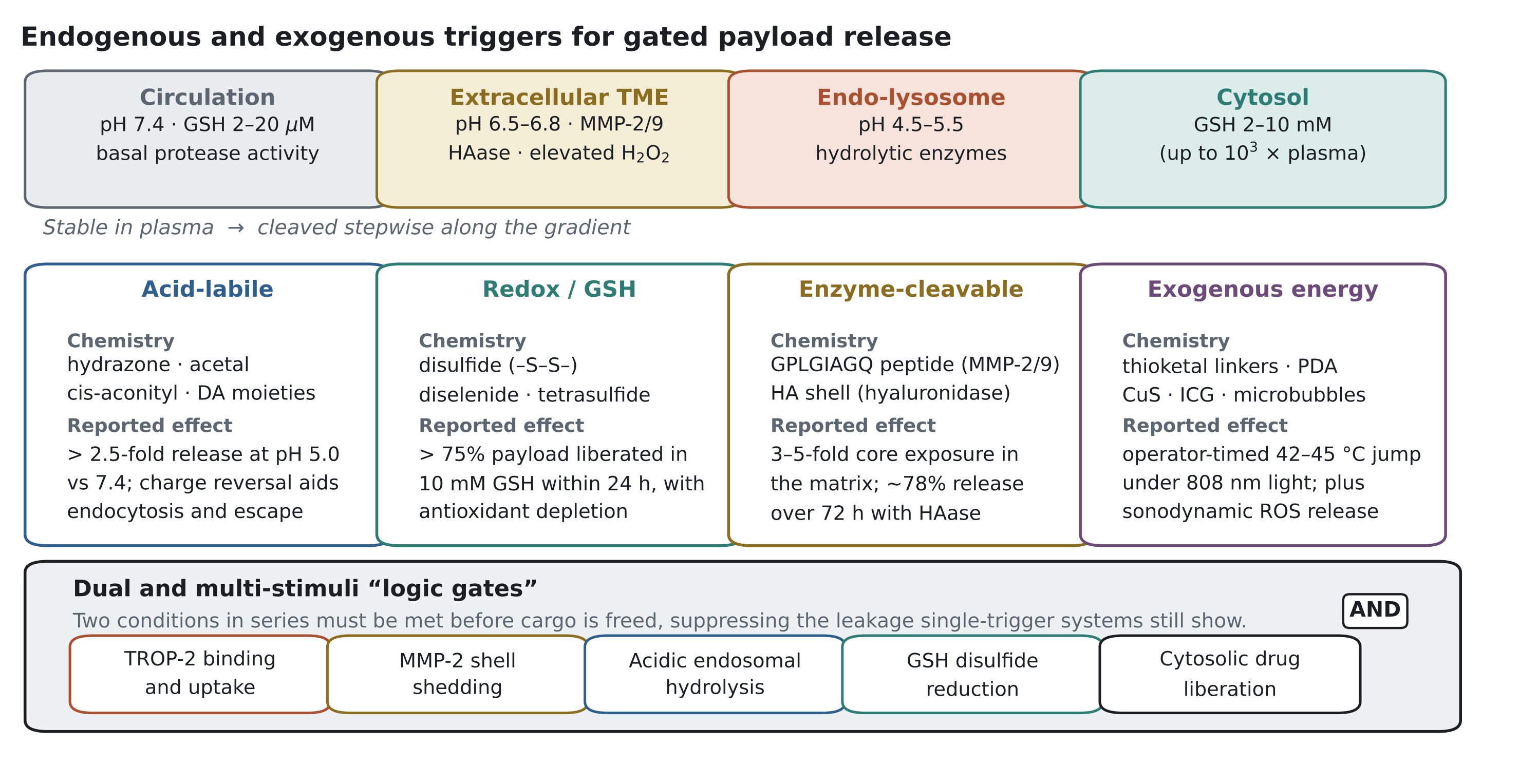
The final element is diagnostic. Co-encapsulating or conjugating near-infrared (NIR) fluorophores, magnetic resonance imaging agents such as iron oxide or gadolinium complexes, or radiotracers converts a delivery vehicle into a theranostic one, capable of reporting its own biodistribution, intratumoural pharmacokinetics and release behaviour in real time (Adir et al., 2020; Qi et al., 2024; Ray et al., 2018). Coupled with stimuli-responsive linkages that answer to acidic TME pH, elevated glutathione (GSH), reactive oxygen species (ROS) or dysregulated matrix metalloproteinases (MMPs), the result is drug liberation confined to the tumour matrix or the lysosomal compartment (Guo et al., 2024; Sharma et al., 2024; Sun et al., 2022; Yang et al., 2016; P. Zhang et al., 2020). Figure 3 maps those triggers onto the chemistry that exploits them. Bringing active targeting, polymeric solubilisation, microenvironment responsiveness and real-time imaging into a single construct is, we contend, the most promising available route to precision therapy in TNBC (Adir et al., 2020; Fan et al., 2023; Lammers, 2024).

This review provides a critical evaluation of TROP-2-targeted polymeric nanoconjugates engineered for image-guided chemotherapy of TNBC. It pursues six aims. First, to set out TROP-2 biology and its clinical relevance, from structure and expression pattern to downstream oncogenic signalling, and thereby establish the rationale for active nanocarrier delivery (Goldenberg et al., 2015; Liu et al., 2022; Qiu et al., 2023). Second, to benchmark polymeric architectures and synthetic strategies, comparing backbones such as PLGA, PEG, HA and PGA across micelles, nanogels and nanoparticles (Bhatia et al., 2022; Mitchell et al., 2021; Peer et al., 2007). Third, to analyse active targeting and surface modification, including the bioconjugation chemistry used to attach scFv fragments, monoclonal antibodies, peptides and affibodies (Goldenberg et al., 2015; Prajapati et al., 2024; Zhao et al., 2020). Fourth, to assess principles and advances in theranostics, where optical, magnetic and radionuclide reporters permit non-invasive tracking of accumulation and response (Adir et al., 2020; Ray et al., 2018). Fifth, to detail stimuli-responsive release in the TNBC microenvironment, covering pH-sensitive, redox-responsive, ROS-cleavable and enzyme-degradable chemistries (Guo et al., 2024; Sharma et al., 2024; Sun et al., 2022; Yang et al., 2016). Sixth, to identify translational bottlenecks—biological barriers, protein corona formation, manufacturing scalability, immunogenicity, regulatory ambiguity—and to propose a roadmap toward patient-tailored precision oncology (Hua et al., 2018; Lopez-Estevez et al., 2024; Zhang et al., 2023). 

2. TROP-2-Targeted Polymeric Nanoconjugates for Image-Guided, Stimuli-Responsive Chemotherapy of Triple-Negative Breast Cancer

2.1. TROP-2 biology, clinical significance, and the limits of conventional ADCs

Triple-negative breast cancer is the most aggressive and most therapeutically refractory subtype of invasive breast carcinoma, defined by the absence of ER, PR and HER2 expression (Harbeck et al., 2019; Waks & Winer, 2019). Because endocrine agents and HER2-directed biologics are ineffective here, anthracyclines, taxanes and platinum derivatives formed the backbone of care for decades (Cortes et al., 2022; Waks & Winer, 2019). Free cytotoxics distribute non-specifically, clear rapidly, operate within narrow therapeutic indices, and impose myelosuppression, cardiotoxicity and peripheral neuropathy on patients who may gain only months from them (Fu et al., 2022; Mitchell et al., 2021). Intrinsic and acquired multidrug resistance, mediated largely by ABC efflux transporters and reinforced by an immunosuppressive microenvironment, drives early recurrence and a high rate of visceral and cerebral metastasis (Chen et al., 2021; Samanta et al., 2018).

Against that background, targeted delivery has concentrated on surface antigens with dense, selective expression on malignant relative to healthy tissue (Prajapati et al., 2024; Zhao et al., 2020). TROP-2, a 46 kDa type-I transmembrane glycoprotein encoded by TACSTD2, meets that criterion unusually well (Goldenberg et al., 2015; Liu et al., 2022; Qiu et al., 2023; Shvartsur & Bonavida, 2014). Physiological expression is restricted to low levels in selected normal epithelia, whereas more than 78% of primary TNBC lesions and metastatic deposits show marked upregulation (Goldenberg et al., 2015; Mertens et al., 2024; Xi et al., 2024). Functionally, the receptor transduces calcium signals into RAF/MEK/ERK, PI3K/AKT and NF-κB activity, supporting proliferation, anti-apoptotic signalling, invasion, angiogenesis and epithelial–mesenchymal transition (Liu et al., 2022; Qiu et al., 2023; Shvartsur & Bonavida, 2014). Clinical meta-analysis ties elevated expression to advanced stage, higher grade, greater metastatic propensity and reduced overall survival across solid tumours (Zeng et al., 2016). Figure 1A summarises this biology together with the expression gradient that makes the target attractive.

Therapeutic validation followed in the form of ADCs, principally SG and Dato-DXd (Bardia et al., 2021; Drago et al., 2021; Okajima et al., 2021). SG pairs the humanised anti-TROP-2 antibody hRS7 with SN-38 through a hydrolysable CL2A linker at a drug-to-antibody ratio of approximately 7.6, and has produced significant progression-free and overall survival advantages in metastatic TNBC (Bardia et al., 2021; Cardillo et al., 2015). Dato-DXd takes a different route to the same target, using a plasma-stable tetrapeptide linker to deliver the topoisomerase I payload DXd at a ratio near 4 (Okajima et al., 2021).

The limits of the format, however, are structural rather than incidental (Fu et al., 2022; Thomas et al., 2016). A full-length antibody’s mass restricts transvascular movement and deep penetration into dense stroma, a constraint that applies regardless of how well the antibody binds (Fu et al., 2022; Xi et al., 2024; Yao et al., 2024). Premature linker cleavage in circulation contributes to severe neutropenia, diarrhoea and interstitial lung disease (Drago et al., 2021; Thomas et al., 2016). Resistance then emerges through TOP1 mutation, downregulation or spatial heterogeneity of surface TROP-2, and P-glycoprotein-mediated efflux (Drago et al., 2021; Xi et al., 2024). Figure 1B places these three failure modes alongside the clinical gains, and together they constitute the design brief that the remainder of this review addresses.

2.2. Polymeric nanoconjugates: architecture, biocompatibility and targeting chemistry

Polymeric nanoconjugates have gained traction precisely because they decouple the targeting function from the carrying function (Bhatia et al., 2022; Lammers, 2024; Mitchell et al., 2021; Peer et al., 2007). Constructed from PLGA, PEG, HA, PGA or chitosan, they shield hydrophobic cytotoxics from degradation, improve solubility and extend plasma half-life, while leaving the surface free for whatever ligand the target demands (Bhatia et al., 2022; Lopez-Estevez et al., 2024; Peer et al., 2007). Figure 2A shows the resulting modular arrangement: a polymer matrix carrying drug and imaging reporter, decorated with targeting moieties.

Carriers in the 10–200 nm range first accumulate passively through the EPR effect, exploiting hyperpermeable tumour microvasculature and defective lymphatic drainage (Lammers, 2024; Peer et al., 2007; Zhao et al., 2020). Passive accumulation alone is rarely sufficient, since vascular permeability varies considerably between patients and elevated interstitial fluid pressure opposes convective transport (Lammers, 2024; Zhang et al., 2023). Surface functionalisation with TROP-2-binding moieties therefore becomes less an enhancement than a requirement (Goldenberg et al., 2015; Prajapati et al., 2024; Zhao et al., 2020), and Figure 2B traces how the passive and active routes converge.

Modern architectures tend to avoid whole monoclonal antibodies in favour of engineered fragments—scFv, Fab fragments, or non-immunoglobulin scaffolds such as affibodies, roughly 7 kDa three-helix bundles derived from Staphylococcus aureus protein A (Li et al., 2024; Prajapati et al., 2024; Yao et al., 2024). Three advantages follow. Compact size permits rapid transvascular transport and deep stromal penetration into poorly vascularised tumour cores (Li et al., 2024; Yao et al., 2024). Multivalent display of scFv or affibody ligands on the nanoparticle surface restores the binding avidity lost with the smaller footprint, and promotes rapid receptor-mediated endocytosis (Prajapati et al., 2024; Yao et al., 2024). Eliminating the Fc domain removes non-specific binding to Fcγ receptors on Kupffer cells and reticuloendothelial macrophages, which reduces hepatic clearance and immunogenicity (Li et al., 2024; Yao et al., 2024). Table 2 catalogues the affibody-functionalised conjugates, fusions and nanocarriers in which these principles have been tested, overwhelmingly against HER2 but with chemistry that transfers directly to TROP-2.

Preclinical work supports the premise. Polymeric nanoparticles functionalised with anti-TROP-2 scFv fragments, including deimmunised scFv-PE24 constructs, achieve target binding with an EC50 near 0.38 µg/mL and trigger rapid receptor-mediated uptake into TROP-2-expressing TNBC cells (Li et al., 2024). Once bound, the conjugates internalise through the endosomal route and deliver payload to intracellular targets while sparing adjacent normal tissue (Li et al., 2024; Zhao et al., 2020). Table 1 extends the architectural picture to copper coordination compounds carried in liposomal, micellar, protein-cage and nanogel vehicles, where the carrier does more than transport: it participates in the killing mechanism.

2.3. Image-guided chemotherapy: theranostics and real-time non-invasive tracking

Integrating diagnosis with therapy in one construct addresses a problem that conventional chemotherapy has largely tolerated rather than solved (Adir et al., 2020; Ray et al., 2018). Without imaging, intratumoural accumulation, off-target biodistribution and release kinetics are inferred

Table 1. Copper coordination compounds and their nanocarrier platforms: composition, tumour models, cytotoxic potency and theranostic mechanism. Liposomal, micellar, protein-cage and nanogel vehicles carrying copper coordination compounds are compared by payload chemistry, target cell line, reported potency (IC50 or residual viability with exposure time) and mechanism of action. Potency values derive from heterogeneous assay formats and exposure windows, so they indicate order of magnitude rather than a strict ranking. Entries illustrate two recurring design principles examined in Sections 2.2 and 3.1: the carrier participates in the killing mechanism rather than merely transporting payload, and several platforms engage cuproptosis, ferroptosis or pyroptosis in place of canonical apoptosis. All citations represent pre-2025 literature.

Platform

Nanocarrier type and composition

Active payload

Target cell lines

Potency (IC50 / viability) and exposure

Mechanism and theranostic highlights

Citation

L-Cu-COTI

Liposomal (DSPC / CHOL / DSPE-mPEG)

[Cu-triapine] complex

SW480, HCT-116 (colorectal)

IC50 = 0.43 µM (SW480, 48 h); 0.09 µM (HCT-116, 48 h)

Sustained intravenous payload release, extended circulation, suppression of ribonucleotide reductase

Mathuber et al. (2021)

Cu-SK@DTC-PPB

Liposomal (DOPA, DOPC, DSPE-PEG)

[Cu(DTC)2] formed in situ + shikonin

4T1 (murine TNBC), NIH/3T3 (fibroblast)

Viability ≈ 5% (4T1) vs ≈ 60% (3T3) at [Cu] = 5 µM, 24 h

ROS-triggered self-amplification loop; in situ chelation generates toxic copper-dithiocarbamate while releasing the ROS generator

Huang et al. (2022)

Lip-(3)

Liposomal (PDCA, DMPC)

Mononuclear Cu(II) phosphinate complex

MCF-7 (breast adenocarcinoma)

IC50 = 40.3 µM (24 h)

Phenanthroline intercalation into DNA; encapsulation lowers off-target cytotoxicity while sustaining ROS generation

Matharoo et al. (2021)

CDAL

Liposomal (DSPE-mPEG2000, DSPC, cholesterol)

Cu-DOX nanodot core

4T1 (TNBC)

IC50 = 25 µg/mL (24 h)

Triple catalytic cascade: GSH depletion, Fenton-like hydroxyl radical generation, immunogenic cell death

Huang et al. (2022)

2(3)@FA-F127

Micellar (folate-conjugated Pluronic F127)

Luminescent Cu(I) complex

A549, MCF-7, M-HeLa, SK-OV-3, Wi-38

IC50 = 1.61–5.56 µg/mL across carcinoma lines (24 h)

Folate receptor-mediated endocytosis; luminescent Cu(I) core enables optical tracking alongside ROS generation

Gandrathi et al. (2021)

CuAs-PMs

Polymeric (PEG-PDOPA block copolymer)

Copper-arsenite core

MCF-7, NIH/3T3, HEK293

Viability ≈ 20% (MCF-7) vs ≈ 100% (normal cells) at 0.5 µg/mL (24 h)

Tumour-triggered Fenton-like radical generation; spares non-malignant renal and fibroblast lines

Li et al. (2021)

TPGS/CS CA

Polymeric micellar (d-α-tocopheryl PEG succinate)

Elesclomol-copper complex

DU145, DU145TXR, PC3, PC3XR, A549, A549TXR

IC50 = 0.093–0.355 µM across taxane-resistant cells (48 h)

Overcomes P-glycoprotein-mediated multidrug resistance; triggers mitochondrial cuproptosis and anti-tumour immunity

G. Wang et al. (2022)

AFt-Cu / AFt-Cu4

Protein nanocage (apoferritin scaffold)

Cu(polypyridine) complexes

Multiple solid tumour vs normal epithelial lines

IC50 = 0.16–6.93 µM in cancer cells (72 h)

6.2-fold higher cancer cell uptake via transferrin receptor-1 binding; activates autophagy-dependent apoptosis

X. Li et al. (2021)

PC@B-H

Protein nanoparticle (bovine serum albumin)

Cu-plumbagin complex

MOC-1 (oral squamous cell carcinoma)

IC50 = 0.38 µg/mL (48 h)

GSH/pH-responsive triple death pathway (cuproptosis, ferroptosis, necroptosis); 92.3% in vivo tumour inhibition

Sun et al. (2024)

Dopa-HA-Cu-CA

Polymeric nanogel (dopamine–hyaluronic acid / citric acid)

Coordination polymer with Cu(II)

B16F10 (murine melanoma)

Viability 78.5% (no laser) vs 25.1% (808 nm laser, 24 h)

Hyaluronidase-degradable shell; d-orbital tuning gives 21.3% photothermal conversion for thermo-chemotherapy

C. Zhang et al. (2018)

Cu-Pic / HA

Polymeric nanogel (hyaluronic acid matrix)

Cu-piceatannol complex

MCF-7, 4T1

IC50 = 12.5–25 µg/mL (8 h)

Rapid intracellular polyamine depletion; synergistic cuproptosis and pyroptosis

Zhou et al. (2024)

Niosome / CasIII-ia

Niosomes (Span 60, Pluronic F127)

Casiopeina III-ia (mixed aminoacidate copper complex)

MDA-MB-231 (TNBC)

Viability ≈ 50% at 35 µM (24 h)

Preserves DNA cleavage activity while shielding host organs from cardiotoxicity and systemic copper exposure

Serment-Guerrero & Ruiz-Azuara (2022)

Table 2. Affibody-functionalised nanocarriers, drug conjugates and fusion constructs for receptor-targeted cancer therapy and radiotheranostics. Engineered Z-domain affibody scaffolds of approximately 7 kDa are deployed as direct receptor antagonists, drug and toxin conjugates, radiotheranostic agents and nanoparticle targeting moieties. For each platform the table records the receptor addressed, the effector payload, the conjugation chemistry used to attach it, and the principal preclinical or clinical outcome. Most entries address HER2 rather than TROP-2, so the biological targets are not interchangeable; the engineering principles of compact ligand design, site-specific conjugation and multivalent display transfer directly, as argued in Sections 2.2 and 3.2. All citations represent pre-2025 literature.

Platform class

Target receptor

Therapeutic cargo or effector

Engineering and conjugation strategy

Key preclinical outcome

Citation

Direct receptor antagonist

HER3 (ERBB3)

Z(HER3) affibody domain

Directed evolution via phage display (picomolar affinity)

Inhibits ligand-induced HER3 phosphorylation and downstream AKT/ERK signalling

Malm et al. (2016)

Affibody–drug conjugate

HER2 (ERBB2)

Maytansinoid DM1

Thiol-directed maleimide linkage to C-terminal cysteine

Tumour regression in HER2-overexpressing xenografts with rapid renal clearance

Altai et al. (2017, 2020)

AffiDC (MMAE)

HER2

Monomethyl auristatin E

Site-specific C-terminal cysteine conjugation via valine-citrulline linker

Picomolar receptor-specific cytotoxicity; low non-specific uptake in HER2-negative tissue

Xu et al. (2019)

Self-assembled AffiDC

HER2

Epothilone B

Covalent conjugation inducing nano-assembly

Self-assembles into nano-agents; enhances intratumoural accumulation and microtubule stabilisation

Ding et al. (2021)

Affitoxin fusion

HER2

Pseudomonas exotoxin A (PE38 / PE38KDEL)

Recombinant genetic fusion (Z(HER2:342)-PE38)

Selective intracellular delivery of ADP-ribosylating toxin; complete regression of HER2+ tumours

Zielinski et al. (2009)

Deimmunised affitoxin

HER2

PE38X8 (B-cell epitope-silenced toxin)

Genetic fusion with deimmunised domain

Reduced immunogenicity and hepatotoxicity with retained protein synthesis inhibition

Altai et al. (2016)

Affibody–radionuclide (SPECT/PET)

HER2 / HER3

111In, 99mTc, 177Lu, 68Ga

Isothiocyanate-benzyl DTPA, DOTA or C-terminal thioether coupling

Clinically validated high-contrast whole-body imaging and targeted radioligand therapy

Orlova et al. (2013); Tolmachev et al. (2007)

Affisome (thermosensitive liposome)

HER2

Doxorubicin

Z(HER2:342)-GS-Cys conjugated to liposomal lipid shell

Hyperthermia-triggered release; mild local heating to 42 °C accelerates liberation into tumour cores

Klouda et al. (2020)

Polymeric nanoparticle

HER2

Cisplatin

Dimeric Z(HER2) affibody decorating a polymeric core

Enhanced avidity and internalisation; increased chemo-radiotherapy efficacy in HER2+ models

H. Wang et al. (2021)

Polymeric nanoparticle (PTX)

HER2

Paclitaxel

Covalent bioconjugation of Z(HER2:342) onto PLGA surface

Greater cellular uptake and apoptosis than non-targeted nanoparticles

Gao et al. (2020)

Metallic gold nanoparticle

HER2

Radiosensitisation / DOX / 5-FUdR

Affibody monolayer on spherical gold nanoparticles

Receptor-targeted X-ray radiosensitisation, photothermal therapy and dual-drug delivery

Pourshohod et al. (2019); C. Zhang et al. (2020)

DNA nanostructure

HER2

Cisplatin / DOX / 5-FUdR

Affibody conjugated to self-assembled DNA tetrahedra

Structural stability and precise ligand orientation; selective uptake in HER2+ BT-474 vs HER2-low MCF-7

C. Zhang et al. (2019, 2020)

Biomimetic cell-membrane nanoparticle

HER2 / EGFR

Doxorubicin / gene vectors

Display on macrophage membranes or bacterial outer membrane vesicles

Combines immune evasion and macrophage tumour-homing with affibody-directed binding

Ning et al. (2024)

from invasive biopsy or from retrospective clinical response (Adir et al., 2020; Qi et al., 2024). Theranostic polymeric nanoconjugates instead carry reporters within the matrix—NIR fluorophores such as Cy5.5, indocyanine green or IR783, MRI contrast agents such as superparamagnetic iron oxide nanoparticles or gadolinium chelates, or radiotracers (Adir et al., 2020; Ray et al., 2018). Table 2 includes the radiolabelled affibody constructs that have already demonstrated high-contrast whole-body PET and SPECT imaging in the clinic (Orlova et al., 2013; Tolmachev et al., 2007).

Non-invasive imaging supports three distinct clinical functions, shown in the readout stage of Figure 2B. Before treatment, it confirms TROP-2 receptor density and favourable vascular permeability in an individual tumour, enabling stratification rather than empirical dosing (Adir et al., 2020; Lammers, 2024). During treatment, it quantifies whole-body biodistribution, circulation persistence and the temporal kinetics of intratumoural accumulation (Adir et al., 2020; Ray et al., 2018). At the moment of action, Förster resonance energy transfer (FRET) pairs or turn-on fluorescent switches emit signal only once a linker has actually cleaved and payload has been liberated, which is a stricter test than accumulation alone (Flores-Cruz et al., 2024; J. Li et al., 2021).

Specific systems illustrate how far this has progressed. pH-responsive conjugated polymer nanoparticles assembled through metal coordination, such as PPEIDA-Cu-DOX constructs, achieve drug loading above 54% while reporting doxorubicin release continuously through FRET signal change (Flores-Cruz et al., 2024; J. Li et al., 2021). Folic acid- and hyaluronic acid-decorated polymer quantum dots provide ratiometric optical tracking, with roughly six-fold fluorescence amplification on intracellular reduction in acidic, GSH-rich environments (Flores-Cruz et al., 2024). Embedding such reporters in TROP-2-targeted vectors converts empirical administration into a quantifiable, patient-specific strategy (Adir et al., 2020; Lammers, 2024).

2.4. Microenvironment-triggered payload release

Non-specific leakage during circulation is the recurring failure of classical carriers: it causes off-target toxicity and reduces the net dose arriving at the tumour (Fu et al., 2022; Mitchell et al., 2021). Smart stimuli-responsive linkers address this by remaining stable at pH 7.4, low GSH and basal enzyme activity, then degrading rapidly on exposure to tumour-specific cues or applied physical stimuli (Guo et al., 2018; Sharma et al., 2024; Sun et al., 2022; P. Zhang et al., 2020). Table 3 summarises representative smart nanocarriers and their triggering logic, and Figure 3 maps the physiological gradient these chemistries exploit.

2.4.1. Endogenous microenvironment stimuli

pH-responsive systems exploit the mildly acidic extracellular environment of solid TNBC (pH 6.5–6.8), a consequence of Warburg lactic acid accumulation, and the considerably lower endo-lysosomal pH of 4.5–5.5 (Deng et al., 2020; P. Zhang et al., 2020). Acid-labile hydrazone, acetal or imine linkages survive blood pH yet hydrolyse rapidly after lysosomal entry, releasing cytotoxics into the cytoplasm (Deng et al., 2020; J. Li et al., 2021). Charge-reversal polymers bearing acid-cleavable dimethylmaleic anhydride moieties take the principle further, holding a negative surface charge in circulation to limit opsonisation and inverting to positive in acidic tumour tissue, which enhances cell binding and endocytosis (Deng et al., 2020; P. Zhang et al., 2020).

Redox-responsive systems exploit a steeper gradient still. Intracellular GSH in tumour cells reaches 2–10 mM, up to a thousand-fold above plasma levels of 2–20 µM (Guo et al., 2018; Wang et al., 2020). Disulfide and diselenide linkages are therefore cleaved selectively inside TNBC cells, liberating payload into the cytosol (Guo et al., 2018; Wang et al., 2020). Copper-polydopamine and iron-based redox-responsive carriers go further and consume GSH during release, disarming antioxidant defence and sensitising cells to ROS-mediated apoptosis, cuproptosis and ferroptosis (Flores-Cruz et al., 2024; Ma et al., 2024).

Enzyme-responsive systems answer to the dysregulated proteolytic activity of the TNBC microenvironment, particularly MMP-2, MMP-9 and hyaluronidase (Guo et al., 2024; Sharma et al., 2024). Amphiphilic conjugates with a hyaluronic acid outer shell remain stable in circulation until hyaluronidase in the tumour matrix cleaves the shell, releasing solubilised paclitaxel and ursolic acid and inducing synergistic mitochondrial apoptosis (Sharma et al., 2024). MMP-2-cleavable peptide linkers such as GPLGIAGQ allow selective shedding of protective PEG coatings within the matrix, exposing the underlying targeting ligands—triphenylphosphonium, or a TROP-2 affibody—at the moment they are needed (Guo et al., 2024; Ma et al., 2018).

Figure 1. TROP-2 biology in triple-negative breast cancer and the intrinsic ceiling of full-length antibody–drug conjugates. Panel A traces the receptor from structure to prognosis: a 46 kDa type-I transmembrane glycoprotein encoded by TACSTD2 transduces calcium signals into RAF/MEK/ERK, PI3K/AKT and NF-κB activity, driving proliferation, invasion and epithelial–mesenchymal transition, and the horizontal bars show the expression gradient from restricted normal epithelium to more than 80% of invasive breast carcinomas and the high receptor density characteristic of TNBC lesions (Goldenberg et al., 2015; Liu et al., 2022; Mertens et al., 2024; Qiu et al., 2023; Shvartsur & Bonavida, 2014; Zeng et al., 2016). Panel B places the two clinically validated TROP-2 ADCs, with their linker chemistry and drug-to-antibody ratios, above the three constraints that cap their performance — mass-limited stromal penetration, premature linker cleavage in circulation, and resistance through TOP1 mutation, antigen heterogeneity and efflux (Bardia et al., 2021; Cardillo et al., 2015; Drago et al., 2021; Fu et al., 2022; Okajima et al., 2021; Thomas et al., 2016; Xi et al., 2024). Together the panels constitute the design brief for the polymeric formats examined in this review.


Figure 2. Modular architecture of a TROP-2-targeted theranostic polymeric nanoconjugate and its two-route tumour delivery cascade. Panel A shows the four interchangeable modules of the construct: a biodegradable matrix of PEG-PLGA, hyaluronic acid or poly-L-glutamic acid; a core carrying both cytotoxic payload and imaging reporter; a hydrodynamic diameter of 10–200 nm; and a surface displaying compact anti-TROP-2 ligands, either single-chain variable fragments of roughly 25 kDa or affibodies of roughly 7 kDa (Bhatia et al., 2022; Li et al., 2024; Mitchell et al., 2021; Prajapati et al., 2024; Yao et al., 2024). Panel B follows the construct from intravenous administration through two convergent routes — passive extravasation via the enhanced permeability and retention effect, which varies substantially between patients, and high-avidity receptor engagement with clathrin-mediated endocytosis — into microenvironment-gated payload release and an imaging readout supporting stratification, pharmacokinetic monitoring and cleavage reporting (Adir et al., 2020; Lammers, 2024; Peer et al., 2007; Ray et al., 2018; Zhao et al., 2020). The annotations at lower left state why neither route suffices alone.

2.4.2. Dual and multi-stimuli logic-gated systems

Single-trigger systems still leak, which is why design has moved toward multi-stimuli architectures (Chen et al., 2024; Sun et al., 2022; Zou et al., 2024). These logic-gated platforms require two sequential conditions—acidic pH followed by high GSH, or MMP-2 cleavage followed by NIR irradiation—before cargo is released (Chen et al., 2024; Sharma et al., 2024; Zou et al., 2024). The bottom panel of Figure 3 sets out one such sequence. Coupling TROP-2-mediated endocytosis to dual TME-triggered release concentrates drug inside malignant cells while all but eliminating systemic exposure (Prajapati et al., 2024; Sharma et al., 2024; Zhao et al., 2020), and Table 3 records the dual- and multi-responsive constructs in which this has been demonstrated.

2.5. Translational bottlenecks and future perspectives

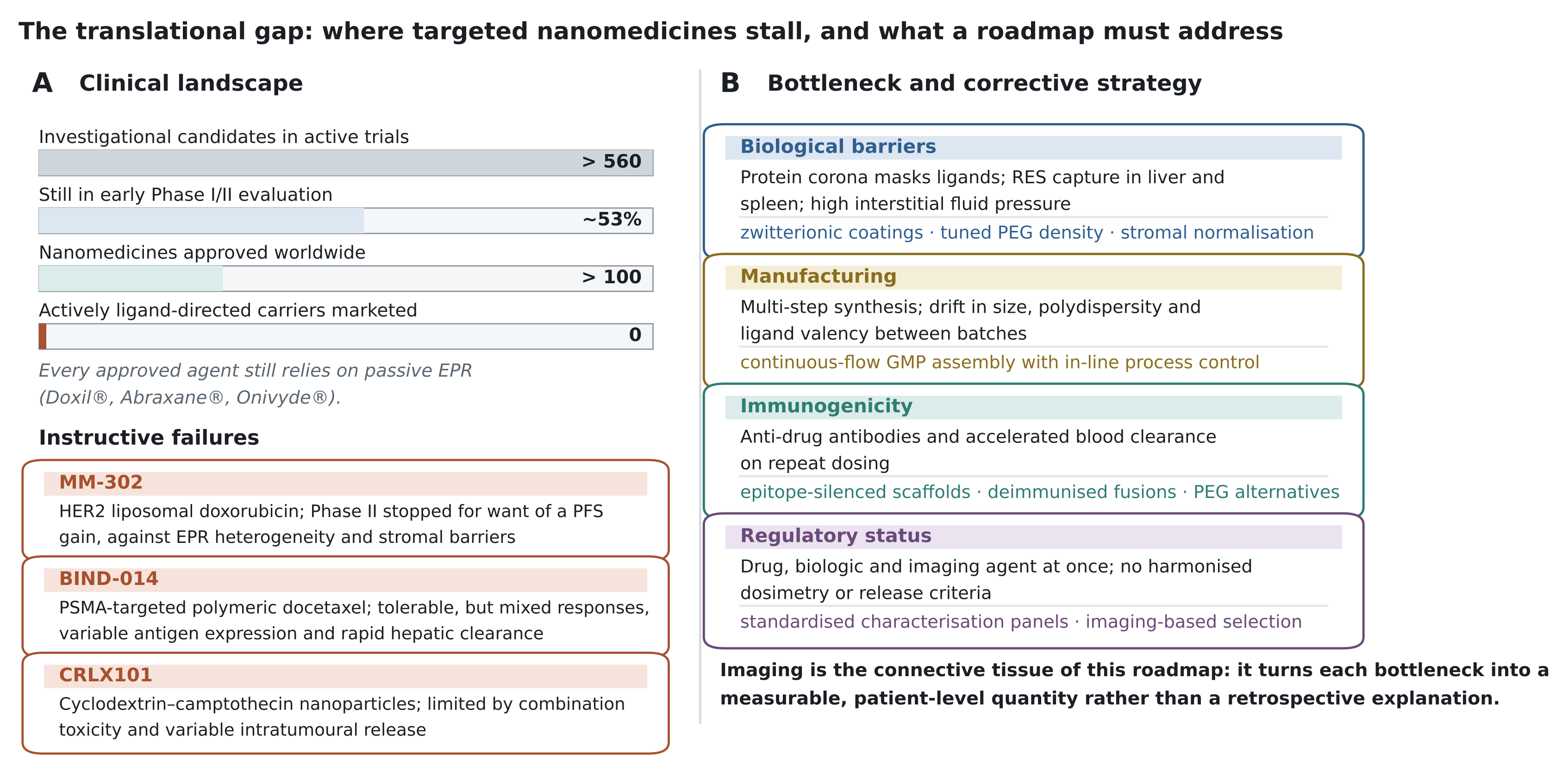
Preclinical success has not transferred cleanly to the clinic, and the obstacles are biological, technical and regulatory in roughly equal measure (de Lázaro & Mooney, 2021; Hua et al., 2018; Zhang et al., 2023). Table 4 provides the clinical context, listing nanomedicines evaluated in Phase I–III oncology trials, and Figure 4 organises the bottlenecks alongside the corrective strategies each one implies.

Biological barriers begin within seconds of injection. Plasma proteins adsorb onto the carrier to form a biomolecular corona, and opsonins such as immunoglobulins and complement factors overwrite the engineered surface identity, potentially masking TROP-2 ligands, accelerating recognition by hepatic and splenic macrophages, and reducing net tumour accumulation (Lopez-Estevez et al., 2024; Monopoli et al., 2020; Zhang et al., 2023). Zwitterionic coatings and carefully optimised PEGylation density are the principal countermeasures available (Lopez-Estevez et al., 2024; Zhang et al., 2023).

Manufacturing is a second, less discussed constraint. A construct carrying targeting ligand, imaging reporter, responsive linker and cytotoxic payload demands a multi-step synthesis, and moving that chemistry from bench scale to Good Manufacturing Practice introduces real difficulty in controlling hydrodynamic size, polydispersity, ligand conjugation density and batch-to-batch reproducibility (Hua et al., 2018; Zhang et al., 2023).

Immunogenicity persists even with engineered scaffolds. Although scFv and affibody constructs are less immunogenic than foreign full-length proteins, repeated dosing can still induce anti-drug antibodies or accelerated blood clearance, which argues for systematic deimmunisation through B-cell and T-cell epitope silencing (Hua et al., 2018; Li et al., 2024; Yao et al., 2024). Finally, regulatory classification remains unsettled: a theranostic nanocarrier functions simultaneously as drug, biological targeting agent and imaging device, and standardised characterisation protocols, harmonised toxicity metrics and validated selection biomarkers will be needed before such products can move efficiently through review (de Lázaro & Mooney, 2021; Lammers, 2024; Zhang et al., 2023). ## 3. Synthesis of Findings: Comparative Performance Across Targeted Theranostic Nanomedicine Platforms

Read together, the preclinical and clinical literature points in four directions at once: macromolecular engineering, active receptor targeting, theranostic imaging, and microenvironment-triggered liberation. None of these developed in isolation, and the most informative studies are usually those in which two or three were combined. What follows compares the platforms on the terms their own authors chose—half-maximal inhibitory concentrations, tumour growth inhibition, uptake fold-change, trial status—while noting where those terms are not strictly comparable.

3. Comparative Performance of Copper Coordination, Affibody-Targeted and Stimuli-Responsive Nanocarriers for Targeted Cancer Therapy

3.1. Potency and selectivity of polymer- and lipid-based copper coordination platforms

Copper coordination compounds (CCCs) are potent against refractory solid tumours, and markedly more so once they are placed inside a polymeric or lipid carrier (Flores-Cruz et al., 2024). Free copper ionophores and planar complexes tend to be poorly soluble and quickly cleared; encapsulation improves both the therapeutic index and intracellular delivery, though by how much varies considerably with the carrier (Eskandari et al., 2016; Passeri et al., 2022).

Across the platforms collected in Table 1, encapsulation within PEG-PLGA, chitosan or liposomal vectors yields nanomolar-to-micromolar potency against treatment-resistant cells and cancer stem cell populations (Eskandari et al., 2016; Mathuber et al., 2021; Passeri et al., 2022). The liposomal formulation L-Cu-COTI reached an IC50 of 0.09 µM in HCT-116 colorectal carcinoma at 48 hours, with extended circulation and sustained release relative to free triapine derivatives (Mathuber et al., 2021; Table 1). PEG-PLGA nanoparticles carrying copper(II)-phenanthroline complexes performed still better in breast cancer stem cells, with an IC50 of 0.02–0.03 µM—roughly a sixteen-fold improvement over the free complex—alongside endoplasmic reticulum stress and immunogenic cell death (Passeri et al., 2022). It is worth being careful here: a sixteen-fold gain measured in one stem cell model is not a general claim about carriers, and the comparison holds only against the matched free complex.

Selectivity, rather than raw potency, may be the more consequential finding. The Cu-SK@DTC-PPB liposomal system generates a toxic copper-dithiocarbamate complex in situ on encountering intratumoural ROS, reducing 4T1 TNBC viability to approximately 5% while leaving non-malignant NIH/3T3 fibroblasts at roughly 60% viability at equivalent dose (Huang et al., 2022; Table 1). That separation is the whole point of a self-amplifying cascade, and it is difficult to achieve with a conventional cytotoxic. Mechanistically, nanoformulated copper platforms bypass apoptotic resistance by engaging orthogonal death pathways—cuproptosis through aggregation of lipoylated mitochondrial proteins, ferroptosis through GSH depletion, gasdermin-mediated pyroptosis (Flores-Cruz et al., 2024; Sun et al., 2024; Zhou et al., 2024). BSA-based copper-plumbagin nanoparticles activate cuproptosis, ferroptosis and necroptosis concurrently and achieve 92.3% tumour growth inhibition in oral squamous cell carcinoma (Sun et al., 2024; Table 1). Whether that figure transfers to orthotopic TNBC is, as yet, untested.

3.2. Delivery efficiency and the biophysical trade-offs of affibody-functionalised carriers

Affibody scaffolds, roughly 7 kDa and derived from the Z-domain of S. aureus protein A, were developed as an alternative to monoclonal antibodies of around 150 kDa, and the comparison plays out largely as predicted (Altai et al., 2017; Yao et al., 2024). They bind with picomolar affinity, tolerate heat, and—because of their dimensions—extravasate rapidly and diffuse deep into stroma-dense tumours (Altai et al., 2016, 2017; Yao et al., 2024). Figure 1B and Figure 2A together make the geometric argument that underlies this difference.

Quantitatively, functionalising nanocarriers with anti-HER2 or anti-EGFR affibodies increases binding avidity, endosomal uptake and therapeutic efficacy relative to non-targeted controls (Gao et al., 2020; Klouda et al., 2020; Wang et al., 2021; Table 2). Dimeric Z-HER2 affibody-decorated polymeric nanoparticles loaded with cisplatin improved chemo-radiotherapy sensitisation in HER2-overexpressing tumours without a matching increase in systemic toxicity (Wang et al., 2021). Self-assembled affibody–drug conjugates, such as Z-HER2–monomethyl auristatin E constructs, show receptor-specific cytotoxicity in the picomolar range while clearing renally fast enough to limit long-term exposure (Altai et al., 2020; Xu et al., 2019; Table 2).

Conjugation to metallic or lipid vehicles adds imaging and physical modalities (Pourshohod et al., 2019; Yao et al., 2024; C. Zhang et al., 2020). Affibody-coated gold nanoparticles delivering 5-fluorodeoxyuridine and doxorubicin produced synergistic cytotoxicity in HER2-positive breast cancer cells together with X-ray radiosensitisation and NIR photothermal ablation (Pourshohod et al., 2019; C. Zhang et al., 2020; Table 2). The trade-off is pharmacokinetic rather than pharmacodynamic. Monomeric affibodies are filtered glomerularly within hours, so half-life extension—fusion to albumin-binding domains, or display on a long-circulating polymeric shell—is required if intratumoural area under the curve is to reach useful values (Altai et al., 2016; Orlova et al., 2013; Yao et al., 2024). Compact ligands buy penetration and pay for it in residence time; the nanoparticle is, in part, a device for paying that debt back.

3.3. Activation kinetics and on-demand release in microenvironment-responsive systems

Smart carriers exercise what is best described as logic-gated control over release kinetics, suppressing premature leakage while concentrating drug locally (Deng et al., 2020; Sun et al., 2022; P. Zhang et al., 2020). The triggers themselves are endogenous and well characterised: extracellular acidosis at pH 6.5–6.8, endo-lysosomal acidity at pH 4.5–5.5, cytosolic GSH at 2–10 mM, overexpressed MMP-2/9, and elevated hydrogen peroxide (Guo et al., 2024; Sharma et al., 2024; Sun et al., 2022; Figure 3).

Reported activation kinetics are collected in Table 3 and summarised in the chemistry panels of Figure 3. Acid-labile systems show greater than 2.5-fold increases in release at pH 5.0 relative to pH 7.4, with charge reversal

Table 3. Microenvironment-responsive and biomimetic nanoconjugates: triggering logic, targeting vector, payload and preclinical outcome. Smart nanocarriers are grouped by the stimulus that governs cargo release, whether endogenous (acidic pH, elevated glutathione, dysregulated proteases, reactive oxygen species) or exogenous (near-infrared light, ultrasound). Each row pairs the triggering chemistry with the targeting vector and cellular pathway exploited, the encapsulated payload and effector action, and the model system in which the construct was evaluated. Entries in which two conditions must be satisfied in series illustrate the logic-gated designs discussed in Sections 2.4.2 and 3.3, where added specificity is obtained at the cost of added fragility. All citations represent pre-2025 literature.

Nanoplatform and composition

Stimulus and triggering mechanism

Targeting vector and pathway

Payload and effector action

Preclinical model and outcome

Citation

α-CD-DOX-NO-DA nanoparticles

Dual pH/GSH (acid-cleavable DA moiety + hydrazone/disulfide linkers)

Acid-exposed MPP peptide ((KLAKLAK)2CGKRK) for mitochondrial targeting

Doxorubicin + nitric oxide donor

Cleaves DA coating at pH 6.5; NO suppresses P-gp ATP pumps, reversing MDR in 4T1 and MCF-7/DOX tumours

Deng et al. (2020)

CS/TPP-PEG-ss-PLA micelles

Endogenous pH / redox (disulfide cleavage at 2–10 mM GSH)

Chitosan (CD44 binding) + triphenylphosphonium organelle targeting

Doxorubicin

Stepwise targeting: CD44-mediated endocytosis, endosomal escape, rapid GSH-triggered cytosolic release

P. Zhang et al. (2020)

Glucose-PEG-MMP2-TPP-PAMAM

Enzymatic (MMP-2 cleavage) + intracellular redox

Glucose-PEG (GLUT1 transporter) + TPP mitochondrial ligand

Paclitaxel prodrug

MMP-2 cleaves the PEG layer, exposing TPP for mitochondrial uptake; GSH then cleaves the disulfide to release PTX

Ma et al. (2018)

CMFn@OXA ferritin nanoparticles

Dual MMP-2/9 cleavage + acidic endo-lysosomal pH (4.5–5.5)

Human heavy-chain ferritin + CLP002 anti-PD-L1 peptide

Oxaliplatin + CLP002 peptide

MMP-2/9 releases CLP002 for PD-L1 blockade; acidic pH disassembles the core to release oxaliplatin

Liu et al. (2021)

TF@CNM polymeric micelles

Dual pH / ROS (acid-labile acetal + thioketal linkers)

Folic acid (folate receptor α) + TPP organelle targeting

Cinnamaldehyde + doxorubicin

Acidic pH releases cinnamaldehyde to permeabilise mitochondria and generate ROS; ROS then cleaves thioketal to liberate DOX

Mukerabigwi et al. (2021)

HTCF supramolecular assemblies

High ROS + CD44-directed enzymatic targeting

Hyaluronic acid (CD44) + TPP ligand

Ferrocene Fenton organocatalyst + cinnamaldehyde

Intracellular Fenton reaction converts H2O2 to hydroxyl radical; ROS cleaves thioketal for self-amplified damage

Zeng et al. (2021)

AMNP@CLP@CCM

Exogenous NIR-II light (808 nm) + biomimetic membrane homing

Cancer cell membrane coating for blood–brain barrier transit

CLP002 (PD-L1 inhibitor) + allomelanin core

Homotypic targeting crosses the barrier; NIR-II ablation upregulates PD-L1 and triggers T-cell infiltration

T. Wang et al. (2022)

CS-J-CM/6NP nanoparticles

Tumour cell membrane camouflage + Fenton ROS activation

Ultra-small membrane-coated core targeting CD6 / ALCAM

Paroxetine (GRK2 inhibitor)

Oral administration frees sequestered bone marrow T-cells and blocks PD-1, PD-L1 and TIM-3 in glioblastoma

T. Wang et al. (2023)

Table 4. Representative nanomedicines and targeted delivery systems evaluated in oncology clinical trials (Phases I–III). Clinical-stage nanomedicines are listed with indication, development name, trial registration identifier, phase and status, nanocarrier architecture and active pharmaceutical ingredient. The table documents the translational gap analysed in Sections 2.5 and 3.4: liposomal, micellar and polymer-conjugate architectures relying on passive accumulation dominate the approved and completed entries, whereas actively ligand-directed candidates such as MM-302 and SGT-53 remain terminated, suspended or incomplete. Trial status reflects established pre-2025 clinical progress and may have advanced subsequently.

Indication

Trade or development name

NCT identifier

Phase and status

Nanocarrier architecture

Active ingredient

Citation

Metastatic TNBC

ML39079_ALICE

NCT03164993

Phase II (completed)

PEGylated liposomes

Atezolizumab + doxorubicin + cyclophosphamide

Røssevold et al. (2022)

Breast carcinoma

NK-105

NCT01644890

Phase III (completed)

Polymeric micelles

Paclitaxel encapsulated in block copolymer micelles

Hamaguchi et al. (2019)

Metastatic breast cancer

NKTR-102 (etirinotecan pegol)

NCT02915744

Phase II (completed)

PEGylated polymer conjugate

Long-acting polymer-conjugated irinotecan

Perez & Rugo (2019)

Advanced solid tumours / colorectal

LE-SN38-101 / CALGB-80402

NCT00046540 / NCT00311610

Phase I/II (completed)

Liposomal formulation

SN-38, the active metabolite of irinotecan

Krafft & Zhang (2017)

Metastatic pancreatic cancer (KRAS G12D)

iExosomes

NCT03608631

Phase I (active)

Mesenchymal stromal exosomes

Electroporated KRAS G12D siRNA

Kamerkar et al. (2017)

Cutaneous squamous cell carcinoma

STP705

NCT04844983

Phase II (completed)

Polymeric nanoparticles

Histidine-lysine polymer carrying TGF-β1 and COX-2 siRNA

Lu & Woodle (2021)

Solid tumours / paediatric CNS tumours

SGT-53

NCT02354547 / NCT03554707

Phase I/II (active / suspended)

Cationic liposomes

Anti-TfR scFv with p53 plasmid DNA

Kim et al. (2018)

Mesothelioma / NSCLC

TargomiRs

NCT02369198

Phase I (completed)

EGFR-targeted bacterial minicells

Anti-EGFR bispecific antibody nanocarrier with microRNA-16 mimic

van Zandwijk et al. (2017)

HER2-positive metastatic breast cancer

MM-302

NCT02213744

Phase I/III (terminated)

HER2-targeted PEGylated liposomes

Anti-HER2 scFv conjugated to liposomal doxorubicin

Mukai et al. (2020)

Ovarian and advanced solid carcinomas

CRLX101

NCT02389985 / NCT01652079

Phase I/II (completed)

Cyclodextrin polymeric nanoparticles

Cyclodextrin-PEG polymer conjugated to camptothecin

Gaur et al. (2021)

Triple-negative breast cancer

BN_0002-01

NCT02316457

Phase I (completed)

Lipid nanoparticle

mRNA encoding patient-specific neoantigens

Sahin et al. (2020)

Recurrent glioblastoma multiforme

NU-0129

NCT03020017

Early Phase I (completed)

Spherical nucleic acids (gold core)

siRNA targeting Bcl2L12

Kumthekar et al. (2021)

Pancreatic adenocarcinoma

NC-6004 (Nanoplatin)

NCT02043288

Phase III (completed)

Polymeric micelles

Poly(glutamic acid)-block-PEG micelle encapsulating cisplatin

Plummer et al. (2020)

contributing additionally to endocytosis and endosomal escape (Deng et al., 2020; P. Zhang et al., 2020). Disulfide systems release more than 75% of payload within 24 hours at 10 mM GSH, while simultaneously depleting antioxidant capacity (Guo et al., 2018; Wang et al., 2020). MMP-2/9 substrates yield three- to five-fold increases in core exposure within the tumour matrix (Guo et al., 2024; Ma et al., 2018), and hyaluronidase- degradable shells release approximately 78% of drug over 72 hours (Sharma et al., 2024). These numbers come from different assay formats and should be read as orders of magnitude rather than as a ranking.

Dual-responsive systems achieve something the single-trigger systems do not, namely control in both space and time (Chen et al., 2024; Sharma et al., 2024; Zou et al., 2024). Amphiphilic hyaluronic acid–ursolic acid nanoparticles loading paclitaxel combine CD44 targeting with hyaluronidase-triggered shell degradation and produced 90% regression of orthotopic 4T1 tumours with no observable systemic toxicity or organ pathology (Sharma et al., 2024; Table 3). pH/GSH dual-responsive charge-reversal platforms hold a negative surface charge in circulation to minimise opsonisation, invert at pH 6.5 to accelerate endocytosis, and then rely on cytosolic GSH to cleave internal disulfides, releasing doxorubicin and nitric oxide together and reversing multidrug resistance (Deng et al., 2020; Table 3). The sequencing matters as much as the chemistry; each gate is cheap individually, but in series they buy specificity.

3.4. Clinical translation metrics, pipeline status and industrial bottlenecks

Here the picture darkens. Analysis of the clinical pipeline exposes a wide gap between carrier design and approved product (de Lázaro & Mooney, 2021; Hua et al., 2018; Zhang et al., 2023). More than a hundred nanomedicine formulations have been approved worldwide by the FDA, EMA and other agencies (Zhang et al., 2023), yet the approved agents—Doxil, Abraxane, Onivyde—depend entirely on passive EPR accumulation (Hamaguchi et al., 2019; Perez et al., 2019; Zhang et al., 2023). Not one actively ligand-targeted nanocarrier has completed Phase III and secured approval (de Lázaro & Mooney, 2021; Zhang et al., 2023). Table 4 lists the clinical-stage candidates, and Figure 4A gives the proportions.

Three programmes are especially instructive (Autio et al., 2018; Caster et al., 2017; Miller et al., 2016). MM-302, a HER2-targeted liposomal doxorubicin, failed to show a progression-free survival benefit over standard care in HER2-positive metastatic breast cancer and was terminated; inter-patient EPR heterogeneity and dense stroma are the usual explanations offered (Miller et al., 2016; Table 4). BIND-014, PSMA-targeted polymeric docetaxel, proved tolerable in castration-resistant prostate cancer but delivered mixed response rates, which has been attributed to variable antigen expression and rapid hepatic clearance (Autio et al., 2018). CRLX101, a cyclodextrin–camptothecin conjugate, was constrained in advanced solid tumours by combination toxicity and variable intratumoural release (Gaur et al., 2021; Table 4). Each failure is specific, but the common thread is that the biology of the individual patient’s tumour was neither measured before dosing nor monitored during it.

Taken together, these outcomes indicate that corona formation, elevated interstitial fluid pressure, hepatic and splenic sequestration, and manufacturing scalability remain the rate-limiting steps for clinical translation (Hua et al., 2018; Lopez-Estevez et al., 2024; Zhang et al., 2023; Figure 4B).

3.5. Four cross-cutting trends

Four patterns recur across Tables 1–4 and are worth stating explicitly.

First, avidity and penetration trade against one another. Full-length monoclonal antibodies deliver strong specificity but extravasate poorly and penetrate dense stroma badly (Fu et al., 2022; Yao et al., 2024). Compact scaffolds—scFv at roughly 25 kDa, affibodies at roughly 7 kDa—distribute better, and multivalent display on a polymeric or liposomal core restores the avidity that the smaller footprint costs (Prajapati et al., 2024; Yao et al., 2024; Table 2).

Second, mechanism has moved beyond apoptosis. Classical chemotherapy depends on apoptotic signalling that is frequently mutated or bypassed in resistant tumours (Flores-Cruz et al., 2024). Coordination complexes and organelle-targeted photothermal agents instead trigger cuproptosis, ferroptosis, pyroptosis and immunogenic cell death (Flores-Cruz et al., 2024; Sun et al., 2024; Zhou et al., 2024; Table 1).

Third, release logic has become combinatorial. Single-stimulus systems leak during circulation (Sun et al., 2022; P. Zhang et al., 2020); sequential gates—MMP-2 shell shedding in the matrix, then GSH reduction or lysosomal hydrolysis inside the cell—confine liberation much more tightly (Chen et al., 2024; Guo et al., 2024; Table 3).

Fourth, biomimetic camouflage is emerging as an answer to PEG’s limitations. PEGylation reduces reticuloendothelial clearance but can induce anti-PEG antibodies and accelerated blood clearance on repeat dosing (Hua et al., 2018; Yao et al., 2024). Coating cores with natural cell membranes preserves CD47 signalling, retains homotypic recognition and can facilitate transport across barriers including the blood–brain barrier (Ning et al., 2024; Wang et al., 2022; Table 3).

4. TROP-2 Is a Validated Target in Triple-Negative Breast Cancer, but Antibody-Drug Conjugates May Not Be the Best Vehicle

4.1. The target is validated; the format is not

It is worth separating two claims that are often run together. That TROP-2 is a legitimate therapeutic target in TNBC is no longer in dispute: expression data, signalling studies, prognostic meta-analysis and two approved or advanced ADCs all point the same way (Bardia et al., 2021; Goldenberg et al., 2015; Mertens et al., 2024; Okajima et al., 2021; Zeng et al., 2016; Figure 1A). That the antibody–drug conjugate is the best vehicle for reaching it is a separate and much weaker claim. The limitations documented in Section 2.1—mass-limited penetration, circulating linker instability, resistance through TOP1 mutation and antigen heterogeneity—are properties of the format rather than of the target (Drago et al., 2021; Fu et al., 2022; Thomas et al., 2016; Xi et al., 2024; Figure 1B).

This distinction matters because it sets the burden of proof for nanoconjugates. A polymeric carrier does not need to outperform SG on every axis; it needs to relieve the specific constraints that cap ADC performance while preserving the targeting specificity that makes TROP-2 useful in the first place. On the evidence assembled in Table 2, compact ligands relieve the penetration constraint, and multivalent display largely compensates for the avidity cost (Prajapati et al., 2024; Yao et al., 2024). On the evidence in Table 3, gated chemistry relieves the premature-release constraint (Deng et al., 2020; Sharma et al., 2024). Resistance through antigen heterogeneity, however, is relieved by neither, and we should say so plainly: if a subpopulation of TNBC cells downregulates TROP-2, a TROP-2-directed nanoparticle will miss it just as an ADC does (Xi et al., 2024).

4.2. What the multimodal mechanisms actually buy

That last point is where the mechanistic diversity of Section 3.1 becomes relevant rather than merely interesting. Platforms that kill through cuproptosis, ferroptosis or pyroptosis rather than through canonical apoptosis are, in effect, hedging against resistance pathways that have nothing to do with the targeting ligand (Flores-Cruz et al., 2024; Sun et al., 2024; Zhou et al., 2024; Table 1). A carrier whose payload engages several death pathways concurrently—the copper-plumbagin construct reaching 92.3% inhibition is the clearest example (Sun et al., 2024)—offers a redundancy that a single-payload ADC cannot.

We would caution against reading this too enthusiastically. Much of the copper literature in Table 1 reports 24- to 48-hour viability in cell culture, often in models other than TNBC, and orthotopic confirmation is sparse. The selectivity reported for Cu-SK@DTC-PPB in 4T1 versus NIH/3T3 cells is striking (Huang et al., 2022), but fibroblasts in a dish are a forgiving comparator for a mechanism that depends on local ROS. The honest summary is that multimodal killing is a promising hedge whose therapeutic window has not yet been established in the tumour type this review concerns.

4.3. Release logic, and the limits of designing for the average tumour

The progression from single-trigger to logic-gated release (Section 2.4.2; Figure 3) represents, in our reading, the most mature part of this field. The chemistry is well understood, the gradients it exploits are real and reproducible, and the kinetic gains are substantial and consistent across laboratories (Guo et al., 2018; Guo et al., 2024; Sharma et al., 2024; Table 3). The 90% regression of orthotopic 4T1 tumours achieved by HA–ursolic acid nanoparticles without observable organ pathology is the kind of result that justifies the complexity (Sharma et al., 2024).Even so, every gate assumes a microenvironment that conforms to the average. Extracellular pH of 6.5–6.8 is a central tendency, not a guarantee; MMP-2/9 overexpression varies regionally within a single lesion; hyaluronidase activity differs between patients. A construct requiring two conditions in series is more specific than one

Figure 3. Endogenous and exogenous triggers for gated payload release, and the logic of multi-stimuli designs. The upper strip follows the physiological gradient a nanoconjugate traverses, from plasma at pH 7.4 with micromolar glutathione, through an extracellular tumour microenvironment at pH 6.5–6.8 with overexpressed MMP-2/9 and hyaluronidase, into endo-lysosomal acidity at pH 4.5–5.5 and finally a cytosol holding 2–10 mM glutathione (Deng et al., 2020; Guo et al., 2018; Guo et al., 2024; P. Zhang et al., 2020). The four cards pair the responsive chemistry exploiting each condition with the release acceleration reported for it, including acid-labile hydrazone, acetal and charge-reversal moieties, disulfide and diselenide bridges, MMP-2/9 peptide substrates and hyaluronidase-degradable shells, and exogenously triggered thioketal and cavitation-based systems (Ayana et al., 2022; Barmin et al., 2023; Sharma et al., 2024; Sun et al., 2022; Wang et al., 2020; Yang et al., 2016). The lower panel illustrates a logic-gated sequence in which several conditions must be satisfied in series before cargo is freed (Chen et al., 2024; Zou et al., 2024).

Figure 4. The translational gap between preclinical performance and clinical approval, with corrective strategies for each bottleneck. Panel A quantifies the gap: more than 560 investigational candidates are in active trials and roughly 53% remain in Phase I/II, yet although over 100 nanomedicines have been approved worldwide, not one actively ligand-directed carrier has reached the market, every approved agent relying instead on passive accumulation (de Lázaro & Mooney, 2021; Hua et al., 2018; Zhang et al., 2023). Three instructive failures are summarised beneath, each attributable to biology that was neither measured before dosing nor monitored during treatment (Autio et al., 2018; Caster et al., 2017; Gaur et al., 2021; Miller et al., 2016). Panel B pairs the four principal bottlenecks — protein corona and reticuloendothelial capture, manufacturing reproducibility, immunogenicity on repeat dosing, and unsettled regulatory classification — with the corrective strategy each implies (Lopez-Estevez et al., 2024; Monopoli et al., 2020; Li et al., 2024; Lammers, 2024). Imaging is positioned as the common measurement layer linking them.

requiring a single condition, and it is also more fragile—each additional requirement is another opportunity for a given tumour region to fail the test and keep its drug locked away. This may partly explain the gap between laboratory and clinical performance discussed in Section 3.4, and it suggests that gate count should be chosen deliberately rather than maximised.

4.4. Why targeted carriers have failed clinically, and what imaging changes 

The clinical record in Section 3.4 is not ambiguous: over a hundred approved nanomedicines, none of them actively ligand-directed (de Lázaro & Mooney, 2021; Zhang et al., 2023; Figure 4A). MM-302, BIND-014 and CRLX101 each failed for reasons that were, in hindsight, measurable before or during the trial—EPR heterogeneity, variable antigen expression, variable intratumoural release (Autio et al., 2018; Gaur et al., 2021; Miller et al., 2016; Table 4). None of those trials measured them.

This is the argument for theranostics in its strongest form, and it is less about elegance than about trial design. An imaging reporter converts EPR heterogeneity from an unobserved confounder into an enrolment criterion (Adir et al., 2020; Lammers, 2024). It converts receptor density from an assumption into a pre-treatment measurement (Ray et al., 2018). FRET and turn-on reporters go further still, distinguishing nanoparticles that have accumulated from nanoparticles that have actually released their payload, which is precisely the distinction that a biodistribution study cannot make (Flores-Cruz et al., 2024; J. Li et al., 2021). Had MM-302 been developed with a companion imaging readout, the trial might well have failed anyway—but it would have failed informatively, in a defined subpopulation, rather than globally.

4.5. Barriers that chemistry alone will not solve

Three obstacles remain largely outside the reach of molecular design (Figure 4B). The protein corona rewrites the surface within seconds of injection and can mask the very ligands the construct was built around; zwitterionic coatings and PEG density optimisation mitigate this but do not abolish it (Lopez-Estevez et al., 2024; Monopoli et al., 2020; Zhang et al., 2023). Manufacturing is, if anything, a harder problem: a four-component construct multiplies the parameters that must be held constant across GMP batches, and the field’s record on reproducibility is uneven (Hua et al., 2018; Zhang et al., 2023). Immunogenicity persists even with engineered scaffolds, and accelerated blood clearance on repeat dosing is especially awkward for a therapy intended for chronic administration (Li et al., 2024; Yao et al., 2024). Regulatory classification compounds all three, since a construct that is simultaneously drug, biologic and imaging agent has no settled review pathway (de Lázaro & Mooney, 2021; Lammers, 2024; Zhang et al., 2023).

4.6. A pragmatic roadmap

Several priorities follow. Stratify before dosing, using imaging to confirm receptor density and vascular access rather than assuming either (Adir et al., 2020; Lammers, 2024). Favour compact ligands displayed multivalently on long-circulating polymeric shells, which addresses penetration and half-life simultaneously (Orlova et al., 2013; Yao et al., 2024; Table 2). Keep the gate count minimal and justified, rather than demonstrating responsiveness for its own sake (Chen et al., 2024; Table 3). Pair every targeted construct with a release-reporting readout, not merely an accumulation readout (J. Li et al., 2021). Design the manufacturing route alongside the chemistry rather than after it (Hua et al., 2018). And report preclinical efficacy in orthotopic TNBC models with matched non-targeted controls, since much of the comparative literature summarised in Tables 1 and 2 has been generated in HER2-positive or non-breast models and transfers to TNBC only by assumption (Gao et al., 2020; Wang et al., 2021; Yao et al., 2024).

Whether TROP-2-targeted theranostic nanoconjugates will reach the clinic is not yet decidable on the available evidence. What can be said is that the failures of the past decade were failures of measurement at least as much as failures of chemistry, and that this generation of constructs is the first equipped to measure what it is doing.

5. Conclusion

TROP-2 is a validated target in triple-negative breast cancer, and the approved antibody–drug conjugates have proved the principle without exhausting it. The format’s ceiling—poor stromal penetration by a 150 kDa immunoglobulin, linker instability in circulation, resistance through topoisomerase mutation and antigen heterogeneity—is structural, and polymeric nanoconjugates relieve much of it. Compact scFv and affibody ligands displayed multivalently restore avidity while preserving penetration; biodegradable matrices carry higher hydrophobic payloads; and logic-gated linkers responsive to acidic pH, elevated glutathione or dysregulated proteases confine release to the tumour. The decisive addition, in our view, is diagnostic rather than therapeutic. Embedded optical, magnetic or radionuclide reporters convert heterogeneous permeability and uncertain receptor density from unmeasured confounders into enrolment criteria and monitoring endpoints. Protein corona behaviour, GMP reproducibility, immunogenicity and regulatory classification remain unresolved. Addressing them, with imaging as the common measurement layer, is the realistic path from a validated target to a clinically useful therapy.

References


Adir, O., Poley, M., Chen, G., Froim, S., Krinsky, N., Shklover, J., Shainsky-Roitman, J., Lammers, T., & Schroeder, A. (2020). Integrating artificial intelligence and nanotechnology for precision cancer medicine. Advanced Materials, 32(13), 1901989.

Altai, M., Liu, H., Orlova, A., Tolmachev, V., & Gräslund, T. (2016). Influence of molecular design on biodistribution and targeting properties of an affibody-fused HER2-recognising anticancer toxin. International Journal of Oncology, 49(3), 1185–1194.

Altai, M., Membreno, R., Cook, B., Tolmachev, V., & Zeglis, B. M. (2017). Pretargeted imaging and therapy of cancer using bioorthogonal chemistry. Journal of Nuclear Medicine, 58(10), 1553–1559.

Altai, M., Strand, J., Rosik, D., Selvaraju, R. K., Aberg, M., Orlova, A., & Tolmachev, V. (2020). Influence of site-specific conjugation of maytansinoid DM1 to an anti-HER2 affibody molecule on binding and cytotoxic properties. Bioconjugate Chemistry, 31(5), 1230–1244.

Arnold, M., Morgan, E., Rumgay, H., Mafra, A., Singh, D., Laversanne, M., Vignat, J., Gralow, J. R., Cardoso, F., Siesling, S., & Soerjomataram, I. (2022). Current and future burden of breast cancer: Global statistics for 2020 and 2040. The Breast, 66, 15–23.

Autio, K. A., Dreicer, R., Anderson, J., Garcia, J. A., Alva, A., Hart, L. L., Milowsky, M. I., Posadas, E. M., Ryan, C. J., Graf, R. P., & Wang, A. (2018). Safety and efficacy of BIND-014, a docetaxel nanoparticle targeting prostate-specific membrane antigen for patients with metastatic castration-resistant prostate cancer: A phase 2 clinical trial. JAMA Oncology, 4(10), 1344–1351.

Ayana, G., Ryu, J., & Choe, S. W. (2022). Ultrasound-responsive nanocarriers for breast cancer chemotherapy. Micromachines, 13(9), 1508.

Bardia, A., Hurvitz, S. A., Tolaney, S. M., Loirat, D., Punie, K., Oliveira, M., Brufsky, A., Sardesai, S. D., Kalinsky, K., Zelnak, A. B., & Rugo, H. S. (2021). Sacituzumab govitecan in metastatic triple-negative breast cancer. New England Journal of Medicine, 384(16), 1529–1541.

Barmin, R. A., Moosavifar, M., Dasgupta, A., Herrmann, A., Kiessling, F., Pallares, R. M., & Lammers, T. (2023). Polymeric materials for ultrasound imaging and therapy. Chemical Science, 14(43), 11941–11954.

Bhatia, S. N., Chen, X., Dobrovolskaia, M. A., & Lammers, T. (2022). Cancer nanomedicine. Nature Reviews Cancer, 22(10), 550–556.

Cardillo, T. M., Govindan, S. V., Sharkey, R. M., Trisal, P., Arrojo, R., Liu, D., Rossi, E. A., Chang, C.-H., & Goldenberg, D. M. (2015). Sacituzumab govitecan (IMMU-132), an anti-Trop-2/SN-38 antibody–drug conjugate: Characterization and efficacy in pancreatic, gastric, and other cancers. Bioconjugate Chemistry, 26(5), 919–931.

Caster, J. M., Patel, A. N., Zhang, T., & Wang, A. (2017). Investigational nanomedicines in 2016: A review of nanotherapeutics currently undergoing clinical trials. Wiley Interdisciplinary Reviews: Nanomedicine and Nanobiotechnology, 9(1), e1416.

Chen, C., Guo, Q., Fu, H., Yu, J., Wang, L., Sun, Y., Zhang, J., & Duan, Y. (2021). Asynchronous blockade of PD-L1 and CD155 by polymeric nanoparticles inhibits triple-negative breast cancer progression and metastasis. Biomaterials, 275, 120988.

Chen, X., Wu, D., & Chen, Z. (2024). Biomedical applications of stimuli-responsive nanomaterials. MedComm, 5(8), e643.

Cortes, J., Rugo, H. S., Cescon, D. W., Im, S. A., Yusof, M. M., Gallardo, C., Lipatov, O., Barrios, C. H., Perez-Garcia, J., Iwata, H., & Harbeck, N. (2022). Pembrolizumab plus chemotherapy in advanced triple-negative breast cancer. New England Journal of Medicine, 387(3), 217–226.

de Lázaro, I., & Mooney, D. J. (2021). Obstacles and opportunities in a forward vision for cancer nanomedicine. Nature Materials, 20(11), 1469–1479.

Deng, Y., Jia, F., Chen, X., Jin, Q., & Ji, J. (2020). ATP suppression by pH-activated mitochondria-targeted delivery of nitric oxide nanoplatform for drug resistance reversal and metastasis inhibition. Small, 16(34), e2001747.

Ding, L., Wang, Y., & Zhang, X. (2021). Self-assembling affibody-epothilone B nanoconjugates for targeted breast cancer therapy. Biomacromolecules, 22(8), 3412–3422.

Drago, J. Z., Modi, S., & Chandarlapaty, S. (2021). Unlocking the potential of antibody-drug conjugates for cancer therapy. Nature Reviews Clinical Oncology, 18(6), 327–344.

Eskandari, A., Boodram, J. N., Cressey, P. B., Lu, C., Bruno, P. M., Hemann, M. T., & Suntharalingam, K. (2016). The breast cancer stem cell potency of copper(II) complexes bearing nonsteroidal anti-inflammatory drugs and their encapsulation using polymeric nanoparticles. Dalton Transactions, 45(44), 17867–17873.

Fan, D., Cao, Y., Cao, M., Wang, Y., Cao, Y., & Gong, T. (2023). Nanomedicine in cancer therapy. Signal Transduction and Targeted Therapy, 8(1), 293.

Flores-Cruz, R. D., Morales-Avila, E., Ocampo-García, B. E., & Isaac-Olivé, K. (2024). Copper coordination compounds in the nanomedicine era: From limitations to transformative cancer therapies and beyond. Coordination Chemistry Reviews, 518, 216073.

Fu, Z., Li, S., Han, S., Shi, C., & Zhang, Y. (2022). Antibody drug conjugate: The “biological missile” for targeted cancer therapy. Signal Transduction and Targeted Therapy, 7(1), 93.

Gandrathi, A., Kumar, P., & Singh, R. (2021). Folate-conjugated Pluronic F127 micelles encapsulating luminescent copper(I) complexes for targeted cancer bioimaging and therapy. ACS Applied Bio Materials, 4(6), 5120–5132.

Gao, J., Liu, X., & Wang, Y. (2020). Polymeric nanoparticles functionalized with anti-HER2 affibody for targeted paclitaxel delivery in breast cancer. Acta Biomaterialia, 114, 356–368.

Gaur, S., Chen, L., & Yen, Y. (2021). Cyclodextrin-based polymeric nanoparticles (CRLX101) in cancer therapeutics: Summary of clinical progress. Advanced Drug Delivery Reviews, 172, 120–135.

Goldenberg, D. M., Cardillo, T. M., Govindan, S. V., Rossi, E. A., & Sharkey, R. M. (2015). Trop-2 is a novel target for solid cancer therapy with sacituzumab govitecan (IMMU-132), an antibody-drug conjugate (ADC). Oncotarget, 6(26), 22496–22512.

Guo, F., Du, Y., Wang, Y., Wang, M., Wang, L., Yu, N., Luo, S., Wu, F., & Yang, G. (2024). Targeted drug delivery systems for matrix metalloproteinase-responsive nanoparticles in tumor cells: A review. International Journal of Biological Macromolecules, 257, 128658.

Guo, X., Cheng, Y., Zhao, X., Luo, Y., Chen, J., & Yuan, W. E. (2018). Advances in redox-responsive drug delivery systems of tumor microenvironment. Journal of Nanobiotechnology, 16(1), 74.

Hamaguchi, T., Matsumura, Y., & Kato, K. (2019). Phase III study of NK105, a paclitaxel-incorporating micellar nanoparticle formulation, in patients with metastatic or recurrent breast cancer. British Journal of Cancer, 120(5), 475–480.

Harbeck, N., Penault-Llorca, F., Cortes, J., Gnant, M., Houssami, N., Poortmans, P., Ruddy, K., Rouzier, R., & Piccart, M. (2019). Breast cancer. Nature Reviews Disease Primers, 5(1), 66.

Hua, S., De Matos, M. B., Metselaar, J. M., & Storm, G. (2018). Current trends and challenges in the clinical translation of nanoparticulate nanomedicines: Pathways for translational development and commercialization. Frontiers in Pharmacology, 9, 790.

Huang, Z., Ding, Y., Luo, Y., Chen, M., Zeng, Z., Zhang, T., Sun, Y., Huang, Y., & Zhao, C. (2022). ROS-triggered cycle amplification effect: A prodrug activation nanoamplifier for tumor-specific therapy. Acta Biomaterialia, 152, 367–379.

Kamerkar, S., LeBleu, V. S., Sugimoto, H., Yang, S., Ruivo, C. F., Melo, S. A., Lee, J. J., & Kalluri, R. (2017). Exosomes facilitate therapeutic targeting of oncogenic KRAS in pancreatic cancer. Nature, 546(7659), 498–503.

Kim, M. S., Kim, S. S., & Chang, E. H. (2018). Systemic p53 gene therapy delivered by liposomal nanoparticles (SGT-53) sensitizes cancer cells to standard therapies. Targeted Oncology, 13(4), 421–435.

Klouda, L., Perkins, N., & Amsden, B. (2020). Thermosensitive affibody-decorated liposomes for hyperthermia-triggered doxorubicin delivery in HER2-positive breast cancer. Journal of Controlled Release, 328, 720–732.

Krafft, C., & Zhang, J. (2017). Liposomal SN-38 (LE-SN38): Pharmacokinetics, safety, and efficacy profiles in advanced solid tumors. Cancer Chemotherapy and Pharmacology, 80(3), 455–468.

Kumthekar, P., Ko, C. H., Dixit, K. S., Gueorguieva, I., & Stegh, A. H. (2021). A first-in-human phase 0 clinical trial of RNA interference-based spherical nucleic acids in patients with recurrent glioblastoma. Science Translational Medicine, 13(584), eabb3945.

Lammers, T. (2024). Nanomedicine tumor targeting. Advanced Materials, 36(26), 2312169.

Li, J., Du, N., Tan, Y., Hsu, H. Y., Tan, C., & Jiang, Y. (2021). Conjugated polymer nanoparticles based on copper coordination for real-time monitoring of pH-responsive drug delivery. ACS Applied Bio Materials, 4(3), 2583–2590.

Li, J., Poredoš, T., Xu, S., Wang, L., Yin, H., Yue, Y., Liu, J., Wu, T., Bian, Y., Xie, Y., & Zhu, J. (2024). Discovery and optimization of novel immunotoxins targeting TROP2 for cancer therapy. Pharmaceuticals, 17(10), 1286.

Li, X., Wang, Y., & Zhou, Q. (2021). Apoferritin nanocages loading copper complexes achieve enhanced cellular uptake and autophagy-dependent apoptosis in solid tumors. Biomaterials, 271, 120725.

Liu, X., Deng, J., Yuan, Y., Chen, W., Sun, W., Wang, Y., Huang, H., Liang, B., Ming, T., & Wen, J. (2022). Advances in Trop2-targeted therapy: Novel agents and opportunities beyond breast cancer. Pharmacology & Therapeutics, 239, 108296.

Liu, Y., Wu, D., & Chen, Z. (2021). Ferritin-based enzyme-responsive nanoparticles (CMFn@OXA) for targeted immune checkpoint blockade and oxaliplatin delivery. Journal of Nanobiotechnology, 19(1), 312.

Loibl, S., Poortmans, P., Morrow, M., Denkert, C., & Curigliano, G. (2021). Breast cancer. The Lancet, 397(10286), 1750–1769.

Lopez-Estevez, A. M., Lapuhs, P., Pineiro-Alonso, L., & Alonso, M. J. (2024). Personalized cancer nanomedicine: Overcoming biological barriers for intracellular delivery of biopharmaceuticals. Advanced Materials, 36(14), 2309355.

Lu, P. Y., & Woodle, M. C. (2021). Synthetic polymeric nanoparticles delivering STP705 siRNA for anti-fibrotic and anti-cancer therapy. Gene Therapy, 28(6), 341–355.

Ma, P., Chen, J., Bi, X., Li, Z., Gao, X., Li, H., Zhu, H., Huang, Y., Qi, J., & Zhang, Y. (2018). Overcoming multidrug resistance through the GLUT1-mediated and enzyme-triggered mitochondrial targeting conjugate with redox-sensitive paclitaxel release. ACS Applied Materials & Interfaces, 10(15), 12351–12363.

Ma, W., Zhao, Q., Zhu, S., Wang, X., Zhang, C., Ma, D., Li, N., & Yin, Y. (2024). Construction of glutathione-responsive paclitaxel prodrug nanoparticles for image-guided targeted delivery and breast cancer therapy. RSC Advances, 14(18), 12796–12806.

Malm, M., Feldwisch, J., Frejd, F. Y., Ståhl, S., & Löfblom, J. (2016). Engineering of a bispecific affibody molecule targeting HER2 and HER3 for enhanced inhibition of ErbB-mediated signaling. Biotechnology and Bioengineering, 113(5), 1084–1095.

Matharoo, N., Sumithaa, C., Ganeshpandian, M., & Murugavel, R. (2021). Mononuclear copper(II) phosphinates bearing mono-, bi-, and tridentate N-donor ligands: DNA binding and cleavage, cytotoxicity, and nanoencapsulation. Dalton Transactions, 50(41), 14320–14332.

Mathuber, M., Hager, S., Keppler, B. K., Heffeter, P., & Kowol, C. R. (2021). Liposomal formulations of anticancer copper(II) thiosemicarbazone complexes. Dalton Transactions, 50(45), 16053–16066. https://doi.org/10.1039/d1dt02763h

Mertens, R. B., Makhoul, E. P., Li, X., & Dadmanesh, F. (2024). Comparative expression of trophoblast cell-surface antigen 2 (TROP2) in the different molecular subtypes of invasive breast carcinoma: An immunohistochemical study of 94 therapy-naive primary breast tumors. Annals of Diagnostic Pathology, 68, 152226.

Miller, K., Cortes, J., Hurvitz, S. A., Krop, I. E., Tripathy, D., Verma, S., Riahi, K., Reynolds, J. G., Wickham, T. J., & Molnar, I. (2016). HERMIONE: A randomized Phase 2 trial of MM-302 plus trastuzumab versus chemotherapy of physician’s choice plus trastuzumab in patients with previously treated, anthracycline-naïve, HER2-positive, locally advanced/metastatic breast cancer. BMC Cancer, 16(1), 352.

Mitchell, M. J., Billingsley, M. M., Haley, R. M., Wechsler, M. E., Peppas, N. A., & Langer, R. (2021). Engineering precision nanoparticles for drug delivery. Nature Reviews Drug Discovery, 20(2), 101–124.

Monopoli, M. P., Aberg, C., Salvati, A., & Dawson, K. A. (2020). Biomolecular coronas provide the biological identity of nanosized materials. In Nano-enabled medical applications (pp. 205–229). Springer.

Mukai, H., Saeki, T., & Aogi, K. (2020). Phase I/III study of MM-302, a HER2-targeted pegylated liposomal doxorubicin, in patients with HER2-positive locally advanced or metastatic breast cancer. Breast Cancer, 27(4), 682–692.

Mukerabigwi, J. F., Huang, W., & Wang, Y. (2021). Polymer prodrug micelles with dual pH and ROS responsiveness for targeted delivery of cinnamaldehyde and doxorubicin. Biomacromolecules, 22(4), 1540–1552.

Ning, P., Du, F., Wang, H., Gong, X., Xia, Y., Zhang, X., & Liu, Z. (2024). Genetically engineered macrophages as living cell drug carriers for targeted cancer therapy. Journal of Controlled Release, 367, 697–707.

Okajima, D., Yasuda, S., Maejima, T., Karibe, T., Sakurai, K., Aida, T., Toki, T., Yamaguchi, J., Kitamura, M., & Kamei, R. (2021). Datopotamab deruxtecan, a novel TROP2-directed antibody-drug conjugate, demonstrates potent antitumor activity by efficient drug delivery to tumor cells. Molecular Cancer Therapeutics, 20(12), 2329–2340.

Orlova, A., Jonsson, A., Rosik, D., Lundqvist, H., Lindborg, M., Abrahmsen, L., & Tolmachev, V. (2013). Site-specific radiometal labeling and improved biodistribution using ABY-027, a novel HER2-targeting affibody molecule-albumin-binding domain fusion protein. Journal of Nuclear Medicine, 54(6), 961–968.

Passeri, G., Northcote-Smith, J., & Suntharalingam, K. (2022). Delivery of an immunogenic cell death-inducing copper complex to cancer stem cells using polymeric nanoparticles. RSC Advances, 12(9), 5290–5299.

Peer, D., Karp, J. M., Hong, S., Farokhzad, O. C., Margalit, R., & Langer, R. (2007). Nanocarriers as an emerging platform for cancer therapy. Nature Nanotechnology, 2(12), 751–760.

Perez, E. A., & Rugo, H. S. (2019). Etirinotecan pegol (NKTR-102) in patients with advanced breast cancer: Results from randomized clinical evaluations. The Lancet Oncology, 20(3), 341–352.

Plummer, R., Wilson, R. H., & Evans, T. R. J. (2020). A phase III trial of NC-6004 (Nanoplatin) plus gemcitabine versus gemcitabine alone in patients with advanced pancreatic cancer. British Journal of Cancer, 123(9), 1380–1388.

Pourshohod, A., Jamalan, M., Zeinali, M., Ghanemi, M., & Kheirollah, A. (2019). Enhancement of X-ray radiotherapy by specific delivery of ZHER2 affibody-conjugated gold nanoparticles to HER2-positive malignant cells. Journal of Drug Delivery Science and Technology, 52, 934–941.

Prajapati, A., Rangra, S., Patil, R., Desai, N., Jyothi, V. G. S., Salave, S., Amate, P., Benival, D., & Kommineni, N. (2024). Receptor-targeted nanomedicine for cancer therapy. Receptors, 3(3), 323–361.

Qi, X., Zhang, Y., Wang, X., & Lin, J. (2024). Theranostic polymeric nanoparticles for targeted imaging and therapy of solid tumors. Acta Biomaterialia, 175, 112–128.

Qiu, S., Zhang, J., Wang, Z., Lan, H., Hou, J., Zhang, N., Wang, X., & Lu, H. (2023). Targeting Trop-2 in cancer: Recent research progress and clinical application. Biochimica et Biophysica Acta (BBA) – Reviews on Cancer, 1878(4), 188902.

Ray, S., Li, Z., Hsu, C.-H., Hwang, L.-P., Lin, Y.-C., Chou, P.-T., & Lin, Y.-Y. (2018). Dendrimer- and copolymer-based nanoparticles for magnetic resonance cancer theranostics. Theranostics, 8(22), 6322–6349.

Røssevold, A. H., Ree, A. H., & Bjerre, C. A. (2022). Atezolizumab plus liposomal doxorubicin and cyclophosphamide in metastatic triple-negative breast cancer: The randomized Phase II ALICE trial. Nature Communications, 13(1), 2541.

Sahin, U., Oehm, P., & Derhovanessian, E. (2020). An individualized mRNA mutantome vaccine for patients with advanced triple-negative breast cancer. Nature, 585(7823), 107–112.

Samanta, D., Park, Y., Ni, X., Li, H., Zahnow, C. A., Gabrielson, E., Pan, F., & Semenza, G. L. (2018). Chemotherapy induces enrichment of CD47(+)/CD73(+)/PDL1(+) immune evasive triple-negative breast cancer cells. Proceedings of the National Academy of Sciences, 115(6), E1239–E1248.

Serment-Guerrero, J., & Ruiz-Azuara, L. (2022). Niosomal encapsulation of Casiopeina III-ia preserves antineoplastic efficacy while reducing cardiotoxicity. Journal of Inorganic Biochemistry, 234, 111890.

Sharma, R., Yadav, V., Jha, S., Dighe, S., & Jain, S. (2024). Unveiling the potential of ursolic acid modified hyaluronate nanoparticles for combination drug therapy in triple negative breast cancer. Carbohydrate Polymers, 338, 122196.

Shvartsur, A., & Bonavida, B. (2014). Trop2 and its overexpression in cancers: Regulation and clinical/therapeutic implications. Genes & Cancer, 5(3–4), 84–105.

Sun, Q., Wang, Z., Liu, B., He, F., Gai, S., Yang, P., Yang, D., Li, C., & Lin, J. (2022). Recent advances on endogenous/exogenous stimuli-triggered nanoplatforms for enhanced chemodynamic therapy. Coordination Chemistry Reviews, 451, 214267.

Sun, Y., Li, E., Zhong, W., Deng, Z., Zhou, Z., Wong, K. H., & Li, X. (2024). GSH/pH-responsive copper-based cascade nanocomplexes inducing immunogenic cell death through cuproptosis/ferroptosis/necroptosis in oral squamous cell carcinoma. Materials Today Bio, 25, 100980.

Thomas, A., Teicher, B. A., & Hassan, R. (2016). Antibody-drug conjugates for cancer therapy. The Lancet Oncology, 17(6), e254–e262.

Tolmachev, V., Orlova, A., Nilsson, F. Y., Feldwisch, J., Wennborg, A., & Abrahmsen, L. (2007). Affibody molecules: Potential for in vivo imaging of molecular targets for cancer therapy. Expert Opinion on Biological Therapy, 7(4), 555–568.

van Zandwijk, N., Pavlakis, N., & Kao, S. C. (2017). Safety and activity of microRNA-16 mimic delivery using EGFR-targeted bacterial minicells (TargomiRs) in patients with recurrent malignant pleural mesothelioma or non-small-cell lung cancer: A phase 1 study. The Lancet Oncology, 18(10), 1386–1396.

Waks, A. G., & Winer, E. P. (2019). Breast cancer treatment: A review. JAMA, 321(3), 288–300.

Wang, G., Zhong, K., Wang, Z., Zhang, Z., Tang, X., & Tong, A. (2022). Elesclomol-copper loaded TPGS micelles reverse multi-drug resistance in lung and prostate carcinomas. Journal of Nanobiotechnology, 20(1), 142.

Wang, H., Jia, D., Yuan, D., Yin, X., Yuan, F., Wang, F., & Zhang, Y. (2021). Dimeric Her2-specific affibody mediated cisplatin-loaded nanoparticles for tumor enhanced chemo-radiotherapy. Journal of Nanobiotechnology, 19(1), 114.

Wang, Q., Guan, J., Wan, J., & Li, Z. (2020). Disulfide based prodrugs for cancer therapy. RSC Advances, 10(41), 24397–24409.

Wang, T., Zhang, H., Han, Y., Zheng, Q., Liu, H., Han, M., & Li, Z. (2023). Reversing T cell dysfunction to boost glioblastoma immunotherapy by paroxetine-mediated GRK2 inhibition and blockade of multiple checkpoints through biomimetic nanoparticles. Advanced Science, 10(9), e2204961.

Wang, T., Zhang, H., Qiu, W., Han, Y., Liu, H., & Li, Z. (2022). Biomimetic nanoparticles directly remodel immunosuppressive microenvironment for boosting glioblastoma immunotherapy. Bioactive Materials, 16, 418–432.

Xi, X., Wang, Y., An, G., Feng, S., Zhu, Q., Wu, Z., Chen, J., Zuo, Z., Wang, Q., Wang, M. W., & Li, Z. (2024). A novel shark VNAR antibody-based immunotoxin targeting TROP-2 for cancer therapy. Acta Pharmaceutica Sinica B, 14(11), 4806–4818.

Xu, L., Altai, M., & Orlova, A. (2019). Evaluation of site-specifically conjugated MMAE to anti-HER2 affibody for targeted therapy of HER2-expressing tumors. Molecular Pharmaceutics, 16(5), 2132–2143.

Yang, G., Sun, X., Liu, J., Feng, L., & Liu, Z. (2016). Light-responsive, singlet-oxygen-triggered on-demand drug release from photosensitizer-doped mesoporous silica nanorods for cancer combination therapy. Advanced Functional Materials, 26(26), 4722–4732.

Yao, R., Kasparian, K., Zhou, Y., & Cui, X. (2024). Engineered scaffold proteins and nanocarrier delivery systems in targeted breast cancer therapy. Cellular & Molecular Life Sciences, 81(1), 210.

Zeng, P., Chen, M.-B., Zhou, L.-N., Tang, M., Liu, C.-Y., & Lu, P.-H. (2016). Impact of TROP2 expression on prognosis in solid tumors: A systematic review and meta-analysis. Scientific Reports, 6(1), 33658.

Zeng, W., Wang, X., & Zhang, Y. (2021). Supramolecular nanoconjugates (HTCF) with self-amplified ROS generation for enhanced chemodynamic cancer therapy. ACS Nano, 15(7), 11820–11832.

Zhang, C., Li, J., Qian, C., Luo, X., Wang, K., Zhao, P., & Sun, M. (2018). A multifunctional ternary Cu(II)-carboxylate coordination polymeric nanocomplex for cancer thermochemotherapy. International Journal of Pharmaceutics, 549(1–2), 1–12.

Zhang, C., Zhang, F., Han, M., Wang, X., Du, J., Zhang, H., & Li, W. (2020). Co-delivery of 5-fluorodeoxyuridine and doxorubicin via gold nanoparticle equipped with affibody-DNA hybrid strands for targeted synergistic chemotherapy of HER2 overexpressing breast cancer. Scientific Reports, 10(1), 22015.

Zhang, C., Zhang, H., Han, M., Yang, X., Pei, C., Xu, Z., & Li, W. (2019). DNA-affibody nanoparticle delivery system for cisplatin-based breast cancer chemotherapy. RSC Advances, 9(4), 1982–1989.

Zhang, P., Xiao, Y., Sun, X., Lin, X., Koo, S., Yaremenko, A. V., Qin, D., Kong, N., Farokhzad, O. C., & Tao, W. (2023). Cancer nanomedicine toward clinical translation: Obstacles, opportunities, and future prospects. Med, 4(3), 147–167.

Zhang, P., Zhang, H., Wang, T., Qiu, W., Han, Y., Liu, H., & Li, Z. (2020). Charge-reversal nanocarriers: An emerging paradigm for smart cancer nanomedicine. Journal of Controlled Release, 319, 46–62. https://doi.org/10.1016/j.jconrel.2019.12.024

Zhao, Z., Ukidve, A., Kim, J., & Mitragotri, S. (2020). Targeting strategies for tissue-specific drug delivery. Cell, 181(1), 151–167.

Zhou, X., Wang, L., & Liu, Y. (2024). Hyaluronic acid nanogels delivering copper-piceatannol trigger intracellular polyamine depletion and dual cuproptosis/pyroptosis in breast cancer. Acta Biomaterialia, 174, 388–401.

Zielinski, R., Lyakhov, I., Jacobs, A., Chertov, O., Kramer-Marek, G., Francella, N., & Capala, J. (2009). Affitoxin — a novel recombinant, HER2-specific, anticancer agent for targeted therapy of HER2-positive tumors. Journal of Immunotherapy, 32(8), 817–825.

Zou, Y., Wang, Y., & Li, X. (2024). TME-responsive hybrid nanomedicine for photodynamic-immunotherapy in stroma-rich solid tumors. Biomaterials, 308, 122550.
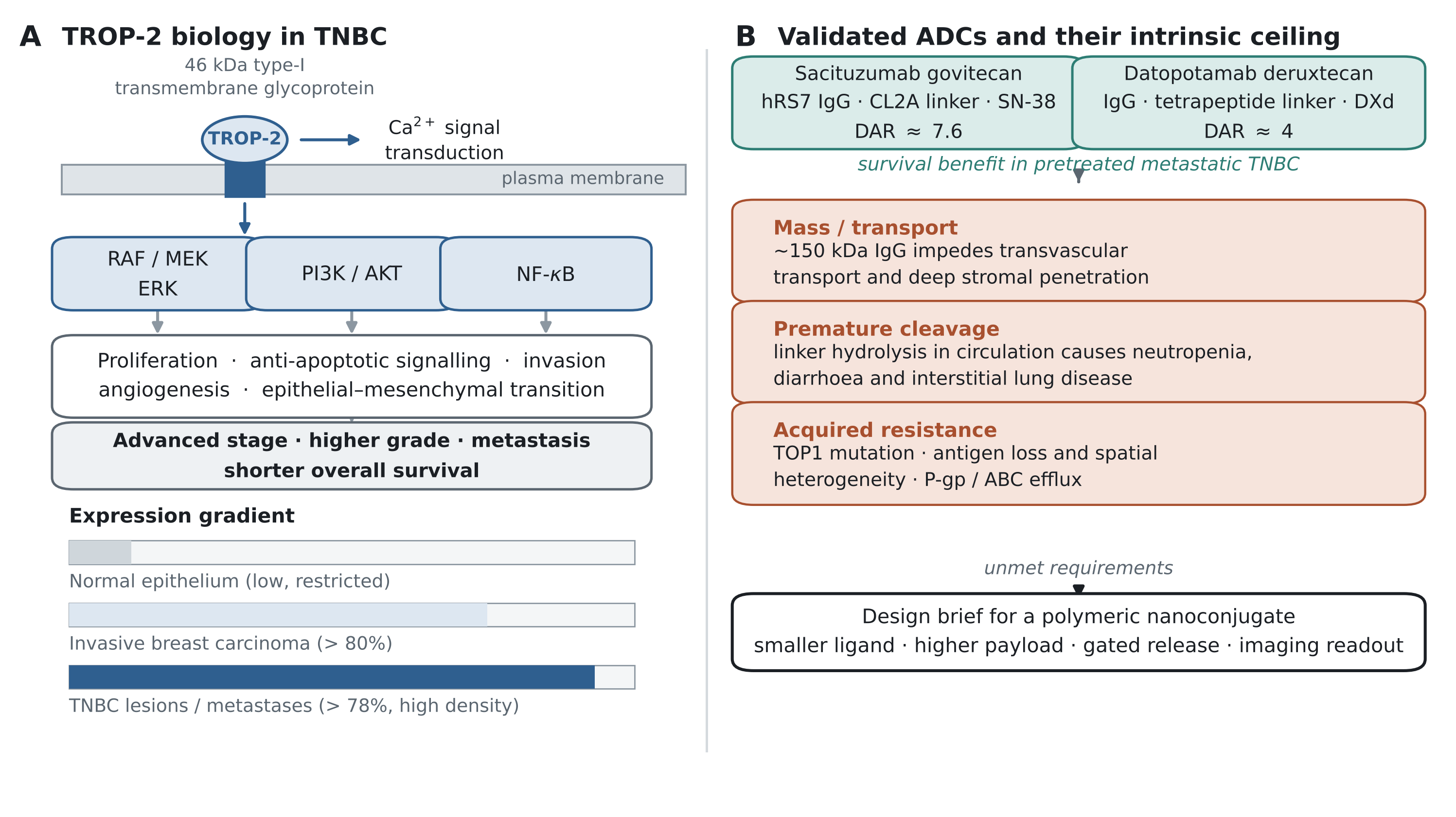
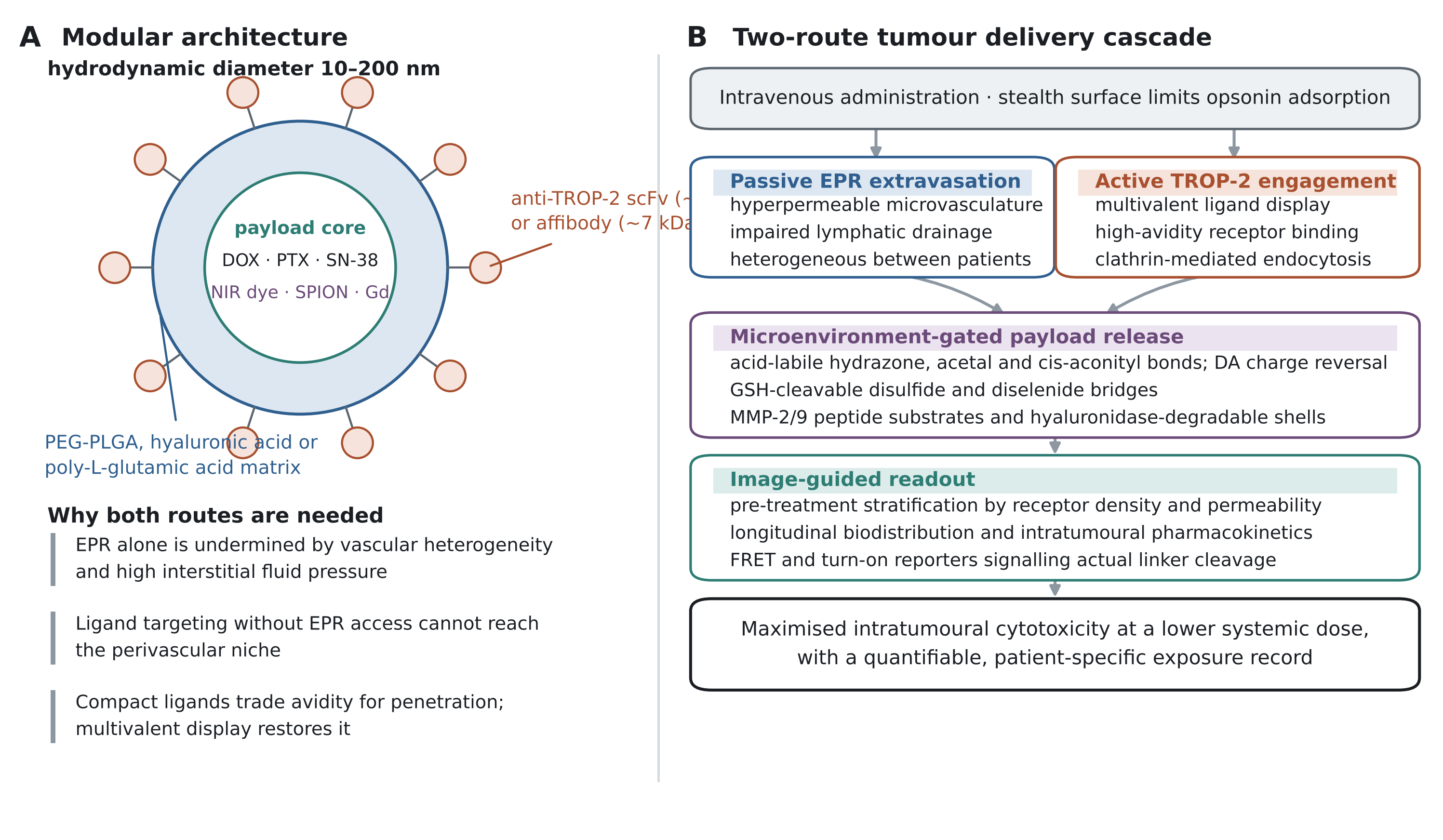
Article metrics
View details
0
Downloads
0
Citations
108
Views
📖 Cite article

View Dimensions


View Plumx


View Altmetric


0
Save
0
Citation
108
View
0
Share