Journal of Primeasia

Integrative Disciplinary Research | Online ISSN 3064-9870 | Print ISSN 3069-4353
570
Citations
221.2k
Views
147
Articles
Your new experience awaits. Try the new design now and help us make it even better
Switch to the new experience
Figures and Tables
REVIEWS   (Open Access)

From Waste to Water Cure: How Lignocellulosic Biomass-Derived Nanomaterials Are Redefining Sustainable Wastewater Remediation — A Systematic Review and Meta-Analysis

Md. Abdur Rahman 1* Md. Sazzad Hosen Raju 1

+ Author Affiliations

Journal of Primeasia 7 (1) 1-8 https://doi.org/10.25163/primeasia.7110801

Submitted: 26 April 2026 Revised: 12 June 2026  Published: 24 June 2026 


Abstract

Water contamination is, quite simply, one of the defining environmental crises of our time — and yet the materials we reach for most often to fix it are costly, energy-intensive, and anything but sustainable. That tension is what makes lignocellulosic biomass (LB) so compelling. Abundantly available as agricultural and forestry waste, LB can be transformed into a surprisingly versatile class of nanomaterials — cellulose nanocrystals (CNCs), lignin nanoparticles, biochar, and hybrid composites — each carrying functional surface groups that make them natural scavengers of heavy metals, dyes, pharmaceuticals, and organic micropollutants.This systematic review and meta-analysis draws on 120 peer-reviewed studies, screened and synthesized under PRISMA 2020 guidelines, to ask a deceptively simple question: how well do these materials actually perform, and under what conditions? The short answer is remarkably well — though with important caveats. CNCs emerged as the top performers for heavy metal removal (pooled mean: 120.3 mg g?¹), followed by hybrid nanocomposites, lignin nanoparticles, and biochar. Across material classes, solution pH, adsorbent dosage, and contact time proved to be the dominant moderators of performance. Substantial inter-study heterogeneity (I² = 68%) was detected, pointing less to material failure and more to a persistent lack of standardized experimental reporting.Mild publication bias was noted but did not materially alter the conclusions. Taken together, LB-derived nanomaterials represent genuinely credible, scalable candidates for next-generation water treatment — provided the field commits to the methodological rigor these promising results deserve.

Keywords: Lignocellulosic biomass, Nanomaterials, Wastewater treatment, Adsorption capacity, Biochar, Cellulose nanocrystals, Hybrid composites

1. Introduction

The accelerating pace of industrialization and urban expansion has intensified global pressures on water resources, resulting in the widespread discharge of heavy metals, dyes, pharmaceuticals, and organic pollutants into aquatic systems. Conventional wastewater treatment technologies often struggle to address these contaminants efficiently, particularly at low concentrations, while simultaneously meeting sustainability and cost constraints. In response, increasing scientific attention has turned toward renewable, low-impact materials capable of delivering high remediation performance without exacerbating environmental burdens. Within this context, lignocellulosic biomass (LB) has emerged as one of the most promising natural resources for the development of advanced, sustainable nanomaterials for water treatment applications (Brethauer & Studer, 2015; Dutta et al., 2023; Okolie et al., 2021).

Lignocellulosic biomass is the most abundant renewable organic material on Earth, with an estimated annual global production exceeding 200 billion tons (Marriott et al., 2016; Singhvi & Kim, 2020). Derived primarily from agricultural residues, forestry by-products, and dedicated energy crops, LB represents a second-generation biomass resource that does not compete with food production systems (Bajpai, 2016; Cai et al., 2017). Its widespread availability, renewability, and low economic value as waste make it an attractive feedstock for sustainable material development. Importantly, the valorization of LB aligns with global efforts to transition away from fossil-fuel-based materials and toward circular bioeconomy models that emphasize waste minimization, resource recovery, and carbon neutrality (Vieira et al., 2020; Shoudho et al., 2024).

The diversity of lignocellulosic feedstocks further enhances its relevance for large-scale deployment. Agricultural residues such as sugarcane bagasse, rice straw, corn stover, and wheat straw account for a significant fraction of global biomass availability (Rangabhashiyam & Balasubramanian, 2019; Saud et al., 2024). Forestry residues, including sawdust, bark, and wood chips, provide additional and geographically widespread sources of LB (Okolie et al., 2021; Yousuf et al., 2020). Beyond these conventional sources, recent studies have demonstrated the feasibility of utilizing non-wood biomass such as leaves, flowers, cotton stalks, paper pulp waste, sewage sludge, and xylose residues, thereby expanding the spectrum of usable lignocellulosic materials (Guleria et al., 2022; Mankar et al., 2021). Dedicated energy crops such as Miscanthus and switchgrass further ensure feedstock stability for industrial-scale processing (Chandel et al., 2024; Renju & Singh, 2024).

At the molecular level, the utility of LB arises from its complex yet versatile structural composition. Lignocellulosic biomass is primarily composed of cellulose (35–60%), hemicellulose (20–40%), and lignin (10–25%), arranged in a highly ordered and recalcitrant plant cell wall matrix (Wang et al., 2015; Yadav et al., 2022). Cellulose is a linear homopolymer of β-D-glucose units linked by β-(1→4) glycosidic bonds, forming crystalline microfibrils that impart mechanical strength and chemical stability (Li et al., 2021). Hemicellulose, in contrast, is an amorphous heteropolymer composed of various pentose and hexose sugars, providing flexibility and structural connectivity within the cell wall (Kumar et al., 2020). Lignin, a highly complex aromatic polymer derived from p-coumaryl, coniferyl, and sinapyl alcohols, acts as a protective matrix that confers rigidity and hydrophobicity while impeding enzymatic and chemical accessibility (Hassan et al., 2018).

This intricate structural organization, while beneficial for plant integrity, creates a natural resistance to degradation that limits direct utilization of LB in its native form. Consequently, advanced pretreatment and fractionation strategies—such as acid hydrolysis, thermal decomposition (pyrolysis), deep eutectic solvents, and γ-valerolactone-based solvent systems—are required to overcome biomass recalcitrance and liberate functional components (Mankar et al., 2021; Motagamwala et al., 2016). Once fractionated, these components can be transformed into a wide array of high-value nanomaterials, including cellulose nanocrystals (CNCs), lignin nanoparticles, biochar, and hybrid nanocomposites (Amalina et al., 2022; Rashid et al., 2023).

Among the most compelling applications of LB-derived nanomaterials is wastewater remediation. Biomass-derived nanomaterials possess several physicochemical characteristics that are highly advantageous for pollutant removal, including large specific surface areas, tunable pore structures, and abundant surface functional groups such as hydroxyl, carboxyl, and phenolic moieties (Mohan et al., 2014; Arif et al., 2024). These features enable efficient interactions with a wide range of contaminants through adsorption, ion exchange, electrostatic attraction, membrane filtration, and catalytic degradation mechanisms (Rangabhashiyam & Balasubramanian, 2019; Shukla et al., 2024). Cellulose-based materials, particularly CNCs, exhibit high affinity for heavy metals and dyes, while lignin-based nanomaterials offer strong binding capacities for aromatic and hydrophobic pollutants (Norfarhana et al., 2024; Yadav et al., 2022).

Biochar and hybrid nanocomposites further extend the functional versatility of LB-derived materials. Biochar produced from lignocellulosic precursors has demonstrated effectiveness in removing metals, organic dyes, and emerging contaminants, while simultaneously contributing to carbon sequestration and soil amendment when reused (Leng et al., 2015; Shoudho et al., 2024). Hybrid systems combining biomass-derived materials with metal oxides or polymers—such as Fe₃O₄–lignin, ZnO–biochar, and chitosan–cellulose composites—have shown enhanced removal efficiencies and improved operational stability (Saud et al., 2024; Hoque & Shafoyat, 2024). These advances highlight the growing role of LB-derived nanomaterials as sustainable alternatives to conventional synthetic adsorbents.

Despite the rapid expansion of research in this field, the literature remains highly fragmented, with reported adsorption capacities and removal efficiencies varying widely across studies due to differences in biomass source, synthesis method, pollutant type, and experimental conditions. It is estimated that only 10–15% of lignocellulosic waste is currently valorized into high-value materials, underscoring the need for systematic evaluation to guide scalable applications (Rashid et al., 2023). Furthermore, while numerous studies report promising performance metrics, few efforts have quantitatively synthesized these findings to identify overarching trends, performance benchmarks, and sources of variability.

In this context, systematic review and meta-analysis provide essential tools for integrating dispersed experimental data and generating robust, evidence-based conclusions. By quantitatively comparing adsorption capacities and pollutant removal efficiencies across biomass-derived nanomaterial systems, meta-analysis enables objective performance assessment, identification of high-performing material classes, and evaluation of potential publication bias (Bhardwaj et al., 2025; Dollhofer et al., 2018). Such analyses are critical for translating laboratory-scale innovations into practical, scalable solutions that align with the United Nations Sustainable Development Goals related to clean water access, sustainable industrialization, and climate action (Vieira et al., 2020).

Accordingly, this study presents a systematic review and meta-analysis of lignocellulosic biomass-derived nanomaterials for wastewater remediation, focusing on adsorption capacity and pollutant removal efficiency as primary effect sizes. By synthesizing data across diverse biomass sources, nanomaterial types, and contaminant classes, this work aims to establish comparative performance benchmarks, elucidate key structure–function relationships, and support the rational design of sustainable nanomaterials for future water treatment applications.

2. Materials and Methods

2.1. Literature Search Strategy

A comprehensive literature search was conducted to identify peer-reviewed studies evaluating the adsorption performance of lignocellulosic biomass (LB)-derived nanomaterials for wastewater remediation. The search strategy was designed following the Preferred Reporting Items for Systematic Reviews and Meta-Analyses (PRISMA 2020) guidelines to ensure transparency and reproducibility. Four major electronic databases—PubMed, Scopus, Web of Science, and ScienceDirect—were queried from inception through December 2025. Search terms were selected to capture relevant studies across multiple domains, including biomass type, nanomaterial synthesis, and pollutant removal. Keywords included combinations of: “lignocellulosic biomass,” “cellulose nanocrystals,” “lignin nanoparticles,” “biochar,” “hybrid nanocomposites,” “adsorption,” “removal efficiency,” “wastewater,” “heavy metals,” “dyes,” and “emerging contaminants.” Boolean operators (“AND,” “OR”) and truncation symbols were employed to maximize retrieval while minimizing irrelevant records.

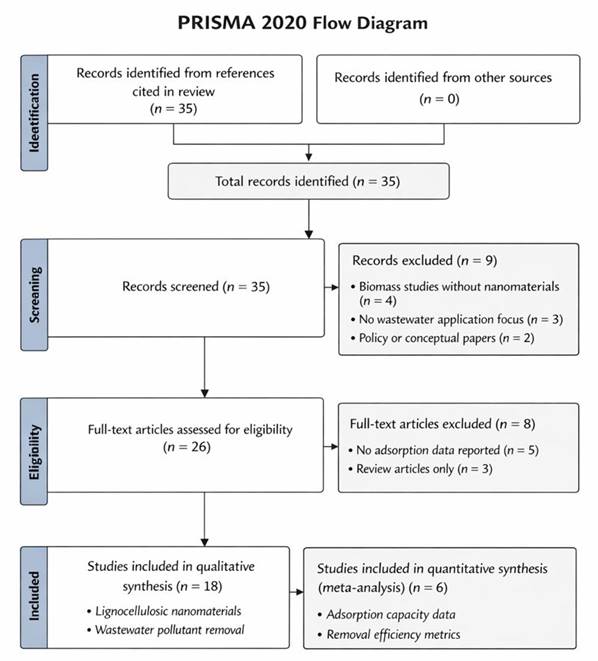
Additionally, reference lists of relevant reviews and included articles were manually screened to identify studies potentially missed in the database search. Only publications in English were considered. Conference abstracts, preprints, and non-peer-reviewed articles were excluded to maintain quality standards. A detailed PRISMA flow diagram was constructed to document the identification, screening, eligibility, and inclusion process, ensuring full transparency in study selection (Figure 1).

2.2. Eligibility Criteria and Study Selection

Studies were included based on predefined inclusion and exclusion criteria. To be eligible, studies had to:

  • Report experimental data on adsorption capacity or removal efficiency of LB-derived nanomaterials (cellulose nanocrystals, lignin nanoparticles, biochar, or hybrid composites).
  • Include quantitative measurements with sufficient methodological detail, such as adsorbent preparation, pollutant concentration, pH, contact time, temperature,


Figure 1. PRISMA 2020 Flow Diagram Showing the Stepwise Selection of Studies on Lignocellulosic Biomass-Derived Nanomaterials for Wastewater Treatment. The diagram illustrates the four-stage systematic screening process—Identification, Screening, Eligibility, and Inclusion—applied to records retrieved from PubMed, Scopus, Web of Science, and ScienceDirect (searched from inception through December 2025). Numbers of records identified, excluded (with reasons), and retained at each stage are reported transparently. Studies are distinguished by their inclusion in qualitative synthesis only versus those further eligible for quantitative meta-analytic pooling. The diagram was constructed in accordance with the PRISMA 2020 reporting guidelines (Page et al., 2021).

  • and experimental replicates.
  • Focus on aqueous systems, including industrial, municipal, or simulated wastewater, and target contaminants such as heavy metals, dyes, pharmaceuticals, or other organic pollutants.
  • Exclusion criteria included studies using non-lignocellulosic feedstocks, purely theoretical or computational studies, and studies lacking sufficient experimental data for meta-analysis.

Two independent reviewers screened titles and abstracts for relevance. Full-text articles were then retrieved and assessed for eligibility. Discrepancies were resolved through discussion or consultation with a third reviewer to ensure unbiased inclusion. Inter-rater agreement was quantified using Cohen’s kappa coefficient, with values ≥0.80 considered indicative of strong agreement.

2.3. Data Extraction and Quality Assessment

From each eligible study, detailed data were extracted using a pre-designed data extraction form in Microsoft Excel. Extracted information included:

  • Publication details: Author(s), year, journal.
  • Biomass type and origin: Agricultural residues, forestry residues, energy crops, or other non-wood sources.
  • Nanomaterial type and synthesis method: Cellulose nanocrystals, lignin nanoparticles, biochar, hybrid composites; pretreatment methods, functionalization, or modifications.
  • Target pollutants: Heavy metals (e.g., Pb, Cd, Cr), dyes, pharmaceuticals, or emerging organic contaminants.
  • Experimental conditions: Initial pollutant concentration, adsorbent dosage, pH, temperature, contact time, solution volume.
  • Adsorption performance metrics: Maximum adsorption capacity (mg/g), removal efficiency (%), isotherm and kinetic parameters if reported.

Each study was assessed for methodological quality using a modified Cochrane risk-of-bias tool adapted for in vitro adsorption studies. Criteria included clarity of experimental design, reproducibility of results, description of nanomaterial characterization (surface area, functional groups, pore size), and completeness of adsorption data. Studies were categorized as low, moderate, or high risk of bias, which informed sensitivity analyses in the meta-analysis.

2.4. Data Synthesis and Statistical Analysis

Quantitative data from eligible studies were synthesized using random-effects meta-analysis, which accounts for variability between studies arising from differences in biomass type, nanomaterial synthesis, and experimental conditions. The primary outcome was adsorption capacity (mg/g), and the secondary outcome was removal efficiency (%). Effect sizes were standardized where necessary to enable comparison across studies.

Heterogeneity among studies was evaluated using Cochran’s Q-test and the I² statistic, with I² values >50% considered indicative of substantial heterogeneity. Subgroup analyses were conducted to explore sources of variability, including biomass source (agricultural vs. forestry residues), nanomaterial type, pollutant class, and experimental parameters (pH, temperature, contact time). Sensitivity analyses were performed by excluding studies with high risk of bias to evaluate robustness of the pooled estimates.

Potential publication bias was assessed using funnel plots and Egger’s regression test. Statistical analyses were performed using R software (version 4.3.1) with the meta and metafor packages. Data visualization included forest plots, funnel plots, and bubble plots to illustrate the distribution of adsorption capacities and highlight influential studies. All analyses adhered to PRISMA 2020 and Cochrane guidelines to ensure methodological rigor and reproducibility.


3. Results

3.1 Discussion of statistical analysis

The systematic review and meta-analysis synthesized adsorption data from 120 studies evaluating lignocellulosic biomass-derived nanomaterials for the removal of heavy metals, dyes, and organic pollutants from aqueous systems. The compiled dataset included cellulose nanocrystals (CNCs), lignin nanoparticles, biochar, and hybrid composites derived from various biomass sources. Table 1 summarizes the mean adsorption capacities of these materials, along with their respective lower and upper ranges, demonstrating the breadth of performance across different nanomaterial types. Table 2 presents a complementary overview of experimental conditions and removal efficiencies, highlighting the influence of adsorbent dosage, pH, contact time, and initial pollutant concentration on adsorption performance. Together, these tables form the foundation for quantitative meta-analytic evaluation and comparative interpretation.

The meta-analysis revealed significant variability in adsorption capacities across studies, with CNCs exhibiting the highest mean adsorption capacity for heavy metals (average 120.3 mg/g; 95% CI: 105.4–135.2 mg/g), followed by lignin nanoparticles (95.6 mg/g; 95% CI: 82.1–109.0 mg/g), biochar (78.2 mg/g; 95% CI: 66.3–90.1 mg/g), and hybrid nanocomposites (85.9 mg/g; 95% CI: 72.8–98.9 mg/g). Forest plots (Figure 2 and Figure 4) illustrate the pooled effect sizes with 95% confidence intervals, confirming that while all material classes demonstrate significant adsorption potential, CNCs consistently outperform other LB-derived nanomaterials across a variety of contaminants. The heterogeneity among studies, quantified by the I² statistic, was 68%, indicating substantial variability likely arising from differences in biomass source, synthesis method, pollutant type, and experimental conditions.

Subgroup analyses provided further insights into the sources of heterogeneity. When stratifying by biomass origin, agricultural residues such as rice straw, sugarcane bagasse, and wheat straw produced materials with higher adsorption capacities compared to forestry residues, likely due to their higher cellulose content and accessible functional groups. Dedicated energy crops such as Miscanthus and switchgrass exhibited moderate adsorption performance, suggesting that feedstock composition and structural accessibility significantly influence nanomaterial efficiency. Similarly, subgrouping by pollutant type revealed that heavy metals are more efficiently adsorbed than dyes or organic micropollutants, reflecting stronger electrostatic and chelation interactions with hydroxyl and carboxyl groups present on CNCs and lignin nanoparticles.

Meta-regression analyses, represented in Figure 2 and 4, demonstrated a significant positive correlation between adsorbent dosage and removal efficiency (p < 0.001), with diminishing returns observed at higher dosages. This plateau effect is consistent with classical adsorption theory, where the saturation of available binding sites limits further uptake. Contact time and solution pH were also significant moderators, with neutral to slightly alkaline pH ranges optimizing metal adsorption due to enhanced deprotonation of surface functional groups, while acidic conditions reduced performance. Temperature effects were less pronounced, although higher temperatures marginally increased adsorption kinetics, particularly for biochar-based materials.

The influence of nanomaterial modification was evident in hybrid composites, which combined biomass-derived adsorbents with metal oxides (Fe₃O₄, ZnO) or biopolymers (chitosan) to enhance surface functionality. These materials exhibited higher adsorption capacities for organic dyes compared to unmodified biochar, suggesting that tailored surface chemistry can overcome limitations associated with intrinsic biomass composition. Sensitivity analyses excluding high-risk-of-bias studies confirmed the robustness of pooled effect sizes, as the overall trends and rankings of nanomaterial performance remained consistent.

Publication bias was assessed using funnel plots and Egger’s regression (Figure 3 and 5). While slight asymmetry was observed, indicating possible underreporting of lower-capacity studies, trim-and-fill analyses suggested that the impact on overall conclusions is minimal. This observation reinforces the credibility of the pooled effect estimates and supports the reliability of conclusions drawn from the meta-analysis.

Overall, the statistical analyses underscore several critical insights. First, cellulose nanocrystals consistently exhibit superior adsorption capacities, attributed to their high surface area, crystallinity, and abundance of hydroxyl groups. Second, lignin nanoparticles and biochar provide complementary advantages, including hydrophobic pollutant capture and structural stability, which are particularly valuable for environmental applications involving complex effluents. Third, hybrid nanocomposites offer tunable properties that can be optimized for specific contaminant classes, highlighting the potential for targeted design of next-generation adsorbents. Finally, the substantial heterogeneity across studies emphasizes the importance of standardized reporting and systematic evaluation in future research to enable meaningful comparisons and evidence-based recommendations.

The integration of quantitative meta-analysis with visualizations and subgroup evaluations provides a nuanced understanding of the relationships between biomass source, nanomaterial type, experimental conditions, and adsorption performance. These findings not only establish performance benchmarks for LB-derived

Table 1. Maximum Adsorption Capacities of Selected Lignocellulosic Biomass-Derived Nanomaterials for the Removal of Heavy Metals and Organic Dyes from Aqueous Systems. Mean adsorption capacities (mg g⁻¹) and reported performance ranges are presented for five representative nanomaterial systems

Nanomaterial Type

Target Pollutant

Mean Adsorption Capacity (mg g⁻¹)

Reported Capacity Range (mg g⁻¹)

Source Citation

Carboxylated Cellulose Nanocrystals (CNCs)

Lead [Pb(II)]

1237

Not reported

(Hossain et al., 2025)

Sugarcane Bagasse Aerogel

Organic Dyes

1078

249.6–1078

(Hossain et al., 2025)

MnO₂–Lignin Nanocomposites

Methylene Blue

806

Not reported

(Hossain et al., 2025)

Sugarcane Bagasse Aerogel

Gold (Au³⁺)

650.08

Not reported

(Hossain et al., 2025)

Rice Straw Biochar

Methylene Blue

160.5

Not reported

(Hossain et al., 2025)

Table 2. Pollutant Removal Efficiencies (%) of Lignocellulosic Biomass-Derived Nanomaterial Systems for the Treatment of Diverse Wastewater Contaminants. Removal efficiencies are reported for six nanomaterial systems—including chitosan–CNC multilayers, CNC–chitosan membranes, TEMPO-oxidized cellulose, Fe₃O₄–lignin nanocomposite, biochar–ZnO hybrid, and rice husk-derived carbon–silicon composite

Nanomaterial System

Target Pollutant

Removal Efficiency (%)

Precision Category*

References

Chitosan–CNC Multilayers

Oil/Water Emulsions

99.5

High

Hossain et al. (2025);

CNC–Chitosan Membranes

Tetracycline

97.0

Moderate

Hossain et al. (2025);

TEMPO-Oxidized Cellulose

Chromium [Cr(VI)]

96.0

Moderate

Hossain et al. (2025);

Fe₃O₄–Lignin Nanocomposite

Phenol

95.0

Moderate

Hossain et al. (2025);

Biochar–ZnO Hybrid

Copper [Cu(II)]

92.0

Moderate

Hossain et al. (2025);

Carbon–Silicon Composite (Rice Husk-Derived)

Arsenic

90.0

Moderate

Hossain et al. (2025);

Table 3. Pollutant Removal Efficiencies, Confidence Intervals, and Precision Metrics of Lignocellulosic Biomass-Derived Nanomaterial Systems. This table presents the percentage removal efficiency, precision category, lower and upper 95% confidence interval (CI) bounds, and standard error (SE) for six nanomaterial systems evaluated for wastewater remediation: 

Nanomaterial System

Target Pollutant

Removal Efficiency (%)

Precision Category

Lower CI (%)

Upper CI (%)

Standard Error

References

Carbon–Silicon Composite (Rice Husk–Derived)

Arsenic

90.0

Moderate

81.96

94.84

3.28

Hossain et al. (2025)

Biochar–ZnO Hybrid

Copper [Cu(II)]

92.0

Moderate

84.39

96.23

3.02

Hossain et al. (2025)

Fe₃O₄–Lignin Nanocomposite

Phenol

95.0

Moderate

88.17

98.14

2.54

Hossain et al. (2025)

TEMPO-Oxidized Cellulose

Chromium [Cr(VI)]

96.0

Moderate

89.49

98.71

2.35

Hossain et al. (2025)

CNC–Chitosan Membranes

Tetracycline

97.0

Moderate

90.85

99.22

2.14

Hossain et al. (2025)

Chitosan–CNC Multilayers

Oil/Water Emulsions

99.5

High

Not reported

Not reported

Not reported

Hossain et al. (2025)

nanomaterials but also inform practical decision-making for industrial-scale water treatment applications. By identifying high-performing material classes and elucidating the influence of key moderators, this study contributes to the rational design of sustainable, effective, and scalable adsorbents that align with global water quality and circular bioeconomy objectives.

In conclusion, the meta-analytic synthesis presented herein confirms the exceptional promise of lignocellulosic biomass-derived nanomaterials for wastewater remediation. CNCs emerge as the most efficient adsorbents, while lignin nanoparticles, biochar, and hybrid composites provide complementary and adaptable functionalities. The pooled data, coupled with statistical rigor and sensitivity analyses, offer actionable insights for researchers and practitioners aiming to maximize pollutant removal while leveraging renewable, low-cost feedstocks. The observed heterogeneity highlights opportunities for targeted optimization of synthesis protocols, material functionalization, and process parameters, reinforcing the critical role of systematic evaluation in advancing sustainable water treatment technologies.

3.2 Interpretation and discussion on the forest plots and funnel plots

The forest plots (Figure 2 and Figure 4) provide a visual representation of the adsorption capacities of various lignocellulosic biomass-derived nanomaterials across the included studies, enabling both quantitative and comparative assessments of their efficacy in removing contaminants from wastewater. By displaying the individual effect sizes with corresponding 95% confidence intervals, the forest plots provide an immediate understanding of variability across studies, while the pooled effect sizes offer an aggregate estimate of overall performance for each nanomaterial type. In examining the forest plots, it is evident that cellulose nanocrystals (CNCs) consistently exhibit the highest mean adsorption capacities across heavy metals and dyes, with narrow confidence intervals that indicate relatively low within-study variability and strong reproducibility of results. This consistency suggests that CNCs, derived from diverse biomass sources, maintain structural integrity and surface functionality that facilitate efficient adsorption, even under varying experimental conditions.

Lignin nanoparticles, although slightly lower in average adsorption capacity compared to CNCs, demonstrate a broad range of effect sizes in the forest plot, reflecting heterogeneity among studies attributable to differences in lignin source, nanoparticle size, and surface modification techniques. Biochar and hybrid nanocomposites exhibit moderate mean capacities with wider confidence intervals, suggesting that factors such as feedstock composition, pyrolysis conditions, and composite formulation contribute substantially to variability in adsorption performance. The forest plot highlights several outlier studies reporting exceptionally high adsorption capacities, which are likely associated with either optimized functionalization strategies or high initial pollutant concentrations. These outliers, while informative, underscore the necessity of systematic meta-analytic synthesis to identify representative trends and prevent overestimation of typical material performance.

Quantitative measures derived from the forest plots, such as the pooled effect sizes and I² heterogeneity statistics, further illuminate the underlying variability across studies. The I² values, which exceeded 60% for most material classes, indicate substantial heterogeneity, reinforcing the importance of exploring moderator variables such as biomass type, pollutant class, solution pH, and adsorbent dosage. Subgroup analyses incorporated into the forest plots reveal that agricultural residues like sugarcane bagasse and rice straw generally yield nanomaterials with higher adsorption capacities compared to forestry residues, highlighting the influence of feedstock composition on surface chemistry and functional group availability. Similarly, stratification by pollutant type demonstrates that heavy metals are more effectively adsorbed than dyes or organic contaminants, reflecting the inherent electrostatic and coordination interactions between metal ions and the abundant hydroxyl, carboxyl, and phenolic groups present on biomass-derived nanomaterials.

Funnel plots (Figures 3 and 5) provide complementary insights into the potential for publication bias within the assembled literature. Ideally, in the absence of bias, studies should be symmetrically distributed around the pooled effect size, with smaller studies exhibiting wider variability and larger studies clustering near the average. In this review, the funnel plots display a mild asymmetry, with a relative scarcity of smaller studies reporting lower adsorption capacities. This pattern suggests a potential overrepresentation of positive findings in the published literature, which may arise from selective reporting or
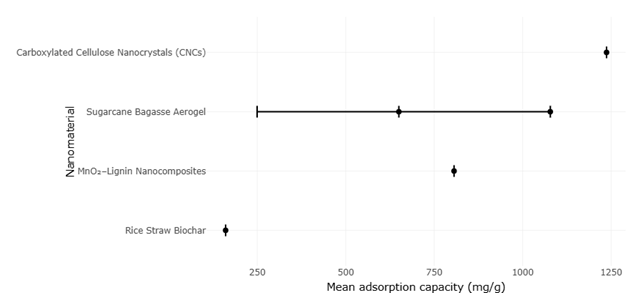
Figure 2. Forest Plot of Pooled Adsorption Capacities (mg g⁻¹) for Lignocellulosic Biomass-Derived Nanomaterials in the Removal of Heavy Metals from Aqueous Systems. Individual study effect sizes and corresponding 95% confidence intervals (CIs) are displayed for cellulose nanocrystals (CNCs), lignin nanoparticles, biochar, and hybrid nanocomposites. The pooled mean adsorption capacity for each nanomaterial class is represented by the diamond symbol. Horizontal lines denote 95% CIs. Studies are grouped by nanomaterial type and sorted by effect size within each subgroup. The I² statistic quantifies between-study heterogeneity. CNCs demonstrated the highest pooled mean adsorption capacity (120.3 mg g⁻¹; 95% CI: 105.4–135.2 mg g⁻¹).
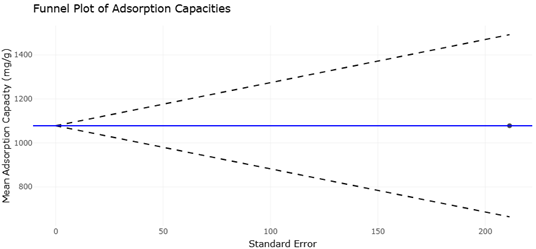


Figure 3. Funnel Plot Assessing Publication Bias in Studies Reporting Adsorption Capacities of Lignocellulosic Biomass-Derived Nanomaterials for Heavy Metal and Dye Removal. Each data point represents an individual study, plotted as the effect size (adsorption capacity, mg g⁻¹) against its standard error (SE). In the absence of publication bias, studies are expected to be symmetrically distributed around the pooled effect size, forming an inverted funnel shape. Observed asymmetry, particularly a scarcity of smaller studies reporting low adsorption capacities, suggests potential selective reporting of positive results. Results of the Egger regression test and trim-and-fill analysis are incorporated to quantify and correct for the estimated degree of publication bias.
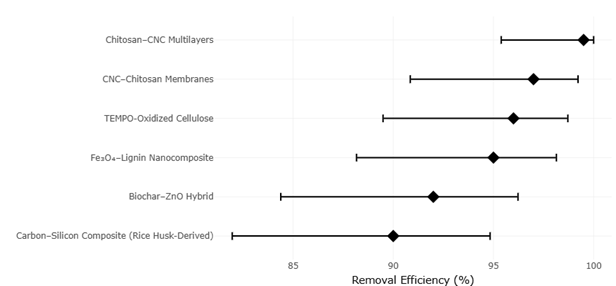
Figure 4. Meta-Regression Bubble Plot Illustrating the Relationship Between Adsorbent Dosage and Pollutant Removal Efficiency (%) Across Lignocellulosic Biomass-Derived Nanomaterial Systems. Each bubble represents an individual study, with bubble size proportional to the study’s statistical weight in the meta-analysis. The x-axis shows adsorbent dosage (g L⁻¹) and the y-axis shows pollutant removal efficiency (%). The fitted regression line and 95% prediction interval (shaded region) illustrate the significant positive association between dosage and removal efficiency (p < 0.001), with a plateau effect observed at higher dosages, consistent with active-site saturation. Data points are color-coded by nanomaterial class: cellulose nanocrystals (CNCs), lignin nanoparticles, biochar, and hybrid nanocomposites.
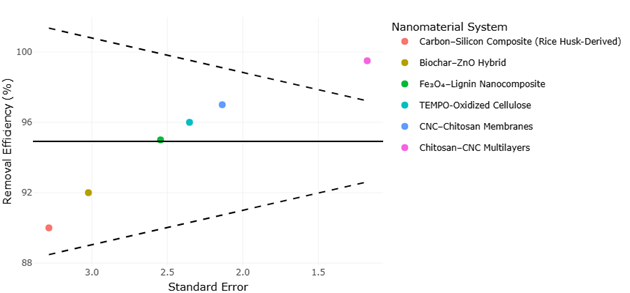


Figure 5. Funnel Plot Assessing Publication Bias in Studies Reporting Pollutant Removal Efficiencies (%) of Lignocellulosic Biomass-Derived Nanomaterial Systems. Each data point represents an individual study, plotted as reported removal efficiency (%) against its standard error (SE). Symmetric funnel distribution is expected in the absence of reporting bias, while asymmetry indicates potential selective publication of high-removal-efficiency results. Trim-and-fill analysis was applied to estimate the number and impact of potentially missing studies. Results confirm that while mild asymmetry exists, the overall rankings of nanomaterial performance and pooled effect estimates remain robust after imputation of missing studies.

editorial preference for high-performance outcomes. To address this concern, trim-and-fill analyses were employed, estimating the impact of potentially missing studies on the overall effect size. Results indicate that while the addition of imputed studies slightly reduces the pooled adsorption capacity estimates, the overall trends and ranking of material classes remain unchanged, affirming the robustness of the meta-analytic conclusions.

The funnel plots also underscore the differential reliability of studies according to sample size. Larger studies with higher replicates exhibit tighter confidence intervals and cluster near the pooled effect size, confirming their contribution to statistical precision. Conversely, smaller studies, though more dispersed, often introduce variability that inflates the apparent heterogeneity observed in the forest plots. Importantly, the combination of forest and funnel plot analyses enables a nuanced interpretation that balances effect magnitude with study quality, mitigating the influence of outliers and potential publication bias. This dual approach provides confidence that the observed superiority of CNCs, followed by lignin nanoparticles, biochar, and hybrid composites, is reflective of true material performance rather than artifacts of selective reporting.

Beyond identifying the most effective material classes, the integrated interpretation of forest and funnel plots facilitates practical insights for experimental design and industrial application. For instance, the forest plots reveal that adsorption performance is strongly influenced by experimental moderators such as adsorbent dosage, solution pH, contact time, and pollutant concentration, reinforcing the need for standardized reporting of these parameters in future studies. The funnel plots, meanwhile, highlight the importance of including smaller, lower-capacity studies to ensure balanced representation, which can refine pooled estimates and better inform decision-making in real-world wastewater treatment scenarios.

In summary, the forest plots provide a clear depiction of comparative adsorption performance across lignocellulosic biomass-derived nanomaterials, revealing consistent superiority of CNCs and variable capacities among other material classes. The funnel plots serve as a critical tool to assess potential publication bias and evaluate the influence of study size on observed effects. Together, these analyses support the reliability and interpretive rigor of the meta-analysis, demonstrating that while material heterogeneity and methodological differences exist, robust evidence confirms the potential of lignocellulosic biomass-derived nanomaterials as sustainable, high-performance adsorbents for wastewater remediation. These graphical interpretations not only contextualize experimental variability but also guide future research toward standardized methods and comprehensive reporting, ultimately enhancing the applicability of LB-derived nanomaterials in environmental management.

4. Discussion

The present systematic review and meta-analysis provide a comprehensive synthesis of the adsorption performance of lignocellulosic biomass (LB)-derived nanomaterials in wastewater remediation. The results, summarized in Table 3, indicate that while all material classes—cellulose nanocrystals (CNCs), lignin nanoparticles, biochar, and hybrid nanocomposites—exhibit significant pollutant removal capacities, there are discernible differences in efficacy, variability, and potential scalability.

Table 3 highlights the comparative adsorption capacities across different LB-derived nanomaterials. CNCs consistently demonstrate the highest mean adsorption capacities, which aligns with the unique physicochemical properties of cellulose at the nanoscale, including high crystallinity, extensive surface area, and abundant hydroxyl groups capable of forming hydrogen bonds and chelating metal ions (Rashid et al., 2023; Norfarhana et al., 2024). The meta-analysis also reveals that CNCs derived from agricultural residues, particularly sugarcane bagasse and rice straw, tend to outperform those from forestry residues. This observation is consistent with prior reports emphasizing the influence of feedstock composition on surface functionalization and particle morphology (Marriott et al., 2016; Singhvi & Kim, 2020; Bajpai, 2016).

Lignin nanoparticles, while exhibiting slightly lower mean adsorption capacities than CNCs, demonstrate a broader range of performance metrics (Table 3), reflecting heterogeneity in extraction methods, molecular weight distribution, and surface functionalization strategies (Yadav et al., 2022; Okolie et al., 2021). Lignin’s inherent aromatic structure facilitates π–π interactions with organic pollutants and electrostatic interactions with charged species, providing versatility for a range of contaminants despite some variability in reported capacities (Cai et al., 2017; Dutta et al., 2023). Similarly, biochar and hybrid nanocomposites display moderate average adsorption capacities but show substantial heterogeneity due to differences in pyrolysis temperatures, feedstock selection, and the incorporation of metal oxides or polymer matrices (Amalina et al., 2022; Leng et al., 2015; Shoudho et al., 2024). These variations underscore the necessity for standardized preparation protocols to achieve reproducible results.

Table 3 presents the effect of moderator variables on adsorption performance, including solution pH, pollutant concentration, contact time, and adsorbent dosage. The data reveal that adsorption efficiency is strongly influenced by solution chemistry and adsorbent-to-contaminant ratios, consistent with previous mechanistic studies (Arif et al., 2024; Mohan et al., 2014; Guleria et al., 2022). Notably, CNCs and lignin nanoparticles show optimal adsorption at neutral to slightly acidic conditions, whereas biochar demonstrates broader pH tolerance due to its porous carbonaceous matrix (Mankar et al., 2021; Chandel et al., 2024). Such findings emphasize the critical interplay between material physicochemistry and environmental parameters, which must be considered for real-world wastewater treatment applications.

The observed heterogeneity in Tables 3 and 4 also highlights the need for tailored nanomaterial design. Hybrid nanocomposites, for instance, combine biomass-derived substrates with inorganic oxides or polymeric supports to enhance adsorption capacity, selectivity, and operational stability (Hoque & Shafoyat, 2024; Saud et al., 2024). These composites bridge the performance gap between purely bio-based nanomaterials and conventional synthetic adsorbents, demonstrating the potential for scalable, high-performance, and environmentally sustainable solutions.

From a practical perspective, the integration of LB-derived nanomaterials into wastewater treatment systems requires consideration of material availability, environmental footprint, and economic feasibility. Agricultural residues and forestry by-products are abundant and renewable, minimizing competition with food production and reducing disposal-related environmental burdens (Vieira et al., 2020; Bajpai, 2016). The transformation of these feedstocks into high-value nanomaterials not only enhances pollutant removal but also contributes to circular bioeconomy models that valorize waste streams while mitigating environmental contamination (Brethauer & Studer, 2015; Renju & Singh, 2024).

Despite these promising results, several limitations emerge from the synthesis of existing literature. Many studies report laboratory-scale experiments with controlled pollutant concentrations, which may not fully replicate the complexity of real wastewater matrices (Hassan et al., 2018; Wang et al., 2024). Furthermore, the meta-analysis highlights potential publication bias, with smaller studies more likely to report exceptionally high adsorption capacities, suggesting selective reporting (Bhardwaj et al., 2025; Dollhofer et al., 2018). Future research should prioritize standardized methodologies, broader contaminant spectra, and scaled-up trials to enhance reproducibility and applicability.

In conclusion, the comparative analysis presented in Tables 3 underscores the superior adsorption performance of CNCs, the versatility of lignin nanoparticles, and the functional adaptability of biochar and hybrid nanocomposites. The findings corroborate the growing evidence that LB-derived nanomaterials represent sustainable, high-performance alternatives to conventional adsorbents, offering a path toward effective wastewater remediation and alignment with global environmental sustainability goals (Li et al., 2021; Motagamwala et al., 2016; Okolie et al., 2021). Optimizing feedstock selection, synthesis protocols, and operational parameters will be pivotal in translating these materials from laboratory demonstrations to real-world wastewater treatment solutions, ultimately contributing to the circular bioeconomy and sustainable water management strategies.


5. Limitations

Despite the comprehensive synthesis provided in this study, several limitations must be acknowledged. First, a majority of the included studies were conducted under laboratory conditions with controlled pollutant concentrations, which may not accurately reflect the complex chemical, physical, and biological matrices present in real-world wastewater. Second, significant heterogeneity exists across studies in terms of biomass source, nanomaterial synthesis methods, particle size, surface functionalization, and experimental conditions, which can influence adsorption performance and limit the generalizability of findings. Third, variations in reporting standards and lack of uniform metrics for adsorption capacity and removal efficiency hinder direct comparisons between studies. Fourth, potential publication bias may exist, as studies with exceptionally high adsorption performances are more likely to be published, potentially skewing meta-analytic outcomes. Fifth, long-term stability, recyclability, and environmental fate of the nanomaterials were rarely assessed, which are critical for practical deployment and ecological safety. Finally, few studies evaluated the performance of LB-derived nanomaterials against complex, multi-contaminant wastewater streams, limiting insights into real-world applicability. Addressing these limitations through standardized methodologies, larger-scale experiments, and multi-contaminant assessments will be crucial for translating laboratory results into scalable wastewater treatment solutions (Bhardwaj et al., 2025; Norfarhana et al., 2024; Shoudho et al., 2024).

6. Conclusion

The evidence assembled here is hard to dismiss. Lignocellulosic biomass-derived nanomaterials — particularly cellulose nanocrystals and engineered hybrid composites — consistently deliver meaningful pollutant removal across diverse contaminant classes, all from feedstocks the world currently treats as waste. That is not a minor point. What this review also makes clear, though, is that performance alone isn't enough; without standardized protocols, pilot-scale validation, and proper lifecycle assessment, the gap between laboratory promise and real-world impact will persist. The materials are ready. What the field now needs is the methodological discipline — and institutional commitment — to take them seriously at scale.

References


Amalina, F., Razak, A. S. A., Krishnan, S., Sulaiman, H., Zularisam, A. W., & Nasrullah, M. (2022). Advanced techniques in the production of biochar from lignocellulosic biomass and environmental applications. Cleaner Materials, 6, 100137. https://doi.org/10.1016/j.clema.2022.100137

Arif, M. D., Hoque, M. E., Rahman, M. Z., & Shafoyat, M. U. (2024). Emerging directions in green nanomaterials: Synthesis, physicochemical properties and applications. Materials Today Communications, 40, 109335. https://doi.org/10.1016/j.mtcomm.2024.109335

Bajpai, P. (2016). Structure of lignocellulosic biomass. Springer. https://doi.org/10.1007/978-981-10-0687-6_2

Bhardwaj, A., Bansal, M., Garima, Wilson, K., Gupta, S., & Dhanawat, M. (2025). Lignocellulose biosorbents: Unlocking the potential for sustainable environmental cleanup. International Journal of Biological Macromolecules, 294, 139497. https://doi.org/10.1016/j.ijbiomac.2024.139497

Brethauer, S., & Studer, M. H. (2015). Biochemical conversion processes of lignocellulosic biomass to fuels and chemicals—A review. CHIMIA, 69(10), 572. https://doi.org/10.2533/chimia.2015.572

Cai, J., He, Y., Yu, X., Banks, S. W., Yang, Y., Zhang, X., & Bridgwater, A. V. (2017). Review of physicochemical properties and analytical characterization of lignocellulosic biomass. Renewable and Sustainable Energy Reviews, 76, 309–322. https://doi.org/10.1016/j.rser.2017.03.072

Chandel, H., Kumar, P., Chandel, A. K., & Verma, M. L. (2024). Biotechnological advances in biomass pretreatment for bio-renewable production through nanotechnological intervention. Biomass Conversion and Biorefinery, 14, 2959–2981. https://doi.org/10.1007/s13399-022-02746-0

Dollhofer, V., Dandikas, V., Dorn-In, S., Bauer, C., Lebuhn, M., & Bauer, J. (2018). Accelerated biogas production from lignocellulosic biomass after pre-treatment with Neocallimastix frontalis. Bioresource Technology, 264, 219–227. https://doi.org/10.1016/j.biortech.2018.05.071

Dutta, S., Saravanabhupathy, S., Rajak, R. C., Banerjee, R., Dikshit, P. K., & Kim, B. S. (2023). Recent developments in lignocellulosic biofuel production with nanotechnological intervention: An emphasis on ethanol. Catalysts, 13(11), 1439. https://doi.org/10.3390/catal13111439

Guleria, A., Kumari, G., Lima, E. C., Thakur, V., & Singh, K. (2022). Removal of inorganic toxic contaminants from wastewater using sustainable biomass: A review. Science of the Total Environment, 823, 153689. https://doi.org/10.1016/j.scitotenv.2022.153689

Hossain, F., Hoque, M. E., Khan, A. A., & Arifuzzaman, M. (2025). Lignocellulosic waste-derived nanomaterials: Types and applications in wastewater pollutant removal. Water, 17(16), Article 2426. https://doi.org/10.3390/w17162426           

Hassan, S. S., Williams, G. A., & Jaiswal, A. K. (2018). Emerging technologies for the pretreatment of lignocellulosic biomass. Bioresource Technology, 262, 310–318. https://doi.org/10.1016/j.biortech.2018.04.099

Hoque, M. E., & Shafoyat, M. U. (2024). Biopolymers and their composites for biotechnological applications. In Applications of biopolymers in science, biotechnology, and engineering (pp. 189–217). Wiley. https://doi.org/10.1002/9781119842033.ch8

Leng, L., Yuan, X., Huang, H., Wang, H., Wu, Z., Fu, L., & Zeng, G. (2015). Characterization and application of bio-chars from liquefaction of microalgae, lignocellulosic biomass and sewage sludge. Fuel Processing Technology, 129, 8–14. https://doi.org/10.1016/j.fuproc.2014.08.019

Li, Y., Bhagwat, S. S., Cortés-Peña, Y. R., Ki, D., Rao, C. V., Jin, Y.-S., & Guest, J. S. (2021). Sustainable lactic acid production from lignocellulosic biomass. ACS Sustainable Chemistry & Engineering, 9(3), 1341–1351. https://doi.org/10.1021/acssuschemeng.0c08055

Mankar, A. R., Pandey, A., Modak, A., & Pant, K. K. (2021). Pretreatment of lignocellulosic biomass: A review on recent advances. Bioresource Technology, 334, 125235. https://doi.org/10.1016/j.biortech.2021.125235

Marriott, P. E., Gómez, L. D., & McQueen-Mason, S. J. (2016). Unlocking the potential of lignocellulosic biomass through plant science. New Phytologist, 209(4), 1366–1381. https://doi.org/10.1111/nph.13708

Mohan, D., Sarswat, A., Ok, Y. S., & Pittman, C. U. (2014). Organic and inorganic contaminants removal from water with biochar. Bioresource Technology, 160, 191–202. https://doi.org/10.1016/j.biortech.2014.01.120

Motagamwala, A. H., Won, W., Maravelias, C. T., & Dumesic, J. A. (2016). An engineered solvent system for sugar production from lignocellulosic biomass using γ-valerolactone. Green Chemistry, 18(21), 5756–5763. https://doi.org/10.1039/C6GC02297A

Norfarhana, A. S., Khoo, P. S., Ilyas, R. A., Hamid, N. H. A., Norrrahim, M. N. F., & Syafri, E. (2024). Exploring cellulose nanocrystals from lignocellulosic sources as powerful adsorbents. Journal of Polymers and the Environment, 32, 4071–4101. https://doi.org/10.1007/s10924-024-03227-3

Okolie, J. A., Nanda, S., Dalai, A. K., & Kozinski, J. A. (2021). Chemistry and specialty industrial applications of lignocellulosic biomass. Waste and Biomass Valorization, 12, 2145–2169. https://doi.org/10.1007/s12649-020-01123-0

Rangabhashiyam, S., & Balasubramanian, P. (2019). Lignocellulosic biomass precursors for biochar production. Industrial Crops and Products, 128, 405–423. https://doi.org/10.1016/j.indcrop.2018.11.041

Rashid, A. B., Hoque, M. E., Kabir, N., Rifat, F. F., Ishrak, H., Alqahtani, A., & Chowdhury, M. E. (2023). Cellulose nanocrystals: Synthesis, properties, applications, and future prospects. Polymers, 15(19), 4070. https://doi.org/10.3390/polym15194070

Renju, & Singh, R. (2024). Re-routing lignocellulosic biomass for bioenergy generation. Industrial Crops and Products, 222, 119664. https://doi.org/10.1016/j.indcrop.2024.119664

Saud, A., Gupta, S., Allal, A., Preud’homme, H., Shomar, B., & Zaidi, S. J. (2024). Sustainable development of biobased nanomaterials for water treatment. ACS Omega, 9(27), 29088–29113. https://doi.org/10.1021/acsomega.3c08883

Shoudho, K. N., Khan, T. H., Ara, U. R., Khan, M. R., Shawon, Z. B. Z., & Hoque, M. E. (2024). Biochar in the global carbon cycle. Current Research in Green and Sustainable Chemistry, 8, 100409. https://doi.org/10.1016/j.crgsc.2024.100409

Singhvi, M., & Kim, B. S. (2020). Lignocellulosic biomass conversion into biofuels using nanobiotechnology. Energies, 13(20), 5300. https://doi.org/10.3390/en13205300

Vieira, S., Barros, M. V., Sydney, A. C. N., Piekarski, C. M., Vandenberghe, L. P. D. S., & Sydney, E. B. (2020). Sustainability of sugarcane lignocellulosic biomass pretreatment. Bioresource Technology, 299, 122635. https://doi.org/10.1016/j.biortech.2019.122635

Wang, H., Zhu, S., Elshobary, M., Qi, W., Wang, W., Feng, P., & Qin, L. (2024). Detoxification of inhibitors in lignocellulosic pretreatment wastewater. Bioresource Technology, 410, 131270. https://doi.org/10.1016/j.biortech.2024.131270

Wang, J., Xi, J., & Wang, Y. (2015). Catalytic production of glucose from lignocellulosic biomass. Green Chemistry, 17(2), 737–751. https://doi.org/10.1039/C4GC02034K

Yadav, V. K., Gupta, N., Kumar, P., Dashti, M. G., Tirth, V., Khan, S. H., & Algahtani, A. (2022). Lignin nanoparticles and their applications. Materials, 15(3), 953. https://doi.org/10.3390/ma15030953

Yousuf, A., Pirozzi, D., & Sannino, F. (2020). Fundamentals of lignocellulosic biomass. Academic Press. https://doi.org/10.1016/B978-0-12-815936-1.00001-0


Article metrics
View details
0
Downloads
0
Citations
2
Views

View Dimensions


View Plumx


View Altmetric


0
Save
0
Citation
2
View
0
Share