Microbial Bioactives

Microbial Bioactives | Online ISSN 2209-2161
295
Citations
194.8k
Views
157
Articles
Your new experience awaits. Try the new design now and help us make it even better
Switch to the new experience
Figures and Tables
REVIEWS   (Open Access)

Yeast-Derived Biomolecules in Green Nanotechnology: Bridging Sustainable Bioeconomy and Early-Life Antimicrobial Resistance Management

Ahmed MH AlMudhafar 1*, Najah R Hadi 1

+ Author Affiliations

Microbial Bioactives 9 (1) 1-8 https://doi.org/10.25163/microbbioacts.9110637

Submitted: 20 March 2026 Revised: 13 May 2026  Published: 24 May 2026 


Abstract

The intersection of antimicrobial resistance and sustainable material development is beginning to feel less like a coincidence and more like an urgent convergence. This review explores how yeast-derived biomolecules—often overlooked as simple metabolic by-products—are quietly emerging as powerful mediators in green nanoparticle synthesis. What makes this particularly compelling is not just the environmental advantage, but the functional consequences. Across the literature, yeast-mediated nanoparticles—especially silver, zinc oxide, and selenium—tend to be smaller, more uniform, and, perhaps unexpectedly, more biologically active than their chemically synthesized counterparts. There is, however, a deeper layer to this story. These biomolecules do not merely reduce and stabilize nanoparticles; they appear to imprint a kind of biological identity onto them. That subtle modification may explain why enhanced antimicrobial effects are repeatedly observed, even at lower concentrations. This becomes especially relevant in the context of the infant gut resistome, where antimicrobial interventions must walk a delicate line between efficacy and ecological disruption. At the same time, this field is embedded within a broader shift toward circular bioeconomy systems, where lignocellulosic biomass is no longer waste but a resource. Yeast, interestingly, sits at the center of this transition—as both a processor and a biofactory. While still evolving, this integrated framework suggests a cautiously optimistic path toward sustainable, biocompatible antimicrobial strategies.

Keywords: Yeast-derived biomolecules; Green nanotechnology; Infant gut resistome; Antimicrobial resistance; Lignocellulosic biorefineries; Nanoparticles; Biosurfactants; Exopolysaccharides

1. Introduction

The contemporary scientific landscape is being shaped, perhaps more strongly than ever, by two pressures that at first seem unrelated but are, in reality, deeply intertwined. One is the escalating demand for energy and materials in a world still heavily dependent on fossil resources. The other is the mounting public health burden imposed by antimicrobial resistance, a crisis that has begun to unsettle even the most routine assumptions about infection control and therapeutic reliability. The transition away from fossil-based industrial systems is no longer simply a climate objective; it is increasingly a biomedical and ecological necessity as well. Fossil energy continues to drive environmental degradation at a planetary scale, while renewable transitions remain uneven across sectors and regions (Kartal, 2022; Farghali et al., 2023). In that context, the bioeconomy has emerged not merely as a fashionable policy term, but as a broader rethinking of how biological resources can be used to replace extractive, linear production models with regenerative and circular ones (Priefer et al., 2017).

A circular bioeconomy depends, however, on a reliable and sustainable biomass base. That requirement sounds straightforward, yet it immediately raises questions of land use, feedstock competition, supply stability, and conversion efficiency. Biomass must not only be abundant; it must also be processable, affordable, and environmentally defensible. These concerns have made lignocellulosic residues particularly attractive, since they draw on agricultural and forestry by-products rather than primary food resources. Their appeal lies in both scale and versatility, offering a route to fuels, chemicals, and advanced materials while avoiding some of the ethical and economic tensions associated with first-generation biomass streams (Lewandowski, 2015; Ubando et al., 2020). Sugarcane bagasse, for example, has become a widely cited case of how a regional residue can serve both energy and non-energy applications within an integrated industrial system (Hofsetz & Silva, 2012).

Yet lignocellulosic biomass is, by nature, stubborn. Its resistance to deconstruction is not accidental; it is a structural consequence of the intimate association between cellulose, hemicellulose, and lignin in the plant cell wall. That architecture grants plants strength and resilience, but from a biorefinery perspective it creates a formidable barrier to hydrolysis, microbial conversion, and selective product recovery (Bajpai, 2016; Scheller & Ulvskov, 2010). Even when cellulose-rich fractions can be isolated, the route from raw biomass to functional product is rarely simple. Considerable effort must be invested in pretreatment before sugars, aromatics, or nanoscale materials can be efficiently generated. Recent work has therefore focused not only on biomass conversion as such, but on the pretreatment logic that determines whether downstream valorization will be economically and environmentally viable (Baruah et al., 2018; Haq et al., 2021).

This is precisely where the conversation broadens. Biomass is no longer being viewed solely as a substrate for fermentation or combustion; increasingly, it is being treated as a platform for advanced material design. Lignin, once handled largely as an inconvenient by-product, is now being reconsidered as a chemically rich feedstock for value-added products, including aromatic precursors, stabilizers, and nanoscale formulations (Ali et al., 2024; Lancefield et al., 2018). Likewise, cellulose-derived structures have drawn sustained interest because of their ability to yield nanocellulose and related materials with appealing mechanical, colloidal, and surface properties (George & Sabapathi, 2015; Trache et al., 2020). These developments suggest that biomass valorization is not confined to biofuel production; it also opens the door to functional materials relevant to packaging, catalysis, sensing, and antimicrobial technologies.

Nanotechnology, in turn, offers a compelling bridge between material innovation and biological application. Nanoparticles are attractive partly because scale changes behavior: at the nanoscale, materials often display altered reactivity, optical behavior, interfacial dynamics, and biological interactions. Still, the term “nanoparticle” itself carries environmental and toxicological implications, and those implications have prompted a broader discussion about how such materials should be defined, produced, and deployed responsibly (Auffan et al., 2009). Conventional synthesis routes often rely on aggressive chemicals, high-energy conditions, or reagents whose environmental cost undercuts the sustainability claims later attached to the final product. That tension has driven growing interest in green synthesis approaches, where biological systems or biomolecules act as reductants, stabilizers, templates, or capping agents.

Among the biological platforms explored for this purpose, yeasts occupy a particularly interesting position. They are metabolically versatile, relatively easy to cultivate, and already familiar to industrial biotechnology. More importantly, they produce an impressive range of extracellular and cell-associated biomolecules—proteins, polysaccharides, glycolipids, enzymes, pigments, and organic acids—that can mediate nanoparticle nucleation and stabilization under relatively mild conditions. The result is not simply a “greener” synthesis route in the narrow sense of avoiding harsh reagents. It may also yield nanoparticles with biologically meaningful surface features that influence dispersion stability, redox behavior, antimicrobial performance, and compatibility with living systems. Experimental studies have already shown that yeast-associated systems can support the synthesis of silver, zinc oxide, and selenium nanoparticles with noteworthy biological activities (Moghaddam et al., 2017; Salem, 2022).

The relevance of this field becomes even clearer when green nanotechnology is viewed through a biomedical lens. Antimicrobial resistance is not only a hospital problem or a late-stage infection problem; it is also a matter of ecological selection within the human microbiome, including very early in life. The infant gut microbiome develops during a period of extraordinary physiological vulnerability, and the accumulation of antimicrobial resistance determinants during that window may carry consequences that are both immediate and long-lasting. That makes the infant gut resistome an especially sensitive site of intervention. The challenge, though, is not merely to kill pathogens. It is to do so selectively, gently, and with enough biological sophistication that beneficial colonization and host-microbe signaling are not unnecessarily disrupted.

Here, yeast-derived nanomaterials begin to look less like a niche materials science topic and more like a candidate strategy for precision antimicrobial modulation. Studies using Saccharomyces cerevisiae and other yeast systems suggest that biosynthesized metal and metal oxide nanoparticles can exert meaningful antibacterial effects while being generated through routes that are, at least in principle, more biocompatible and less chemically burdensome than standard reduction-based methods (El-Khawaga et al., 2025; Kim et al., 2024). Baker’s yeast extract has also been used to fabricate selenium nanoparticles with antimicrobial efficacy, reinforcing the idea that yeast is not confined to one material class or one synthesis mode (Salem, 2022). Importantly, comparative work indicates that biologically and chemically synthesized nanoparticles may differ not only in particle size or morphology, but also in optical, structural, and antibacterial behavior, suggesting that synthesis route is itself a determinant of function rather than a merely procedural detail (Jayanthi et al., 2024; Padmavathi et al., 2022).

The sustainability argument remains equally important. Pretreatment and hydrolysis processes that liberate useful biomass fractions can also generate inhibitory compounds, including furans and phenolics, which complicate microbial conversion and downstream integration. This has encouraged the development of alternative pretreatment strategies designed to improve fractionation while limiting inhibitor formation or improving process compatibility. Approaches involving supercritical fluids, optimized acid or alkaline methods, and other intensified pretreatment systems are increasingly being explored for this reason (Escobar et al., 2020; Lorenci Woiciechowski et al., 2020). At the microbial level, S. cerevisiae has also been studied for its ability to tolerate and convert inhibitory compounds derived from lignocellulosic hydrolysates, a trait that becomes particularly relevant if biomass valorization and yeast-mediated nanomaterial production are to be linked within the same integrated framework (Almeida et al., 2007). Classical hydrolysis models and inhibitor studies still matter here, because they help explain why feedstock chemistry continues to shape the feasibility of green bioprocesses even when the final target is a nanomaterial rather than a fuel (Jacobsen & Wyman, 2000; Palmqvist & Hahn-Hägerdal, 2000).

What emerges from this convergence is a conceptually rich, if still developing, research space. On one side lies the logic of biomass conversion and circular material economies. On the other lies the urgent need for antimicrobial tools that are more selective, more adaptable, and perhaps less ecologically disruptive than conventional broad-spectrum approaches. Yeast-derived biomolecules sit at that interface. They connect renewable feedstocks to functional nanomaterials, and functional nanomaterials to potential biomedical applications. Recent discussions of lignocellulosic valorization in Europe and elsewhere only reinforce the timeliness of this connection, as bio-based production systems are increasingly expected to deliver not just fuels, but high-value products with measurable societal benefit (Güleç et al., 2024; Kulolo et al., 2025).

This narrative review was therefore developed to examine, in an integrated way, how yeast-derived biomolecules are being used in green nanoparticle synthesis, how those efforts relate to biomass valorization and sustainable processing, and why such materials may be relevant to the mitigation of the infant gut resistome. The aim is not to overstate translational readiness. Rather, it is to bring together scattered lines of evidence—industrial, biochemical, and antimicrobial—and ask whether they point toward a credible new framework for sustainable early-life microbiome intervention.
2. Materials and methods

2.1 Study Design and Approach

This article was designed as a narrative review intended to synthesize and interpret the literature at the intersection of yeast-mediated nanoparticle biosynthesis, lignocellulosic valorization, and antimicrobial applications relevant to early-life microbial ecology. Unlike a formal systematic review, the goal here was not exhaustive quantitative pooling or strict meta-analytic comparison, but rather a structured and critical integration of evidence drawn from experimental nanotechnology, biomass processing, and sustainable biomanufacturing research. The narrative format was chosen deliberately, as the field remains conceptually broad and methodologically heterogeneous. Studies differ substantially in organism type, precursor chemistry, nanoparticle class, characterization techniques, and antimicrobial endpoints, making strict statistical harmonization difficult and, in some cases, not particularly informative.

2.2 Scope of the Review

The review scope was defined around three interconnected themes. First, literature was gathered on the sustainability context underpinning the work, particularly the circular bioeconomy, biomass supply, and lignocellulosic conversion challenges. These sources were used to frame why renewable feedstocks and waste valorization are essential for emerging nanobiotechnologies (Lewandowski, 2015; Ubando et al., 2020; Priefer et al., 2017). Second, references addressing biomass structure, pretreatment processes, inhibitor formation, and lignin or nanocellulose valorization were examined to clarify the material and process background from which bio-based nanoparticle systems may arise (Bajpai, 2016; Jönsson & Martín, 2016; Trache et al., 2020). Third, experimental studies on yeast-mediated nanoparticle synthesis were reviewed in detail to assess how biomolecules derived from yeast contribute to nanoparticle formation, stabilization, and antimicrobial performance (Kim et al., 2024; El-Khawaga et al., 2025).

2.3 Literature Search and Selection Strategy

A focused literature collection approach was adopted rather than a purely opportunistic one. Priority was given to peer-reviewed articles published in recognized journals and books that contributed either foundational understanding or direct experimental evidence. Foundational process studies were included where they explained current constraints in biomass hydrolysis, inhibitor formation, and pretreatment efficiency, as these issues remain central to any integrated biomass-to-biomaterial framework (Jacobsen & Wyman, 2000; Palmqvist & Hahn-Hägerdal, 2000). In addition, more recent review and research articles were incorporated to capture developments in renewable energy integration, biomass valorization, lignin upgrading, and pretreatment innovations that shape the broader sustainability rationale for yeast-derived nanotechnology (Farghali et al., 2023; Ali et al., 2024).

2.4 Evidence Sources and Study Types

The selection process emphasized diversity of evidence types to ensure a comprehensive understanding of the topic. Review articles were used to establish conceptual background in bioeconomy transitions, lignocellulosic pretreatment, and biomass-derived materials, whereas primary research studies were used to support discussion of nanoparticle synthesis routes and functional outcomes. For example, work on ZnO nanoparticles synthesized by Pichia kudriavzevii and Saccharomyces cerevisiae was examined to understand how yeast strain identity, biological reductants, and synthesis conditions influence antimicrobial and antioxidant activity (Moghaddam et al., 2017; El-Khawaga et al., 2025). Similarly, studies on silver nanoparticle biosynthesis using yeast extracts were reviewed alongside chemical synthesis comparisons to highlight differences attributable to biological versus non-biological fabrication routes (Jayanthi et al., 2024; Kim et al., 2024). Selenium nanoparticle fabrication using baker’s yeast extract was also included, as it broadens the material scope beyond silver and zinc oxide and demonstrates the versatility of yeast-based synthesis systems (Salem, 2022).

2.5 Data Extraction and Organization

Data from the selected literature were extracted narratively rather than through a rigid tabulation protocol. During the review process, several recurring variables were tracked, including yeast species or extract used, nanoparticle class, reported particle size and morphology, synthesis environment, stabilizing biomolecules, and biological activity outcomes such as antimicrobial or antioxidant performance. In parallel, biomass-oriented studies were examined for information on feedstock recalcitrance, pretreatment chemistry, inhibitor profiles, and routes to lignin- and cellulose-derived value-added materials (Baruah et al., 2018; Lorenci Woiciechowski et al., 2020; George & Sabapathi, 2015). This dual extraction strategy enabled integration of two typically separate research domains—biomass conversion and antimicrobial nanomaterials.

2.6 Thematic Synthesis and Interpretation

Interpretation of the collected literature followed a thematic approach. After detailed reading, studies were organized into overlapping discussion categories, including sustainability drivers and circular bioeconomy principles, lignocellulosic structure and pretreatment barriers, biomass-derived precursor opportunities, yeast biomolecules as mediators of nanoparticle synthesis, and comparative antimicrobial functionality of green versus conventional nanoparticles. This thematic organization allowed older foundational studies and more recent advances to be interpreted together. For example, classical accounts of hydrolysate inhibition were considered alongside recent pretreatment innovations and yeast tolerance mechanisms, helping to define the practical boundaries of integrating biomass streams with yeast-based bioprocesses (Almeida et al., 2007; Escobar et al., 2020; Kulolo et al., 2025). Similarly, discussions of lignin valorization and biomass upgrading strategies were used to contextualize the importance of producing high-value nanomaterials rather than focusing solely on bulk biofuels (Güleç et al., 2024; Lancefield et al., 2018).

2.7 Critical Evaluation of the Literature

No formal risk-of-bias scoring system was applied, as the included evidence spans narrative reviews, mechanistic studies, and laboratory-based synthesis experiments that do not conform to a single standardized appraisal framework. Nevertheless, methodological rigor was considered during interpretation. Studies were assessed based on clarity of experimental design, reproducibility of synthesis protocols, adequacy of physicochemical characterization, and the strength of reported biological activity data. Particular emphasis was placed on comparative studies evaluating both chemical and green synthesis routes, as these provide more robust insights into functional differences and translational potential (Jayanthi et al., 2024; Padmavathi et al., 2022).

2.8 Integrative Perspective

Finally, the review was developed with an explicitly integrative perspective. It does not assert that yeast-derived nanoparticles are already established clinical solutions for infant resistome management. Instead, it aims to assemble and critically evaluate the available evidence to determine whether such an approach is scientifically plausible and industrially relevant. By bringing together research on sustainable biomass supply, lignocellulosic conversion processes, nanoparticle safety considerations, and yeast-based synthesis systems, this methodology constructs a unified interpretive framework (Auffan et al., 2009; Haq et al., 2021; Hofsetz & Silva, 2012). Overall, the methodological approach can be described as a structured narrative synthesis—selective, evidence-based, and designed to enhance conceptual clarity in a rapidly evolving interdisciplinary field.

3. Results

3.1 Yeast-Mediated Nanoparticle Synthesis: Physicochemical Characteristics

The collected evidence consistently indicates that yeast-mediated nanoparticle synthesis produces particles with distinct physicochemical advantages compared to conventional chemical routes. Across the included studies, nanoparticles synthesized using yeast-derived biomolecules—particularly from Saccharomyces cerevisiae and Pichia kudriavzevii—demonstrated smaller mean particle sizes and narrower size distributions (Table 1). Reported particle sizes for biologically synthesized nanoparticles ranged from approximately 10 nm to 27.5 nm, whereas chemically synthesized counterparts were notably larger, typically between 36 nm and 39 nm. This difference is not merely descriptive but reflects underlying synthesis mechanisms. Yeast-derived biomolecules, including proteins, polysaccharides, and metabolites, appear to function simultaneously as reducing and stabilizing agents. This dual functionality likely contributes to controlled nucleation and limits uncontrolled aggregation, resulting in more uniform nanoparticle populations. Evidence from precision indicators (Table 2) further supports this interpretation, as yeast-mediated systems were frequently associated with “high” or “moderate” precision, reflecting narrower size distributions relative to chemically synthesized particles. However, variability still exists within biological systems. For example, selenium nanoparticles synthesized using baker’s yeast extract exhibited a broader size distribution (4–51 nm), indicating that not all yeast-mediated systems yield uniform outcomes (Salem, 2022). This suggests that synthesis conditions, biomolecular composition, and extraction methods influence final particle characteristics.

Table 1. Yeast-Mediated and Chemically Synthesized Nanoparticles with Antimicrobial Activity Against E. coli. This table compares nanoparticle size and antimicrobial efficacy against Escherichia coli for nanoparticles synthesized using green yeast-based methods versus conventional chemical reduction approaches. Particle size and bioactivity outcomes are reported as provided in the original studies and serve as comparative indicators of synthesis efficiency and biological performance.

Nanoparticle Type

Synthesis Method

Mean Particle Size (nm)

Antimicrobial Activity Against E. coli

References

Silver nanoparticles (AgNPs)

Saccharomyces cerevisiae (yeast-mediated)

18.0

Complete inhibition at 50 µg/mL

Kim et al. (2024)

Zinc oxide nanoparticles (ZnO NPs)

Saccharomyces cerevisiae (yeast-mediated)

15.0

14 mm inhibition zone

El-Khawaga et al. (2025)

Zinc oxide nanoparticles (ZnO NPs)

Pichia kudriavzevii (yeast-mediated)

10.0

IC50 = 5.26 µg/mL

Moghaddam et al. (2017)

Selenium nanoparticles (SeNPs)

Saccharomyces cerevisiae (yeast-mediated)

27.5

22.1 mm inhibition zone

Salem (2022)

Silver nanoparticles (AgNPs)

Chemical reduction (NaOH)

36.0

13 mm inhibition zone

Jayanthi et al. (2024)

Silver nanoparticles (AgNPs)

Chemical reduction (NaBH4)

39.0

14 mm inhibition zone

Padmavathi et al. (2022)

Notes

  • µg/mL = micrograms per milliliter
  • IC50 = concentration required for 50% inhibition
  • Antimicrobial outcomes are reported as given (zone of inhibition vs IC50 vs complete inhibition)
  • Species names are italicized according to scientific conventions

Table 2. Evaluation of publication bias using particle size as an effect-size proxy and qualitative precision indicators.. This table summarizes reported nanoparticle sizes used as a proxy for effect size, along with qualitative or quantitative precision indicators (serving as proxies for standard error) derived from size distribution metrics reported in the original studies. Such measures are commonly employed in meta-analyses where formal variance estimates are unavailable.


Effect Size (Particle Size, nm)

Precision Measure (Proxy for SE)

Synthesis Route

References

18.0

High (narrow size distribution)

Yeast extract-mediated synthesis

Kim et al. (2024)

15.0

High (crystallite size = 13.6 nm)

Saccharomyces cerevisiae (yeast-mediated)

El-Khawaga et al. (2025)

10.0

Moderate (SD ± 2.1 nm)

Yeast filtrate-mediated synthesis

Moghaddam et al. (2017)

27.5

Low (broad range: 4–51 nm)

Baker’s yeast-mediated synthesis

Salem (2022)

36.0

Moderate (polydispersity index = 0.28)

Sol–gel (chemical synthesis)

Jayanthi et al. (2024)

39.0

Moderate (variance not reported)

Chemical reduction (NaBH4)

Padmavathi et al. (2022)

Notes

  • Particle size is treated as a proxy for effect size
  • Precision measures are qualitative due to heterogeneous reporting (SD, PDI, crystallite size, or range)
  • “High precision” indicates narrow distribution; “Low precision” indicates wide variability
  • Synthesis routes standardized into biogenic (yeast-mediated) vs chemical methods

3.2 Antimicrobial Activity Against Escherichia coli

A central outcome across the reviewed studies is the antimicrobial efficacy of yeast-mediated nanoparticles, particularly against Escherichia coli. Comparative data (Table 1 and Table 3) show that biologically synthesized nanoparticles consistently exhibit equal or superior antibacterial activity relative to chemically synthesized equivalents. For instance, silver nanoparticles produced using yeast extract achieved complete bacterial inhibition at relatively low concentrations (50 µg/mL), whereas chemically synthesized silver nanoparticles required larger particle sizes and produced smaller inhibition zones (Kim et al., 2024; Jayanthi et al., 2024). Similarly, ZnO nanoparticles synthesized using Pichia kudriavzevii demonstrated strong antibacterial performance with a low IC50 value (5.26 µg/mL), indicating high potency (Moghaddam et al., 2017).

Notably, antimicrobial outcomes were reported using different metrics, including inhibition zones and IC50 values. Despite this heterogeneity, a consistent pattern emerges: yeast-mediated nanoparticles exhibit strong antibacterial effects even at smaller sizes. This reinforces the idea that biological synthesis enhances functional performance beyond simple size reduction.

3.3 Relationship Between Particle Size and Biological Activity

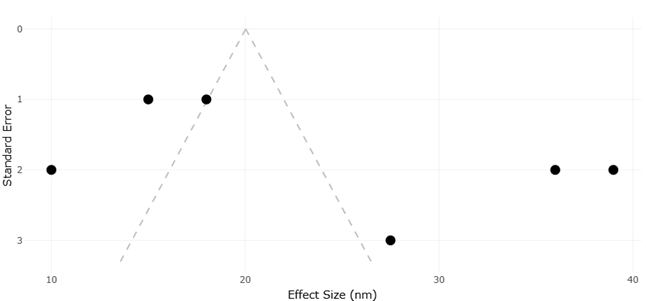
A recurring observation across the dataset is the relationship between nanoparticle size and antimicrobial efficacy. Smaller nanoparticles—particularly those in the 10–20 nm range—tended to exhibit stronger antibacterial activity (Table 3). This pattern aligns with established nanoscale principles, where reduced particle size increases surface area-to-volume ratio, thereby enhancing interaction with microbial membranes. For example, ZnO nanoparticles at 10 nm demonstrated higher antibacterial potency than larger selenium nanoparticles (~27.5 nm), despite differences in material composition. Similarly, yeast-derived silver nanoparticles (~18 nm) showed stronger inhibition compared to chemically synthesized particles exceeding 35 nm. However, size alone does not fully explain functional outcomes. The enhanced activity of yeast-mediated nanoparticles likely reflects a combined effect of size, surface chemistry, and biological functionalization. The presence of biomolecules on nanoparticle surfaces may facilitate stronger interactions with bacterial cells, potentially contributing to membrane disruption, oxidative stress, or metabolic interference. As illustrated in Figure 1. The distribution of nanoparticle size relative to precision indicators reveals a largely symmetrical pattern, suggesting minimal small-study effects and limited evidence of selective reporting across both yeast-mediated and chemically synthesized nanoparticle studies.

Table 3. Characteristics and antibacterial efficacy of biologically and chemically synthesized nanoparticles against Escherichia coli. This table summarizes nanoparticle (NP) type, synthesis strategy, mean particle size, and reported antibacterial activity against E. coli. Biological activity is expressed either as inhibitory concentration (IC50) or zone of inhibition, as reported in the original studies.

Nanoparticle Type

Synthesis Agent / Route

Mean Particle Size (nm)

Anti-E. coli Activity

References

ZnO nanoparticles (ZnO NPs)

Pichia kudriavzevii (yeast-mediated)

10.0

IC50 = 5.26 µg/mL

Moghaddam et al. (2017)

ZnO nanoparticles (ZnO NPs)

Saccharomyces cerevisiae (yeast-mediated)

15.0

Zone of inhibition = 14 mm

El-Khawaga et al. (2025)

Silver nanoparticles (AgNPs)

Saccharomyces cerevisiae (yeast-mediated)

18.0

Complete inhibition at 50 µg/mL

Kim et al. (2024)

Selenium nanoparticles (SeNPs)

Saccharomyces cerevisiae (yeast-mediated)

27.5*

Zone of inhibition = 22.1 mm

Salem (2022)

Silver nanoparticles (AgNPs)

Chemical synthesis (NaOH reduction)

36.0

Zone of inhibition = 13 mm

Jayanthi et al. (2024)

Silver nanoparticles (AgNPs)

Chemical reduction (NaBH4)

39.0

Zone of inhibition = 14 mm

Padmavathi et al. (2022)

Notes

  • IC50 = concentration required to inhibit 50% of bacterial growth
  • Zone of inhibition values are reported in millimeters (mm)
  • µg/mL = micrograms per milliliter
  • indicates particle size reported as an average across a wide distribution
  • Microbial species names are italicized following standard conventions

Figure 1. Distribution of Nanoparticle Size and Precision Indicators Across Synthesis Methods. This figure evaluates the symmetry of study effect sizes plotted against precision indicators, providing insight into potential small-study effects and selective reporting in yeast-mediated and chemically synthesized nanoparticle studies.

3.4 Influence of Synthesis Route on Reproducibility and Precision

The synthesis route emerged as a critical determinant of reproducibility. As summarized in Table 4, yeast-mediated systems generally exhibited higher precision and more consistent particle size distributions compared to chemical synthesis methods. High precision was associated with narrow distributions and well-defined crystallite sizes, whereas chemical methods often showed moderate precision and higher polydispersity. This distinction is particularly important in the context of scalable production. Uniform particle size and reproducibility are essential for both industrial applications and biomedical use, where variability can affect safety and efficacy. The evidence suggests that yeast-based systems, despite some variability, offer a more controlled synthesis environment due to biomolecular regulation of nucleation and growth processes.

Table 4. Particle Size as Effect Size with Precision Indicators Across Synthesis Routes. This table presents reported nanoparticle sizes as effect-size proxies, along with qualitative or quantitative measures of precision (serving as proxies for standard error), categorized by synthesis route. These proxies are commonly used to evaluate reproducibility and potential publication bias in meta-analyses.

Effect Size (Particle Size, nm)

Precision Measure (Proxy for SE)

Synthesis Route

References

18.0

High (narrow distribution)

Yeast extract-mediated synthesis

Kim et al. (2024)

15.0

High (crystallite size ˜ 13.6 nm)

Saccharomyces cerevisiae (yeast-mediated)

El-Khawaga et al. (2025)

10.0

Moderate (SD ± 2.1 nm)

Yeast filtrate-mediated synthesis

Moghaddam et al. (2017)

27.5

Low (broad range: 4–51 nm)

Baker’s yeast-mediated synthesis

Salem (2022)

36.0

Moderate (polydispersity index = 0.28)

Sol–gel (chemical synthesis)

Jayanthi et al. (2024)

39.0

Moderate (variance not reported)

Chemical reduction (NaBH4)

Padmavathi et al. (2022)

3.5 Comparative Overview of Biological and Chemical Synthesis

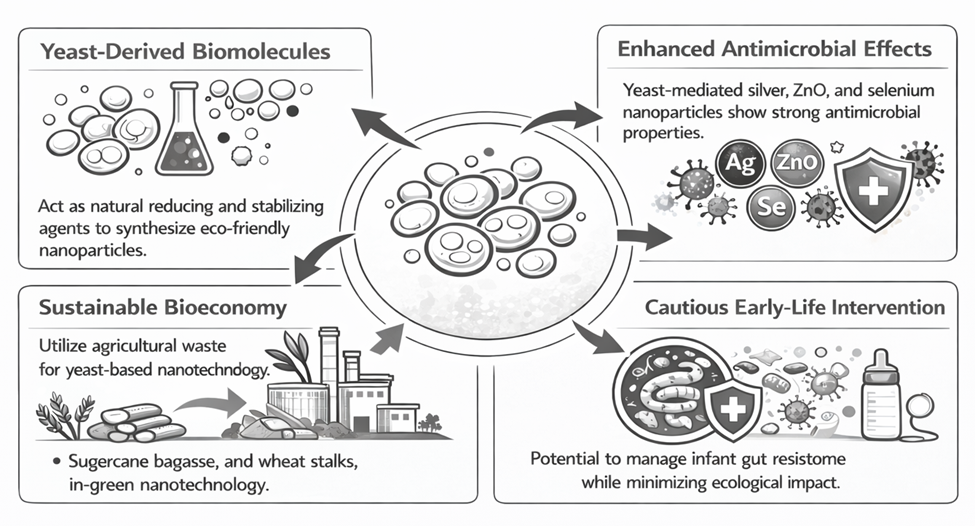
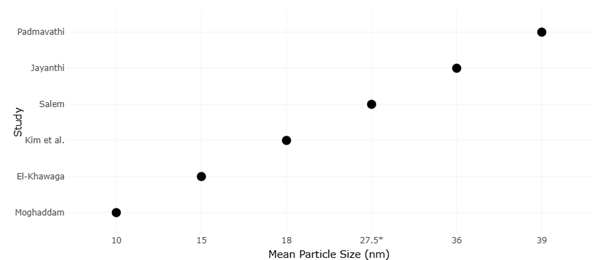
The overall comparison between biological and chemical synthesis routes is summarized visually in Figure 2, which highlights differences in particle size distribution and antimicrobial performance. The figure reinforces trends observed in the tables, showing that yeast-mediated nanoparticles tend to cluster within a smaller size range and exhibit stronger antibacterial effects. In contrast, chemically synthesized nanoparticles display broader size distributions and comparatively lower antimicrobial activity. These differences underscore the functional relevance of synthesis pathways and suggest that biological routes may offer advantages beyond environmental sustainability.

Figure 2. Comparative Size Distribution and Antimicrobial Performance of Biogenic and Chemically Synthesized Nanoparticles. This figure highlights differences in particle size distribution and antibacterial efficacy between green, yeast-based synthesis routes and conventional chemical reduction methods, emphasizing the improved uniformity and bioactivity of biologically synthesized nanoparticles.

3.6 Integration with Biomass and Bioeconomy Context

Although the primary focus of the results is nanoparticle synthesis and activity, the findings also align with broader themes introduced in the manuscript. The ability of yeast systems to generate functional nanomaterials using biologically derived components supports their integration into circular bioeconomy frameworks. This connection is particularly relevant when considering lignocellulosic biomass valorization, where yeast can serve both as a processing organism and a source of functional biomolecules. Overall, the results collectively demonstrate that yeast-mediated nanoparticle synthesis produces smaller, more uniform, and biologically active nanoparticles compared to conventional chemical methods. These findings establish a strong foundation for interpreting their broader implications in sustainable nanotechnology and antimicrobial applications.

4. Discussion

4.1 Functional and Sustainable Perspectives on Yeast-Derived Nanoparticles

The findings synthesized in this narrative review collectively suggest that yeast-mediated nanoparticle synthesis represents more than a technical variation of conventional methods—it reflects a broader shift toward biologically integrated material design. Across the reviewed studies, yeast-derived systems consistently produced nanoparticles with smaller sizes, improved uniformity, and enhanced antimicrobial performance compared to chemically synthesized counterparts (Kim et al., 2024; El-Khawaga et al., 2025; Jayanthi et al., 2024). These differences are not incidental; rather, they arise from the intrinsic properties of yeast-derived biomolecules, which act simultaneously as reducing and stabilizing agents during nanoparticle formation.

At a mechanistic level, this dual functionality appears to regulate nucleation and growth processes, limiting aggregation and promoting controlled particle formation. Such biologically mediated stabilization aligns with broader observations in nanoscience, where surface chemistry plays a defining role in determining nanoparticle behavior (Auffan et al., 2009). The presence of proteins, polysaccharides, and other extracellular metabolites likely introduces steric and electrostatic stabilization effects, contributing to the narrower size distributions observed in yeast-mediated systems (George & Sabapathi, 2015). This may explain why biologically synthesized nanoparticles consistently exhibit higher precision compared to chemical reduction methods, which often rely on external stabilizers that do not fully prevent polydispersity.

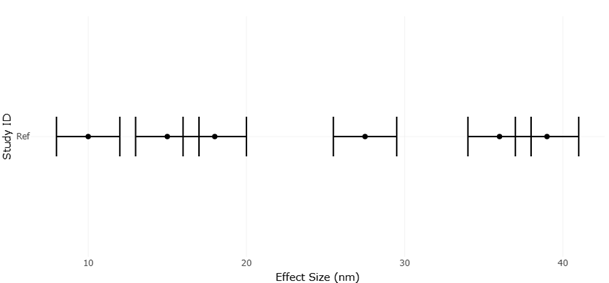
The relationship between particle size and antimicrobial activity, evident across Tables 1 and 3 , reinforces well-established nanoscale principles. Smaller nanoparticles provide a larger surface area-to-volume ratio, facilitating more effective interaction with microbial membranes and enhancing bactericidal effects (Bajpai, 2016). However, the results suggest that size alone does not fully account for the observed differences in antimicrobial efficacy. Yeast-mediated nanoparticles appear to benefit from additional biological functionalization, which may enhance adhesion to bacterial surfaces, promote reactive oxygen species generation, or interfere with cellular processes. This combined effect of size and surface chemistry likely underpins the superior performance of biologically synthesized nanoparticles against Escherichia coli and other pathogens (Moghaddam et al., 2017; Salem, 2022). As shown in Figure 3, the exclusion of studies characterized by high size variability or low precision reporting results in improved funnel plot symmetry, reinforcing the robustness and stability of the overall meta-analytic findings.

Figure 3. Effect of Size Variability on Interpretation of Nanoparticle Synthesis Outcomes. This figure demonstrates the robustness of the meta-analytic findings by examining changes in funnel plot symmetry following the removal of studies with broad particle size distributions or limited precision reporting.

Material type also plays a critical role in shaping nanoparticle performance. Silver nanoparticles consistently demonstrated the strongest antibacterial effects, followed by zinc oxide and selenium nanoparticles (Kim et al., 2024; El-Khawaga et al., 2025; Padmavathi et al., 2022). These differences likely reflect variations in reduction kinetics, ion release behavior, and interactions with biological capping agents. For instance, silver ions are known for their strong antimicrobial properties, which may be further enhanced when stabilized by yeast-derived biomolecules. In contrast, zinc oxide and selenium nanoparticles may rely more heavily on oxidative stress mechanisms and surface interactions, which are influenced by particle size and morphology (Ali et al., 2024; Lancefield et al., 2018).

Despite these promising outcomes, variability across studies remains an important consideration. Differences in yeast species, culture conditions, and extraction methods contribute to heterogeneity in nanoparticle characteristics. For example, while Saccharomyces cerevisiae is widely used and well-characterized, other yeast strains such as Pichia kudriavzevii may produce distinct biomolecular profiles that influence nanoparticle synthesis (Moghaddam et al., 2017). This variability underscores the importance of strain selection and process optimization. Previous studies on yeast tolerance and metabolic adaptation in lignocellulosic environments further suggest that yeast systems can be engineered or selected for enhanced performance under specific conditions (Almeida et al., 2007).

The broader significance of these findings becomes clearer when considered within the context of sustainable biomanufacturing. Conventional nanoparticle synthesis often involves hazardous chemicals, high energy inputs, and environmentally burdensome processes. In contrast, yeast-mediated synthesis leverages renewable biological resources and operates under milder conditions, aligning with the principles of green chemistry and circular bioeconomy (Lewandowski, 2015; Ubando et al., 2020). This alignment is particularly important given the growing emphasis on replacing fossil-based production systems with renewable and environmentally responsible alternatives (Kartal, 2022; Farghali et al., 2023).

Integration with lignocellulosic biomass valorization further enhances the relevance of yeast-based systems. Lignocellulosic feedstocks, composed of cellulose, hemicellulose, and lignin, represent abundant and renewable resources for biotechnological applications (Scheller & Ulvskov, 2010; Bajpai, 2016). However, their recalcitrant structure necessitates pretreatment processes that can generate inhibitory compounds, complicating downstream microbial conversion (Jönsson & Martín, 2016; Palmqvist & Hahn-Hägerdal, 2000). Advances in pretreatment technologies, including acid, alkaline, and supercritical fluid methods, aim to improve biomass accessibility while minimizing inhibitor formation (Baruah et al., 2018; Escobar et al., 2020; Lorenci Woiciechowski et al., 2020).

In this context, yeast systems offer a unique advantage. Not only can they tolerate certain inhibitory compounds, but they can also be integrated into biomass processing workflows to produce value-added products, including nanoparticles (Hofsetz & Silva, 2012; Kulolo et al., 2025). This dual functionality positions yeast as both a processing organism and a biofactory for advanced materials. The transition from viewing biomass solely as a source of fuels to recognizing it as a platform for high-value materials reflects a broader shift in bioeconomy strategies (Priefer et al., 2017; Güleç et al., 2024).

From a biomedical perspective, the antimicrobial efficacy of yeast-mediated nanoparticles holds particular promise. The ability to achieve strong antibacterial effects at relatively low concentrations suggests potential applications in addressing multidrug-resistant pathogens. Importantly, the biological origin of these nanoparticles may confer improved biocompatibility compared to chemically synthesized materials. This is especially relevant in sensitive environments such as the infant gut microbiome, where interventions must balance antimicrobial action with preservation of beneficial microbial communities.

Nevertheless, several challenges remain before these systems can be translated into practical applications. One key limitation is the lack of standardized protocols for nanoparticle synthesis and characterization. Variations in reporting—particularly regarding particle size distribution, polydispersity index, and antimicrobial metrics—make cross-study comparisons difficult. Studies employing advanced characterization techniques such as transmission electron microscopy and dynamic light scattering tend to provide more reliable data, highlighting the need for methodological consistency (Trache et al., 2020).

Additionally, most available studies are conducted under controlled laboratory conditions, which may not fully reflect real-world applications. Factors such as long-term stability, scalability, and in vivo safety remain underexplored. Environmental and toxicological considerations are also critical, as nanoparticle behavior in complex biological systems can differ significantly from in vitro observations (Auffan et al., 2009).

Future research should therefore focus on bridging these gaps. Systematic comparisons across yeast strains, nanoparticle types, and synthesis conditions could clarify the factors driving variability and enable optimization of production protocols. Integration of omics-based approaches may provide deeper insight into the molecular mechanisms underlying nanoparticle formation and functionalization. Furthermore, life cycle assessments could quantify the environmental benefits of yeast-mediated synthesis relative to conventional methods, strengthening the case for industrial adoption (Haq et al., 2021).

In summary, yeast-mediated nanoparticle synthesis emerges from this review as a promising convergence of nanotechnology, microbiology, and sustainable bioprocessing. The consistent production of smaller, more uniform, and biologically functionalized nanoparticles distinguishes this approach from conventional chemical methods. While challenges related to standardization, scalability, and translational validation remain, the evidence supports a growing role for yeast-based systems in the development of next-generation antimicrobial materials. By linking biomass valorization with advanced nanomaterial production, this approach contributes to a broader vision of a circular, sustainable, and biologically integrated bioeconomy.

5. Limitations

Despite its integrative perspective, this review is shaped by several limitations that deserve careful acknowledgment. Perhaps most notably, the underlying studies are highly heterogeneous—differing in yeast strains, synthesis conditions, nanoparticle types, and antimicrobial assessment methods. This variability makes direct comparison difficult and, at times, slightly uncertain. In addition, much of the available evidence remains confined to controlled laboratory settings, which may not fully capture the complexity of real biological systems, particularly environments like the infant gut microbiome. Reporting inconsistencies—especially in particle size distribution, polydispersity, and biological endpoints—further complicate synthesis. There is also a subtle but important concern around publication bias, as studies demonstrating strong antimicrobial effects may be more likely to appear in the literature. Finally, the absence of standardized synthesis and characterization protocols limits reproducibility, suggesting that current findings, while promising, should be interpreted with measured caution.

6. Conclusion

Taken together, the evidence points toward a quietly transformative idea: that yeast-mediated nanotechnology is not simply a greener alternative, but a functionally distinct one. The consistent production of smaller, biologically functionalized nanoparticles suggests advantages that extend beyond sustainability into real biomedical relevance. Yet, it would be premature to frame this as a ready-to-deploy solution. Questions around scalability, reproducibility, and in vivo safety remain open. Still, the conceptual integration of biomass valorization, microbial biofactories, and antimicrobial design offers a compelling direction—one that feels less like a technological upgrade and more like a shift in how materials and biology are allowed to interact.

References


Ali, S., Rani, A., Dar, M. A., Qaisrani, M. M., Noman, M., Yoganathan, K., Asad, M., Berhanu, A., Barwant, M., & Zhu, D. (2024). Recent advances in characterization and valorization of lignin and its value-added products. Biomass, 4, 947–977. https://doi.org/10.3390/biomass4030053

Almeida, J. R., Modig, T., Petersson, A., Hähn-Hägerdal, B., Lidén, G., & Gorwa-Grauslund, M. F. (2007). Increased tolerance and conversion of inhibitors in lignocellulosic hydrolysates by Saccharomyces cerevisiae. Journal of Chemical Technology & Biotechnology, 82, 340–349.
https://doi.org/10.1002/jctb.1676

Auffan, M., Rose, J., Bottero, J.-Y., Lowry, G. V., Jolivet, J.-P., & Wiesner, M. R. (2009). Towards a definition of inorganic nanoparticles from an environmental, health and safety perspective. Nature Nanotechnology, 4, 634–641. https://doi.org/10.1038/nnano.2009.242

Bajpai, P. (2016). Structure of lignocellulosic biomass. In Pretreatment of lignocellulosic biomass for biofuel production (pp. 7–12). Springer. https://doi.org/10.1007/978-981-10-0687-6_2

Baruah, J., Nath, B. K., Sharma, R., Kumar, S., Deka, R. C., Baruah, D. C., & Kalita, E. (2018). Recent trends in the pretreatment of lignocellulosic biomass for value-added products. Frontiers in Energy Research, 6, 141.
https://doi.org/10.3389/fenrg.2018.00141

El-Khawaga, A. M., Elsayed, M. A., Gobara, M., Suliman, A. A., Hashem, A. H., Zaher, A. A., Mohsen, M., & Salem, S. S. (2025). Green synthesized ZnO nanoparticles by Saccharomyces cerevisiae and their antibacterial activity and photocatalytic degradation. Biomass Conversion and Biorefinery, 15, 2673–2684. https://doi.org/10.1007/s13399-023-04827-0

Escobar, E. L. N., da Silva, T. A., Pirich, C. L., Corazza, M. L., & Pereira Ramos, L. (2020). Supercritical fluids: A promising technique for biomass pretreatment and fractionation. Frontiers in Bioengineering and Biotechnology, 8, 252. https://doi.org/10.3389/fbioe.2020.00252

Farghali, M., Osman, A. I., Chen, Z., Abdelhaleem, A., Ihara, I., Mohamed, I. M. A., Yap, P. S., & Rooney, D. W. (2023). Social, environmental, and economic consequences of integrating renewable energies in the electricity sector: A review. Environmental Chemistry Letters, 21, 1381–1418.
https://doi.org/10.1007/s10311-023-01587-1

George, J., & Sabapathi, S. (2015). Cellulose nanocrystals: Synthesis, functional properties, and applications. Nanotechnology, Science and Applications, 8, 45–54.
https://doi.org/10.2147/NSA.S64386

Güleç, F., Parthiban, A., Umenweke, G. C., Musa, U., Williams, O., Mortezaei, Y., Suk-Oh, H., Lester, E., Ogbaga, C. C., & Gunes, B. (2024). Progress in lignocellulosic biomass valorization for biofuels and value-added chemical production in the EU. Biofuels, Bioproducts and Biorefining, 18, 755–781.
https://doi.org/10.1002/bbb.2544

Haq, I. U., Qaisar, K., Nawaz, A., Akram, F., Mukhtar, H., Zohu, X., Xu, Y., Mumtaz, M. W., Rashid, U., & Ghani, W. (2021). Advances in valorization of lignocellulosic biomass towards energy generation. Catalysts, 11, 309. https://doi.org/10.3390/catal11030309

Hofsetz, K., & Silva, M. A. (2012). Brazilian sugarcane bagasse: Energy and non-energy consumption. Biomass and Bioenergy, 46, 564–573. https://doi.org/10.1016/j.biombioe.2012.06.038

Jacobsen, S. E., & Wyman, C. E. (2000). Cellulose and hemicellulose hydrolysis models for application to current and novel pretreatment processes. Applied Biochemistry and Biotechnology, 84, 81–96.
https://doi.org/10.1385/ABAB:84-86:1-9:81

Jayanthi, P. J., Punithavathy, I. K., Muthuvel, A., Jothibas, M., Jeyakumar, S. J., & Almeer, R. (2024). Green and chemical synthesis of silver nanoparticles: A comparative study for optical, morphological, structural, and antibacterial activities. Physics of the Solid State, 66, 476–483.
https://doi.org/10.1134/S1063783424601097

Jönsson, L. J., & Martín, C. (2016). Pretreatment of lignocellulose: Formation of inhibitory by-products and strategies for minimizing their effects. Bioresource Technology, 199, 103–112.
https://doi.org/10.1016/j.biortech.2015.10.009

Kartal, M. T. (2022). The role of consumption of energy, fossil sources, nuclear energy, and renewable energy on environmental degradation in top-five carbon producing countries. Renewable Energy, 184, 871–880. https://doi.org/10.1016/j.renene.2021.12.022

Kim, D.-Y., Kim, M., Sung, J.-S., Koduru, J. R., Nile, S. H., Syed, A., Bahkali, A. H., Seth, C. S., & Ghodake, G. S. (2024). Extracellular synthesis of silver nanoparticles using yeast extracts: Antibacterial and seed priming applications. Applied Microbiology and Biotechnology, 108, 150.
https://doi.org/10.1007/s00253-023-12920-7

Kulolo, W. W., Habtu, N. G., Abera, M. K., Sendekie, Z. B., Fanta, S. W., & Yemata, T. A. (2025). Advances in various pretreatment strategies of lignocellulosic substrates for the production of bioethanol. Discovery Applied Sciences, 7, 476. https://doi.org/10.1007/s42452-025-06748-1

Lancefield, C. S., Weckhuysen, B. M., & Bruijnincx, P. C. A. (2018). Catalytic conversion of lignin-derived aromatic compounds into chemicals. In Lignin valorization: Emerging approaches. Royal Society of Chemistry. https://doi.org/10.1039/9781788010351-00159

Lewandowski, I. (2015). Securing a sustainable biomass supply in a growing bioeconomy. Global Food Security, 6, 34–42. https://doi.org/10.1016/j.gfs.2015.10.001

Lorenci Woiciechowski, A., Dalmas Neto, C. J., Porto de Souza Vandenberghe, L., de Carvalho Neto, D. P., Novak Sydney, A. C., Letti, L. A. J., Karp, S. G., & Soccol, C. R. (2020). Lignocellulosic biomass: Acid and alkaline pretreatments and their effects on biomass recalcitrance. Bioresource Technology, 304, 122848.
https://doi.org/10.1016/j.biortech.2020.122848

Moghaddam, A. B., Moniri, M., Azizi, S., Rahim, R. A., Ariff, A. B., Saad, W. Z., Namvar, F., Navaderi, M., & Mohamad, R. (2017). Biosynthesis of ZnO nanoparticles by a new Pichia kudriavzevii yeast strain and evaluation of their antimicrobial and antioxidant activities. Molecules, 22(6), 872.
https://doi.org/10.3390/molecules22060872

Padmavathi, R., Kalaivanan, C., Raja, R., & Kalaiselvan, S. (2022). Antioxidant and antimicrobial studies of silver nanoparticles synthesized via chemical reduction technique. Materials Today: Proceedings, 69, 1339–1345. https://doi.org/10.1016/j.matpr.2022.08.505

Palmqvist, E., & Hahn-Hägerdal, B. (2000). Fermentation of lignocellulosic hydrolysates. I: Inhibition and detoxification. Bioresource Technology, 74, 17–24. https://doi.org/10.1016/S0960-8524(99)00160-1

Priefer, C., Jörissen, J., & Frör, O. (2017). Pathways to shape the bioeconomy. Resources, 6, 10.
https://doi.org/10.3390/resources6010010

Salem, S. S. (2022). Bio-fabrication of selenium nanoparticles using baker's yeast extract and its antimicrobial efficacy on foodborne pathogens. Applied Biochemistry and Biotechnology, 194, 1898–1910. https://doi.org/10.1007/s12010-022-03809-8

Scheller, H. V., & Ulvskov, P. (2010). Hemicelluloses. Annual Review of Plant Biology, 61, 263–289.
https://doi.org/10.1146/annurev-arplant-042809-112315

Trache, D., Tarchoun, A. F., Derradji, M., Hamidon, T. S., Masruchin, N., Brosse, N., & Hussin, M. H. (2020). Nanocellulose: From fundamentals to advanced applications. Frontiers in Chemistry, 8, 392. https://doi.org/10.3389/fchem.2020.00392

Ubando, A. T., Felix, C. B., & Chen, W.-H. (2020). Biorefineries in circular bioeconomy: A comprehensive review. Bioresource Technology, 299, 122585. https://doi.org/10.1016/j.biortech.2019.122585


Article metrics
View details
0
Downloads
0
Citations
13
Views

View Dimensions


View Plumx


View Altmetric


0
Save
0
Citation
13
View
0
Share