Microbial Bioactives

Microbial Bioactives | Online ISSN 2209-2161
380
Citations
258.3k
Views
185
Articles
Your new experience awaits. Try the new design now and help us make it even better
Switch to the new experience
Figures and Tables
REVIEWS   (Open Access)

Microbial Bioactive Metabolites in Cystic Fibrosis: Drivers of Chronic Lung Infection and Novel Therapeutic Targets

Nafiz Tareq Hasnain 1*, Manish Mittal 1, Pallab Paul 1

+ Author Affiliations

Microbial Bioactives 9 (1) 1-8 https://doi.org/10.25163/microbbioacts.9110765

Submitted: 08 April 2026 Revised: 21 May 2026  Published: 07 June 2026 


Abstract

Cystic fibrosis (CF) lung disease has traditionally been understood as a consequence of defective ion transport, impaired mucociliary clearance, and persistent bacterial colonization. Yet recent advances in metabolomics, microbiome science, and immunology suggest that this explanation, while still fundamentally valid, may capture only part of the disease process. Increasingly, the CF airway is being recognized as a metabolically active ecosystem in which host-derived lipids, microbial metabolites, inflammatory mediators, and immune signaling pathways interact continuously to shape chronic pulmonary injury. This narrative review synthesizes current evidence regarding microbial bioactive metabolites and their contribution to airway inflammation, pathogen adaptation, oxidative stress, and therapeutic resistance in CF. Particular attention is given to sphingolipid dysregulation, short-chain fatty acids, quorum-sensing molecules, immunometabolites such as succinate and itaconate, and gut–lung axis signaling. The review further explores the growing therapeutic relevance of natural bioactive compounds, sphingolipid modulators, and CFTR-targeted therapies in controlling chronic inflammatory and metabolic dysfunction. Collectively, the evidence suggests that microbial metabolites are not passive byproducts of infection but active regulators of airway ecology and disease persistence. Although important mechanistic uncertainties remain, emerging metabolomic insights may ultimately help redefine CF management through precision immunometabolism and multi-target therapeutic strategies aimed at disrupting the metabolic conditions that sustain chronic airway disease.

Keywords: Cystic fibrosis, Microbial bioactive metabolites, Immunometabolism, Sphingolipids, Pseudomonas aeruginosa, Chronic lung inflammation, Precision therapeutics

1. Introduction

Cystic fibrosis (CF) remains one of the most intensively studied inherited respiratory disorders, yet its biological complexity continues to challenge both clinicians and researchers. Traditionally, CF was viewed primarily as a monogenic disease caused by mutations in the cystic fibrosis transmembrane conductance regulator (CFTR) gene, resulting in defective chloride and bicarbonate transport across epithelial membranes. While this explanation remains fundamentally correct, it no longer captures the full depth of the disease process. Increasingly, CF is being understood not simply as a disorder of ion transport, but as a dynamic metabolic and immunological condition in which host-derived and microbial metabolites continuously shape airway ecology, inflammation, and disease progression (Elborn, 2016).

The dysfunctional CFTR protein alters the hydration and pH balance of airway surface liquid, producing dehydrated mucus that is unusually viscous and difficult to clear. Over time, impaired mucociliary clearance creates a permissive environment for microbial colonization and persistent inflammation. Even in clinically stable patients or infants diagnosed early in life, bronchoalveolar lavage studies have demonstrated elevated neutrophilic inflammation and pro-inflammatory cytokine release, suggesting that inflammatory injury begins long before irreversible structural lung damage becomes apparent (Konstan et al., 1994; Khan et al., 1995; Bonfield et al., 1995). What is perhaps more striking is that inflammation in CF does not behave as a transient defensive response. Instead, it evolves into a chronic self-amplifying cycle where epithelial dysfunction, immune dysregulation, microbial persistence, and metabolic adaptation reinforce one another in increasingly complex ways.

Historically, the microbial dimension of CF lung disease was often interpreted through a relatively narrow lens focused on classical pathogens such as Staphylococcus aureus and Pseudomonas aeruginosa. However, recent microbiome and metabolomic investigations suggest that the CF airway is not merely infected; rather, it functions as a metabolically active ecosystem shaped by fluctuating oxygen gradients, nutrient availability, host immune pressures, and microbial signaling compounds (Palmer et al., 2007; Palmer & Whiteley, 2015). Within this environment, microbial bioactive metabolites are not passive byproducts of bacterial growth. They actively regulate pathogen competition, biofilm maturation, immune signaling, oxidative stress, and tissue injury. In many respects, these metabolites may represent the biochemical language through which host and microbes negotiate persistence within the diseased airway.

Among the organisms capable of exploiting this altered airway niche, Pseudomonas aeruginosa has emerged as perhaps the most metabolically adaptable pathogen in CF. Early colonizers are often gradually displaced as P. aeruginosa acquires phenotypic characteristics favorable for chronic persistence, including biofilm formation, quorum sensing activation, and metabolic flexibility (Palmer & Whiteley, 2015). Yet this transition does not occur in isolation. The surrounding metabolic environment appears to selectively favor organisms capable of utilizing host-derived carbon sources and inflammatory metabolites. This realization has shifted attention toward understanding how microbial metabolites, host lipids, and immunometabolic pathways collectively drive pathogen dominance.

One area that has attracted considerable attention involves the role of sphingolipids and related bioactive lipids in CF airway inflammation. Several studies have shown that CFTR dysfunction disrupts lipid homeostasis, particularly within epithelial and immune cells, leading to abnormal ceramide accumulation and altered sphingosine metabolism (Becker et al., 2010; Aureli et al., 2016). Ceramide accumulation has been associated with enhanced neutrophilic inflammation, epithelial cell death, oxidative stress, and increased susceptibility to P. aeruginosa infection. Conversely, reductions in protective lipid mediators such as sphingosine-1-phosphate (S1P) may impair immune regulation and epithelial repair mechanisms (Untersmayr et al., 2020). Alterations in membrane lipid composition within CF macrophages may further compromise bacterial clearance and sustain chronic infection (Lévêque et al., 2017).

These lipid abnormalities appear to have clinical relevance even during early disease stages. Elevated concentrations of lysophosphatidic acid and other inflammatory lipids have been linked with structural lung damage progression in children with CF (Horati et al., 2020). Similarly, oxidative stress-driven lipid dysregulation has been observed in early CF lung disease before substantial functional decline becomes clinically evident (Scholte et al., 2019). Such findings suggest that metabolic alterations may precede, and perhaps partially drive, irreversible pulmonary injury. Consequently, lipid metabolites are increasingly being explored not only as mechanistic contributors to disease but also as potential biomarkers for monitoring progression and therapeutic response.

At the same time, the CF airway microbiota itself contributes substantially to the metabolic landscape. Hypoxic and anaerobic microenvironments within mucus plugs support fermentative metabolism by facultative and obligate anaerobes, resulting in the production of short-chain fatty acids (SCFAs) such as acetate, propionate, and butyrate. These metabolites exhibit complex and somewhat paradoxical effects within CF airways. On one hand, SCFAs can intensify inflammatory signaling by stimulating cytokine production, including IL-8 release from airway epithelial cells (Ghorbani et al., 2015). On the other hand, their effects on bacterial growth appear concentration dependent, occasionally suppressing P. aeruginosa proliferation under acidic conditions while promoting adaptation at lower concentrations. This duality illustrates the difficulty of categorizing microbial metabolites as strictly beneficial or harmful. Their biological effects are often highly context dependent and influenced by pH, oxygen availability, microbial composition, and host immune status.

Another emerging concept in CF pathophysiology involves immunometabolism, particularly within macrophages and neutrophils. CF macrophages demonstrate exaggerated inflammatory responses and altered metabolic programming characterized by increased glycolysis and accumulation of metabolites such as succinate and itaconate (Bruscia et al., 2009). Succinate serves not only as an inflammatory signal but also as a preferred carbon source for P. aeruginosa, thereby linking host immune metabolism directly to bacterial adaptation (Riquelme & Prince, 2021). Even more intriguingly, P. aeruginosa possesses metabolic pathways capable of degrading itaconate, a metabolite normally associated with anti-inflammatory host defense mechanisms. This metabolic exploitation reflects a sophisticated level of host-pathogen interaction in which bacterial survival depends, at least partly, on manipulating the immune system’s own biochemical responses.

Beyond central carbon metabolism, nutrient availability within CF sputum strongly influences bacterial behavior. The CF airway contains elevated concentrations of amino acids, DNA fragments, lipids, and sugars derived from damaged host tissues and inflammatory cell turnover. Aromatic amino acids such as phenylalanine and tyrosine can stimulate quorum sensing pathways, including the production of the Pseudomonas quinolone signal (PQS), which regulates virulence factors and biofilm-associated behaviors (Palmer & Whiteley, 2015). Likewise, N-acetylglucosamine enhances the production of phenazines such as pyocyanin, compounds that generate reactive oxygen species and contribute directly to epithelial injury and declining lung function (Hunter et al., 2012). These observations reinforce the idea that CF sputum is not metabolically inert. Rather, it acts as a chemically active medium capable of modulating bacterial pathogenicity in real time.

More recently, attention has expanded beyond the lungs to include the gut-lung axis in CF. Recurrent antibiotic exposure, altered mucus physiology, and CFTR dysfunction profoundly reshape gut microbial communities, resulting in intestinal dysbiosis and altered metabolite production (Thavamani et al., 2021). Metabolites derived from gut microbiota, particularly indole compounds, may influence pulmonary inflammation through systemic immune signaling pathways involving the aryl hydrocarbon receptor (AHR) (Hou et al., 2025). Elevated indole-related volatile compounds have been associated with poorer pulmonary outcomes and may potentially serve as non-invasive biomarkers of microbial imbalance and disease activity. Emerging evidence also suggests that gut microbial disturbances may contribute indirectly to pulmonary pathogen colonization and immune dysfunction (Marsh et al., 2026).

Despite remarkable advances in therapy, especially with the introduction of highly effective CFTR modulators such as elexacaftor/tezacaftor/ivacaftor (ETI), persistent inflammation and chronic infection remain significant clinical challenges (Harwood et al., 2021; Jarosz-Griffiths et al., 2020). Although modulators substantially improve lung function and survival, they do not uniformly normalize airway microbiology or inflammatory signaling. Some studies indicate that CFTR modulators alter phagocyte activity and inflammatory responses only partially (Meoli et al., 2022), while others report minimal changes in volatile breath metabolomic profiles despite clinical improvement (Seidl et al., 2026). These findings raise an important possibility: correcting CFTR function alone may not fully reverse the deeply established metabolic networks sustaining chronic infection.

Consequently, there is growing interest in therapies capable of targeting downstream metabolic and inflammatory pathways. Strategies under investigation include sphingolipid modulators such as miglustat and acid sphingomyelinase inhibitors (Dechecchi et al., 2008; Mitri et al., 2020), inhaled anti-biofilm therapies including alginate oligosaccharides (Fischer et al., 2022), metabolically active natural products and phytochemicals (Luo et al., 2025), essential oils with anti-biofilm activity (Papa et al., 2020), and optimized inhaled antibiotic combinations (Taccetti et al., 2021). Importantly, these approaches increasingly recognize that chronic CF lung disease cannot be explained solely through bacterial presence. The metabolic interactions between host immunity, microbial communities, and bioactive signaling molecules may be equally critical determinants of disease persistence and therapeutic failure.

Taken together, current evidence suggests that microbial bioactive metabolites occupy a central, though still incompletely understood, position in the progression of CF lung disease. They influence inflammation, microbial adaptation, epithelial injury, immune signaling, and treatment responsiveness in ways that are remarkably interconnected. Yet substantial uncertainties remain. It is still unclear which metabolites are merely markers of disease progression and which actively drive pathology. Likewise, the extent to which CFTR modulators reshape airway metabolomics over the long term remains uncertain, particularly in patients with established structural disease or chronic P. aeruginosa colonization (Gramegna et al., 2026; Pailhoriès et al., 2026). Addressing these gaps may ultimately help redefine therapeutic strategies, shifting CF management toward a more integrated metabolic and ecological model of airway disease rather than a purely antimicrobial one.

2. Methodology

2.1 Study Design and Review Approach

This study was conducted as a narrative review aimed at critically synthesizing current evidence regarding microbial bioactive metabolites and their role in cystic fibrosis (CF) lung disease, with particular emphasis on chronic airway inflammation, microbial adaptation, immunometabolism, and emerging therapeutic strategies. Unlike systematic reviews that focus primarily on predefined quantitative outcomes, the present review adopted a broader interpretive framework to explore mechanistic relationships among host-derived lipids, microbial metabolites, inflammatory signaling pathways, and respiratory disease progression. The narrative review design was considered especially appropriate because the available literature remains highly heterogeneous, spanning clinical studies, experimental models, metabolomic investigations, microbiome analyses, pharmacological studies, and translational respiratory research.

The review was developed to provide an integrated overview of the evolving concept that CF airway disease functions as a metabolically active ecosystem rather than solely as a disorder of mucus obstruction and bacterial colonization. Particular attention was given to emerging evidence related to sphingolipid dysregulation, microbial fermentation products, host immunometabolism, quorum-sensing metabolites, oxidative stress pathways, and natural bioactive compounds with potential therapeutic relevance.

2.2 Literature Search Strategy

A comprehensive literature search was conducted using multiple electronic databases, including PubMed, Scopus, Web of Science, Google Scholar, and ScienceDirect. Searches were performed to identify peer-reviewed articles published primarily between 1994 and 2026, although selected earlier foundational studies were also considered when historically relevant to CF pathophysiology and inflammatory mechanisms. The search process combined Medical Subject Headings (MeSH) terms and keyword-based strategies related to cystic fibrosis metabolomics and respiratory inflammation.

The primary search terms included combinations of: “cystic fibrosis,” “bioactive metabolites,” “microbial metabolites,” “sphingolipids,” “ceramide,” “short-chain fatty acids,” “Pseudomonas aeruginosa,” “quorum sensing,” “oxidative stress,” “immunometabolism,” “gut–lung axis,” “CFTR modulators,” “metabolomics,” “lipidomics,” “respiratory inflammation,” “biofilm metabolism,” and “natural bioactive compounds.” Additional manual searches of reference lists from highly relevant articles were also performed to identify studies not captured during the initial database screening.

2.3 Eligibility Criteria and Study Selection

Studies were included if they addressed at least one of the following areas: (i) microbial bioactive metabolites in CF airways, (ii) host-derived lipid mediators and inflammatory signaling, (iii) metabolomic or lipidomic alterations in CF, (iv) immunometabolic interactions involving airway pathogens, (v) microbial adaptation and quorum-sensing pathways, or (vi) therapeutic interventions targeting metabolic and inflammatory pathways in respiratory disease. Both clinical and experimental studies were considered eligible, including in vitro investigations, animal studies, translational respiratory research, and observational clinical studies.

Preference was given to studies with strong mechanistic relevance, recent metabolomic findings, and clinically meaningful respiratory outcomes. Narrative reviews, systematic reviews, and landmark mechanistic papers were also incorporated where they provided conceptual or biological context for interpreting newer findings. Studies unrelated to respiratory disease, non-English publications, conference abstracts lacking sufficient methodological detail, and duplicate reports were excluded from the final synthesis.

The selection process was conducted through title and abstract screening followed by full-text evaluation of potentially relevant studies. Particular emphasis was placed on identifying evidence that linked metabolic alterations directly with chronic airway inflammation, microbial persistence, oxidative injury, or therapeutic responsiveness in CF.

2.4 Data Extraction and Thematic Synthesis

Relevant information from eligible studies was extracted manually and organized into thematic categories. These categories included: (i) bioactive lipid abnormalities and airway injury, (ii) microbial fermentation metabolites and ecological adaptation, (iii) immunometabolic signaling in chronic infection, (iv) gut–lung axis interactions, (v) natural bioactive compounds and phytochemicals, and (vi) pharmacological modulators targeting inflammatory and metabolic pathways.

Data extracted from the selected studies included metabolite type, biological source, signaling pathway involvement, inflammatory effects, microbial interactions, therapeutic mechanisms, and major clinical or experimental findings. Quantitative findings related to oxidative stress markers, inflammatory cytokines, metabolomic signatures, and microbial metabolites were summarized descriptively rather than statistically pooled because of methodological heterogeneity among studies. Tables were subsequently developed to synthesize bioactive lipid profiles, microbial metabolites, natural therapeutic compounds, and pharmacological modulators relevant to CF airway disease.

2.5 Methodological Considerations and Limitations

Several limitations inherent to narrative review methodology should be acknowledged. The included studies differed substantially in experimental design, patient populations, analytical methods, and metabolomic platforms, which limited direct comparison across studies. In addition, many emerging findings related to immunometabolism and microbial metabolomics remain based on preclinical or exploratory investigations rather than large-scale longitudinal clinical trials.

Despite these limitations, the narrative review approach allowed integration of mechanistic insights across diverse scientific disciplines, including respiratory medicine, microbiology, immunology, metabolomics, and pharmacology. This broader synthesis was considered valuable for exploring the complex and interconnected metabolic interactions underlying chronic CF lung disease and for identifying potential future therapeutic directions centered on precision immunometabolism and metabolic-targeted respiratory care (Elborn, 2016; Harwood et al., 2021; Mitri et al., 2020).

3. Bioactive Lipids and Immunometabolic Drivers of Chronic Airway Inflammation in Cystic Fibrosis

3.1 Inflammatory Diseases and Bioactive Lipids in the Respiratory Tract

Cystic fibrosis (CF) lung disease has traditionally been interpreted through a largely mechanical framework, one centered on dehydrated mucus, impaired mucociliary clearance, and progressive airway obstruction. While these features unquestionably remain central to disease progression, they no longer seem sufficient to explain the extraordinary persistence of inflammation and microbial adaptation observed in many patients. Increasingly, evidence suggests that the CF airway behaves less like a passive site of obstruction and more like a highly dynamic metabolic environment where host-derived lipids, microbial metabolites, immune mediators, and environmental stress signals interact continuously. Within this altered biochemical landscape, bioactive metabolites appear to shape not only inflammatory responses but also pathogen survival, tissue remodeling, and long-term pulmonary decline (Harwood et al., 2021; Mitri et al., 2020). Figure 1 summarizes the dynamic metabolic environment of the cystic fibrosis airway, highlighting the interconnected roles of bioactive metabolites, microbial adaptation, immune dysregulation, and oxidative stress in sustaining chronic pulmonary inflammation and disease progression.

The emergence of metabolomics and breathomics has further complicated earlier assumptions about CF pathophysiology. These approaches have revealed that the respiratory tract in CF contains a remarkably diverse array of inflammatory lipids, microbial fermentation products, oxidative stress metabolites, and immunomodulatory compounds. Some of these molecules may function as biomarkers of disease activity, whereas others appear to actively drive pathology itself. The distinction, however, is not always straightforward. In many cases, metabolites simultaneously reflect and reinforce inflammation, making it difficult to separate cause from consequence. This ambiguity may partly explain why chronic airway inflammation often persists even after the introduction of highly effective CFTR modulator therapies such as elexacaftor/tezacaftor/ivacaftor (ETI) (Gramegna et al., 2026; Seidl et al., 2026).

3.2 Bioactive Lipids and Early Pulmonary Injury

Among the most intensively investigated metabolic abnormalities in CF are disruptions in sphingolipid and phospholipid metabolism. Lipids within the respiratory tract are not merely structural membrane components; they also function as signaling mediators that regulate epithelial integrity, immune cell recruitment, apoptosis, oxidative stress, and microbial defense. Under healthy conditions, these pathways remain tightly balanced. In CF, however, CFTR dysfunction appears to disturb this equilibrium at multiple levels (Lévêque et al., 2017).

One particularly important finding involves the accumulation of ceramide within airway tissues. Ceramide is a bioactive sphingolipid known to promote inflammatory signaling and epithelial injury. Experimental studies suggest that defective CFTR alters intracellular vesicular pH, impairing acid sphingomyelinase regulation and subsequently promoting ceramide accumulation (Dechecchi et al., 2011). Elevated ceramide concentrations have been associated with increased neutrophilic infiltration, oxidative stress, and heightened susceptibility to chronic bacterial colonization. Although inflammation in CF has long been linked to persistent infection, these findings imply that at least part of the inflammatory process may emerge intrinsically from disrupted lipid metabolism itself rather than solely from microbial presence (Bardin et al., 2018; Snowball et al., 2026).

The significance of these abnormalities becomes particularly evident during early disease stages. Longitudinal bronchoalveolar lavage fluid analyses in children with CF have demonstrated that specific lipid signatures can predict structural lung disease progression even before severe clinical decline becomes apparent (Horati et al., 2020). Increased ratios of long-chain ceramides to very-long-chain ceramides have been associated with worsening PRAGMA-CF scores and airway remodeling. Likewise, oxidative stress-associated lipid disturbances have been observed in young patients with relatively preserved lung function, suggesting that metabolic injury begins remarkably early in the disease process (Scholte et al., 2019).

Other lipid mediators may contribute to pulmonary injury through somewhat different mechanisms. Lysophosphatidic acid (LPA) and lysophosphatidylcholine (LPC), for example, are elevated in CF airways and appear capable of amplifying cytokine signaling, epithelial activation, and tissue remodeling responses (Horati et al., 2020). LPA signaling has been linked to amphiregulin release and neutrophil recruitment, processes that may perpetuate the chronic inflammatory cycle characteristic of CF lung disease. At the same time, protective lipid mediators such as sphingosine-1-phosphate (S1P) are often diminished. Reduced S1P levels may impair immune regulation and epithelial repair pathways, potentially worsening pulmonary damage over time (Untersmayr et al., 2020).

Interestingly, lipid dysregulation is not unique to CF and has also been reported in other inflammatory pulmonary disorders, including idiopathic pulmonary fibrosis (IPF) (Bargagli et al., 2020; Yan et al., 2017). While the pathogenic mechanisms differ substantially between these diseases, similarities in disrupted lipid signaling pathways raise the possibility that certain metabolic drivers of inflammation may transcend individual respiratory conditions. This overlap has stimulated growing interest in targeting lipid metabolism therapeutically across chronic lung diseases more broadly. Figure 2 summarizes the mechanistic relationship between CFTR dysfunction and lipid metabolic abnormalities in cystic fibrosis, highlighting how altered ceramide, LPA/LPC, and S1P signaling pathways contribute to oxidative stress, epithelial injury, neutrophilic inflammation, and progressive pulmonary decline.

3.3 Microbial Fermentation Products and Airway Inflammation

The metabolic environment of the CF airway is further complicated by microbial fermentation products generated under hypoxic and anaerobic conditions. Thick mucus plugs create oxygen gradients that favor the growth of facultative and obligate anaerobes, many of which produce short-chain fatty acids (SCFAs) such as acetate, propionate, and butyrate. Traditionally, SCFAs have often been viewed positively because of their anti-inflammatory roles within the gastrointestinal tract. Yet within the CF lung, their effects appear considerably more complex and,
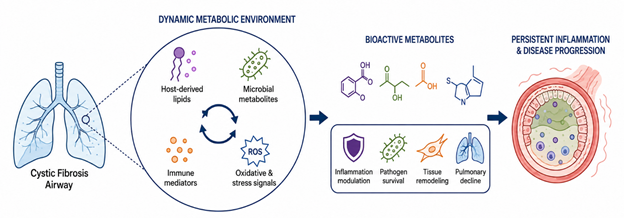
Figure 1: Metabolic and Inflammatory Interactions Driving Cystic Fibrosis Lung Disease. This figure illustrates how host-derived lipids, microbial metabolites, immune mediators, and oxidative stress signals interact within the cystic fibrosis airway microenvironment, contributing to persistent inflammation, pathogen survival, tissue remodeling, and progressive pulmonary decline.
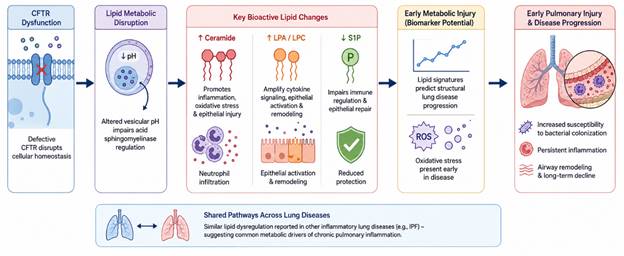
Figure 2. Bioactive Lipid Dysregulation and Early Pulmonary Injury in Cystic Fibrosis. This infographic illustrates how CFTR dysfunction disrupts lipid metabolic pathways, leading to ceramide accumulation, altered lysophospholipid signaling, oxidative stress, immune dysregulation, and progressive airway inflammation that contributes to early pulmonary injury and chronic lung disease progression in cystic fibrosis.


at times, contradictory (Ghorbani et al., 2015).

Elevated SCFA concentrations in sputum have been associated with increased neutrophilic inflammation and heightened cytokine release, including IL-6 and IL-8 production by airway epithelial cells. Propionate, in particular, appears capable of intensifying inflammatory signaling pathways while simultaneously altering bacterial growth dynamics. What makes these metabolites especially intriguing is their concentration-dependent behavior. Lower SCFA levels may support bacterial persistence and metabolic adaptation, whereas higher acidic concentrations can inhibit certain organisms or promote the selection of resistant phenotypes (Ghorbani et al., 2015). This duality complicates simplistic interpretations of microbial metabolites as either beneficial or harmful.

The ecological implications are equally important. Anaerobic bacterial communities are increasingly recognized as active participants in CF airway disease rather than merely incidental colonizers. Shifts toward anaerobe-dominated microbial networks have been observed in patients with advanced disease or non-tuberculous mycobacterial infection (Pailhoriès et al., 2026). These organisms contribute not only to local metabolite production but also to broader alterations in airway pH, redox balance, and inflammatory signaling. In effect, the microbial community continuously reshapes the biochemical conditions that sustain its own persistence.

3.4 Immunometabolism and Pathogen Adaptation

Perhaps one of the most fascinating developments in recent years involves the concept of immunometabolism in CF. Activated immune cells do not simply produce inflammatory cytokines; they also undergo profound metabolic reprogramming that can influence pathogen behavior directly. Neutrophils and macrophages in CF airways exhibit altered glycolytic activity and increased production of metabolites such as succinate and itaconate (Makam et al., 2009).

Pseudomonas aeruginosa, the dominant chronic pathogen in many adults with CF, appears exceptionally well adapted to exploit these metabolic conditions. Rather than relying solely on traditional nutrients, P. aeruginosa preferentially consumes host-derived succinate as a carbon source, facilitating rapid growth and promoting biofilm-associated phenotypes (Palmer & Whiteley, 2015; Riquelme & Prince, 2021). The organism’s metabolic flexibility likely contributes substantially to its extraordinary persistence within CF airways.

Even more striking is the relationship between P. aeruginosa and itaconate. Normally, itaconate functions as an anti-inflammatory immunometabolite intended to suppress excessive inflammation and inhibit bacterial metabolism. However, P. aeruginosa possesses metabolic pathways capable of degrading and utilizing itaconate, effectively converting a host defense mechanism into a survival advantage (Riquelme & Prince, 2021). This phenomenon highlights the sophistication of metabolic host-pathogen interactions in chronic CF infection. The bacteria are not merely surviving within inflammation; they are adapting specifically to the inflammatory metabolites generated by the host immune response itself.

3.5 The Gut–Lung Axis and Systemic Metabolic Signaling

Although CF lung disease remains the major determinant of morbidity and mortality, growing evidence suggests that pulmonary inflammation cannot be fully understood without considering systemic microbial interactions, particularly those involving the gut microbiome. CF-associated intestinal dysbiosis arises from multiple factors, including altered epithelial ion transport, frequent antibiotic exposure, pancreatic insufficiency, and specialized nutritional regimens (Thavamani et al., 2021).

This dysbiosis may influence respiratory disease through the gut–lung axis, a bidirectional communication network mediated partly by microbial metabolites. Indole derivatives produced during bacterial tryptophan metabolism have attracted particular interest because they serve as ligands for the aryl hydrocarbon receptor (AHR), an important regulator of epithelial integrity and immune homeostasis (Hou et al., 2025). Elevated indole-related compounds in exhaled breath have been associated with poorer pulmonary outcomes and chronic P. aeruginosa colonization.

The implications of these findings remain somewhat uncertain. It is still unclear whether gut-derived metabolites actively contribute to pulmonary inflammation or primarily function as biomarkers reflecting broader systemic dysbiosis. Nevertheless, mounting evidence suggests that intestinal microbial disturbances may influence pulmonary immunity more substantially than previously appreciated (Marsh et al., 2026). This has prompted increasing interest in microbiome-directed interventions, dietary modulation, and metabolite-targeted
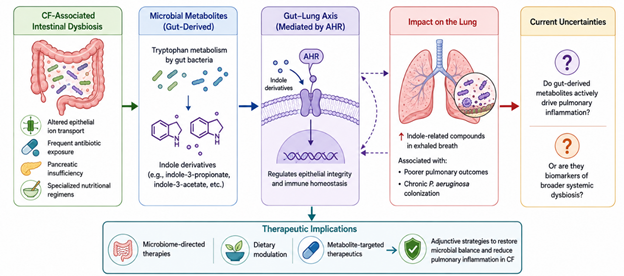
Figure 3. Gut–Lung Axis and Microbial Metabolite Signaling in Cystic Fibrosis. This Figure illustrates how CF-associated intestinal dysbiosis may influence pulmonary inflammation through gut-derived microbial metabolites, particularly indole derivatives that regulate epithelial integrity and immune homeostasis via aryl hydrocarbon receptor (AHR)-mediated signaling pathways.
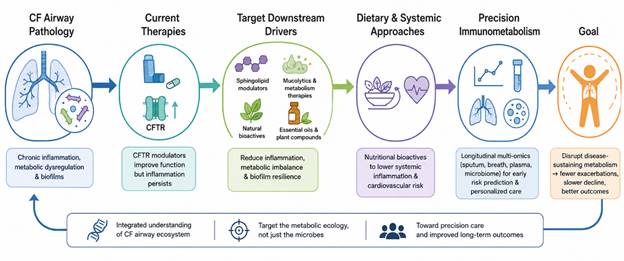
Figure 4. Precision Immunometabolism-Based Therapeutic Framework for Cystic Fibrosis Lung Disease. This figure illustrates how persistent airway inflammation and metabolic dysregulation continue despite CFTR modulator therapy, highlighting emerging strategies targeting sphingolipid signaling, biofilm metabolism, natural bioactives, and precision metabolomic profiling to improve long-term clinical outcomes in cystic fibrosis.

therapeutics as adjunctive strategies in CF care. Figure 3 summarizes the proposed gut–lung axis in cystic fibrosis, highlighting the role of intestinal dysbiosis, tryptophan-derived microbial metabolites, and AHR signaling in modulating pulmonary immunity, chronic inflammation, and susceptibility to persistent respiratory colonization.

3.6 Emerging Therapeutic Strategies Beyond CFTR Correction

The development of CFTR modulators has undoubtedly transformed CF management. ETI therapy improves lung function, nutritional status, and survival in many patients. Yet despite these remarkable advances, complete resolution of airway inflammation and chronic infection remains uncommon (Harwood et al., 2021). In many individuals, inflammatory pathways appear to persist despite partial restoration of CFTR activity, suggesting that chronic metabolic alterations may become somewhat self-sustaining over time.

Consequently, attention has shifted toward therapies targeting downstream inflammatory and metabolic drivers. Sphingolipid modulators, including acid sphingomyelinase inhibitors such as amitriptyline, have shown potential for reducing ceramide accumulation and inflammatory signaling (Dechecchi et al., 2011; Mitri et al., 2020). Likewise, mucolytic and metabolism-based therapies aimed at disrupting biofilm nutrient networks continue to evolve. Natural bioactive compounds have also emerged as promising adjunctive candidates. Curcumin, resveratrol, and baicalin possess anti-inflammatory and antioxidant properties that may influence CF-related signaling pathways (Chang et al., 2021; Luo et al., 2025). Baicalin, for example, has demonstrated anti-fibrotic and metabolic regulatory effects in pulmonary injury models through modulation of glutathione and lipid metabolism. Essential oils and plant-derived bioactive substances have similarly shown anti-biofilm activity against Staphylococcus aureus isolates obtained from CF patients (Papa et al., 2020). Although many of these approaches remain experimental, they reflect a broader conceptual shift toward targeting the metabolic ecology of CF rather than focusing exclusively on antimicrobial eradication.

At the same time, interest is growing in dietary and nutritional bioactives capable of reducing systemic inflammation and cardiovascular complications associated with CF (Trandafir et al., 2023). These interventions may become increasingly relevant as life expectancy improves and long-term comorbidities emerge more prominently.

The understanding of CF lung disease has evolved considerably from earlier models centered solely on mucus obstruction and bacterial colonization. Current evidence increasingly portrays the CF airway as a metabolically active ecosystem shaped by intricate interactions among bioactive lipids, microbial fermentation products, immune signaling metabolites, oxidative stress pathways, and systemic microbial communication networks. Yet many uncertainties remain unresolved. It is still difficult to determine which metabolites primarily drive pathology and which merely reflect ongoing disease activity. Figure 4 summarizes the evolving therapeutic paradigm of cystic fibrosis (CF) lung disease, emphasizing the transition from conventional CFTR correction toward precision immunometabolism approaches that target chronic inflammation, metabolic imbalance, microbial persistence, and systemic complications associated with CF progression.

Nevertheless, the concept of “precision immunometabolism” is beginning to emerge as a potentially transformative framework for future CF management. Longitudinal metabolomic profiling of sputum, breath condensates, plasma, and microbial communities may eventually help identify patients at risk for exacerbation, treatment failure, or accelerated structural decline before irreversible injury occurs. Importantly, the future of CF therapy may depend not only on correcting CFTR dysfunction but also on disrupting the metabolic conditions that allow chronic inflammation and microbial persistence to endure.

4. Integrated Metabolomic and Inflammatory Signatures in Cystic Fibrosis Lung Disease

4.1 Altered Lipid Metabolism and Early Structural Lung Injury

The integrated evidence gathered from clinical lipidomics, metabolomic profiling, and inflammatory biomarker analyses suggests that the cystic fibrosis (CF) airway is characterized by profound metabolic dysregulation rather than merely mucus accumulation and airway obstruction. Across the studies examined, one of the clearest recurring patterns involved alterations in host-derived bioactive lipids, particularly sphingolipids, lysolipids, and oxidative lipid mediators. These metabolic disturbances appeared closely associated with inflammatory severity, neutrophilic infiltration, and progressive structural lung injury. As summarized chronologically in Table 1, several lipid subclasses demonstrated consistent abnormalities in CF patients compared with healthy or inflammatory controls.

Among the most prominent findings was the increased ratio of long-chain ceramides (LCC) to very-long-chain ceramides (VLCC) detected in bronchoalveolar lavage fluid. Elevated LCC/VLCC ratios were associated with worsening PRAGMA-CF scores, indicating stronger correlations with bronchiectasis and airway wall thickening in early disease stages (Scholte et al., 2019). Interestingly, these alterations were detectable even before severe pulmonary decline became clinically apparent, implying that dysregulated sphingolipid metabolism may contribute to disease progression from infancy onward rather than emerging solely as a consequence of chronic infection.

Lysolipids also appeared to play an important inflammatory role. Increased concentrations of lysophosphatidic acid (LPA) and lysophosphatidylcholine (LPC) correlated strongly with elevated IL-8 levels and neutrophil percentages within airway secretions (Horati et al., 2020). Mechanistically, these molecules are believed to activate LPAn receptors and stimulate epithelial shedding responses, thereby contributing to tissue remodeling and persistent inflammatory signaling. The findings collectively suggest that lysolipid-mediated signaling may act as an amplifying system within the chronically inflamed CF airway.

Oxidative stress markers further reinforced the concept of intrinsic metabolic injury in CF. Elevated levels of 8-iso-PGE2 and 15-HETE were repeatedly observed and correlated with worsening radiographic abnormalities and inflammatory burden (Scholte et al., 2019; Horati et al., 2020). Notably, oxidative lipid products were sometimes detected even in patients without overt bacterial exacerbation, implying that oxidative injury may represent an inherent component of CFTR dysfunction itself rather than simply reflecting infection-related inflammation. In parallel, reduced levels of sphingosine-1-phosphate (S1P) and sphingosine were associated with impaired immune responses, gastrointestinal symptoms, and increased susceptibility to Staphylococcus aureus colonization (Untersmayr et al., 2020). Together, these findings suggest that lipid dysregulation in CF is multifactorial, involving both excessive pro-inflammatory signaling and loss of protective immune-regulatory pathways.

4.2 Microbial Metabolites and the Formation of a Pathogenic Airway Niche

While host-derived lipids appeared central to early inflammatory injury, microbial metabolites further shaped the biochemical environment of the CF airway. The studies summarized in Table 2 demonstrated that anaerobic fermentation products, quorum-sensing molecules, and immunometabolites collectively contribute to pathogen persistence and metabolic adaptation within chronically infected lungs.

Short-chain fatty acids (SCFAs), including acetate, propionate, and butyrate, emerged as particularly important mediators within hypoxic mucus-rich environments. These metabolites, primarily generated by anaerobic bacteria, exhibited somewhat paradoxical biological effects. On one hand, SCFAs stimulated inflammatory cytokine release, including IL-6 and IL-8 production by airway epithelial cells (Ghorbani et al., 2015). On the other hand, their influence on bacterial growth appeared highly concentration dependent. Lower concentrations occasionally promoted bacterial proliferation, whereas acidic high-concentration environments could inhibit growth or select for more resistant phenotypes. This duality illustrates the metabolic complexity of the CF airway, where microbial products may simultaneously intensify inflammation while reshaping microbial ecology.

The role of Pseudomonas aeruginosa in exploiting these metabolic conditions became increasingly apparent across multiple studies. Pyocyanin and the Pseudomonas quinolone signal (PQS) were identified as major virulence-associated metabolites involved in redox signaling, quorum sensing, and biofilm maintenance (Palmer & Whiteley, 2015). PQS alone regulates approximately 10% of the P. aeruginosa genome and contributes substantially to outer membrane vesicle formation and virulence adaptation. Pyocyanin production, meanwhile, correlated with reactive oxygen species generation and epithelial injury, reinforcing the relationship between microbial metabolism and tissue destruction.

Host-derived immunometabolites also appeared critically important in sustaining chronic infection. Succinate, released from activated macrophages within inflamed airways, served as a preferred carbon source for P. aeruginosa, promoting bacterial proliferation and metabolic adaptation (Riquelme & Prince, 2021). Perhaps more strikingly, P. aeruginosa demonstrated the ability to

Table 1: Bioactive Lipid Profiles and Clinical Correlations in Cystic Fibrosis (CF). This table summarizes host-derived lipid mediators and their association with disease severity markers.

Lipid Class

Specific Molecule/Ratio

Change in CF

Clinical Correlate

Biomarker Type

Pathological Role

Analytical Method

Reference

Sphingolipid

LCC/VLCC Ratio

Increased

PRAGMA-CF %DIS

Predictive

Modulates lipid rafts; induces inflammation

HPLC-MS/MS

Scholte et al. (2019)

Lysolipid

LPA (Composite)

Increased

IL-8; % Neutrophils

Inflammatory

Triggers protein shedding; tissue remodelling

HPLC-MS/MS

Horati et al. (2020)

Lysolipid

LPC (Composite)

Increased

Sputum Neutrophils

Progression

Precursor to LPA; activates LPAn receptors

HPLC-MS/MS

Scholte et al. (2019)

Isoprostane

8-iso-PGE2

Increased

Chest CT Scores

Oxidative Stress

Signals lipid peroxidation; innate CF trait

HPLC-MS/MS

Horati et al. (2020)

Prostaglandin

PGA1 & PGA2

Increased

IL-8; % PMN

Acute Inflam.

Agonists of acute inflammatory response

HPLC-MS/MS

Scholte et al. (2019)

Sphingolipid

S1P (Unbound)

Decreased

GI Symptoms

Immune Status

Impairs immune cell activation/maturation

ELISA/MS

Untersmayr et al. (2020)

Precursor

Sphingomyelin

Variable

Neutrophil Infiltration

Turnover

Source for ceramide via ASM activity

HPLC-MS/MS

Scholte et al. (2019)

Precursor

Sphingosine

Decreased

S. aureus infection

Susceptibility

Deficiency increases pathogen colonization

HPLC-MS/MS

Horati et al. (2020)

Phospholipid

PC (Composite)

Decreased

Lung Function (FEV1)

Membrane

Altered surfactant composition in chronic disease

HPLC-MS/MS

Palmer & Whiteley (2015)

Oxylipin

15-HETE

Increased

PRAGMA-CF %BX

Pro-inflam.

Precursor to pro-inflammatory eoxins

HPLC-MS/MS

Scholte et al. (2019)

Table 2: Microbial Bioactive Metabolites and Their Impact on Pathogenicity and Host Response. This table details metabolites produced by pulmonary microbiota and their metabolic effects on the CF lung environment.

Metabolite

Bacterial Source

Environment

Effect on Pathogen

Effect on Host

Pathogenic Cue

Therapeutic Target

Reference

Acetate

Anaerobes

Hypoxic/Acidic

Boosts growth (low conc)

Increases IL-8/IL-6

Metabolic substrate

Antibiotic adjunct

Ghorbani et al. (2015)

Propionate

Anaerobes

Hypoxic/Acidic

Inhibits growth (high conc)

Aggravates inflammation

Selects for phenotypes

SCFA inhibitors

Ghorbani et al. (2015)

Butyrate

Anaerobes

Hypoxic/Acidic

pH-dependent growth

Decreases iNOS expr.

Fermentation byproduct

Probiotic restoration

Ghorbani et al. (2015)

Pyocyanin

P. aeruginosa

Biofilm

QS-regulated toxin

Induces ROS; cell death

Redox signaling

Phenazine blockers

Palmer & Whiteley (2015)

PQS

P. aeruginosa

Biofilm

Regulates 10% genome

Promotes OMV formation

Quorum sensing cue

QS inhibitors

Palmer & Whiteley (2015)

Succinate

Host Macrophage

Inflamed

Preferred carbon source

Stimulates IL-1β

Fuels proliferation

Catabolite repression

Riquelme & Prince (2021)

Itaconate

Host Macrophage

Inflamed

Toxic to S. aureus

Resolves inflammation

Adaptive carbon source

AceA enzyme

Riquelme & Prince (2021)

Indole

Gut Microbiota

Systemic

Marker of infection

AHR receptor ligand

Lung-gut axis link

AHR modulators

Hou et al. (2025)

Lactic Acid

P. aeruginosa

Biofilm

Adaptation to hypoxia

Correlates with inflam.

Fermentation strategy

Metabolism-based Tx

Palmer & Whiteley (2015)

GlcNAc

Polymicrobial

Sputum

Potentiates virulence

Cues pyocyanin prod.

Bacterial competition

Chitinase targeting

Palmer & Whiteley (2015)

metabolize itaconate, a host-produced anti-inflammatory metabolite typically intended to restrict bacterial growth. Rather than suppressing infection, itaconate metabolism appeared to support bacterial persistence through specialized enzymatic pathways such as AceA-mediated catabolism. These findings suggest that P. aeruginosa is not simply surviving within inflammatory airways but actively adapting to, and benefiting from, host immunometabolic responses.

Another emerging finding involved the role of gut-derived metabolites such as indole. Elevated indole signaling was associated with chronic infection and activation of the aryl hydrocarbon receptor (AHR), supporting the growing importance of the gut–lung axis in CF pathophysiology (Hou et al., 2025). Although the exact mechanistic implications remain uncertain, indole-related signaling may contribute to systemic immune modulation and epithelial barrier dysfunction.

4.3 Therapeutic Potential of Natural Bioactive Compounds

Given the persistence of inflammation despite conventional therapies, several studies explored the therapeutic potential of natural bioactive compounds capable of modulating inflammatory and metabolic pathways. As outlined in Table 3, phytochemicals demonstrated a broad range of antioxidant, anti-inflammatory, anti-fibrotic, and immunomodulatory activities across multiple respiratory disease models.

Curcumin emerged as one of the most extensively investigated compounds. In both CF and chronic obstructive pulmonary disease models, curcumin reduced inflammatory signaling through NF-κB and TLR-2 pathway inhibition while also improving CFTR trafficking and chloride transport in certain experimental systems (Luo et al., 2025). These dual effects are particularly interesting because they suggest that some natural compounds may simultaneously address inflammatory injury and partial CFTR dysfunction.

Resveratrol and quercetin similarly demonstrated significant anti-inflammatory potential through inhibition of PI3K/Akt signaling and modulation of apoptotic pathways. In airway epithelial models, resveratrol suppressed IL-8 release, whereas quercetin reversed fibrotic changes in animal models through Akt and caveolin-1 regulation (Luo et al., 2025). Although these findings remain largely preclinical, they indicate that phytochemicals may interfere directly with the inflammatory cascades activated by abnormal lipid metabolism and oxidative stress.

Baicalin showed particularly promising anti-fibrotic activity in pulmonary fibrosis models. Treatment normalized oxidative stress markers, reduced malondialdehyde levels, and increased superoxide dismutase activity through modulation of TGF-β1 and glutathione pathways (Chang et al., 2021). Likewise, compounds such as luteolin, andrographolide, safranal, and oridonin demonstrated protective effects against acute lung injury through regulation of NF-κB, ERK, JNK, and Nrf2 signaling pathways. Collectively, these findings suggest that natural bioactive compounds may offer valuable adjunctive therapeutic strategies for managing chronic inflammatory lung diseases, including CF.

4.4 Pharmacological Modulators and Persistent Metabolic Inflammation

The introduction of highly effective CFTR modulator therapies (HEMT), particularly elexacaftor/tezacaftor/ivacaftor (ELX/TEZ/IVA), has substantially improved clinical outcomes in CF. However, the evidence synthesized in Table 4 suggests that important metabolic and inflammatory abnormalities frequently persist despite CFTR correction.

Ivacaftor and combination therapies reduced neutrophil elastase activity, IL-8 expression, and bacterial density in many patients (Harwood et al., 2021). Triple-combination HEMT additionally lowered P2X7 receptor activity and improved several inflammatory parameters (Meoli et al., 2022). Nevertheless, eradication of chronic infection remained inconsistent, and persistent metabolite abnormalities continued to be reported despite improved lung function.

Interestingly, Seidl et al. (2026) demonstrated that ETI therapy did not significantly alter volatile organic compound breath profiles in children with CF, suggesting that underlying metabolic disturbances may remain incompletely corrected. This observation supports the growing idea that long-standing inflammatory and microbial networks may become partially independent of the original CFTR defect over time.

Several adjunctive pharmacological strategies therefore appear increasingly relevant. Amitriptyline, an acid sphingomyelinase inhibitor, normalized ceramide levels and improved bacterial clearance in experimental and early clinical studies (Dechecchi et al., 2011). Miglustat

Table 3: Natural Bioactive Components and Their Mechanisms in Respiratory Inflammatory Diseases. This table highlights the therapeutic potential of phytochemicals against respiratory pathologies based on experimental models.

Bioactive Component

Natural Source

Disease Model

Signaling Pathway

Molecular Effect

Experimental Type

Key Finding

Reference

Curcumin

Curcuma longa

CF / COPD

NF-κB / TLR-2

Down-regulates TLR-2

Clinical Trial

Improves FEV1/FVC

Luo et al. (2025)

Resveratrol

Vitis vinifera

Airway Inflam.

PI3K / Akt

Inhibits IL-8 release

In vitro (A549)

Potent anti-inflam.

Luo et al. (2025)

Quercetin

Vitis vinifera

Pulm. Fibrosis

Akt / Caveolin-1

Induces apoptosis

In vivo (Mice)

Reverses fibrosis

Luo et al. (2025)

Ginsenoside

Panax ginseng

COPD

FOXP3 / Th17

Up-regulates Treg

Clinical Trial

Pathological relief

Luo et al. (2025)

Baicalin

S. baicalensis

Pulm. Fibrosis

TGF-β1 / Glutathione

Increases SOD levels

In vivo (Rats)

Anti-fibrotic effect

Chang et al. (2021)

Andrographolide

A. paniculata

COVID-19 / ALI

NF-κB / p-65

Suppresses mucins

In vivo (Mice)

Reduces pneumonia

Luo et al. (2025)

Luteolin

L. japonica

ALI

MEK / ERK

Inhibits chemotaxis

In vivo (Mice)

Protects lung injury

Luo et al. (2025)

Safranal

Crocus sativus

Asthma

JNK / p38

Alleviates IgE levels

In vivo (Mice)

Inhibits mast cells

Luo et al. (2025)

Oridonin

R. rubescens

ALI

Nrf2 / NLRP3

Reduces oxidative stress

In vivo (Rats)

Prevents cell death

Luo et al. (2025)

Tanshinone IIA

S. miltiorrhiza

Pulm. Fibrosis

COX-2 / PGE2

Reduces oedema

In vivo (Mice)

Antifibrotic activity

Bahri et al. (2017)


Table 4: Therapeutic Targets and Pharmacological Modulators for CF and Chronic Lung Disease. This table outlines established and emerging pharmacological strategies to mitigate inflammation and infection.

Modulator / Drug

Target Class

Molecular Target

Clinical Status

Effect on Inflammation

Effect on Bacteria

Key Limitation

Reference

Ivacaftor

Potentiator

CFTR Gating

Approved

Reduces NE and IL-8

Reduces density

Mutation-specific

Harwood et al. (2021)

Lumacaftor/Iva

Corrector/Pot.

CFTR F508del

Approved

Modest overall change

Variable phagocytosis

Drug interactions

Meoli et al. (2022)

ELX/TEZ/IVA

Triple HEMT

CFTR F508del

Approved

Lowers P2X7R activity

Eradication failure

Persistent metabolites

Meoli et al. (2022)

Amitriptyline

ASM Inhibitor

Acid Sphingomyel.

Phase II

Normalizes Ceramide

Improves clearance

Long-term data needed

Dechecchi et al. (2011)

Miglustat

GSL Inhibitor

Glycosphingolipid

Phase II

Reduces IL-8 expr.

Neutrophil modulation

Off-target effects

Dechecchi et al. (2011)

Fenretinide

Retinoid

Ceramide Synthase

Phase II

Corrects fatty acids

Enhances clearance

Safety profile

Scholte et al. (2019)

Dornase alfa

Mucolytic

Sputum DNA

Approved

Decreases viscosity

Improves penetration

No metabolic shift

Palmer & Whiteley (2015)

A1AT (Inhaled)

Protease Inhib.

Neutrophil Elast.

Phase IIa

Transient NE reduction

Bioavailability issues

Prediction difficulty

Mitri et al. (2020)

Indoles (Syn.)

AHR Agonist

Aryl Hydrocarbon R

Preclinical

Immune homeostasis

Antibacterial

Delivery optimization

Hou et al. (2025)

Myriocin

SPT Inhibitor

Sphingolipid Synth

Preclinical

Anti-inflammatory

Restoration of SPH

Systemic toxicity

Mitri et al. (2020)

and fenretinide similarly targeted sphingolipid pathways, reducing IL-8 expression and correcting fatty acid abnormalities. Meanwhile, inhaled alpha-1 antitrypsin (A1AT) and mucolytics such as dornase alfa demonstrated partial benefits by reducing airway viscosity and neutrophilic injury, although they did not fully reverse metabolic dysregulation (Mitri et al., 2020).

Emerging therapies targeting the aryl hydrocarbon receptor also showed promise. Synthetic indole derivatives may help restore immune homeostasis while simultaneously exerting antimicrobial effects (Hou et al., 2025). Likewise, myriocin-mediated sphingolipid synthesis inhibition demonstrated anti-inflammatory activity, although concerns regarding systemic toxicity remain unresolved.

4.5 Integrated Interpretation of Metabolic Interactions in CF Lung Disease

Collectively, the evidence synthesized across Tables 1–4 supports the concept that CF lung disease represents a highly interconnected metabolic ecosystem rather than a purely infectious disorder. Host-derived lipid abnormalities appear to initiate and sustain inflammatory injury early in life, while microbial metabolites reinforce pathogen adaptation and chronic immune activation. Natural bioactive compounds and targeted pharmacological modulators show increasing potential to interrupt these pathways, although current therapies remain only partially effective.

Importantly, the findings also suggest that correcting CFTR dysfunction alone may not completely reverse the metabolic “memory” established within chronically inflamed airways. Persistent lipid dysregulation, oxidative stress, microbial adaptation, and altered immunometabolism continue to shape disease progression even in the era of advanced modulator therapy. These observations collectively highlight the need for precision metabolomic profiling and multi-target therapeutic strategies capable of addressing both the genetic and metabolic dimensions of cystic fibrosis lung disease.

5. The Metabolic Ecology of the Cystic Fibrosis Lung: Implications for Precision Therapeutics

5.1 Reframing Cystic Fibrosis Lung Disease as a Metabolic Disorder

The findings synthesized in this review collectively suggest that cystic fibrosis (CF) lung disease may no longer be adequately explained through the traditional framework of mucus obstruction and chronic bacterial colonization alone. While impaired mucociliary clearance undeniably remains central to disease initiation, the broader evidence increasingly points toward a far more intricate metabolic and immunological disorder. The CF airway appears to function as a highly dynamic biochemical ecosystem where host-derived lipids, microbial metabolites, inflammatory signaling pathways, and immune responses continuously interact to shape disease progression. Rather than operating independently, these mechanisms appear deeply interconnected, forming a persistent cycle of inflammation, tissue remodeling, and microbial adaptation.

One particularly important implication emerging from the present findings is that metabolic dysregulation likely begins remarkably early in life, perhaps even before chronic infection becomes firmly established. The lipidomic patterns summarized in Table 1 strongly support this possibility. Elevated long-chain ceramide to very-long-chain ceramide (LCC/VLCC) ratios, increased lysolipid concentrations, and oxidative lipid markers were consistently associated with structural lung abnormalities and inflammatory severity in young CF patients. These observations align with earlier reports suggesting that CFTR dysfunction itself alters intracellular vesicular pH and disrupts sphingolipid homeostasis, ultimately favoring ceramide accumulation and chronic neutrophilic inflammation (Aureli et al., 2016; Scholte et al., 2019).

What makes these findings especially compelling is the apparent predictive nature of several lipid biomarkers. Elevated LCC/VLCC ratios and lysophosphatidic acid (LPA) levels were associated not simply with existing disease severity but with subsequent structural decline measured through PRAGMA-CF scoring systems (Horati et al., 2020). This raises an interesting and somewhat unsettling possibility: the inflammatory “trajectory” of CF lung disease may, at least partly, be programmed metabolically during very early life. If so, microbial infection might accelerate an already primed inflammatory environment rather than acting as the sole initiating trigger.

5.2 Lipid Dysregulation and Persistent Airway Remodeling

The role of bioactive lipids within CF airways appears to extend beyond simple inflammatory signaling. Increasing evidence suggests that these molecules actively contribute to tissue remodeling, epithelial injury, and immune dysfunction. Lysophosphatidic acid, for example, functions as a potent signaling mediator capable of activating LPAn receptors and stimulating amphiregulin shedding, neutrophil recruitment, and fibroproliferative pathways (Horati et al., 2020). In practical terms, this may help explain why structural lung damage often progresses despite periods of relative microbiological stability.

Oxidative stress markers provide further evidence of intrinsic metabolic injury. Elevated 8-iso-PGE2 and related lipid peroxidation products were observed even in some non-infected CF patients, suggesting that oxidative imbalance may represent a fundamental component of CFTR deficiency itself rather than merely a secondary effect of infection (Scholte et al., 2019). Reduced sphingosine-1-phosphate (S1P) levels, meanwhile, may impair immune cell maturation and epithelial barrier regulation, thereby weakening pulmonary defense mechanisms and increasing susceptibility to pathogens such as Staphylococcus aureus (Untersmayr et al., 2020).

Interestingly, similar lipid abnormalities have also been described in other chronic inflammatory lung disorders, including pulmonary fibrosis and chronic obstructive pulmonary disease. Although these diseases differ clinically and genetically, the overlap in disrupted sphingolipid signaling and oxidative metabolism hints at broader shared mechanisms of chronic respiratory inflammation. This overlap may partly explain why several anti-fibrotic or antioxidant compounds investigated in non-CF lung disease also demonstrate therapeutic potential in CF models (Chang et al., 2021).

5.3 Microbial Metabolites as Ecological Drivers of Chronic Infection

If host-derived lipids establish the inflammatory foundation of the CF airway, microbial metabolites appear to intensify and sustain the resulting pathological environment. The metabolites summarized in Table 2 illustrate how bacterial communities within hypoxic mucus-rich airways continuously reshape local biochemical conditions through fermentation products, quorum-sensing molecules, and immunometabolic interactions.

Short-chain fatty acids (SCFAs), including acetate, propionate, and butyrate, represent particularly important examples of this metabolic cross-talk. Traditionally associated with beneficial gastrointestinal effects, SCFAs within the CF airway appear to exert considerably more complicated influences. Ghorbani et al. (2015) demonstrated that SCFAs stimulate IL-6 and IL-8 release from airway epithelial cells, thereby amplifying local inflammation. Yet their effects on bacterial physiology were notably concentration dependent. Lower concentrations occasionally promoted bacterial growth and adaptation, whereas acidic higher concentrations selected for more resilient or resistant microbial phenotypes.

This duality reflects a broader ecological principle operating within the CF airway: metabolites rarely function in isolation or in uniformly beneficial or harmful ways. Rather, their effects depend heavily on local pH, oxygen gradients, microbial composition, and host immune activity. Anaerobic organisms, increasingly recognized within advanced CF lung disease, likely contribute substantially to this metabolic complexity by maintaining fermentation-driven inflammatory conditions (Palmer & Whiteley, 2015).

Among airway pathogens, Pseudomonas aeruginosa appears particularly adept at exploiting these conditions. Beyond traditional virulence factors such as pyocyanin and PQS-mediated quorum sensing, P. aeruginosa demonstrates remarkable metabolic flexibility. The organism preferentially utilizes host-derived succinate released from activated macrophages and inflammatory cells, effectively converting host immunometabolism into a nutrient source (Riquelme & Prince, 2021). Even more strikingly, P. aeruginosa can catabolize itaconate, a host-generated anti-inflammatory metabolite normally intended to suppress bacterial growth. This capacity to metabolically exploit immune defense pathways likely contributes substantially to the organism’s persistence within CF airways.

The resulting relationship between host inflammation and microbial adaptation appears almost symbiotic in a pathological sense. Inflammation generates metabolites that favor bacterial persistence, while bacterial metabolites further intensify inflammation and tissue damage. Breaking this cycle remains one of the major therapeutic challenges in CF care.

5.4 Persistent Metabolic Abnormalities Despite CFTR Modulator Therapy

The emergence of highly effective CFTR modulator therapies (HEMT), particularly elexacaftor/tezacaftor/ivacaftor (ETI), has transformed clinical outcomes for many individuals with CF. Improvements in lung function, nutritional status, and exacerbation frequency are now well documented (Harwood et al., 2021). Nevertheless, the evidence synthesized in Table 4 suggests that important metabolic and inflammatory abnormalities frequently persist despite substantial restoration of CFTR activity.

This persistence raises important mechanistic questions. Although ETI reduces neutrophil elastase activity and bacterial density, several studies indicate that established microbial communities and metabolomic signatures remain incompletely altered (Meoli et al., 2022; Seidl et al., 2026). The relatively stable volatile organic compound profiles observed after ETI therapy imply that chronic metabolic networks may become partially self-sustaining over time, particularly in patients with advanced structural lung disease.

One possibility is that prolonged inflammation creates a form of “metabolic memory” within airway tissues and microbial communities. Once biofilm formation, oxidative stress pathways, and sphingolipid dysregulation become deeply established, correcting CFTR function alone may no longer fully normalize the airway environment. This may partly explain why some patients continue to experience persistent inflammation or recurrent infection despite otherwise impressive clinical responses to modulators.

The findings therefore support the growing consensus that adjunctive metabolic therapies will likely remain necessary even in the HEMT era. Acid sphingomyelinase inhibitors such as amitriptyline and glycosphingolipid modulators like miglustat demonstrated encouraging anti-inflammatory effects through normalization of ceramide metabolism (Dechecchi et al., 2011). Similarly, myriocin-mediated sphingolipid synthesis inhibition and inhaled alpha-1 antitrypsin therapies offer additional avenues for interrupting chronic inflammatory pathways (Mitri et al., 2020).

5.5 Natural Bioactive Compounds and Multi-Target Therapeutic Strategies

An especially promising aspect of the current evidence involves the therapeutic potential of natural bioactive compounds summarized in Table 3. Unlike conventional antibiotics, many phytochemicals appear capable of modulating multiple inflammatory and metabolic pathways simultaneously. This characteristic may prove particularly valuable in CF, where disease progression depends on highly interconnected signaling networks.

Curcumin, for example, demonstrated anti-inflammatory activity through NF-κB and TLR-2 suppression while also partially improving CFTR trafficking in some experimental models (Luo et al., 2025). Resveratrol and quercetin inhibited PI3K/Akt signaling and reduced IL-8-mediated inflammation, whereas baicalin normalized glutathione metabolism and reduced oxidative injury in pulmonary fibrosis models (Chang et al., 2021). These findings suggest that natural compounds may target both inflammatory signaling and metabolic dysregulation concurrently.

Although most of these therapies remain experimental, their broader significance may lie in shifting CF treatment philosophy away from purely antimicrobial strategies toward metabolic modulation and immune regulation. This approach aligns closely with the emerging concept of “precision immunometabolism,” where therapeutic decisions are guided not solely by microbiological findings but also by individualized metabolomic and inflammatory profiles.

5.6 Future Perspectives and Clinical Implications

Collectively, the evidence synthesized across the introduction, results, and Tables 1–4 suggests that CF lung disease represents a metabolically driven inflammatory ecosystem rather than simply a chronic infectious disorder. Host-derived bioactive lipids appear to initiate inflammatory vulnerability early in life, microbial metabolites sustain ecological adaptation and immune dysregulation, and persistent oxidative stress contributes to irreversible structural injury. At the same time, current CFTR modulators, while transformative, may not completely reverse the established metabolic “scars” of chronic disease.

Future progress will likely depend on integrating longitudinal metabolomic profiling with targeted therapeutic interventions. Non-invasive technologies such as breathomics, sputum metabolomics, and electronic nose systems may eventually allow clinicians to identify high-risk inflammatory patterns before irreversible damage develops. Combining CFTR correction with sphingolipid modulators, antioxidant phytochemicals, quorum-sensing inhibitors, and microbiome-targeted therapies may ultimately provide a more comprehensive strategy for controlling chronic CF lung disease.

Still, important uncertainties remain. Many of the pathways discussed here have been identified primarily through experimental or observational studies, and large-scale clinical validation remains limited. Moreover, distinguishing causal metabolic drivers from secondary disease markers continues to be challenging. Nevertheless, the growing recognition of metabolic dysfunction as a central component of CF pathophysiology represents an important conceptual shift that may substantially influence future therapeutic development and precision respiratory medicine

6. Limitations of the study

Several limitations should be considered when interpreting the findings presented in this narrative review. First, the available literature remains highly heterogeneous, involving diverse experimental models, patient populations, analytical platforms, and metabolomic methodologies, which complicates direct comparison across studies. Many mechanistic insights regarding microbial metabolites, sphingolipid dysregulation, and immunometabolic signaling are derived primarily from in vitro studies, animal experiments, or exploratory observational investigations rather than large-scale longitudinal clinical trials. In addition, causality remains difficult to establish because many metabolites may function simultaneously as biomarkers and active contributors to disease progression. The rapidly evolving nature of CFTR modulator research also creates uncertainty regarding long-term metabolic remodeling after therapy initiation. Furthermore, some emerging concepts, including gut–lung metabolic signaling and precision immunometabolism, remain insufficiently validated clinically. Consequently, additional multicenter metabolomic studies and translational investigations are needed to clarify therapeutic relevance and disease-specific metabolic pathways in cystic fibrosis.

7. Conclusion

Current evidence increasingly suggests that cystic fibrosis lung disease represents far more than chronic bacterial infection alone. Instead, the CF airway appears to function as a metabolically dynamic inflammatory ecosystem shaped by interactions among microbial metabolites, host-derived lipids, oxidative stress pathways, and immune signaling networks. Bioactive metabolites influence pathogen persistence, epithelial injury, inflammatory amplification, and therapeutic responsiveness in highly interconnected ways. Although CFTR modulators have transformed clinical outcomes, persistent metabolic abnormalities and chronic inflammation often remain unresolved. Future progress may therefore depend on integrating metabolomic profiling with multi-target therapeutic approaches capable of addressing both genetic dysfunction and airway metabolic ecology. Advancing this immunometabolic perspective may ultimately improve precision treatment strategies and long-term pulmonary outcomes in cystic fibrosis.

Author Contributions

N.T.H., M.M., and P.P. conceptualized and designed the review study. N.T.H. conducted the literature search, evidence synthesis, and primary manuscript drafting. M.M. contributed to the interpretation of metabolomic, microbiome, and immunological findings and critically revised the manuscript. P.P. assisted with data interpretation, manuscript editing, and overall supervision of the review. All authors contributed to the intellectual content of the manuscript, reviewed and approved the final version, and agreed to be accountable for all aspects of the work.

Acknowledgements

The authors sincerely acknowledge the academic support provided by Bangladesh Medical University during the preparation of this review. The authors are also grateful to researchers and clinicians worldwide whose contributions to cystic fibrosis research, microbial metabolomics, immunometabolism, and respiratory microbiology provided the scientific foundation for this work. Their efforts have significantly advanced the understanding of chronic lung disease and emerging therapeutic strategies.

References


Aureli, M., Schiumarini, D., Loberto, N., Bassi, R., Tamanini, A., Mancini, G., ... & Sonnino, S. (2016). Unravelling the role of sphingolipids in cystic fibrosis lung disease. Chemistry and Physics of Lipids, 200, 94-103. https://doi.org/10.1016/j.chemphyslip.2016.08.002

Bahri, S., Refini, R. M., d'Alessandro, M., Bergantini, L., Cameli, P., Vantaggiato, L., Bini, L., & Landi, C. (2017). The efficacy of plant extract and bioactive compounds in the treatment of pulmonary fibrosis. Biomedicine & Pharmacotherapy, 93, 666-673. https://doi.org/10.1016/j.biopha.2017.06.052

Bardin, P., Marchal-Duval, E., Sonneville, F., Blouquit-Laye, S., Rousselet, N., Le Rouzic, P., ... & Tabary, O. (2018). Small RNA and transcriptome sequencing reveal the role of miR-199a-3p in inflammatory processes in cystic fibrosis airways. Journal of Pathology, 245(4), 410-420.
https://doi.org/10.1002/path.5095

Bargagli, E., Refini, R. M., d'Alessandro, M., Bergantini, L., Cameli, P., Vantaggiato, L., Bini, L., & Landi, C. (2020). Metabolic dysregulation in idiopathic pulmonary fibrosis. International Journal of Molecular Sciences, 21(16), 5663. https://doi.org/10.3390/ijms21165663

Becker, K. A., Riethmüller, J., Zhang, Y., & Gulbins, E. (2010). The role of sphingolipids and ceramide in pulmonary inflammation in cystic fibrosis. Open Respiratory Medicine Journal, 4, 39-47.
https://doi.org/10.2174/1874306401004010039

Bonfield, T. L., Panuska, J. R., Konstan, M. W., Hilliard, K. A., Hilliard, J. B., Ghnaim, H., et al. (1995). Inflammatory cytokines in cystic fibrosis lungs. American Journal of Respiratory and Critical Care Medicine, 152, 2111-2118. https://doi.org/10.1164/ajrccm.152.6.8520783

Bruscia, E. M., Zhang, P.-X., Ferreira, E., Caputo, C., Emerson, J. W., Tuck, D., et al. (2009). Macrophages directly contribute to the exaggerated inflammatory response in cystic fibrosis transmembrane conductance regulator−/− mice. American Journal of Respiratory Cell and Molecular Biology, 40, 295-304.
https://doi.org/10.1165/rcmb.2008-0170OC

Chang, H., Meng, H. Y., Bai, W. F., & Meng, Q. G. (2021). A metabolomic approach to elucidate the inhibitory effects of baicalin in pulmonary fibrosis. Pharmaceutical Biology, 59(1), 1014-1023.
https://doi.org/10.1080/13880209.2021.1950192

Dechecchi, M. C., Nicolis, E., Norez, C., Bezzerri, V., Borgatti, M., Mancini, I., et al. (2008). Anti-inflammatory effect of miglustat in bronchial epithelial cells. Journal of Cystic Fibrosis, 7, 555-565.
https://doi.org/10.1016/j.jcf.2008.06.002

Dechecchi, M. C., Nicolis, E., Norez, C., Bezzerri, V., Borgatti, M., Mancini, I., ... & Tabary, O. (2011). Modulators of sphingolipid metabolism reduce lung inflammation in cystic fibrosis. American Journal of Respiratory Cell and Molecular Biology, 45(6), 825-833. https://doi.org/10.1165/rcmb.2010-0457OC

Elborn, J. S. (2016). Cystic fibrosis. The Lancet, 388(10059), 2519-2531.
https://doi.org/10.1016/S0140-6736(16)00576-6

Fischer, R., Schwarz, C., Weiser, R., et al. (2022). Evaluating the alginate oligosaccharide (OligoG) as a therapy for Burkholderia cepacia complex cystic fibrosis lung infection. Journal of Cystic Fibrosis, 21, 821-829. https://doi.org/10.1016/j.jcf.2022.01.003

Ghorbani, P., Santhakumar, P., Hu, Q., Djiadeu, P., Wolever, T. M. S., Palaniyar, N., & Grasemann, H. (2015). Short-chain fatty acids affect cystic fibrosis airway inflammation and bacterial growth. European Respiratory Journal, 46(4), 1033-1045. https://doi.org/10.1183/09031936.00143614

Gramegna, A., Magnoni, C., Premuda, C., Alicandro, G., Akkerman, O., Amorim, A., ... & Blasi, F. (2026). Determinants of early Elexacaftor-Tezacaftor-Ivacaor use in adults with cystic fibrosis and preserved lung function: insights from a European multicenter survey. Journal of Cystic Fibrosis. Advance online publication. https://doi.org/10.1016/j.jcf.2026.03.005

Harwood, K. H., McQuade, R. M., Jarnicki, A., & Schneider-Futschik, E. K. (2021). Anti-inflammatory influences of cystic fibrosis transmembrane conductance regulator drugs on lung inflammation in cystic fibrosis. International Journal of Molecular Sciences, 22(14), 7606. https://doi.org/10.3390/ijms22147606

Horati, H., Janssens, H. M., Margaroli, C., Veltman, M., Stolarczyk, M., Kilgore, M. B., ... & Scholte, B. J. (2020). Airway profile of bioactive lipids predicts early progression of lung disease in cystic fibrosis. Journal of Cystic Fibrosis, 19(6), 902-909. https://doi.org/10.1016/j.jcf.2020.01.010

Hou, S., Yue, Q., Hou, X., & Wu, Q. (2025). Targeting the aryl hydrocarbon receptor: The potential of indole compounds in the treatment of cystic fibrosis. International Journal of Molecular Sciences, 26(20), 9876. https://doi.org/10.3390/ijms26209876

Hunter, R. C., Klepac-Ceraj, V., Lorenzi, M. M., Grotzinger, H., Martin, T. R., & Newman, D. K. (2012). Phenazine content in the cystic fibrosis respiratory tract negatively correlates with lung function and microbial complexity. American Journal of Respiratory Cell and Molecular Biology, 47, 738-745.
https://doi.org/10.1165/rcmb.2012-0088OC

Jarosz-Griffiths, H. H., Scambler, T., Wong, C. H., Lara-Reyna, S., Holbrook, J., Martinon, F., et al. (2020). Different CFTR modulator combinations downregulate inflammation differently in cystic fibrosis. eLife, 9.
https://doi.org/10.7554/eLife.54556.sa2

Khan, T. Z., Wagener, J. S., Bost, T., Martinez, J., Accurso, F. J., & Riches, D. W. (1995). Early pulmonary inflammation in infants with cystic fibrosis. American Journal of Respiratory and Critical Care Medicine, 151, 1075-1082. https://doi.org/10.1164/ajrccm/151.4.1075

Konstan, M. W., Hilliard, K. A., Norvell, T. M., & Berger, M. (1994). Bronchoalveolar lavage findings in cystic fibrosis patients with stable, clinically mild lung disease suggest ongoing infection and inflammation. American Journal of Respiratory and Critical Care Medicine, 150, 448-454. https://doi.org/10.1164/ajrccm.150.2.8049828

Lévêque, M., Le Jeune, A., Jouneau, S., Jan, S., & Catheline, D. (2017). Alterations in lipid membrane composition in CF macrophage may play a role in chronic infections in CF patients. Journal of Cystic Fibrosis, 16(4), 443-453. https://doi.org/10.1016/j.jcf.2016.10.011

Luo, J., Luo, J., Fang, Z., Fu, Y., & Xu, B. (2025). Insights into effects of natural bioactive components on inflammatory diseases in respiratory tract. Phytotherapy Research. Advance online publication. https://doi.org/10.1002/ptr.8367

Makam, M., Diaz, D., Laval, J., Gernez, Y., Conrad, C. K., Dunn, C. E., ... & Tirouvanziam, R. (2009). Activation of critical, host-induced, metabolic and stress pathways marks neutrophil entry into cystic fibrosis lungs. Proceedings of the National Academy of Sciences, 106(14), 5779-5783. https://doi.org/10.1073/pnas.0813410106

Marsh, R., Tricker, J. M., Delhaes, L., Bomberger,J. M., & van der Gast, C. (2026). The gut microbiome: Recent findings and future opportunities in cystic fibrosis. Journal of Cystic Fibrosis. https://doi.org/10.1016/j.jcf.2026.05.003

Meoli, A., Eickmeier, O., Pisi, G., Fainardi, V., Zielen, S., & Esposito, S. (2022). Impact of CFTR modulators on the impaired function of phagocytes in cystic fibrosis lung disease. International Journal of Molecular Sciences, 23(20), 12421. https://doi.org/10.3390/ijms232012421

Mitri, C., Xu, Z., Bardin, P., Corvol, H., Touqui, L., & Tabary, O. (2020). Novel anti-inflammatory approaches for cystic fibrosis lung disease: Identification of molecular targets and design of innovative therapies. Frontiers in Pharmacology, 11, 1096. https://doi.org/10.3389/fphar.2020.01096

Pailhoriès, H., Velo-Suarez, L., Moalic, Y., et al. (2026). A disrupted microbial network and an ecological shift towards anaerobes in NTM-infected cystic fibrosis patients. Journal of Cystic Fibrosis.
https://doi.org/10.1016/j.jcf.2026.04.005

Palmer, G. C., & Whiteley, M. (2015). Metabolism and pathogenicity of Pseudomonas aeruginosa infections in the lungs of individuals with cystic fibrosis. Microbiology Spectrum, 3(4), MBP-0003-2014.
https://doi.org/10.1128/microbiolspec.MBP-0003-2014

Papa, R., Garzoli, S., Vrenna, G., Sabatino, M., Sapienza, F., Relucenti, M., ... & Ragno, R. (2020). Essential oils biofilm modulation activity, chemical and machine learning analysis-Application on Staphylococcus aureus isolates from cystic fibrosis patients. International Journal of Molecular Sciences, 21(23), 9258.
https://doi.org/10.3390/ijms21239258

Riquelme, S. A., & Prince, A. (2021). Pseudomonas aeruginosa consumption of airway metabolites promotes lung infection. Pathogens, 10(8), 957. https://doi.org/10.3390/pathogens10080957               

Scholte, B. J., Horati, H., Veltman, M., Vreeken, R. J., Garratt, L. W., Tiddens, H. A., ... & Stick, S. (2019). Oxidative stress and abnormal bioactive lipids in early cystic fibrosis lung disease. Journal of Cystic Fibrosis, 18(6), 781–789. https://doi.org/10.1016/j.jcf.2019.04.011       

Seidl, E., Licht, J. C., Slingers, G., van Koningsbruggen-Rietschel, S., van der Gast, C., Fragoso, C., ... & Grasemann, H. (2026). CFTR modulator therapy with ETI does not significantly alter eNose-derived VOC breath profiles in children with CF. Journal of Cystic Fibrosis. Advance online publication. https://doi.org/10.1016/j.jcf.2026.03.014       

Snowball, J., Salem, V., Wu, M., & Blackman, S. M. (2026). Perspectives in cystic fibrosis related diabetes (CFRD) research. Journal of Cystic Fibrosis. Advance online publication.

Taccetti, G., Francalanci, M., Pizzamiglio, G., et al. (2021). Cystic fibrosis: Recent insights into inhaled antibiotic treatment and future perspectives. Antibiotics, 10, 338. https://doi.org/10.3390/antibiotics10030338

Thavamani, A., Salem, I., Sferra, T. J., & Sankararaman, S. (2021). Impact of altered gut microbiota and its metabolites in cystic fibrosis. Metabolites, 11(2), 123. https://doi.org/10.3390/metabo11020123             

Trandafir, L. M., Frasinariu, O. E., Tarca, E., Butnariu, L. I., Leon Constantin, M. M., Moscalu, M., ... & Moisa, S. M. (2023). Can bioactive food substances contribute to cystic fibrosis-related cardiovascular disease prevention?. Nutrients, 15(2), 314. https://doi.org/10.3390/nu15020314 

Untersmayr, E., Stafflinger-Fürst, E., Heiden, D., Diesner, S. C., Japtok, L., Kleuser, B., ... & Kozelsky-Scholte, L. (2020). Plasma S1P levels are influenced by CFTR function and correlate with clinical symptoms in adult CF patients. Nutrients, 12(3), 765. https://doi.org/10.3390/nu12030765 

Yan, F., Wen, Z., Wang, R., Luo, W., Du, Y., Wang, W., & Chen, X. (2017). Identification of the lipid biomarkers from plasma in idiopathic pulmonary fibrosis by Lipidomics. BMC pulmonary medicine, 17(1), 174. https://doi.org/10.1186/s12890-017-0513-4  


Article metrics
View details
0
Downloads
0
Citations
12
Views

View Dimensions


View Plumx


View Altmetric


0
Save
0
Citation
12
View
0
Share