1. Introduction
The world’s oceans—vast, dynamic, and still only partially understood—cover nearly 70% of the Earth’s surface and quietly harbor an extraordinary reservoir of biological and chemical diversity. It is tempting to focus on the visible—the coral reefs, the large vertebrates, the striking marine landscapes—but, in truth, the real engine of oceanic innovation lies at a much smaller scale. Microorganisms, often overlooked, form the biochemical backbone of marine ecosystems and, increasingly, a focal point for modern drug discovery efforts (Nagarajan et al., 2015; Nikolouli & Mossialos, 2012).
Among the many contributions of these microbial communities, the production of secondary metabolites stands out. These molecules are not essential for basic survival, at least not in the conventional metabolic sense, yet they confer subtle but critical ecological advantages—mediating competition, communication, and defense in complex and often resource-limited environments (Donadio et al., 2007). Over time, this ecological pressure has shaped a remarkable diversity of chemical structures, many of which have proven to be pharmacologically potent, ranging from antimicrobial agents to anticancer compounds (Blunt et al., 2018; Newman & Cragg, 2020).
Still, there is a lingering challenge—one that has persisted for decades. A significant proportion of marine microorganisms remain unculturable under standard laboratory conditions, a phenomenon widely referred to as the “great plate count anomaly” (Vartoukian et al., 2010). This limitation has historically constrained access to marine microbial chemistry, effectively concealing vast biosynthetic potential. In response, the field has gradually shifted toward culture-independent strategies, where genome mining and metagenomics now play central roles in uncovering hidden metabolic pathways (Simon & Daniel, 2009; Amoutzias et al., 2016).
Genome mining, in particular, has transformed the way researchers approach natural product discovery. Rather than relying solely on empirical screening, scientists can now interrogate microbial genomes directly, identifying biosynthetic gene clusters (BGCs) that encode complex metabolic pathways (Blin et al., 2019; Medema et al., 2015). These clusters often contain the genetic blueprint for large, multifunctional enzymes such as nonribosomal peptide synthetases (NRPS) and polyketide synthases (PKS), which operate through modular assembly-line mechanisms to construct chemically diverse molecules (Strieker et al., 2010; Donadio et al., 2007). The modularity of these systems, while elegant, also hints at an immense combinatorial potential—suggesting that what has been discovered so far may represent only a fraction of what is biologically possible.
Metagenomics extends this approach further, allowing researchers to access genetic material directly from environmental samples without the need for cultivation. In complex habitats such as marine sponges or sediments, where microbial consortia are tightly interconnected, metagenomic strategies have revealed an unexpectedly rich landscape of biosynthetic diversity (Hentschel et al., 2012; Trindade et al., 2015). Functional metagenomics, in particular, has enabled the expression of environmental DNA in heterologous hosts, providing a pathway to experimentally validate predicted bioactivities (Nikolouli & Mossialos, 2012).
Yet, identifying biosynthetic potential is only part of the story. A persistent issue lies in the fact that many of these gene clusters remain transcriptionally silent under laboratory conditions. In other words, even when the genetic blueprint is present, the corresponding metabolite is not produced. This disconnect has driven the development of various activation strategies, including co-cultivation, elicitation, and genetic manipulation (Brakhage et al., 2008; Brakhage & Schroeckh, 2011). These approaches aim to mimic natural environmental cues or directly alter regulatory networks to trigger metabolite production.
Interestingly, ecological context appears to play a crucial role in this process. Marine microorganisms rarely exist in isolation; instead, they engage in intricate interactions with neighboring species. Co-cultivation experiments have demonstrated that these interactions can induce otherwise silent biosynthetic pathways, likely through chemical signaling or competitive stress (Schroeckh et al., 2009; Penesyan et al., 2010). While not always predictable, these responses suggest that microbial metabolism is deeply embedded within its ecological framework—a factor that cannot be ignored when designing experimental systems.
At the same time, advances in synthetic biology have introduced new possibilities. By reconstructing or refactoring biosynthetic gene clusters in heterologous hosts, researchers can bypass native regulatory constraints and achieve more consistent metabolite production (Hertweck, 2015). Combined with bioinformatics tools capable of predicting chemical structures from gene sequences, this approach represents a shift toward more rational and design-driven natural product discovery (Boddy, 2014).
Evolutionary processes further complicate—and enrich—this landscape. Horizontal gene transfer, gene duplication, and modular rearrangement all contribute to the diversification of biosynthetic pathways, particularly in marine environments characterized by high selective pressure (Jenke-Kodama & Dittmann, 2009; Nett et al., 2009). Comparative genomic analyses have revealed that even closely related microbial species can possess markedly different biosynthetic repertoires, underscoring the dynamic nature of secondary metabolism (Cimermancic et al., 2014; Calteau et al., 2014).
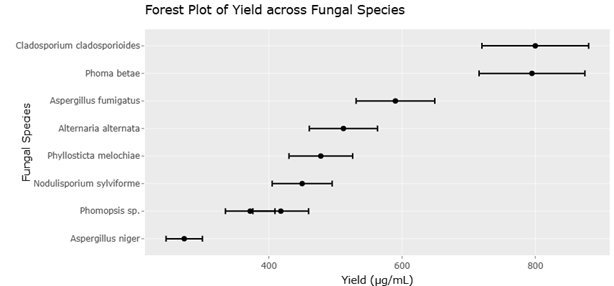
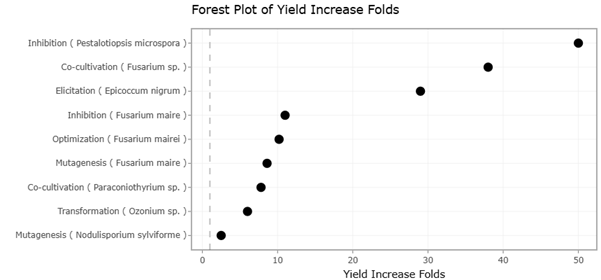
Despite these advances, translating biosynthetic potential into practical applications remains challenging. Many promising compounds are produced in low yields, limiting their scalability and industrial relevance. Strategies such as mutagenesis, metabolic optimization, and pathway engineering have been employed to address this issue, often with varying degrees of success (Gross, 2009; Rutledge & Challis, 2015). In some cases, the combination of multiple approaches—rather than reliance on a single method—appears to yield the most significant improvements.
The broader implications of these efforts are difficult to ignore. Marine-derived natural products have already contributed to several clinically relevant drugs, and their potential continues to expand as new discovery technologies emerge (Fenical & Jensen, 2006; Molinski et al., 2009). Moreover, the integration of genomics, metabolomics, and computational biology is gradually reshaping the field, moving it away from serendipitous discovery toward a more systematic and predictive framework (Harvey et al., 2015; Leal et al., 2016).
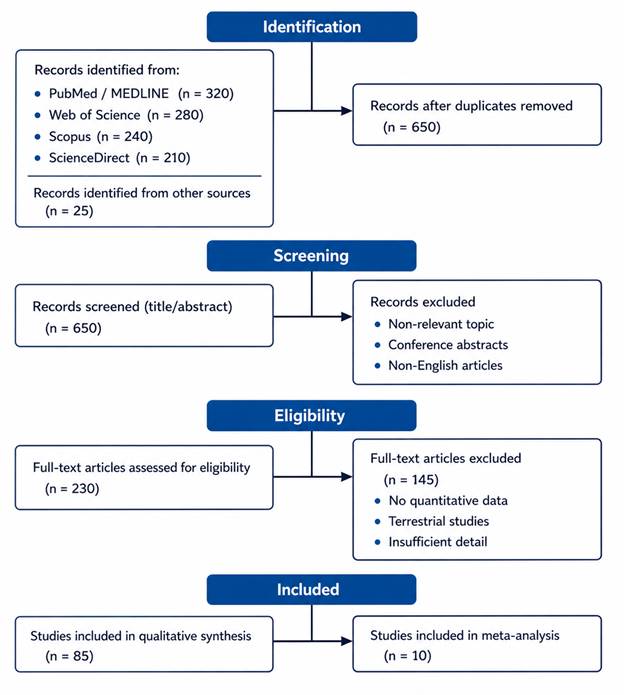
And yet, there is still a sense—perhaps justified—that we are only beginning to understand the full scope of marine microbial chemistry. The interplay between ecological context, genetic potential, and technological capability introduces layers of complexity that resist simple characterization. It is precisely this complexity, however, that makes the field so compelling (Bérdy, 2012; Keller, 2019; Pettit, 2011). Against this backdrop, the present study seeks to provide a systematic synthesis of current knowledge, focusing on three interconnected dimensions: the discovery of marine microbiome secondary metabolites, the application of genome mining and metagenomics as enabling tools, and the strategies employed to enhance metabolite yields. By integrating insights across these domains, this work aims not only to summarize existing progress but also to highlight emerging trends and persistent challenges in marine natural product research.
Ultimately, the exploration of marine microbiomes is less about cataloging individual compounds and more about understanding a broader, evolving system—one that continues to redefine the boundaries of natural product discovery and, perhaps, the future of drug development itself.