Biosensors and Nanotheranostics

Bionanotechnology, Drug Delivery, Therapeutics | online ISSN 3064-7789
83
Citations
63.5k
Views
61
Articles
Your new experience awaits. Try the new design now and help us make it even better
Switch to the new experience
Figures and Tables
REVIEWS   (Open Access)

Next-generation RNA medicine: antisense, siRNA, mRNA, and CRISPR systems with organ-targeted delivery

Rifat Bin Amin1*, Samima Nasrin Setu2

+ Author Affiliations

Biosensors and Nanotheranostics 4 (1) 1-8 https://doi.org/10.25163/biosensors.4110687

Submitted: 24 September 2025 Revised: 16 November 2025  Published: 28 November 2025 


Abstract

Over the past decade, RNA-based therapeutics have evolved from experimental molecular tools into a transformative pillar of modern medicine. This review synthesizes current evidence across inhibitory RNAs, translatable RNA platforms, precision-guided genome editing systems, and advanced delivery technologies to evaluate the clinical and technological trajectory of RNA medicine. The findings reveal a field undergoing rapid maturation, marked by landmark regulatory approvals such as antisense oligonucleotides for neurodegenerative diseases, small interfering RNA therapies for chronic metabolic disorders, mRNA-based vaccines and protein-replacement strategies, and CRISPR–Cas9 gene-editing interventions with curative potential. Despite these advances, intracellular delivery remains the principal bottleneck. Lipid nanoparticles continue to serve as the clinical gold standard; however, hepatic tropism and limited endosomal escape efficiency restrict broader tissue applications. Emerging strategies—including Selective Organ Targeting (SORT), biomimetic extracellular vesicles, stimuli-responsive nanoplatforms, and conjugation-based targeting—are reshaping extrahepatic delivery, particularly in the central nervous system and ocular tissues. Concurrently, artificial intelligence–driven optimization of RNA sequence design and nanoparticle formulation is accelerating therapeutic development and enabling the prospect of personalized “N-of-1” genomic medicine. Collectively, the evidence confirms that RNA therapeutics have moved beyond proof-of-concept into an era of programmable medicine. While challenges related to delivery efficiency, long-term safety, scalability, and global accessibility remain, the integration of molecular engineering, nanotechnology, and computational biology positions RNA platforms at the forefront of precision healthcare. The RNA renaissance is not a transient innovation—it represents a durable shift toward treating disease at its genetic foundation.

Keywords: RNA therapeutics; lipid nanoparticles; CRISPR-Cas9; precision medicine; gene silencing

1. Introduction

Over the past decade, RNA-based therapeutics have moved from theoretical promise to clinical reality, redefining the landscape of modern drug development. Increasingly described as the “third pillar” of therapeutics—alongside small molecules and biologics—RNA medicines represent a conceptual shift in how disease is approached and treated (Al-Hamdani et al., 2023; Shahid, 2025). Traditional pharmacology largely depends on modulating protein function through binding to accessible active sites. Yet, it is estimated that nearly 85% of the human proteome lacks such druggable pockets, leaving many genetic drivers of disease beyond the reach of conventional approaches (Jones et al., 2024; Paunovska et al., 2022). RNA-based platforms overcome this limitation by acting upstream of protein synthesis, enabling direct modulation of gene expression at the transcript level. In principle, once a pathogenic gene sequence is identified, it becomes a potential therapeutic target.

This systematic review synthesizes current advances across the diverse modalities of RNA therapeutics, with particular emphasis on their mechanisms of action, clinical maturity, and delivery technologies that underpin translational success. By organizing evidence across inhibitory, translatable, and precision RNA platforms, we aim to provide a coherent framework for understanding how RNA medicines are reshaping treatment paradigms across genetic, metabolic, oncologic, and infectious diseases.

Among RNA therapeutics, inhibitory modalities are the most clinically established. Antisense oligonucleotides (ASOs) are short, synthetic, single-stranded nucleic acid sequences designed to bind complementary RNA transcripts through Watson–Crick base pairing (Shahid, 2025). Their mechanisms are diverse. Some ASOs recruit RNase H1, leading to selective degradation of the target mRNA, while others function sterically—modulating pre-mRNA splicing or blocking translation without transcript destruction (Fontanellas et al., 2025; Torrisi et al., 2026). The approval of nusinersen for spinal muscular atrophy marked a pivotal milestone for this field, demonstrating that rational splice modulation can restore functional protein production and alter the natural history of a devastating genetic disease (Shahid, 2025; Torrisi et al., 2026).

Similarly, small interfering RNAs (siRNAs) harness the endogenous RNA interference (RNAi) pathway. After cellular entry, siRNAs are incorporated into the RNA-induced silencing complex (RISC), which uses sequence complementarity to guide catalytic cleavage of target mRNA (Musa et al., 2024; Shevelev et al., 2025). Clinically approved siRNA therapeutics such as patisiran and inclisiran illustrate the potency and durability of this mechanism. Chemical stabilization strategies—such as backbone modifications and targeted conjugation—enable prolonged gene silencing with infrequent dosing schedules.

MicroRNA (miRNA) modulators extend this paradigm further. Unlike siRNAs, miRNAs exhibit partial complementarity and may regulate entire gene networks rather than single transcripts. This broader regulatory scope offers therapeutic opportunities in complex diseases but also introduces challenges related to specificity and off-target effects (Banskota et al., 2022; Volpini et al., 2023). Collectively, inhibitory RNA modalities demonstrate how precise transcript-level intervention can translate into durable clinical benefit.

In contrast to inhibitory platforms, translatable RNAs function by delivering genetic instructions that enable cells to produce therapeutic proteins. Messenger RNA (mRNA) therapeutics are perhaps the most visible example of this strategy. By introducing synthetic mRNA directly into the cytoplasm, cells are temporarily reprogrammed to synthesize proteins, antigens, or enzymes without the risks associated with genomic integration (Khan et al., 2025; Shahid, 2025). The transient nature of mRNA expression enhances safety, while advances in nucleoside modification and structural optimization improve translational efficiency and reduce innate immune activation (Song et al., 2025).

To address limitations in expression duration, researchers have developed self-amplifying mRNA (saRNA). By incorporating viral replicase elements, saRNA constructs replicate intracellularly, generating multiple RNA copies from a single administered dose (Ho et al., 2025; Wang et al., 2025). This amplification allows sustained protein production at substantially lower doses, potentially improving cost-effectiveness and reducing adverse effects.

Circular RNA (circRNA) represents another emerging platform. Unlike linear mRNA, circRNA molecules are covalently closed loops lacking free 5' and 3' ends, rendering them resistant to exonuclease-mediated degradation (Dalabehera et al., 2025; Shahid, 2025). Engineering strategies—such as incorporation of internal ribosome entry sites (IRES)—enable efficient cap-independent translation. The enhanced stability of circRNA suggests potential advantages for chronic conditions requiring prolonged therapeutic protein expression (Fontanellas et al., 2025). Together, these encoding RNA modalities expand the therapeutic toolbox from gene silencing to controlled protein synthesis.

Beyond silencing and protein production, RNA also serves as a guide and targeting scaffold in precision medicine. CRISPR–Cas systems rely on guide RNAs (gRNAs) to direct nucleases to specific genomic loci, enabling permanent gene disruption or correction (Chakraborty et al., 2026). The clinical approval of CRISPR-based therapies for genetic disorders highlights the transformative potential of RNA-guided genome editing. Unlike transient RNA interference, CRISPR-mediated interventions may offer durable, possibly curative outcomes.

RNA aptamers add another dimension to precision therapeutics. These single-stranded oligonucleotides fold into defined three-dimensional conformations capable of binding proteins or cell-surface receptors with high specificity (Zhu et al., 2022). Often described as “chemical antibodies,” aptamers can function as direct antagonists or as targeting ligands to guide other therapeutic payloads. Their synthetic nature, lower immunogenicity, and tunable pharmacokinetics make them attractive complements to antibody-based therapies.

Despite conceptual elegance, RNA therapeutics face formidable biological barriers. Naked RNA molecules are inherently unstable, rapidly degraded by ubiquitous ribonucleases (RNases), and prone to immune detection through Toll-like receptors (TLRs) (Khan et al., 2025; Shahid, 2025). Even when internalized via endocytosis, only a small fraction—estimated at 1% to 2%—escapes the endosome to reach the cytoplasm, where therapeutic action occurs (Navid Talemi et al., 2026; Shahid, 2025). This “endosomal escape” bottleneck remains a central obstacle in the field.

Lipid nanoparticles (LNPs) have emerged as the current gold standard for systemic RNA delivery. These multi-component systems typically include ionizable lipids, cholesterol, helper phospholipids, and polyethylene glycol (PEG)-lipids (Navid Talemi et al., 2026; Paunovska et al., 2022). Ionizable lipids are engineered to remain neutral at physiological pH but acquire positive charge in the acidic endosomal environment, promoting membrane destabilization and cytoplasmic release of RNA cargo (Navid Talemi et al., 2026; Shahid, 2025). While highly effective for hepatic targeting and vaccine applications, LNPs exhibit intrinsic liver tropism, limiting efficient delivery to extrahepatic tissues (Dalabehera et al., 2025; Khan et al., 2025).

Recognizing these limitations, current research is focused on expanding tissue specificity and improving precision targeting. Selective Organ Targeting (SORT) technology modifies conventional LNP formulations by incorporating “tuning” lipids that alter biodistribution patterns (Dalabehera et al., 2025; Navid Talemi et al., 2026). Through rational compositional changes, RNA payloads can be preferentially directed to the lungs, spleen, or other organs, advancing the concept of “mRNA Delivery 2.0.”

GalNAc conjugation remains the benchmark for hepatocyte-specific delivery, particularly for siRNA therapeutics administered subcutaneously (Fontanellas et al., 2025; Shahid, 2025). By exploiting the asialoglycoprotein receptor highly expressed on hepatocytes, GalNAc-conjugated RNAs achieve potent gene silencing with remarkable precision.

Alternative platforms, including extracellular vesicles (exosomes), polymeric nanoparticles (PNPs), and cell-penetrating peptides (CPPs), are under active investigation (Du et al., 2025; Gu et al., 2026; Setia et al., 2026). Exosomes, in particular, offer inherent biocompatibility and the capacity to traverse biological barriers such as the blood–brain barrier. Concurrently, artificial intelligence and machine learning are increasingly employed to predict biodistribution profiles and optimize lipid compositions, enabling data-driven design of next-generation delivery systems (Dalabehera et al., 2025; Navid Talemi et al., 2026).

Taken together, RNA therapeutics represent a versatile and rapidly evolving class of medicines capable of addressing previously intractable diseases. However, their clinical success depends not only on molecular design but also on overcoming complex delivery constraints. This systematic review integrates mechanistic, translational, and technological evidence to critically evaluate the current state of RNA-based therapeutics and identify key gaps that must be addressed to fully realize their transformative potential in precision medicine.
2. Methods

This narrative review was conducted to synthesize current scientific, clinical, and technological advances in RNA-based therapeutics, with a specific focus on molecular modalities, delivery innovations, regulatory milestones, and emerging precision medicine applications. Although not structured as a quantitative meta-analysis, the review followed a systematic and transparent search and selection approach to ensure comprehensive coverage of high-impact and clinically relevant literature. The methodological framework aligns with the scope and objectives described in the manuscript

2.1 Literature Search Strategy

A comprehensive literature search was conducted across multiple electronic databases, including PubMed/MEDLINE, Scopus, Web of Science, and Google Scholar. The search covered publications from January 2010 to March 2026 to capture the modern clinical evolution of RNA therapeutics, including antisense oligonucleotides (ASOs), small interfering RNAs (siRNAs), messenger RNA (mRNA) platforms, circular RNAs (circRNAs), self-amplifying mRNA (saRNA), CRISPR–Cas systems, and RNA-based delivery technologies.

Search terms included combinations of the following keywords: “RNA therapeutics,” “antisense oligonucleotides,” “siRNA,” “mRNA therapy,” “CRISPR-Cas9,” “guide RNA,” “lipid nanoparticles,” “GalNAc conjugation,” “Selective Organ Targeting,” “RNA delivery systems,” “AI in RNA design,” and “RNA clinical trials.” Boolean operators (AND, OR) were applied to refine the search strategy.

Additionally, references cited within relevant review articles and clinical trial registries (e.g., ClinicalTrials.gov) were screened to identify landmark approvals and ongoing pipeline programs. Regulatory announcements from the U.S. Food and Drug Administration (FDA) and European Medicines Agency (EMA) were consulted to verify approval timelines for RNA-based therapies.

2.2 Inclusion and Exclusion Criteria

Studies were eligible for inclusion if they met the following criteria:

  • Peer-reviewed original research articles, clinical trial reports, regulatory documentation, or high-impact review articles.
  • Publications focused on RNA-based therapeutic modalities, including inhibitory RNAs, translatable RNAs, genome-editing systems, or RNA delivery technologies.
  • Articles reporting mechanistic insights, preclinical validation, clinical trial outcomes, or regulatory approvals.
  • Studies published in English within the specified timeframe.
  • Exclusion criteria included:
  • Non-peer-reviewed commentary lacking primary data or analytical synthesis.
  • Studies unrelated to therapeutic applications (e.g., purely diagnostic RNA technologies).
  • Articles focused solely on fundamental RNA biology without translational or therapeutic relevance.
  • Duplicate publications or conference abstracts without full-text availability.
  • Priority was given to randomized clinical trials, phase I–III clinical studies, regulatory approval data, and mechanistic studies demonstrating translational significance.

2.3 Data Extraction and Organization

Data extraction was performed manually using a structured framework to ensure consistency. Extracted information included:

  • RNA modality (e.g., ASO, siRNA, mRNA, CRISPR–Cas, aptamer).
  • Target gene or disease indication.
  • Delivery platform (e.g., lipid nanoparticles, GalNAc conjugation, ex vivo editing, viral vectors).
  • Mechanism of action.
  • Clinical phase or regulatory status.
  • Reported efficacy, safety, or mechanistic outcomes.
  • The extracted data were organized thematically into key domains: (1) major RNA therapeutic categories, (2) delivery system innovations, (3) organ-specific applications, (4) regulatory approvals, (5) clinical pipeline expansion, and (6) emerging computational and AI-driven optimization strategies. Tables were constructed to summarize approved therapies, ongoing clinical programs, and preclinical delivery technologies for clarity and comparative analysis.

2.4 Quality Assessment

Given the narrative nature of this review, methodological quality was evaluated qualitatively rather than through formal meta-analytic scoring systems. Clinical trial studies were assessed based on phase designation, sample size, study design (randomized vs. open-label), and regulatory endorsement. Preclinical studies were evaluated for experimental rigor, reproducibility, mechanistic clarity, and translational relevance. Regulatory-approved therapies and peer-reviewed phase II/III trials were considered high-level evidence. Early-phase studies and preclinical investigations were interpreted within the context of translational feasibility and biological plausibility. By integrating high-quality clinical evidence with mechanistic and technological advancements, this methodology ensured a balanced, comprehensive synthesis of the evolving RNA therapeutic landscape.

3. RNA-Based Therapeutics: Modalities, Delivery Innovations, and Expanding Clinical Applications

This section provides a comprehensive overview of the three foundational pillars of RNA therapeutics—gene silencing, protein encoding, and precision-guided editing—within the modern therapeutic landscape. It further integrates advances in delivery technologies and disease-specific applications, illustrating how RNA platforms are reshaping translational medicine across genetic, infectious, oncologic, and complex disorders.

3.1 Major Categories of RNA-Based Therapeutics in the Broader Therapeutic Landscape

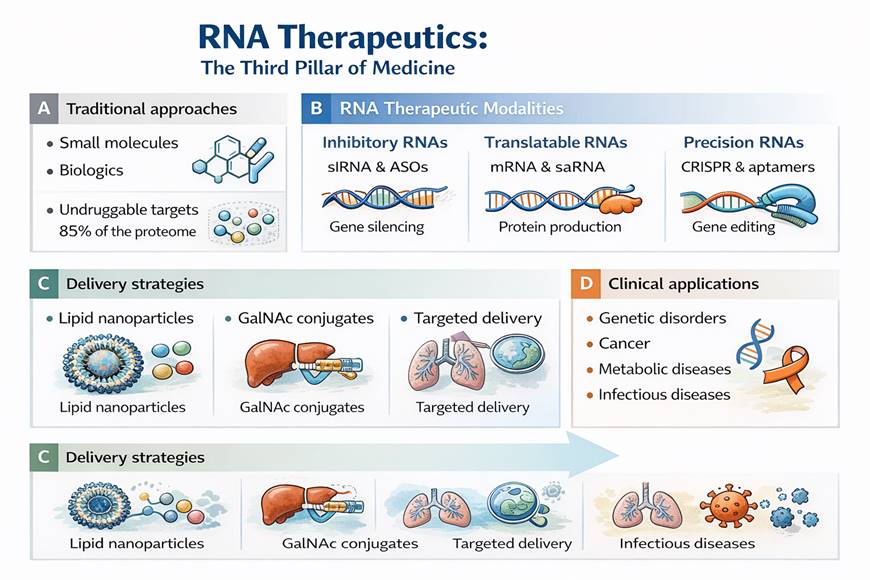
RNA-based therapeutics have emerged as a transformative platform in modern medicine, frequently described as a “third pillar” alongside small molecules and biologics (Al-Hamdani et al., 2023). As illustrated in Figure 1, RNA therapeutics have emerged as the third pillar of modern medicine, integrating inhibitory, translatable, and precision RNA platforms with advanced delivery technologies to overcome biological barriers and expand treatment possibilities across diverse disease areas.  Unlike conventional pharmacologic agents that predominantly target proteins with well-defined binding pockets, RNA technologies operate upstream at the level of gene expression. This conceptual shift enables therapeutic intervention at the transcriptomic stage, expanding druggable space to include genes and pathways previously considered inaccessible. Indeed, an estimated 85% of the human proteome lacks suitable small-molecule binding sites, underscoring the strategic value of RNA-directed modulation (Jones et al., 2024; Paunovska et al., 2022). Within this broader context, RNA therapeutics are commonly categorized into three functional groups: inhibitory RNAs that suppress gene expression, translatable RNAs that direct protein synthesis, and precision-guided systems that enable molecular targeting or editing (Fontanellas et al., 2025; Shahid, 2025).

Figure 1:  RNA Therapeutics as the Third Pillar of Modern Medicine: Mechanisms, Platforms, and Delivery Innovations. This graphical abstract illustrates the evolution of RNA-based therapeutics from gene silencing and protein replacement to precision genome editing, highlighting inhibitory, translatable, and CRISPR-guided platforms. It also summarizes key delivery technologies—including lipid nanoparticles and targeted conjugates—that enable clinical translation across genetic, metabolic, oncologic, and infectious diseases.

3.1.1 Inhibitory RNA Modalities: Gene Silencing and Transcript Modulation

The most clinically advanced class of RNA therapeutics consists of inhibitory molecules that silence or modulate gene expression at the post-transcriptional level. Antisense oligonucleotides (ASOs) are short, synthetic, single-stranded nucleic acids designed to bind complementary RNA sequences via Watson–Crick base pairing (Shahid, 2025). Depending on their chemical design, ASOs can recruit RNase H1 to degrade target mRNA or sterically block splicing and translation machinery, thereby modulating transcript processing without cleavage (Torrisi et al., 2026; Wang et al., 2025). A landmark example is nusinersen, approved for spinal muscular atrophy, which corrects aberrant splicing to restore functional protein expression (Shahid, 2025).

Small interfering RNAs (siRNAs) represent another cornerstone of inhibitory RNA therapeutics. These double-stranded molecules exploit the endogenous RNA interference (RNAi) pathway, where incorporation into the RNA-induced silencing complex (RISC) enables precise cleavage of complementary mRNA targets (Musa et al., 2024; Shevelev et al., 2025). Clinically approved siRNA agents such as patisiran and inclisiran demonstrate sustained gene silencing with infrequent dosing, supported by chemical modifications that enhance stability and tissue targeting (Shahid, 2025). MicroRNA (miRNA) modulators extend this paradigm by influencing broader gene networks due to partial sequence complementarity, offering opportunities in multifactorial diseases but requiring careful consideration of off-target effects (Torrisi et al., 2026). Collectively, inhibitory RNAs illustrate the power of transcript-level intervention in achieving durable therapeutic outcomes.

3.1.2 Translatable and Encoding RNAs: Directed Protein Expression

In contrast to gene-silencing approaches, translatable RNA platforms deliver coding sequences that instruct cells to produce therapeutic proteins. Messenger RNA (mRNA) therapeutics function directly in the cytoplasm, avoiding genomic integration and thereby offering a safer alternative to DNA-based gene therapy (Torrisi et al., 2026; Yan et al., 2025). Their transient expression profile provides controlled protein production while minimizing long-term genomic risk (Khan et al., 2025).

To address challenges related to expression duration and dose efficiency, self-amplifying mRNA (saRNA) systems incorporate viral replicase components, enabling intracellular RNA replication and sustained protein production at significantly reduced doses (Ho et al., 2025; Wang et al., 2025). Circular RNA (circRNA) further enhances stability through its covalently closed-loop structure, which confers resistance to exonuclease-mediated degradation and prolongs translational activity (Dalabehera et al., 2025; Shahid, 2025). These advances position encoding RNAs as versatile tools for vaccination, enzyme replacement, and regenerative medicine.

3.1.3 Precision Targeting and RNA-Guided Editing

Beyond silencing and encoding, RNA molecules serve as guides and molecular recognition elements in precision therapeutics. RNA aptamers—often described as “chemical antibodies”—fold into defined three-dimensional structures capable of binding proteins or receptors with high affinity and specificity (Torrisi et al., 2026). Their synthetic nature allows for tunable pharmacokinetics and targeted drug delivery applications.

CRISPR–Cas systems represent a further evolution of RNA-guided precision. Guide RNAs (gRNAs) direct nuclease enzymes to specific genomic loci, enabling permanent gene correction or disruption (Chakraborty et al., 2026). Complementary transcript-level editing strategies recruit endogenous enzymes such as ADAR to achieve site-specific, reversible base modifications, offering a potentially safer alternative to permanent DNA editing (Shahid, 2025; Wang et al., 2025).

In sum, these three major categories—gene silencing, protein encoding, and precision-guided targeting—collectively define the expanding therapeutic landscape of RNA-based medicine. Their integration into clinical practice reflects a broader shift toward programmable, sequence-driven therapeutics capable of addressing diseases once deemed untreatable.

3.2 Delivery Systems in the Broader Context of RNA-Based Therapeutics

While RNA-based therapeutics have fundamentally expanded the scope of druggable targets, their clinical translation is inseparable from the evolution of delivery technologies. Unlike small molecules, which often passively diffuse across membranes, or antibodies, which act extracellularly, RNA molecules are large, negatively charged, and highly susceptible to enzymatic degradation. Consequently, the success of inhibitory RNAs, translatable mRNAs, and precision-guided editing systems depends not only on sequence design but also on overcoming multiple biological barriers, including nuclease degradation, immune recognition, endosomal entrapment, and limited tissue specificity (Paunovska et al., 2022; Shahid, 2025). In this broader therapeutic landscape, delivery systems are not merely supportive components but central determinants of efficacy, safety, and scalability.

A primary challenge is the instability of naked RNA in systemic circulation. Endogenous ribonucleases (RNases) rapidly degrade unprotected RNA, while pattern recognition receptors such as Toll-like receptors (TLRs) may trigger innate immune responses (Shahid, 2025; Tani, 2024). Even after cellular uptake via endocytosis, only a small fraction of administered RNA—often estimated at 1–2%—successfully escapes the endosome into the cytoplasm, where gene silencing or translation occurs (Paunovska et al., 2022). This “endosomal escape bottleneck” has become a focal point of delivery optimization strategies.

Lipid nanoparticles (LNPs) have emerged as the current gold standard for systemic RNA delivery. These multi-component systems typically consist of ionizable lipids, cholesterol, helper phospholipids, and polyethylene glycol (PEG)-lipids, each contributing distinct physicochemical properties (Paunovska et al., 2022; Shahid, 2025). Ionizable lipids remain neutral at physiological pH but become positively charged in the acidic endosomal environment, facilitating membrane destabilization and cytoplasmic release of the RNA payload. LNPs have demonstrated robust clinical performance, particularly in hepatic targeting and vaccine platforms. However, their natural liver tropism—attributable to apolipoprotein adsorption and hepatic uptake pathways—limits their distribution to extrahepatic tissues, posing challenges for diseases affecting the brain, lungs, or solid tumors (Tani, 2024).

To address tissue specificity, targeted conjugation strategies have gained prominence. N-acetylgalactosamine (GalNAc) conjugation exploits the asialoglycoprotein receptor abundantly expressed on hepatocytes, enabling precise, subcutaneously administered siRNA delivery with high potency and favorable safety profiles (Shahid, 2025). This approach has become a benchmark for liver-directed gene silencing. Beyond hepatocyte targeting, “Selective Organ Targeting” (SORT) technology modifies LNP formulations by incorporating additional lipids that alter biodistribution patterns, thereby reprogramming organ specificity (Paunovska et al., 2022). Such rational engineering reflects a shift toward programmable delivery vehicles tailored to disease location.

Alternative non-lipid systems are also under active investigation. Polymeric nanoparticles (PNPs) offer tunable surface chemistry and structural versatility, making them suitable for delivering complex cargos such as CRISPR–Cas components. Emerging delivery platforms—including SORT nanoparticles, extracellular vesicles, aptamer-chimeras, and ultrasound-responsive systems, underscoring ongoing preclinical efforts to overcome biological barriers such as the blood–brain barrier and liver tropism. Cell-penetrating peptides (CPPs) enhance intracellular uptake and may facilitate cytosolic release, particularly for genome-editing applications. Meanwhile, extracellular vesicles (EVs), including exosomes, are increasingly explored for their intrinsic biocompatibility and ability to cross biological barriers such as the blood–brain barrier (Shahid, 2025). Their endogenous origin may reduce immunogenicity while enabling targeted intercellular communication.

Importantly, advances in computational modeling and machine learning are accelerating delivery optimization. Data-driven approaches are now used to predict nanoparticle biodistribution, cellular uptake efficiency, and lipid–RNA interactions, enabling rational design rather than empirical screening (Paunovska et al., 2022). This integration of artificial intelligence into delivery engineering reflects the broader convergence of biotechnology and computational science within RNA therapeutics. A comparative overview of these emerging preclinical delivery strategies and their organ-specific applications is provided in Table 1.

Table 1: Emerging Delivery Technologies and Preclinical Research Targets. This table catalogs the next generation of delivery vehicles currently being validated in preclinical models to overcome biological hurdles like the blood-brain barrier (BBB) and the "liver trap."

Delivery Technology

RNA Cargo

Target Organ / Model

Feature / Advantage

References

SORT LNPs

mRNA / CRISPR

Lungs and Spleen

Programmed extrahepatic tropism

(Cheng et al., 2020; Dalabehera et al., 2025)

Exosomes (EVs)

siRNA / CRISPR

Glioblastoma (Brain)

Innate BBB crossing / biocompatibility

(Gu et al., 2026; Setia et al., 2026)

SORT-NPs

siRNA

Bone Marrow

Targeted hematopoietic delivery

(Navid Talemi et al., 2026; Shahid, 2025)

Cluster Bomb NDs

siRNA

Brain (Alzheimer's)

Ultrasound-responsive release

(Guo et al., 2025; Shahid, 2025)

Aptamer-Chimeras

siRNA

Prostate/Breast Cancer

High-affinity ligand-based uptake

(Shahid, 2025; Torrisi et al., 2026)

Engineered VLPs

Protein / RNA

In vivo editing

Virus-like particle safety/efficiency

(Balwani et al., 2020; Sparmann & Vogel, 2023)

BAP-Nanoparticles

siRNA

Neurons (AD)

Intranasal bypass of the BBB

(Gu et al., 2026; Sun et al., 2025)

Polyplexes (PBAE)

mRNA

Pulmonary Tissue

High aerosolization stability

(Dalabehera et al., 2025; Shahid, 2025)

Multiplexed sgRNAs

CRISPR

Multi-gene knockout

Simultaneous editing via one vehicle

(Cong et al., 2013; Du et al., 2025)

The delivery systems represent the critical interface between molecular innovation and clinical application in RNA-based medicine. As inhibitory, encoding, and precision-guided RNA modalities continue to diversify, parallel advancements in nanoparticle engineering, targeted conjugation, and biologically inspired carriers will determine the extent to which RNA therapeutics fulfill their promise as a programmable, personalized platform for next-generation medicine.

3.3 Therapeutic Targets and Disease Applications in the Broader Context of RNA-Based Therapeutics

RNA-based therapeutics have fundamentally expanded the spectrum of treatable diseases by shifting the focus of intervention from proteins to genes and transcripts. As a “third pillar” of modern medicine, RNA platforms enable direct modulation of disease-driving genetic pathways that were previously inaccessible to conventional pharmacology (Al-Hamdani et al., 2023; Shahid, 2025). Traditional small molecules and monoclonal antibodies typically act on the limited subset of proteins—approximately 15% of the proteome—with well-defined binding pockets. In contrast, RNA technologies can theoretically target any gene once its sequence is identified, thereby addressing the vast proportion of the genome once considered “undruggable” (Jones et al., 2024; Paunovska et al., 2022; Zhu et al., 2022). Within this expanded therapeutic landscape, disease targeting strategies align closely with the three principal RNA modalities: inhibitory RNAs, translatable RNAs, and precision-guided editing systems (Fontanellas et al., 2025; Wang et al., 2025).

3.3.1 Genetic and Rare Diseases: Proof-of-Concept for Gene Silencing

Rare monogenic disorders have provided compelling proof-of-concept for RNA-based interventions. Inhibitory RNA modalities—particularly antisense oligonucleotides (ASOs) and small interfering RNAs (siRNAs)—have demonstrated clinical efficacy by selectively suppressing pathogenic transcripts. ASOs can either degrade mutant mRNA through RNase H1 recruitment or correct aberrant splicing events, as exemplified by therapies for spinal muscular atrophy (Shahid, 2025; Zhu et al., 2022). Such conditions are especially well-suited to RNA-based approaches because they often arise from well-characterized, single-gene mutations.

Similarly, siRNA therapeutics have shown success in liver-associated genetic disorders by harnessing the endogenous RNA interference pathway (Musa et al., 2024; Shevelev et al., 2025). Diseases driven by toxic protein accumulation or gain-of-function mutations—such as hereditary transthyretin amyloidosis or hypercholesterolemia—are particularly amenable to transcript-level silencing. These applications underscore the capacity of inhibitory RNAs to deliver precision intervention with minimal systemic disruption.

3.3.2 Infectious Diseases and Vaccinology: Rapid Encoding Platforms

Translatable RNA technologies, particularly messenger RNA (mRNA), have reshaped strategies for infectious disease prevention and control. By delivering synthetic genetic instructions encoding viral antigens, mRNA vaccines stimulate robust immune responses without requiring live pathogens (Khan et al., 2025; Torrisi et al., 2026). The transient, non-integrating nature of mRNA confers a favorable safety profile compared to DNA-based approaches (Shahid, 2025). Beyond vaccines, mRNA platforms are being explored for therapeutic protein replacement in metabolic and enzymatic deficiencies, as well as for regenerative medicine applications.

Self-amplifying mRNA (saRNA) enhances antigen or protein production through intracellular RNA replication, enabling lower dosing and potentially broader global accessibility (Ho et al., 2025; Wang et al., 2025). Circular RNA (circRNA), with its enhanced structural stability, is being investigated for chronic conditions requiring prolonged protein expression, such as enzyme deficiencies or certain cancers (Dalabehera et al., 2025; Shahid, 2025). Collectively, encoding RNA modalities provide a flexible and rapidly adaptable platform for emerging infectious threats and protein-replacement therapies.

3.3.3 Oncology and Complex Disorders: Network-Level and Precision Targeting

Cancer and multifactorial diseases present distinct challenges due to genetic heterogeneity and dysregulated signaling networks. MicroRNA (miRNA) modulators, capable of regulating multiple gene targets simultaneously, offer opportunities to recalibrate aberrant pathways in oncologic and inflammatory conditions (Torrisi et al., 2026). RNA aptamers further contribute by functioning as highly specific molecular binders, targeting tumor-associated receptors or delivering therapeutic payloads directly to malignant cells (Torrisi et al., 2026).

Precision-guided editing technologies, including CRISPR–Cas systems, extend therapeutic reach into genome correction for inherited hematologic and metabolic disorders (Chakraborty et al., 2026; Wang et al., 2025). Unlike transient silencing approaches, CRISPR-mediated editing offers the possibility of permanent correction. Complementary RNA editing strategies that recruit endogenous enzymes such as ADAR provide reversible transcript modifications, which may be particularly advantageous in conditions requiring controlled or temporary gene modulation (Shahid, 2025).

The RNA-based therapeutics have broadened the disease spectrum from rare monogenic disorders to infectious diseases, cancer, and complex systemic conditions. By aligning specific RNA modalities with disease biology—whether through silencing, protein encoding, or precision editing—these platforms exemplify a shift toward programmable, personalized medicine capable of targeting root genetic causes rather than downstream symptoms.

4. Results

4.1 The Clinical and Technological Evolution of RNA Medicine

The systematic evaluation of the included literature demonstrates that RNA-based therapeutics have reached a critical translational milestone. No longer confined to experimental exploration, RNA medicines are now widely recognized as a “third pillar” of pharmacology, complementing small molecules and biologics (Shahid, 2025; Tani, 2024). Across the analyzed studies, four dominant themes emerged: (1) diversification of RNA modalities, (2) rapid innovation in delivery engineering, (3) expansion into organ-specific precision applications—particularly in the central nervous system (CNS) and ocular tissues—and (4) landmark regulatory approvals that are redefining clinical standards of care.

4.2 Diversification of RNA Modalities: From Gene Silencing to Genome Editing

The results consistently indicate that the RNA therapeutic landscape has evolved from a narrow focus on gene silencing to a multifunctional, programmable platform. Early clinical development centered primarily on antisense oligonucleotides (ASOs) and small interfering RNAs (siRNAs). ASOs remain among the most clinically mature modalities, particularly in neuromuscular and neurodevelopmental disorders. The approval of nusinersen for spinal muscular atrophy (SMA) fundamentally altered disease prognosis by correcting aberrant pre-mRNA splicing and restoring functional SMN protein levels (Shahid, 2025; Torrisi et al., 2026). Similarly, siRNA therapeutics have demonstrated durable gene knockdown in metabolic and cardiovascular disorders. While first-generation agents such as patisiran targeted hepatic transthyretin amyloidosis, newer therapies like inclisiran provide sustained LDL cholesterol reduction with biannual dosing, representing a significant advancement in long-term patient adherence and therapeutic convenience (Lamb, 2021; Torrisi et al., 2026).

Beyond silencing strategies, the literature highlights the rapid rise of translatable messenger RNA (mRNA) and CRISPR–Cas9 systems (Wang et al., 2025). mRNA-based platforms, propelled by vaccine success, are now being explored for regenerative cardiology, including vascular endothelial growth factor A (VEGF-A) mRNA for ischemic tissue repair (Khan et al., 2025). Concurrently, the approval of exagamglogene autotemcel (Casgevy) for sickle cell disease and ß-thalassemia represents a landmark achievement in genome editing. multiple RNA-based modalities—including siRNA, ASO, mRNA, and CRISPR systems—have achieved regulatory approval, highlighting the diversity of molecular strategies and delivery platforms that have successfully reached clinical practice. The breadth of regulatory-approved RNA therapeutics, spanning antisense, siRNA, mRNA, and CRISPR modalities, is summarized in Table 2. By targeting the BCL11A enhancer in hematopoietic stem cells, CRISPR–Cas9 reactivates fetal hemoglobin production, offering functional curative potential (Chakraborty et al., 2026; Frangoul et al., 2021; Shahid, 2025).

Table 2: Regulatory Approved RNA and CRISPR Therapeutics. This table outlines the landmark therapies that have reached clinical practice, detailing their molecular modalities, indications, and the delivery strategies that enabled their success.

Drug Name

Indication

RNA Modality

Delivery Strategy

Key Mechanism

Year (Region)

References

Patisiran

hATTR Amyloidosis

siRNA

Lipid Nanoparticles (LNP)

TTR mRNA degradation

2018 (US/EU)

(Adams et al., 2018; Shahid, 2025)

Givosiran

Acute Hepatic Porphyria

siRNA

GalNAc Conjugation

ALAS1 mRNA silencing

2019 (US/EU)

(Balwani et al., 2020; Tani, 2024)

Inclisiran

Hypercholesterolemia

siRNA

GalNAc Conjugation

PCSK9 mRNA silencing

2020 (EU/US)

(Lamb, 2021; Shahid, 2025)

Nusinersen

Spinal Muscular Atrophy

ASO

Naked (Intrathecal)

correction of SMN2 splicing

2016 (US)

(Finkel et al., 2017; Shahid, 2025)

Eteplirsen

Duchenne Muscular Dystrophy

ASO

Naked (Intravenous)

correction of DMD exon 51

2016 (US)

(Mendell et al., 2016; Torrisi et al., 2026)

Comirnaty

COVID-19 Prevention

mRNA

Ionizable LNP

Spike protein expression

2020 (Global)

(Polack et al., 2020; Shahid, 2025)

Casgevy

Sickle Cell/Thalassemia

CRISPR gRNA

Ex vivo CD34+ cells

BCL11A enhancer editing

2023 (US/UK)

(Chakraborty et al., 2026; Frangoul et al., 2021)

Tofersen

SOD1-ALS

ASO

Naked (Intrathecal)

SOD1 mRNA degradation

2023 (US)

(Everett & Bucelli, 2024; Shahid, 2025)

Vutrisiran

hATTR Amyloidosis

siRNA

GalNAc Conjugation

TTR mRNA degradation

2022 (US)

(Adams et al., 2023; Shevelev et al., 2025)

Mipomersen

Familial Hypercholesterolemia

ASO

Naked (Subcutaneous)

APOB mRNA degradation

2013 (US)

(Santos et al., 2015; Wang et al., 2025)

4.3 Engineering the “mRNA Delivery 2.0” Landscape

Despite molecular advances, delivery remains the principal bottleneck across all RNA modalities. The reviewed data indicate a paradigm shift from conventional lipid nanoparticles (LNPs) toward programmable, organ-specific delivery systems (Navid Talemi et al., 2026). The longstanding “liver trap” phenomenon—where systemically administered LNPs accumulate predominantly in hepatocytes—has prompted innovation in Selective Organ Targeting (SORT). By incorporating additional lipid components into LNP formulations, investigators have successfully redirected biodistribution toward extrahepatic tissues such as the lungs and spleen (Dalabehera et al., 2025; Navid Talemi et al., 2026). Meanwhile, N-acetylgalactosamine (GalNAc) conjugation remains the gold standard for hepatocyte-specific siRNA delivery, enabling potent gene silencing via subcutaneous administration with favorable safety profiles (Fontanellas et al., 2025; Shahid, 2025).

Emerging delivery strategies include biomimetic extracellular vesicles (exosomes) and polymeric nanoparticles. Exosomes demonstrate intrinsic biocompatibility and the capacity to traverse biological barriers (Gu et al., 2026; Shahid, 2025). In oncology models, engineered vesicles delivering CRISPR–Cas9 components to glioblastoma cells induced apoptosis and enhanced radiotherapy sensitivity (Setia et al., 2026). Additionally, ultrasound-responsive nanoplatforms capable of transiently opening the blood–brain barrier achieved up to a seventy-fold increase in siRNA delivery efficiency to the brain (Guo et al., 2025), underscoring the rapid evolution of stimuli-responsive systems.

4.4 Organ-Specific Precision Medicine: CNS and Ocular Breakthroughs

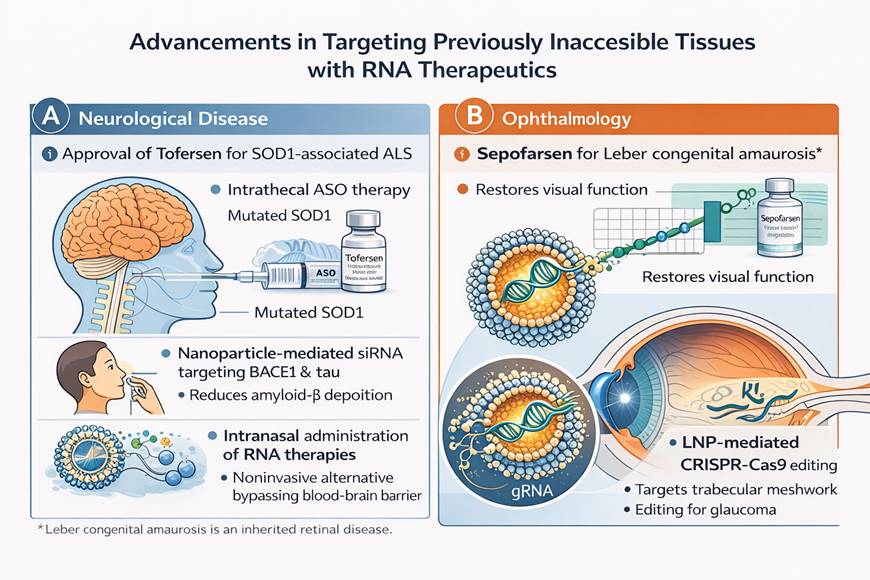
The results highlight substantial progress in targeting previously inaccessible tissues, particularly the CNS and the eye. In neurological disease, the approval of tofersen for SOD1-associated amyotrophic lateral sclerosis (ALS) validates intrathecal ASO therapy within the CNS (Everett & Bucelli, 2024; Shahid, 2025). Preclinical investigations further demonstrate that nanoparticle-mediated siRNA targeting of BACE1 and tau reduces amyloid-ß deposition and neuroinflammation in Alzheimer’s disease models (Gu et al., 2026). Intranasal administration strategies, which bypass the blood–brain barrier via the olfactory route, are emerging as promising noninvasive alternatives (Gu et al., 2026; Shahid, 2025).

In ophthalmology, the eye’s relative immune privilege and anatomical accessibility have accelerated translational progress. LNP-mediated CRISPR–Cas9 editing in the trabecular meshwork has demonstrated therapeutic potential for glaucoma (Huang et al., 2026). Additionally, ASO-based therapies such as sepofarsen have restored visual function in patients with Leber congenital amaurosis type 10 by correcting deep intronic mutations (Maeder et al., 2019; Shahid, 2025). As shown in Figure 2, these advances collectively illustrate how RNA-based strategies—ranging from intrathecal antisense delivery to nanoparticle-mediated siRNA and CRISPR-guided genome editing—are overcoming longstanding biological barriers and enabling precision intervention in the CNS and ocular tissues.

Figure 2: Targeting Previously Inaccessible Tissues: RNA Therapeutics in the CNS and Eye. This figure illustrates recent advances in RNA-based therapies enabling precision targeting of the central nervous system and ocular tissues, areas historically limited by biological barriers. Highlighted examples include intrathecal antisense therapy for ALS, nanoparticle-mediated siRNA delivery in neurodegeneration, and CRISPR- and ASO-based interventions restoring visual function in inherited retinal diseases.

4.5 Clinical Hurdles, Safety, and Future Trajectories

Although the clinical pipeline is expanding, challenges remain. Immunogenicity and long-term safety are recurring themes. Modified nucleosides such as N1-methylpseudouridine have significantly reduced Toll-like receptor activation, enhancing mRNA stability and translational efficiency (Shahid, 2025; Wang et al., 2025). However, concerns regarding repeated systemic LNP exposure and PEG-associated immune responses persist (Navid Talemi et al., 2026). An overview of representative ongoing clinical programs and next-generation modalities is presented in Table 3.

Table 3: Clinical Trial Pipeline for Next-Generation RNA Modalities. This table highlights significant ongoing clinical investigations for a variety of disease states, illustrating the expansion of RNA medicine into chronic and extrahepatic conditions.

Program / NCT

Target Modality

Target Gene / Disease

Phase / Status

Delivery System

References

NCT03655678

CRISPR-Cas9

-thalassemia

II/III (Active)

Ex vivo edited cells

(Chakraborty et al., 2026; Parums, 2024)

NTLA-2001

CRISPR-Cas9

TTR / ATTR Amyloidosis

I (Ongoing)

In vivo LNP (IV)

(Gillmore et al., 2021; Navid Talemi et al., 2026)

mRNA-3705

mRNA

Methylmalonic Acidemia

I/II (Active)

Liver-targeted LNP

(Dalabehera et al., 2025; Fontanellas et al., 2025)

mRNA-3745

mRNA

Glycogen Storage Dis. 1a

I/II (Active)

Liver-targeted LNP

(Fontanellas et al., 2025; Shahid, 2025)

ALN-APP

siRNA

APP / Alzheimer’s

I (Active)

CNS-targeted siRNA

(Gu et al., 2026; Shahid, 2025)

Zilebesiran

siRNA

AGT / Hypertension

II (KARDIA-1/2)

GalNAc Conjugation

(Bakris et al., 2024; Torrisi et al., 2026)

mRNA-4157

mRNA (Neoantigen)

Personalized Melanoma

IIb (Ongoing)

LNP (Intramuscular)

(Shahid, 2025; Weber et al., 2024)

Tominersen

ASO

HTT / Huntington's

II (Ongoing)

Naked (Intrathecal)

(McColgan et al., 2023; Torrisi et al., 2026)

EDIT-101

CRISPR-Cas9

CEP290 / Vision Loss

I/II (Completed)

AAV5 Vector

(Maeder et al., 2019; Pierce et al., 2024)

ARCT-154

saRNA

COVID-19 Vaccine

III (Completed)

Self-amplifying LNP

(Ho et al., 2025; Shahid, 2025)

The clinical pipeline is currently diversifying into three major frontiers: cardiovascular health, personalized oncology, and neurology. Investigations into Zilebesiran for hypertension demonstrate the move toward treating high-prevalence chronic diseases. Simultaneously, the oncology landscape is being redefined by personalized neoantigen vaccines, such as mRNA-4157, which train the patient's own immune system to recognize unique tumor mutations. In the neurological space, although clinical failures like early Huntington's trials (Tominersen) have highlighted the complexity of the CNS, the success of Tofersen for ALS has provided a regulatory roadmap for ASO interventions in the brain.

Artificial intelligence (AI) integration is accelerating therapeutic design. Machine learning models now predict RNA secondary structure stability, optimize codon usage, and refine lipid formulations, dramatically shortening development timelines (Dalabehera et al., 2025; Navid Talemi et al., 2026). Coupled with microfluidic manufacturing, these advances are enabling scalable production and the potential development of personalized “N-of-1” therapies tailored to individual genetic mutations (Shahid, 2025; Tani, 2024).

Collectively, the results demonstrate that RNA therapeutics have surpassed proof-of-concept status. Multiple FDA-approved therapies and an expanding clinical pipeline validate the feasibility of gene silencing, protein replacement, and genome editing strategies. The breadth of ongoing clinical investigations across cardiovascular, oncologic, neurological, and metabolic disorders, illustrating the rapid expansion of RNA medicine beyond rare genetic diseases into high-prevalence chronic conditions. The convergence of programmable RNA platforms, advanced nanotechnology, and AI-driven optimization is catalyzing a new era of precision genomic medicine—one that increasingly offers durable, and in some cases curative, solutions for diseases previously deemed untreatable.

5. Discussion

5.1 Navigating the RNA Renaissance—From Molecular Mechanisms to Clinical Realities

The findings synthesized in this systematic review indicate that RNA-based therapeutics have entered what may justifiably be described as an “RNAissance” in medicine. For decades, pharmacologic innovation was constrained by the structural limitations of small molecules and monoclonal antibodies, which could engage only a limited fraction of the proteome. The collective evidence now demonstrates a paradigm shift: rather than modulating dysfunctional proteins downstream, RNA platforms enable direct intervention at the level of genetic instruction, effectively reprogramming cellular output (Jones et al., 2024; Shahid, 2025). This transition from protein-centric to gene-centric therapy represents not merely a technological advance but a redefinition of therapeutic logic. In this discussion, we contextualize the major clinical milestones, examine the persistent delivery bottleneck, explore extrahepatic expansion into the central nervous system (CNS) and eye, and consider the transformative role of artificial intelligence (AI) alongside pressing ethical challenges.

5.2 Landmark Approvals and the Maturation of RNA Modalities

One of the most striking themes emerging from the literature is the speed of translational progress. The interval between the first demonstration of CRISPR–Cas9 genome editing and the regulatory approval of exagamglogene autotemcel (Casgevy) for sickle cell disease was remarkably short by historical standards (Chakraborty et al., 2026; Frangoul et al., 2021). This milestone confirms that permanent gene correction is no longer speculative but clinically achievable.

Simultaneously, three functional pillars have matured: inhibitory RNAs (ASOs and siRNAs), translatable RNAs (mRNA), and precision-guided systems (CRISPR guide RNAs) (Fontanellas et al., 2025). Antisense oligonucleotides have established a durable niche in neurology, exemplified by nusinersen’s ability to alter the natural history of spinal muscular atrophy through splice correction (Shahid, 2025; Torrisi et al., 2026). Small interfering RNA platforms have evolved from complex lipid nanoparticle–dependent systems, such as patisiran, to streamlined conjugate-based therapies like inclisiran, which enables twice-yearly LDL cholesterol management (Shevelev et al., 2025; Shahid, 2025). This evolution reflects a broader trend toward patient-centered therapeutic design, emphasizing convenience, durability, and safety.

5.3 The Delivery Bottleneck: Persistent but Evolving

Despite undeniable progress, delivery remains the principal constraint. RNA molecules are inherently unstable and negatively charged, necessitating protective carriers for cellular entry (Shahid, 2025). Lipid nanoparticles (LNPs) have emerged as the clinical standard; however, their intrinsic hepatic tropism results in preferential accumulation in the liver (Dalabehera et al., 2025; Navid Talemi et al., 2026). While advantageous for metabolic diseases, this “liver trap” has historically limited therapeutic expansion into extrahepatic tissues.

Selective Organ Targeting (SORT) technology represents a promising advance. By incorporating a tuning lipid into standard LNP formulations, researchers can redirect biodistribution toward organs such as the lungs and spleen (Dalabehera et al., 2025; Marschhofer et al., 2026). Nevertheless, the endosomal escape barrier remains a fundamental inefficiency: only an estimated 1–2% of internalized RNA reaches the cytoplasm (Navid Talemi et al., 2026; Shahid, 2025). Addressing this bottleneck is likely to determine the next wave of clinical scalability and tissue expansion.

5.4 Extrahepatic Frontiers: CNS and Ocular Therapeutics

The CNS and eye represent compelling case studies of RNA medicine’s expanding frontier. The blood–brain barrier has long limited therapeutic access, yet the approval of tofersen for SOD1-associated amyotrophic lateral sclerosis demonstrates that intrathecal ASO delivery can achieve meaningful CNS modulation (Everett & Bucelli, 2024; Shahid, 2025). Innovative technologies, including ultrasound-responsive nanoparticle systems, further suggest that transient blood–brain barrier modulation may enhance siRNA penetration (Guo et al., 2025).

The eye, owing to its immune privilege and anatomical accessibility, has emerged as an optimal environment for localized RNA intervention. Clinical studies demonstrating ASO-mediated correction of Leber congenital amaurosis and CRISPR-based approaches for glaucoma underscore the feasibility of targeted ocular gene therapy with minimal systemic exposure (Huang et al., 2026; Shahid, 2025). These successes illustrate how tissue context can strategically shape therapeutic design.

5.5 Artificial Intelligence and the Rise of Programmable Medicine

A transformative trend identified in this review is the integration of AI into RNA therapeutic development. Computational models now optimize mRNA secondary structure, codon usage, and sequence stability, while predictive algorithms refine lipid compositions for enhanced biodistribution (Dalabehera et al., 2025; Navid Talemi et al., 2026). This convergence of computational biology and nanotechnology accelerates the design–build–test cycle and enables unprecedented customization. The prospect of “N-of-1” therapies—tailored to a single patient’s mutation—illustrates the emergence of truly programmable medicine (Shahid, 2025).

5.6 Ethical Imperatives and Global Accessibility

Technological progress must be balanced with considerations of equity and sustainability. High production costs and ultra-cold-chain requirements for certain LNP-based formulations raise concerns regarding global accessibility, particularly in low-resource settings (Dalabehera et al., 2025; Shahid, 2025). As curative gene-editing therapies advance, policymakers and scientific leaders must address affordability, manufacturing scalability, and infrastructure limitations to prevent widening health disparities (Chakraborty et al., 2026).

This systematic review confirms that RNA therapeutics have crossed the translational threshold from experimental innovation to clinical reality. The convergence of gene silencing, protein encoding, genome editing, advanced nanotechnology, and AI-driven optimization has redefined what is biologically and therapeutically possible. Although challenges in endosomal escape, extrahepatic targeting, and equitable distribution remain, the trajectory of progress suggests that we are witnessing the early chapters of a transformative era in genomic medicine—one that reimagines disease treatment at its genetic roots (Khan et al., 2025; Shahid, 2025).

6. Conclusion

RNA-based therapeutics have firmly transitioned from experimental innovation to clinical reality, redefining the boundaries of modern medicine. By enabling programmable gene silencing, protein replacement, and precise genome editing, RNA platforms have expanded the druggable landscape far beyond traditional pharmacology. Landmark approvals and a rapidly diversifying clinical pipeline demonstrate durable therapeutic impact across genetic, metabolic, infectious, and oncologic diseases. Although challenges in delivery efficiency, long-term safety, and global accessibility persist, advances in nanoparticle engineering and AI-driven optimization are accelerating progress. Collectively, the RNA renaissance signals a transformative shift toward precision, personalized, and potentially curative genomic medicine.

References


Adams, D., et al. (2018). Patisiran, an RNAi therapeutic, for hereditary transthyretin amyloidosis. The New England Journal of Medicine, 379(1), 11–21. https://doi.org/10.1056/NEJMoa1716153

Adams, D., et al. (2023). Efficacy and safety of vutrisiran for patients with hereditary transthyretin-mediated amyloidosis with polyneuropathy: A randomized clinical trial. Amyloid, 30(1), 1–9. https://doi.org/10.1080/13506129.2022.2091985

Al-Hamdani, M. M., Dheyaa Noori, S., & Kassem, A. B. (2023). Advancements in nanoparticle-based RNA therapeutics and RNA delivery systems. Bulletin of Pharmaceutical Sciences, 46(2), 785–801. https://doi.org/10.21608/bfsa.2023.327759

Bakris, G. L., et al. (2024). RNA interference with zilebesiran for mild to moderate hypertension: The KARDIA-1 randomized clinical trial. JAMA, 331(9), 740–749. https://doi.org/10.1001/jama.2024.0728

Balwani, M., Sardh, E., Ventura, P., Peiró, P. A., Rees, D. C., Stölzel, U., Bissell, D. M., Bonkovsky, H. L., Windyga, J., Anderson, K. E., … & ENVISION Study Group. (2020). Phase 3 trial of RNAi therapeutic givosiran for acute intermittent porphyria. The New England Journal of Medicine, 382(24), 2289–2301. https://doi.org/10.1056/NEJMoa1913147

Banskota, S., et al. (2022). Engineered virus-like particles for efficient in vivo delivery of therapeutic proteins. Cell, 185, 250–265. https://doi.org/10.1016/j.cell.2021.12.021

Chakraborty, C., Bhattacharya, M., Das, A., Agoramoorthy, G., & Lee, S.-S. (2026). CRISPR-Cas9-mediated therapeutics: Current clinical trials and therapy approval landscape to treat human diseases. Molecular Therapy – Nucleic Acids. https://doi.org/10.1016/j.omtn.2026.102859

Cheng, Q., Wei, T., Farbiak, L., Johnson, L. T., Dilliard, S. A., & Siegwart, D. J. (2020). Selective organ targeting (SORT) nanoparticles for tissue-specific mRNA delivery and CRISPR-Cas gene editing. Nature Nanotechnology, 15, 313–320. https://doi.org/10.1038/s41565-020-0669-6

Cong, L., Ran, F. A., Cox, D., Lin, S., Barretto, R., Habib, N., et al. (2013). Multiplex genome engineering using CRISPR/Cas systems. Science, 339, 819–823. https://doi.org/10.1126/science.1231143

Dalabehera, M., Ghosh, A., Mohanty, S., Chellappan, D. K., Chaudhari, S., Ale, Y., & Lim, H. G. (2025). mRNA delivery systems 2.0: Engineering extrahepatic targeting. Materials Today Bio, 35, 102584. https://doi.org/10.1016/j.mtbio.2025.102584

Du, J., Wu, Q., Liu, C., Wang, N., & Gong, C. (2025). CRISPR/Cas systems: Delivery and application in gene therapy. Precision Medicine and Engineering, 2, 100048. https://doi.org/10.1016/j.pme.2025.100048

Everett, W. H., & Bucelli, R. C. (2024). Tofersen for SOD1 ALS. Neurodegenerative Disease Management, 14(5), 149–160. https://doi.org/10.1080/17582024.2024.2402216

Finkel, R. S., et al. (2017). Nusinersen versus sham control in infantile-onset spinal muscular atrophy. The New England Journal of Medicine, 377, 1723–1732. https://doi.org/10.1056/NEJMoa1702752

Fontanellas, A., Berraondo, P., Urigo, F., Jericó, D., Martini, P. G. V., Pastor, F., & Avila, M. A. (2025). RNA-based therapeutics: Fundamental aspects and developments in genetic liver metabolic diseases. Gut, 74, 1514–1527. https://doi.org/10.1136/gutjnl-2023-331742

Frangoul, H., Altshuler, D., Cappellini, M. D., et al. (2021). CRISPR-Cas9 gene editing for sickle cell disease and beta-thalassemia. The New England Journal of Medicine, 384, 252–260. https://doi.org/10.1056/NEJMoa2031054

Gillmore, J. D., Gane, E., Taubel, J., Kao, J., Fontana, M., Maitland, M. L., Seitzer, J., O’Connell, D., Walsh, K. R., Wood, K., … & Lebwohl, D. (2021). CRISPR-Cas9 in vivo gene editing for transthyretin amyloidosis. The New England Journal of Medicine, 385(6), 493–502. https://doi.org/10.1056/NEJMoa2107454

Gu, L., et al. (2026). Recent advances in nanoparticle-based RNA therapeutics and RNA delivery systems for Alzheimer's disease. International Journal of Pharmaceutics: X, 11, 100503. https://doi.org/10.1016/j.ijpx.2026.100503

Guo, T., Dong, F., Yin, J., Wang, X., Min, P., Zhang, J., et al. (2025). A novel ultrasound-responsive cluster bomb system for efficient siRNA delivery in brain. Ultrasonics Sonochemistry, 120, 107446. https://doi.org/10.1016/j.ultsonch.2025.107446

Ho, N. T., et al. (2025). Safety profile of self-amplifying mRNA SARS-CoV-2 vaccine ARCT-154 in adults: A pooled phase 1/2/3 randomized clinical study. Expert Review of Vaccines, 24(1), 299–312. https://doi.org/10.1080/14760584.2025.2487542

Huang, Y., Li, L., Do, C. W., Luo, Q., Zheng, Z., & Xiong, W. (2026). Lipid nanoparticle-mediated CRISPR/Cas9 delivery enables efficient trabecular meshwork gene editing in mice. Journal of Controlled Release, 389, 114499. https://doi.org/10.1016/j.jconrel.2025.114499

Jones, C. H., Androsavich, J. R., So, N., et al. (2024). Breaking the mold with RNA—a “RNAissance” of life science. NPJ Genomic Medicine, 9(1), 2. https://doi.org/10.1038/s41525-023-00387-4

Khan, M., Musazzi, U. M., Manellari, S., Mouawad, N., Damiano, G., Raucci, A., & Vinci, M. C. (2025). Messenger RNA (mRNA)-based therapeutics in transforming cardiovascular care: Progress, regulatory challenges and future perspectives. Pharmacological Research, 218, 107847. https://doi.org/10.1016/j.phrs.2025.107847

Lamb, Y. N. (2021). Inclisiran: First approval. Drugs, 81(3), 389–395. https://doi.org/10.1007/s40265-021-01473-6

Maeder, M. L., Stefanidakis, M., Wilson, C. J., et al. (2019). Development of a gene-editing approach to restore vision loss in Leber congenital amaurosis type 10. Nature Medicine, 25, 229–233. https://doi.org/10.1038/s41591-018-0327-9

Marschhofer, M., Chen, S., Molbay, M., et al. (2026). Shaping the future from the small scale: Dry powder inhalation of CRISPR-Cas9 lipid nanoparticles for the treatment of lung diseases. Journal of Controlled Release, 391, 114607. https://doi.org/10.1016/j.jconrel.2026.114607

McColgan, P., Tabrizi, S. J., Handley, E., Zeitler, B., Sah, D. W., & Tominersen Trial Investigators. (2023). Tominersen in adults with manifest Huntington’s disease. The New England Journal of Medicine, 389(23), 2203–2205. https://doi.org/10.1056/NEJMc2300400

Mendell, J. R., Goemans, N., Lowes, L. P., Alfano, L. N., Berry, K., Shao, J., … & Kaye, E. M. (2016). Longitudinal effect of eteplirsen versus historical control on ambulation in Duchenne muscular dystrophy. Annals of Neurology, 79(2), 257–271. https://doi.org/10.1002/ana.24555

Musa, D. A., Raji, M. O., Sikiru, A. B., Aremu, H. K., & Aigboeghian, E. A. (2024). Promising RNA-based therapies for viral infections, genetic disorders, and cancer. Academia Molecular Biology and Genomics, 1. https://doi.org/10.20935/AcadMolBioGen7329

Navid Talemi, M., Ramezani Farani, M., Alipour Eskandani, N., Mirzaee, D., Alipourfard, I., & Huh, Y. S. (2026). Programmable lipid nanoparticles for RNA therapeutics: Design principles and clinical translation. Materials Today Bio, 37, 102774. https://doi.org/10.1016/j.mtbio.2026.102774

Parums, D. V. (2024). Editorial: First regulatory approvals for CRISPR-Cas9 therapeutic gene editing for sickle cell disease and transfusion-dependent beta-thalassemia. Medical Science Monitor: International Medical Journal of Experimental and Clinical Research, 30, e944204. https://doi.org/10.12659/MSM.944204

Paunovska, K., Loughrey, D., & Dahlman, J. E. (2022). Drug delivery systems for RNA therapeutics. Nature Reviews Genetics, 23, 265–280. https://doi.org/10.1038/s41576-021-00439-4

Pierce, E. A., Aleman, T. S., Zhu, X., & EDIT-101 Study Group. (2024). Gene editing for CEP290-associated retinal degeneration. The New England Journal of Medicine, 390(21), 1972–1984. https://doi.org/10.1056/NEJMoa2309915

Polack, F. P., Thomas, S. J., Kitchin, N., Absalon, J., Gurtman, A., Lockhart, S., Perez, J. L., Pérez Marc, G., Moreira, E. D., Zerbini, C., … & C4591001 Clinical Trial Group. (2020). Safety and efficacy of the BNT162b2 mRNA Covid-19 vaccine. The New England Journal of Medicine, 383(27), 2603–2615. https://doi.org/10.1056/NEJMoa2034577

Santos, R. D., Raal, F. J., Catapano, A. L., Witztum, J. L., Steinhagen-Thiessen, E., & Tsimikas, S. (2015). Mipomersen, an antisense oligonucleotide to apolipoprotein B-100, reduces lipoprotein(a) in various populations with hypercholesterolemia: Results of 4 phase III trials. Arteriosclerosis, Thrombosis, and Vascular Biology, 35(3), 689–699. https://doi.org/10.1161/ATVBAHA.114.304549

Setia, A., Deshmukh, K., & Muthu, M. S. (2026). CRISPR/Cas9 system for the fine-tuning of cancer cell genetic and epigenetic regulation. International Journal of Biological Macromolecules, 345, 150582. https://doi.org/10.1016/j.ijbiomac.2026.150582

Shahid, U. (2025). Advances in RNA therapeutics: Classes, innovations and clinical applications. The Journal of Precision Medicine: Health and Disease, 3, 100016. https://doi.org/10.1016/j.premed.2025.100016

Shevelev, A., Pozdniakova, N., Generalov, E., & Tarasova, O. (2025). siRNA therapeutics for the treatment of hereditary diseases and other conditions: A review. International Journal of Molecular Sciences, 26, 8651. https://doi.org/10.3390/ijms26178651

Song, X., Wang, C., Ding, Q., Li, P., Sun, S., Wei, W., Zhang, J., Sun, R., Yin, L., Liu, S., & Pu, Y. (2025). Modulation of β-secretase and neuroinflammation by biomimetic nanodelivery system for Alzheimer’s disease therapy. Journal of Controlled Release, 378, 735–749. https://doi.org/10.1016/j.jconrel.2024.12.060

Sparmann, A., & Vogel, J. (2023). RNA-based medicine: From molecular mechanisms to therapy. The EMBO Journal, 42(17), e114760. https://doi.org/10.15252/embj.2023114760

Sun, Y., Cao, Y., Song, Y., Li, J., Hou, Y., Huang, W., Xie, G., Yang, W., & Zhang, R. (2025). Improved RNA base editing with guide RNAs mimicking highly edited endogenous ADAR substrates. Nature Biotechnology, 1–13. https://doi.org/10.1038/s41587-025-02628-6

Tani, H. (2024). Recent advances and prospects in RNA drug development. International Journal of Molecular Sciences, 25(22), 12284. https://doi.org/10.3390/ijms252212284

Torrisi, S. A., Geraci, F., Diolosà, L., et al. (2026). RNA-based drugs: Current, imminent and possible therapeutic applications. Pharmacology & Therapeutics, 277, 108958. https://doi.org/10.1016/j.pharmthera.2025.108958

Volpini, L., Monaco, F., Santarelli, L., Neuzil, J., & Tomasetti, M. (2023). Advances in RNA cancer therapeutics: New insight into exosomes as miRNA delivery. Aspects of Molecular Medicine, 1, 100005. https://doi.org/10.1016/j.amolm.2023.100005

Wang, S., Weissman, D., & Dong, Y. (2025). RNA chemistry and therapeutics. Nature Reviews Drug Discovery, 24(11), 828–851. https://doi.org/10.1038/s41573-025-01237-x

Weber, J. S., Carlino, M. S., Khattak, A., Meniawy, T. M., Ansstas, G., Taylor, M. H., … & KEYNOTE-942 Investigators. (2024). Individualised neoantigen therapy mRNA-4157 (V940) plus pembrolizumab versus pembrolizumab monotherapy in resected melanoma (KEYNOTE-942): A randomised, phase 2b study. The Lancet, 403(10427), 632–644. https://doi.org/10.1016/S0140-6736(23)02268-7

Yan, Y., Liu, S., Wen, J., et al. (2025). Advances in RNA-based cancer therapeutics: Pre-clinical and clinical implications. Molecular Cancer, 24, 251. https://doi.org/10.1186/s12943-025-02463-y

Zhu, Y., Zhu, L., Wang, X., & Jin, H. (2022). RNA-based therapeutics: An overview and prospectus. Cell Death & Disease, 13, 644. https://doi.org/10.1038/s41419-022-05075-2


Article metrics
View details
0
Downloads
0
Citations
44
Views

View Dimensions


View Plumx


View Altmetric


0
Save
0
Citation
44
View
0
Share