Bioinfo Chem

System biology and Infochemistry
1
Citations
8k
Views
10
Articles
Your new experience awaits. Try the new design now and help us make it even better
Switch to the new experience
Figures and Tables
REVIEWS   (Open Access)

Harmine: A Natural β-Carboline with Promising Multi-Targeted Anticancer Potential

Noshin Tasnim Yana1, Md. Nasimul Haque Shipon1, Md Emran Hossain2, Md. Sakib Al Hasan1*, Md. Tahmidur Rahman1, Emon Mia1

+ Author Affiliations

Bioinfo Chem 7 (1) 1-8 https://doi.org/10.25163/bioinformatics.7110455

Submitted: 22 October 2025 Revised: 22 December 2025  Published: 29 December 2025 


Abstract

Cancer remains a major global health challenge, driving an urgent search for safer and more effective therapeutics from natural sources. Harmine (HRM), a β-carboline alkaloid found predominantly in Peganum harmala and Banisteriopsis caapi, has long been valued in traditional medicine for its diverse pharmacological properties. This study systematically reviewed preclinical and computational evidence to evaluate HRM’s anticancer potential, safety, and pharmacological suitability. Data were collected from PubMed, ScienceDirect, Springer, and Web of Science databases up to February 2025, focusing on in vitro and in vivo studies of HRM’s effects on various cancer types. Additionally, SwissADME and ProTox-II were used to assess drug-likeness and toxicity profiles. Results revealed that HRM inhibits cancer cell proliferation, migration, and invasion while inducing apoptosis, autophagy, and cell cycle arrest across a broad spectrum of cancers—including breast, colon, gastric, liver, lung, thyroid, and skin malignancies. Mechanistically, HRM activates caspase-3/-9 and PARP cleavage, upregulates pro-apoptotic proteins (Bax, p53), and downregulates oncogenic regulators (cyclin D1, p-Akt, and Bcl-2). In silico analyses indicated favorable physicochemical and pharmacokinetic characteristics, with compliance to all major drug-likeness rules and moderate oral bioavailability. Toxicological predictions suggested manageable safety risks, though potential hepatotoxicity and MAO-A inhibition warrant cautious evaluation. In conclusion, harmine demonstrates potent, multi-targeted anticancer properties with strong preclinical evidence supporting its advancement as a natural therapeutic lead. Further pharmacokinetic optimization and clinical validation are essential to confirm its safety and efficacy in humans.

Keywords: Harmine, Anticancer activity, Apoptosis, Cytotoxicity, Natural product

1. Introduction

Cancer, a disorder of cell proliferation, may lead to tumor production, and it is still an uncontrolled disease and a major cause of death worldwide (Islam and Dantas, 2013). As per the World Health Organization, in 2020, cancer was the sole reason for the death of more than 10 million individuals (Asif Ali et al., 2023). In 2030, the global cancer death toll is projected to rise by 75%, with middle and low-income countries being most affected (Bhuia et al., 2023a). By 2050, the total number of cancer cases is projected to increase to 35.3 million, an increase of 76.6% from the 2022 estimate of 20 million (Bizuayehu et al., 2024).

Currently, there are different methods for cancer treatment available based on cancer type and grade, such as radiation or chemotherapy, and other options like immunotherapy, targeted therapy, and hormone therapy employed in cancer patients. The chemotherapeutic approach is used for the treatment of benign and malignant cancers; however, it has several limitations, like side effects and off-target effects (Elumalai et al., 2022). Increasing attention is being paid to the possibility of applying cancer chemopreventive agents for individuals at high risk of neoplastic development. For this purpose, natural compounds have practical advantages with regard to availability, suitability for oral application, regulatory approval, and mechanisms of action (Tsuda et al., 2004). Natural products have marked the history of anticancer drug discovery. A number of widely-used anticancer therapeutics originate from natural sources, such as irinotecan from Camptotheca acuminata (Huang et al., 2021; Kciuk et al., 2020), vincristine from Catharanthus roseus (Huang et al., 2021; Škubník et al., 2021), etoposide from Podophyllum peltatum (Huang et al., 2021; Kluska and Wozniak., 2021), and paclitaxel from Taxus brevifolia (Huang et al., 2021; Zhu and Chen., 2019).

Harmine (HRM) is isolated from the seeds of the medicinal plant, P. harmala L., which grows in arid areas, such as the Middle East and some provinces of China, and has been widely used in folk medicine for a long time. HRM has many pharmacological activities, including anti-inflammatory (Filali et al., 2015), neuroprotective (Kadyan and Singh, 2024), antidiabetic (Morsy et al., 2023), and antitumor activities (Zhang et al., 2020). HRM has demonstrated its ability to suppress cancer cells by coordinating multiple complex mechanisms. Its activation of Myt1, phosphorylation and deactivation of Cdk2, and overexpression of p21, which results in G2 phase cell cycle arrest, are examples of how it causes apoptosis and inhibits proliferation (Timbilla et al., 2024).

In this study, a comprehensive review was conducted to explore the anticancer potential of harmine, a natural compound found in Peganum harmala. Relevant scientific articles were collected from trusted online databases such as PubMed, ScienceDirect, Springer, and Wiley Online Library, covering publications up to February 28, 2024. The keyword “Harmine” was used along with more than 15 related terms including “cancer,” “tumor,” “cytotoxic activity,” “pharmacological activities,” and others to ensure a wide and relevant search. Among the collected studies, those involving preclinical experiments using animal models, tissues, or cell cultures were selected for further analysis. To assess the drug development potential of harmine, the study also used AI-based tools. Specifically, SwissADME was used to evaluate the compound's drug-likeness, and ProTox II was applied to predict its toxicity profile. These tools provided insights into the safety and usability of harmine as a future anticancer drug candidate (Chamberlain et al., 2017; Mvondo et al., 2021).

This review was necessary because although several studies have investigated harmine's anticancer properties, the mechanisms at the cellular and molecular level had not been thoroughly summarized in a structured way. There is also an urgent need for safe, affordable, and natural alternatives to conventional cancer therapies. Harmine shows strong promise in this area, and by combining literature review with modern AI-based screening tools, this study aims to support future development of harmine-based anticancer therapies.

2. Materials and methods

2.1 Study Design

This study was designed as a systematic literature review to evaluate the anticancer potential of harmine, a natural compound from Peganum harmala. Relevant articles were collected from databases including PubMed, ScienceDirect, Springer, Wiley Online, Web of Science, and Google Scholar, using the keyword “Harmine” along with related terms such as “cancer,” “tumor,” “cytotoxicity,” and “biological activity.” Studies involving preclinical models (in vitro/in vivo), harmine dosage, cancer types, and mechanisms of action were selected. Additionally, SwissADME was used to assess drug-likeness, and ProTox II to predict toxicity, providing insights into harmine’s potential as a safe and effective anticancer drug.

2.2 Literature Search strategy

The information was gathered up until February 28, 2025, by using the common keyword “Harmine” to search online databases like PubMed, Wiley Online, Springer Link, ScienceDirect, Web of Science, and Google Scholar. This was followed by the terms “cancer,” “tumor,” “anticancer activity,” “antitumor activity,” “antiproliferation activity,” “human cancer,” “cytotoxic activity,” “biological activities,” “pharmacological activities,” “pharmacological effects,” “chemical features,” “biological sources,” “in vivo studies,” or “in vitro studies.” There were no limitations on time or language in the search parameters. The sources, concentration/dose, testing procedure, suggested action mechanism, overall conclusion, and recommendations were all included in the detailed review of the investigations.

2.3 Inclusion criteria

The following were the evaluation's inclusion criteria: (1) research involving laboratory animals or tissue or cell cultures; (2) research on the medicinal qualities and plant origins of HRM; (3) research showing that HRM is a bioactive compound in preclinical studies of plant extracts; (4) research with or without suggested mechanisms of action; (5) research demonstrating that HRM has synergistic effects after combined with other compounds; (6) studies using HRM derived from natural sources; and (7) research investigating the biopharmaceutical properties of HRM.

2.4 Exclusion criteria 

The following were the exclusion criteria: (1) redundant information, titles, or abstracts that did not fit the criteria for inclusion; (2) case studies, letters, editorials, or commentary; (3) publications that were not written in English; and (4) research papers that were not published or that were not finished.

2.5 Drug-Likeness Properties

The drug-likeness of harmine was evaluated using the SwissADME (http://www.swissadme.ch/) web tool developed by the Swiss Institute of Bioinformatics. The SMILES structure of harmine was entered into the tool to compute its physicochemical, lipophilicity, water solubility, pharmacokinetics, and drug-likeness parameters. Drug-likeness was predicted based on compliance with standard medicinal chemistry filters, including Lipinski’s Rule of Five, Ghose, Veber, Egan, and Muegge rules. The bioavailability score and consensus LogP were also recorded to assess its oral absorption potential.

2.6 Toxic Prediction

The toxicity prediction of harmine was conducted using the ProTox-II web server (https://tox-new.charite.de/protox_II), a computational platform that utilizes machine learning algorithms trained on experimental toxicity data. The SMILES (Simplified Molecular Input Line Entry System) notation of harmine was entered into the system to assess multiple toxicity endpoints. These included LD50 (median lethal dose), hepatotoxicity, carcinogenicity, immunotoxicity, mutagenicity, and cytotoxicity, along with predicted interactions with toxicological targets such as cytochrome P450 enzymes and nuclear receptors. The tool assigns the compound to one of six toxicity classes, based on the globally harmonized system (GHS) for chemical classification.

3. Results and Discussion

3.1 Botanical sources of Harmine

Since ancient times, people have utilized plants as medicine. The usage and promotion of medicinal plants can improve contemporary preventative measures, and they are essential in the fight against disease. Furthermore, these plants natural chemicals provide a useful supply of medicinal biomolecules (Devi et al., 2021; Qadir and Raja, 2021). Many plant groups, including the Nitrariaceae, Malpighiaceae, and Passifloraceae, have yielded HRM, a vital physiologically active component (Javeed et al., 2018; Mayad et al., 2019; de Frias et al., 2012; Khan and Nabavi, 2019). Several plants, including P. harmala, B. caapi, Passiflora incarnata, Tribulus terrestris, and Zygophyllum fabago, are widely used medicinal herbs and significant sources of HRM (Moloudizargari et al., 2013; Callaway, 2005; Frye and Haustein, 2007; Nikam et al., 2009; Dana et al., 2010). Moreover, the botanical sources, plant portion of HRM are exhibited in Table 1.

3.2 Anticancer activity of Harmine: Based on cancer

3.2.1 Blood cancer

Blood cancer is a type of cancer that affects the production and function of blood cells, originating in the bone marrow or lymphatic system (Rahimi Darehbagh and Rezaei, 2024). Blood cancers account for approximately 7% of all cancer cases worldwide, with leukemia, lymphoma, and myeloma collectively causing over 1 million new cases annually (Aljamali et al., 2021). Depending on the kind and stage, treatment options for blood cancer may include immunotherapy, targeted therapy, radiation therapy, chemotherapy, and stem cell transplantation (Sharma et al., 2025). In our study, Oodi et al. (2017) found that HRM (1.6?102.4 µg/mL) increased p15 and DNMT1 levels in NB4 blood cancer cells, leading to increased DNA methylation and cell proliferation (Oodi et al. 2017).

3.2.2 Breast cancer

Globally, breast cancer is increasingly being diagnosed as the most common cancer (Wilkinson and Gathani, 2022). The mortality rates from breast cancer have risen dramatically over the past 20 years, according to global epidemiological studies that have been published (Azamjah et al., 2019). Breast cancer is a complicated process that encompasses multiple cell types, making prevention challenging everywhere. Early detection is one of the best strategies to prevent breast cancer (Sun et al., 2017). Systemic therapy, locoregional therapy, radiation therapy, and surgery are all part of the multidisciplinary approach used to treat breast cancer. Among the several types of systemic therapy are hormone therapy for hormone-positive diseases, chemotherapy, anti-HER2 therapies for HER2-positive diseases, and, most recently, immunotherapy (Tong et al., 2018; Wang and Wu., 2023). According to our current study, HRM has demonstrated significant anticancer efficiency against brain cancer in both in vitro and in vivo investigations. In the MDA-MB-231 and MCF-7 cell lines (0 ? 200 µM), it induces apoptosis by increasing the pro-apoptotic factor Bax and decreasing the anti-apoptotic factor Bcl-2, while decreasing cell proliferation and migration by inhibiting p-Erk and p-Akt (Ding et al., 2019). By using nude BALB/c mice, Ding et al. (2019) also showed that HRM (20?80 mg/kg) significantly inhibited tumour growth. A study by Atteya et al. (2017) reported that HRM (0.1?100 µM) produced cytotoxicity and inhibiting colony formation in MCF-7 cell lines (Atteya et al., 2017). According to the study of Ma et al. (2010), the treatment of MDA-MB-231 breast cancer cells with HRM (1?50 µM) induces cytotoxicity and fluorescence intensity while decreasing Breast cancer resistance protein (BCRP) dependent efflux and mitoxantrone (Ma et al., 2010). A study by Yao et al. (2023) investigated that HRM induces cytotoxicity, apoptosis, and PTEN expression while decreasing proliferation, migration, invasion, N-cadherin, and vimentin (Yao et al., 2023). HRM has a significant anticancer effect on MDA-MB-231 cells at 30 µg/ml, triggering apoptosis by upregulating Puma, Bax, Bid, TRAIL, Caspase-8, p53, and p21, while downregulating Bcl-2 and inhibiting cell proliferation (Hashemi Sheikh Shabani et al., 2015). The compound exhibits cytotoxic effects toward MDA-MB-231 and MCF-7 breast cancer cells, which increase apoptosis and fluorescence intensity while reducing DNA topoisomerase II activity, cell cycle progression, and proliferation (Tang et al., 2023). Zhao and Wink (2013), also showed that HRM induces cytotoxicity by increasing p53 and p21. Which also decreased cell proliferation, Telomerase activity, hTERT mRNA expression, CDK2, c-Myc and cell growth (Zhao and Wink, 2013).

3.2.3 Colon cancer

Colon cancer is one of the most common types of cancer in the world and a leading cause of death (Gandomani et al., 2017). Age, race, diet, and the presence of inflammatory bowel disease are warning signs for colon cancer. The incidence of colon cancer is often intermittent. Obesity, alcohol consumption, smoking, and inactivity have all been identified as risk factors for colon cancer (Carethers, 2018; Rasool et al., 2013). Chemotherapy, surgery, targeted therapy, radiation therapy, and immunotherapy are among the treatments for colon cancer (Shinji et al., 2022). HRM expressed a potent anti-cancer effect against several colon cancer cells in both in vitro and in vivo studies. In SW620 colon cancer cells (0?20.00 µg/ml) with an IC50 value of 5.13 µg/ml, it induced cell cycle arrest, apoptosis, and cytotoxicity by upregulating Bax, caspase-3/-9, and cyclin A while downregulating Bcl-2, Mcl-1, p-ERK, and p-Akt (Liu et al., 2016). A study by Li et al. (2020) showed that HRM at 1?300 µg/mL induced apoptosis while decreasing proliferation, migration, invasion, and metastasis as well as VEGF, MMP 2, MMP 9, TGF-ß, and the EMT pathway (Li et al., 2020). Additionally, an in vivo study by Li et al. (2020) using BALB/c male mice (n=3) and HRM (30 mg/kg (t.v.)) significantly suppressed the tumor growth (Li et al., 2020).

3.2.4 Gastric cancer

A malignant growth that grows in the lining of the stomach is called gastric cancer (Piazuelo and Correa, 2013). Due to risk factors like diet, smoking, and H. pylori infection, gastric cancer is one of the main causes of cancer-related deaths worldwide and is more common in East Asia, Eastern Europe, and South America (Rawla and Barsouk, 2019). In our study, HRM showed strong anti-cancer efficacy against gastric cancer in vitro and in vivo across several cell lines. In MGC-803 and SGC-7901 cells (10?80 µM), HRM triggers autophagy, apoptosis, and cytotoxicity by increasing Bax, cleaved-PARP, cleaved-caspase 3, and inhibiting the PI3K/Akt/mTOR pathway, AMPK, and Bcl-2 (Li et al., 2017). Zhang et al. (2014) investigated that treatment of BGC-823 and SGC-7901 cells (0-16 µg/ml) with HRM produces apoptosis by increasing Bax and decreasing Bcl-2. It also inhibits cell proliferation, migration, invasion, COX-2, PCNA, and MMP-2 (Zhang et al., 2014). In SGC-7901 cells (1-16 µg/ml), the compound induced apoptosis and decreased cell proliferation by increasing Bax and inhibiting Bcl-2 (Yu et al., 2016). According to an in vitro study by Sun et al. (2015), in SGC-7901 and MKN-45 cells at 1-16 µg/ml induces apoptosis while decreasing cell proliferation, migration, invasion, MMP-9, and COX-2 expression (Sun et al., 2015). In vivo, treatment with 15-60 mg/kg (i.p.) in athymic nude mice significantly inhibits tumour growth, while 30 mg/kg (i.p.) effectively suppresses tumor growth in female athymic nude mice.

3.2.5 Glioma cancer 

Glioma is a type of tumor that originates in the glial cells of the brain or spinal cord (Ohgaki and Kleihues, 2005). The World Health Organization divides gliomas, the most prevalent kind of primary brain tumor, into four different categories according to histological characteristics such as cellularity, nuclear anatomy, mitotic action, necrosis, and vascular development (Louis, 2016). Despite rigorous multimodality treatment with chemotherapy, external beam radiation therapy, and surgery, the most prevalent type, glioblastoma multiforme, a grade IV glioma, has a median survival of 14-15 months (Stupp et al., 2005). In our study, HRM (1-10 µM) inhibited cell proliferation and migration in U-87 MG cells with IC50 by downregulating the MMP-3 and AKT pathways (Chin et al., 2021).

3.2.6 Liver cancer

One of the main causes of cancer-related deaths worldwide is liver cancer, which can be caused by a variety of factors, including non-alcoholic fatty liver, smoking, alcohol consumption, obesity, diabetes, iron overload, and B or C hepatitis virus infections (Chuang et al., 2009; (Tufael, 2024). Oncolytic viral therapy, immunotherapy, cytotoxic chemotherapy, and traditional frontline therapy are used to treat liver cancer (Jebar et al., 2015). In HepG2 and Hep3B liver cancer cells, HRM (0-8 µM) enhanced cell death, apoptosis, and PI3K/AKT/mTOR signaling while decreasing proliferation and AKT phosphorylation, resulting in a reduction of colony formation (Chen et al., 2022). Additionally, an in vitro study in HepG2 cells (3.3-270 µg/ml) and an in vivo study in female Balb/c mice (10 mg/kg (i.v.)) showed that HRM significantly inhibits tumor growth (Bei et al., 2014).

3.2.7 Lung cancer

Lung cancer's high death rate worldwide poses a serious risk to public health (de Groot et al., 2012). Lung cancer is mostly caused by tobacco consumption, which includes cigarette smoking, pipes, and nicotine, though it can also strike nonsmokers. Preexisting chronic lung disorders, contact with airborne pollutants, hereditary susceptibility to cancer, indirect smoke exposure, and occupational hazards such as chemicals, radon, and asbestos fibers are additional risk factors (Gupta et al., 2023; Alshehabi, 2017). Advances in the genetics of lung cancer may lead to customized therapies that target specific genes and pathways. The main signaling channels that could provide therapy roadmaps are as follows: pathways that stimulate development (Ras/epidermal growth factor receptor/phosphatidylinositol 3 kinase), inhibit growth (p53/Rb/P14ARF, STK11), trigger apoptosis (Bcl-2/Bax/Fas/FasL), fix DNA, and immortalize genes (Bhuia et al., 2023b; Brambilla and Gazdar, 2009; Shtivelman et al., 2014). Chen et al. (2005) expressed that HRM at 40 µg/ml induced apoptosis in HepG2 and S180 cells (IC50: 0.011–0.021 µmol/ml) by activating Fas and mitochondrial pathways while inhibiting topoisomerases I/II, microtubule formation, and Bcl-2 (Chen et al., 2005). In C57BL/6 mice (n=8), HRM at 7.5 mg/kg (i.v.) exhibits significant anticancer activity by downregulating tumour growth (Chen et al., 2005).

3.2.8 Ovarian cancer

Ovarian cancer is a common disease in women and accounts for the majority of gynecologic cancer-related deaths (Zhang et al., 2022). Risk variables include age, early menarche, late menopause, surroundings, and family history (Salehi et al., 2008). Among them, epigenetic and genetic factors are considered the most important of these, while pregnancy and nursing lower this risk (Rooth, 2013). Cytoreductive surgery as well as cisplatin-based chemotherapy are the mainstays of treatment for patients suffering from advanced ovarian cancer, who have the worst prognosis in terms of curative therapeutic choices. However, a large number of patients exhibit innate or learned immunity to cisplatin-based treatment plans (Pecorelli et al., 2002; Pokhriyal et al., 2019). HRM demonstrated strong anticancer activity against various ovarian cancer cells in both in vitro and in vivo models. Gao et al. (2017) said that HRM reduced SKOV-3 (0–30 µM) ovarian cancer cell proliferation, migration, and colony formation by inhibiting ERK1/2 phosphorylation, CREB activity, and important growth markers like PCNA, EGF, VEGF, MMP-2, and MMP-9 (Gao et al., 2017). Another study by Zhu et al. (2024) investigated that HRM (0?30 µM) increased autophagy, ferroptosis, and pyroptosis in SKOV3, A2780, and ES2 ovarian cancer cells via upregulating LC3-II/I, ATGs, FOXO3, and caspase-1 while decreasing p-mTOR, p-PI3K, p-AKT, xCT, NRF2, and GPX4, which led to suppression of cell proliferation (Zhu et al., 2024).

3.2.9 Pancreatic cancer

Pancreatic ductal carcinoma is a type of carcinoma that develops from the cells covering the pancreatic duct (Kleeff et al., 2016). At the moment, it ranks as the fourth most common cause of mortality linked to cancer. It is anticipated to become the second most common cause of cancer-related fatalities by 2030, though, because of its aggressive nature (Muniraj et al., 2013; Park et al., 2021).According to the study, HRM (0-40 µM) displayed significant anticancer activity against pancreatic cancer cells PANC-1, CFPAC-1, SW-1990, and BxPC-3, increasing apoptosis, p21, cyclin B1, caspase-3 activation, and trabecular bone mass while suppressing colony formation, proliferation, c-Myc, and the AKT/mTOR pathway (Wu et al., 2019).

3.2.10 Skin cancer

Skin cancer is the uncontrolled growth of abnormal skin cells, often caused by ultraviolet radiation exposure. It includes types like basal cell carcinoma, squamous cell carcinoma, and melanoma, with melanoma being the most aggressive form (Mancebo and Wang, 2014; Linares et al., 2015). Skin cancer is one of the most common cancers worldwide, with over 1.5 million new cases annually (Arnold et al., 2022). A study by Hamsa et al. (2011) said that HRM exhibits an anti-cancer effect against B16F-10 skin cancer cells (0.5-2 µg/mL) by triggering apoptosis via upregulation of Bax, p53, Caspase-3, -8, -9, and Bid. It also inhibits Bcl-2 and cell growth.

3.2.11 Thyroid cancer

Thyroid cancer is a common endocrine tumor, and research into its molecular causes has advanced significantly in recent years (Xing, 2013). Radiation exposure, iodine consumption, obesity, estrogen, debates, reproductive variables, Hashimoto's thyroiditis, and lifestyle factors are among the risk factors for thyroid cancer (Kruger et al., 2022). Thyroid gland surgery, tyrosine kinase inhibitor-based molecular-targeted therapy, and radioactive iodine treatment are among the treatment options available to patients who have thyroid cancer (Silaghi et al., 2022). In our study, Ruan et al. (2017) investigated that, in TPC-1 cells, HRM at 2-64?µg/mL significantly increased apoptosis and cytotoxicity as well as decreased cell proliferation, colony formation, migration, and invasion by upregulating Bax and Caspase-3 and downregulating Bcl-2 (Ruan et al., 2017). Additionally, an in vivo study by Ruan et al. (2017) showed that, in C57BL/6 mice, HRM at 7.5 mg/kg (i.v.) significantly inhibits cell growth (Ruan et al., 2017). Another study also said that HRM (0.1-100 µM) promoted apoptosis, increased PARP-1 and E-cadherin, and inhibited Twist1, fibronectin, migration, proliferation, and growth in BHT-101 and CAL-62 thyroid cancer cells (Baldini et al., 2024).

Our overall result showed that HRM expressed a significant effect against several cancers, including lung cancer, skin cancer, and blood cancer. It triggered apoptosis by activating several factors such as caspase 8, 9, and 3, Bax while reducing cell proliferation, colony formation capacity, migration, and invasion. Several in vitro studies showed that HRM increased cytotoxicity toward different cancer cell lines. These results emphasize HRM’s possibility as a therapeutic drug that regulates important processes associated with tumor formation. Further research should focus on improving its pharmacokinetic features in order to improve effectiveness.

However, the anticancer activity of HRM across various cancers, as reported in the literature, is summarized in Table 2, while its possible mechanism of action is illustrated in Figure 1.

4. In Silico Analysis

4.1 Predicted Protein Target Classes of Harmine

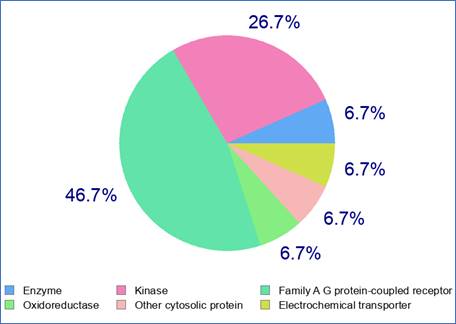
The in-silico target prediction of harmine revealed a diverse range of molecular target classes, suggesting its potential as a multi-target anticancer agent. According to the pie chart analysis, the largest proportion (46.7%) of predicted targets belonged to the Family A G protein-coupled receptors (GPCRs). GPCRs are known to regulate multiple signaling pathways related to cell survival, proliferation, angiogenesis, and immune modulation in cancer cells (Doostmohammadi et al., 2024). The high percentage of GPCR-related targets indicates that harmine may interfere with tumor cell signaling, possibly by blocking or modulating GPCR-mediated oncogenic pathways, which are often overactivated in various cancer types (Figure 2).

The second major class, comprising 26.7%, was protein kinases, which are well-established targets in modern cancer therapy. Kinases regulate key events in cell cycle progression, apoptosis, and metastasis (Lupan et al., 2024). Harmine has been previously shown to inhibit cyclin-dependent kinases (CDKs), particularly Cdk2, through phosphorylation inactivation, leading to cell cycle arrest at the G2 phase (Ock & Kim, 2021). Therefore, its interaction with other kinases further strengthens its potential as a kinase-targeting anticancer compound.

Interestingly, the remaining 6.7% targets were distributed among several functionally important protein classes: enzymes, oxidoreductases, electrochemical transporters, and other cytosolic proteins. These groups are involved in critical cellular processes such as redox balance, energy metabolism, and intracellular transport. For instance, oxidoreductases are involved in regulating oxidative stress, which is a key contributor to cancer progression and drug resistance (M et al., 2022). Harmine's possible influence on oxidative stress pathways may therefore contribute to its pro-apoptotic effects.

Moreover, the presence of electrochemical transporters as predicted targets may indicate harmine’s potential to interfere with ion homeostasis or membrane transport, which are also emerging areas in cancer drug discovery. The targeting of cytosolic proteins suggests that harmine may modulate intracellular signaling or interact with downstream effectors beyond the membrane receptors.

Taken together, these findings suggest that harmine does not act through a single linear mechanism, but rather exhibits pleiotropic effects by engaging with multiple classes of proteins involved in cancer pathogenesis. This polypharmacological profile supports its use as a lead compound for developing multi-target anticancer therapies, especially in complex tumors where monotherapy often fails due to resistance or redundancy in signaling pathways.

4.2 Physicochemical and Drug-Likeness Profile of Harmine

The physicochemical profile of harmine (Table 3), analyzed using SwissADME, indicates its potential suitability as an orally active drug. Harmine has a molecular formula of C13H12N2O and a molecular weight of 212.25 g/mol, which falls well within the acceptable range for drug-like molecules (Lipinski et al., 2001). It contains 13 aromatic heavy atoms, only 1 rotatable bond, and shows a low fraction of sp3 carbon atoms (0.15), suggesting a rigid planar structure-a characteristic that often favors strong binding to biological targets (Meyer et al., 2003). The TPSA (Topological Polar Surface Area) is 37.91 Å2, which is below the 140 Å2 threshold for good intestinal absorption and blood-brain barrier (BBB) permeability (Remko et al., 2011).

In terms of lipophilicity, harmine shows a consensus Log P of 2.78, calculated from five prediction models. This balanced lipophilicity supports its ability to cross lipid membranes, yet remain soluble enough in aqueous environments (Fahr et al., 2005). The water solubility analysis (Log S values ranging from -4.05 to -5.11) categorizes harmine as moderately soluble, which is acceptable for oral formulations. These properties altogether suggest a favorable absorption profile, making it a viable candidate for further formulation development.

Harmine also shows high gastrointestinal (GI) absorption and the ability to penetrate the blood-brain barrier, indicating possible effects on both peripheral and central targets. It is not a P-glycoprotein substrate, which may enhance its intracellular retention. Interestingly, harmine is predicted to inhibit CYP1A2 and CYP3A4, key enzymes involved in drug metabolism (Zhao et al., 2011). This raises the possibility of drug-drug interactions, which should be considered in future pharmacokinetic studies. The compound complies with all five major drug-likeness filters-Lipinski, Ghose, Veber, Egan, and Muegge rules-with zero violations, further supporting its candidacy as a lead compound (Sukhachev et al., 2024). The bioavailability score of 0.55 suggests moderate oral bioavailability.

Overall, harmine exhibits a strong drug-like profile, with favorable lipophilicity, solubility, permeability, and bioavailability characteristics. These properties, along with its previously reported anticancer and kinase-inhibiting activities, make harmine a promising candidate for further development as an anticancer therapeutic. However, its CYP inhibition potential and BBB permeability also point to the need for careful toxicity and safety evaluation in vivo.

4.3 Toxicological Profile

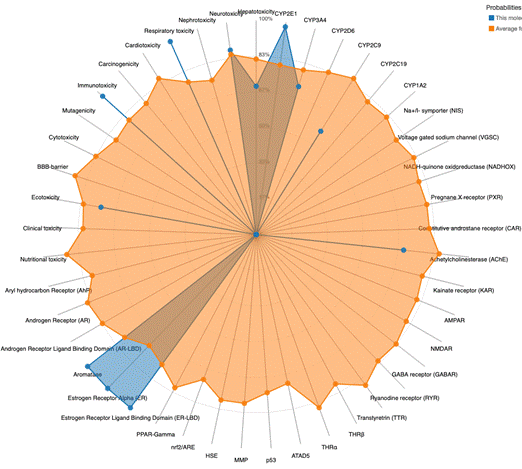
Toxicological analysis is a crucial phase in the drug development process because it guarantees the safety of novel treatment candidates and averts potential harm along with side effects prior to use in clinical trials (Dorato and Buckley, 2006). HRM functions as a bioactive component present in a number of well-known medicinal plants that have long been used in conventional medicine (Javeed et al., 2018). However, despite their advantageous pharmacological properties, some natural materials can have adverse effects as well as prominent toxicity in some circumstances, according to studies of the ingredients in conventional drugs and contemporary pharmacology research (Zhong et al., 2022). HRM acts as a reversible inhibitor of monoamine oxidase A (MAO-A), an enzyme responsible for breaking down neurotransmitters such as serotonin, dopamine, and norepinephrine (Figure 3). By inhibiting MAO-A, HRM increases the levels of these neurotransmitters in the brain, which contributes to its psychoactive effects but also poses risks of toxicity, particularly at high doses (Benny et al., 2023). Acute toxicity studies indicate that HRM has a median lethal dose (LD50) of approximately 120 mg/kg in mice when administered intraperitoneally, with symptoms of overdose including tremors, convulsions, hyperthermia, and respiratory distress (Frecska et al., 2016). HRM also interacts with other drugs, particularly serotonergic agents, increasing the risk of serotonin syndrome, a potentially life-threatening condition (Brito-da-Costa et al., 2020). Furthermore, HRM may inhibit cytochrome P450 enzymes, altering the metabolism of co-administered drugs and potentially leading to adverse effects (Herraiz et al., 2010). Chronic use of HRM may lead to neurotoxicity and hepatotoxicity, although these effects are not well-documented in humans. Additionally, HRM ability to intercalate into DNA raises concerns about its genotoxic potential, though evidence of carcinogenicity remains limited (Pfau and Skog, 2004).

 4.4 Clinical evidence

A clinical study is a crucial step in the research process for creating a new drug, which is described as examinations or trials conducted on human subjects (Friedman et al., 2015). Clinical trials are crucial for the detection, diagnosis, and prevention of disease and also for the creation of innovative treatment strategies (Piantadosi, 2024). Clinical studies also provide information on accuracy, safety, and evidence-based treatment (Friedman et al., 2015). HRM demonstrated potential therapeutic effects in preclinical and clinical studies, particularly in neurodegenerative and psychiatric disorders. HRM has the ability to inhibit monoamine oxidase A (MAO-A), which enhances serotonin and dopamine levels, which may benefit conditions like depression (Prinsloo, 2019). A study by Morales-García et al. (2017) highlighted HRM’s neurogenic properties, promoting hippocampal neurogenesis, which could be beneficial for Alzheimer's disease (Morales-García et al., 2017). Additionally, HRM has shown anticancer activity by targeting dual-specificity tyrosine phosphorylation-regulated kinases (DYRK1A) in pancreatic cancer cells (Kumar et al., 2018). In 2021, Mount Sinai researchers received FDA approval to conduct a Phase 1 clinical trial assessing HRM's safety and tolerability in healthy volunteers (Ables et al., 2024). These findings suggest that harmine could be a viable candidate for therapies aimed at beta-cell regeneration in diabetes patients. Despite promising results, further clinical trials are needed to establish its safety and efficacy in humans.

5. Future Directions

To fully realize harmine’s therapeutic potential, further research is essential. Future studies should focus on comprehensive in vitro and in vivo preclinical experiments, including dose optimization, safety profiling, and mechanistic studies. Given harmine’s inhibitory effect on CYP450 enzymes, careful pharmacokinetic and drug-interaction studies are also needed to ensure safety in polypharmacy settings. Additionally, well-designed clinical trials are crucial to evaluate its efficacy, toxicity, and pharmacodynamics in human subjects. With rigorous validation, harmine could be developed into an effective, affordable, and multi-mechanistic anticancer drug with fewer side effects than conventional chemotherapy.

6. Conclusion

This review demonstrates that harmine (HRM) is a potent natural compound with significant anticancer activity against a wide range of cancers, including breast, colon, liver, lung, thyroid, skin, and hematological malignancies. Harmine acts through multiple mechanisms such as cytotoxicity, apoptosis induction, cell cycle arrest, inhibition of cell proliferation and migration, autophagy activation, and promotion of oxidative stress. Among these, its pro-apoptotic and cell cycle regulatory effects have been most consistently reported. While some dose-dependent toxicities—such as hepatotoxicity, neurotoxicity, and inhibition of cytochrome P450 enzymes—have been observed, harmine’s multi-targeted actions and favorable drug-like properties support its candidacy as a promising anticancer agent.

References


Ables, J. L., Israel, L., Wood, O., Govindarajulu, U., Fremont, R. T., Banerjee, R., Liu, H., Cohen, J., Wang, P., Kumar, K., Lu, G., DeVita, R. J., Garcia-Ocaña, A., Murrough, J. W., & Stewart, A. F. (2024). A Phase 1 single ascending dose study of pure oral harmine in healthy volunteers. Journal of psychopharmacology (Oxford, England), 38(10), 911–923. https://doi.org/10.1177/02698811241273772

Aljamali, N. M., Obaid, A. J., & Naser, M. S. (2021). Chemical Causes of Leukemia. Journal of Modern Chemistry & Chemical Technology, 12(3), 25-36p.

Alshehabi, S. (2017). Interaction between air pollution and host factors in lung cancer. The University of Manchester (United Kingdom).

Anand, U., Dey, A., Chandel, A. K. S., Sanyal, R., Mishra, A., Pandey, D. K., De Falco, V., Upadhyay, A., Kandimalla, R., Chaudhary, A., Dhanjal, J. K., Dewanjee, S., Vallamkondu, J., & Pérez de la Lastra, J. M. (2022). Cancer chemotherapy and beyond: Current status, drug candidates, associated risks and progress in targeted therapeutics. Genes & diseases, 10(4), 1367–1401. https://doi.org/10.1016/j.gendis.2022.02.007

Apriani, E. F., Rosana, Y., & Iskandarsyah, I. (2019). Formulation, characterization, and in vitro testing of azelaic acid ethosome-based cream against Propionibacterium acnes for the treatment of acne. Journal of advanced pharmaceutical technology & research, 10(2), 75–80. https://doi.org/10.4103/japtr.JAPTR_289_18

Arnold, M., Singh, D., Laversanne, M., Vignat, J., Vaccarella, S., Meheus, F., Cust, A. E., de Vries, E., Whiteman, D. C., & Bray, F. (2022). Global Burden of Cutaneous Melanoma in 2020 and Projections to 2040. JAMA dermatology, 158(5), 495–503. https://doi.org/10.1001/jamadermatol.2022.0160

Asgarpanah, J., & Ramezanloo, F. (2012). Chemistry, pharmacology and medicinal properties of Peganum harmala L. African Journal of pharmacy and pharmacology, 6(22), 1573-1580.

Asif Ali, M., Khan, N., Kaleem, N., Ahmad, W., Alharethi, S. H., Alharbi, B., Alhassan, H. H., Al-Enazi, M. M., Razis, A. F. A., Modu, B., Calina, D., & Sharifi-Rad, J. (2023). Anticancer properties of sulforaphane: current insights at the molecular level. Frontiers in oncology, 13, 1168321. https://doi.org/10.3389/fonc.2023.1168321

Atteya, R., Ashour, M. E., Ibrahim, E. E., Farag, M. A., & El-Khamisy, S. F. (2017). Chemical screening identifies the β-Carboline alkaloid harmine to be synergistically lethal with doxorubicin. Mechanisms of ageing and development, 161(Pt A), 141–148. https://doi.org/10.1016/j.mad.2016.04.012

Azamjah, N., Soltan-Zadeh, Y., & Zayeri, F. (2019). Global Trend of Breast Cancer Mortality Rate: A 25-Year Study. Asian Pacific journal of cancer prevention: APJCP, 20(7), 2015–2020. https://doi.org/10.31557/APJCP.2019.20.7.2015

Baldini, E., Cardarelli, S., Campese, A. F., Lori, E., Fallahi, P., Virili, C., Forte, F., Pironi, D., Di Matteo, F. M., Palumbo, P., Costanzo, M. L., D'Andrea, V., Centanni, M., Sorrenti, S., Antonelli, A., & Ulisse, S. (2024). Evaluation of the Therapeutic Effects of Harmine on Anaplastic Thyroid Cancer Cells. International journal of molecular sciences, 25(2), 1121. https://doi.org/10.3390/ijms25021121

Benny, F., Kumar, S., Jayan, J., Abdelgawad, M. A., Ghoneim, M. M., Kumar, A., Manoharan, A., Susan, R., Sudevan, S. T., & Mathew, B. (2023). Review of β-carboline and its derivatives as selective MAO-A inhibitors. Archiv der Pharmazie, 356(7), e2300091. https://doi.org/10.1002/ardp.202300091

Berrougui, H., Isabelle, M., Cloutier, M., Hmamouchi, M., & Khalil, A. (2006). Protective effects of Peganum harmala L. extract, harmine and harmaline against human low-density lipoprotein oxidation. The Journal of pharmacy and pharmacology, 58(7), 967–974. https://doi.org/10.1211/jpp.58.7.0012

Bhuia, M. S., Aktar, M. A., Chowdhury, R., Ferdous, J., Rahman, M. A., Al Hasan, M. S., & Islam, M. T. (2023a). Therapeutic potentials of ononin with mechanistic insights: A comprehensive review. Food Bioscience, 56, 103302.

Bhuia, M. S., Chowdhury, R., Sonia, F. A., Kamli, H., Shaikh, A., El-Nashar, H. A. S., El-Shazly, M., & Islam, M. T. (2023b). Anticancer Potential of the Plant-Derived Saponin Gracillin: A Comprehensive Review of Mechanistic Approaches. Chemistry & biodiversity, 20(9), e202300847. https://doi.org/10.1002/cbdv.202300847

Bizuayehu, H. M., Ahmed, K. Y., Kibret, G. D., Dadi, A. F., Belachew, S. A., Bagade, T., Tegegne, T. K., Venchiarutti, R. L., Kibret, K. T., Hailegebireal, A. H., Assefa, Y., Khan, M. N., Abajobir, A., Alene, K. A., Mengesha, Z., Erku, D., Enquobahrie, D. A., Minas, T. Z., Misgan, E., & Ross, A. G. (2024). Global Disparities of Cancer and Its Projected Burden in 2050. JAMA network open, 7(11), e2443198. https://doi.org/10.1001/jamanetworkopen.2024.43198

Brambilla, E., & Gazdar, A. (2009). Pathogenesis of lung cancer signalling pathways: roadmap for therapies. The European respiratory journal, 33(6), 1485–1497. https://doi.org/10.1183/09031936.00014009

Brito-da-Costa, A. M., Dias-da-Silva, D., Gomes, N. G. M., Dinis-Oliveira, R. J., & Madureira-Carvalho, Á. (2020). Toxicokinetics and Toxicodynamics of Ayahuasca Alkaloids N, N-Dimethyltryptamine (DMT), Harmine, Harmaline and Tetrahydroharmine: Clinical and Forensic Impact. Pharmaceuticals (Basel, Switzerland), 13(11), 334. https://doi.org/10.3390/ph13110334

Callaway J. C. (2005). Various alkaloid profiles in decoctions of Banisteriopsis caapi. Journal of psychoactive drugs, 37(2), 151–155. https://doi.org/10.1080/02791072.2005.10399796

Carethers J. M. (2018). Risk factors for colon location of cancer. Translational gastroenterology and hepatology, 3, 76. https://doi.org/10.21037/tgh.2018.09.15

Chen, Q., Chao, R., Chen, H., Hou, X., Yan, H., Zhou, S., Peng, W., & Xu, A. (2005). Antitumor and neurotoxic effects of novel harmine derivatives and structure-activity relationship analysis. International journal of cancer, 114(5), 675–682. https://doi.org/10.1002/ijc.20703

Chen, Z. Y., Li, J., Zhu, S. D., Li, Z. D., Yu, J. L., Wu, J., ... & Zeng, L. H. (2022). Harmine reinforces the effects of regorafenib on suppressing cell proliferation and inducing apoptosis in liver cancer cells. Experimental and Therapeutic Medicine, 23(3), 1-9.

Chin, L. T., Liu, K. W., Chen, Y. H., Hsu, S. C., & Huang, L. (2021). Cell-based assays and molecular simulation reveal that the anti-cancer harmine is a specific matrix metalloproteinase-3 (MMP-3) inhibitor. Computational biology and chemistry, 94, 107556. https://doi.org/10.1016/j.compbiolchem.2021.107556

Chamberlain, M. C., Baik, C. S., Gadi, V. K., Bhatia, S., & Chow, L. Q. M. (2017). Systemic therapy of brain metastases: non–small cell lung cancer, breast cancer, and melanoma. Neuro-Oncology, 19(1), i1–i24. https://doi.org/10.1093/neuonc/now197

Chuang, S. C., La Vecchia, C., & Boffetta, P. (2009). Liver cancer: descriptive epidemiology and risk factors other than HBV and HCV infection. Cancer letters, 286(1), 9-14.

Dana, E. D., Garcia De Lomas, J., & Sanchez, J. (2010). Effects of the aqueous extracts of Zygophyllum fabago on the growth of Fusarium oxyosporum f. sp. melonis and Pythium aphanidermatum. Weed biology and management, 10(3), 170-175.

de Frias, U. A., Costa, M. C. M., Takahashi, J. A., & Oki, Y. (2012). Banisteriopsis Species: A source of bioactive of potential medical application. Int. J. Biotechnol. Wellness Ind, 1, 163-171.

de Groot, P., & Munden, R. F. (2012). Lung cancer epidemiology, risk factors, and prevention. Radiologic Clinics, 50(5), 863-876.

Devi, G., Sudhakar, K., Vasupradaa, A. P., Sravya, V., Manasa, V., & Yasaswini, E. (2021). Medicinal plants in india and it’s antioxidant potential–a review. Revista geintec-gestao inovacao e tecnologias, 11(4), 1397-1405.

Ding, Y., He, J., Huang, J., Yu, T., Shi, X., Zhang, T., Yan, G., Chen, S., & Peng, C. (2019). Harmine induces anticancer activity in breast cancer cells via targeting TAZ. International journal of oncology, 54(6), 1995–2004. https://doi.org/10.3892/ijo.2019.4777

Dongdong Z, Jin Y, Yang T, Yang Q, Wu B, Chen Y, Luo Z, Liang L, Liu Y, Xu A, Tong X, Can C, Ding L, Tu H, Tan Y, Jiang H, Liu X, Shen H, Liu L, Pan Y, Wei Y and Zhou F (2019) Antiproliferative and Immunoregulatory Effects of Azelaic Acid Against Acute Myeloid Leukemia via the Activation of Notch Signaling Pathway. Front. Pharmacol. 10:1396. doi: 10.3389/fphar.2019.01396

Doostmohammadi, A., Jooya, H., Ghorbanian, K., Gohari, S., & Dadashpour, M. (2024). Potentials and future perspectives of multi-target drugs in cancer treatment: the next generation anti-cancer agents. Cell Communication and Signaling, 22(1), 228. https://doi.org/10.1186/s12964-024-01607-9

Dorato, M. A., & Buckley, L. A. (2006). Toxicology in the drug discovery and development process. Current protocols in pharmacology, 32(1), 10-3.

Dos Santos, R. G., & Hallak, J. E. (2017). Effects of the natural β-carboline alkaloid harmine, a main constituent of ayahuasca, in memory and in the hippocampus: A systematic literature review of preclinical studies. Journal of psychoactive drugs, 49(1), 1-10.

El Fissi, H., Ameziane, H., Bouzid, F., Achqra, I., Msanda, F., & Alif, N. (2024). Isolation, digital analysis, and semi-quantification of harmaline and harmine from Peganum harmala L. Euro-Mediterranean Journal for Environmental Integration, 1-6.

Elumalai, P., Muninathan, N., Megalatha, S. T., Suresh, A., Kumar, K. S., Jhansi, N., Kalaivani, K., & Krishnamoorthy, G. (2022). An Insight into Anticancer Effect of Propolis and Its Constituents: A Review of Molecular Mechanisms. Evidence-based complementary and alternative medicine: eCAM, 2022, 5901191. https://doi.org/10.1155/2022/5901191

Fahr, A., Hoogevest, P. van, May, S., Bergstrand, N., & S. Leigh, M. L. (2005). Transfer of lipophilic drugs between liposomal membranes and biological interfaces: Consequences for drug delivery. European Journal of Pharmaceutical Sciences, 26(3–4), 251–265. https://doi.org/10.1016/j.ejps.2005.05.012

Filali, I., Bouajila, J., Znati, M., Bousejra-El Garah, F., & Ben Jannet, H. (2015). Synthesis of new isoxazoline derivatives from harmine and evaluation of their anti-Alzheimer, anti-cancer and anti-inflammatory activities. Journal of enzyme inhibition and medicinal chemistry, 30(3), 371-376.

Frecska, E., Bokor, P., & Winkelman, M. (2016). The therapeutic potentials of ayahuasca: possible effects against various diseases of civilization. Frontiers in pharmacology, 7, 35.

Friedman, L. M., Furberg, C. D., DeMets, D. L., Reboussin, D. M., & Granger, C. B. (2015). Fundamentals of clinical trials. springer.

Friedman, L. M., Furberg, C. D., DeMets, D. L., Reboussin, D. M., & Granger, C. B. (2015). Fundamentals of clinical trials. springer.

Frison, G., Favretto, D., Zancanaro, F., Fazzin, G., & Ferrara, S. D. (2008). A case of β-carboline alkaloid intoxication following ingestion of Peganum harmala seed extract. Forensic Science International, 179(2-3), e37-e43.

Frye, A., & Haustein, C. (2007). Extraction, identification, and quantification of harmala alkaloids in three species of Passiflora. American journal of undergraduate research, 6(3), 19-26.

Gandomani, H. S., Aghajani, M., Mohammadian-Hafshejani, A., Tarazoj, A. A., Pouyesh, V., & Salehiniya, H. (2017). Colorectal cancer in the world: incidence, mortality and risk factors. Biomedical Research and Therapy, 4(10), 1656-1675.

Gao, J., Zhu, H., Wan, H., Zou, X., Ma, X., & Gao, G. (2017). Harmine suppresses the proliferation and migration of human ovarian cancer cells through inhibiting ERK/CREB pathway. Oncology reports, 38(5), 2927–2934. https://doi.org/10.3892/or.2017.5952

Gupta, N., & Qanungo, K. (2023, May). Cigarette smoking and its association with lung cancer. In AIP Conference Proceedings (Vol. 2535, No. 1). AIP Publishing.

Hamsa, T. P., & Kuttan, G. (2011). Harmine activates intrinsic and extrinsic pathways of apoptosis in B16F-10 melanoma. Chinese medicine, 6(1), 11. https://doi.org/10.1186/1749-8546-6-11

Hashemi Sheikh Shabani, S., Seyed Hasan Tehrani, S., Rabiei, Z., Tahmasebi Enferadi, S., & Vannozzi, G. P. (2015). Peganum harmala L.'s anti-growth effect on a breast cancer cell line. Biotechnology reports (Amsterdam, Netherlands), 8, 138–143. https://doi.org/10.1016/j.btre.2015.08.007

He, J., Chen, S., Yu, T., Chen, W., Huang, J., Peng, C., & Ding, Y. (2022). Harmine suppresses breast cancer cell migration and invasion by regulating TAZ-mediated epithelial-mesenchymal transition. American journal of cancer research, 12(6), 2612–2626.

Herraiz, T., González, D., Ancín-Azpilicueta, C., Arán, V. J., & Guillén, H. (2010). β-Carboline alkaloids in Peganum harmala and inhibition of human monoamine oxidase (MAO). Food and Chemical Toxicology, 48(3), 839-845.

Huang, M., Lu, J. J., & Ding, J. (2021). Natural Products in Cancer Therapy: Past, Present and Future. Natural products and bioprospecting, 11(1), 5–13. https://doi.org/10.1007/s13659-020-00293-7

Huang, M., Lu, J. J., & Ding, J. (2021). Natural products in cancer therapy: Past, present and future. Natural products and bioprospecting, 11(1), 5-13.

Islam, M. T., & Dantas, R. C. M. (2013). Anticancer prospection of salicin, a historical origin of aspirin. Nutr Cancer, 65, 1045-1058.

Javeed, M., Rasul, A., Hussain, G., Jabeen, F., Rasool, B., Shafiq, N., ... & Ali, M. (2018). Harmine and its derivatives: Biological activities and therapeutic potential in human diseases. ||| Bangladesh Journal of Pharmacology|||, 13(3), 203-213.

Javeed, M., Rasul, A., Hussain, G., Jabeen, F., Rasool, B., Shafiq, N., ... & Ali, M. (2018). Harmine and its derivatives: Biological activities and therapeutic potential in human diseases. ||| Bangladesh Journal of Pharmacology|||, 13(3), 203-213.

Jebar, A. H., Errington-Mais, F., Vile, R. G., Selby, P. J., Melcher, A. A., & Griffin, S. (2015). Progress in clinical oncolytic virus-based therapy for hepatocellular carcinoma. Journal of General Virology, 96(Pt_7), 1533-1550.

K. Addo-Boadu; J. Wojta; G. Christ; P. Hufnagl; H. Pehamberger; B.R. Binder. (1996). Azelaic acid decreases the fibrinolytic potential of cultured human melanoma cells in vitro., 103(2), 0–129. doi:10.1016/0304-3835(96)04185-7.

Kadyan, P., & Singh, L. (2024). Unraveling the mechanistic interplay of mediators orchestrating the neuroprotective potential of harmine. Pharmacological Reports, 1-14.

Kartal, M. U. R. A. T., Altun, M. L., & Kurucu, S. (2003). HPLC method for the analysis of harmol, harmalol, harmine and harmaline in the seeds of Peganum harmala L. Journal of pharmaceutical and biomedical analysis, 31(2), 263-269.

Kciuk, M., Marciniak, B., & Kontek, R. (2020). Irinotecan-Still an Important Player in Cancer Chemotherapy: A Comprehensive Overview. International journal of molecular sciences, 21(14), 4919. https://doi.org/10.3390/ijms21144919

Khairudin, N.; Basri, M.; Fard Masoumi, H.R.; Samson, S.; Ashari, S.E. Enhancing the Bioconversion of Azelaic Acid to Its Derivatives by Response Surface Methodology. Molecules 2018, 23, 397. https://doi.org/10.3390/molecules23020397.

Khan, H., & Nabavi, S. M. (2019). Passiflora (Passiflora incarnata). In Nonvitamin and nonmineral nutritional supplements (pp. 361-366). Academic Press.

Kleeff, J., Korc, M., Apte, M., La Vecchia, C., Johnson, C. D., Biankin, A. V., ... & Neoptolemos, J. P. (2016). Pancreatic cancer. Nature reviews Disease primers, 2(1), 1-22.

Kluska, M., & Wozniak, K. (2021). Natural Polyphenols as Modulators of Etoposide Anti-Cancer Activity. International journal of molecular sciences, 22(12), 6602. https://doi.org/10.3390/ijms22126602

Kruger, E., Toraih, E. A., Hussein, M. H., Shehata, S. A., Waheed, A., Fawzy, M. S., & Kandil, E. (2022). Thyroid carcinoma: a review for 25 years of environmental risk factors studies. Cancers, 14(24), 6172.

Kumar, A. (2022). Plant alkaloids. In Phytoconstituents and Antifungals (pp. 53-64). Academic Press.

Kumar, K., Wang, P., Sanchez, R., Swartz, E. A., Stewart, A. F., & DeVita, R. J. (2018). Development of kinase-selective, harmine-based DYRK1A inhibitors that induce pancreatic human β-cell proliferation. Journal of medicinal chemistry, 61(17), 7687-7699.

Lewerenz, L., Hijazin, T., Abouzeid, S., Hänsch, R., & Selmar, D. (2020). Pilot study on the uptake and modification of harmaline in acceptor plants: An innovative approach to visualize the interspecific transfer of natural products. Phytochemistry, 174, 112362. https://doi.org/10.1016/j.phytochem.2020.112362

Li, C., Wang, Y., Wang, C., Yi, X., Li, M., & He, X. (2017). Anticancer activities of harmine by inducing a pro-death autophagy and apoptosis in human gastric cancer cells. Phytomedicine: international journal of phytotherapy and phytopharmacology, 28, 10–18. https://doi.org/10.1016/j.phymed.2017.02.008

Li, Z., Chen, L., He, C., Han, Y., Han, M., Zhang, Y., Qi, L., Xing, X., Huang, W., Gao, Z., & Xing, J. (2020). Improving anti-tumor outcomes for colorectal cancer therapy through in situ thermosensitive gel loading harmine. American journal of translational research, 12(5), 1658–1671.

Liao, Y., Wu, X., Luo, W., Chen, J., Huang, Y., Ma, K., ... & Wang, X. (2023). Azelaic Acid Regulates the Renin–Angiotensin System and Improves Colitis Based on Network Pharmacology and Experimentation. ACS omega, 8(17), 15217-15228. doi.org/10.1021/acsomega.3c00210.

Linares, M. A., Zakaria, A., & Nizran, P. (2015). Skin cancer. Prim Care, 42(4), 645-659.

Liu, J., Li, Q., Liu, Z., Lin, L., Zhang, X., Cao, M., & Jiang, J. (2016). Harmine induces cell cycle arrest and mitochondrial pathway-mediated cellular apoptosis in SW620 cells via inhibition of the Akt and ERK signaling pathways. Oncology reports, 35(6), 3363–3370. https://doi.org/10.3892/or.2016.4695

Liu, X., Li, M., Tan, S., Wang, C., Fan, S., & Huang, C. (2017). Harmine is an inflammatory inhibitor through the suppression of NF-κB signaling. Biochemical and biophysical research communications, 489(3), 332–338. https://doi.org/10.1016/j.bbrc.2017.05.126

Louis, D. N. (2016). WHO classification of tumours of the central nervous system. (No Title).

Lupan, I., Bintintan, V., Deleanu, D., & Samasca, G. (2024). Epigenetic Regulation of DNA Methylation and RNA Interference in Gastric Cancer: A 2024 Update. Biomedicines, 12(9), 2001. https://doi.org/10.3390/biomedicines12092001

Ma, Y., & Wink, M. (2010). The beta-carboline alkaloid harmine inhibits BCRP and can reverse resistance to the anticancer drugs mitoxantrone and camptothecin in breast cancer cells. Phytotherapy research: PTR, 24(1), 146–149. https://doi.org/10.1002/ptr.2860

Malik, Deepinder Singh; Kaur, Gurpreet. (2019). Exploring therapeutic potential of azelaic acid loaded NLCs for the treatment of acne vulgaris. Journal of Drug Delivery Science and Technology, (), 101418–. doi: 10.1016/j.jddst.2019.101418.

Mancebo, S. E., & Wang, S. Q. (2014). Skin cancer: role of ultraviolet radiation in carcinogenesis. Reviews on environmental health, 29(3), 265-273.

Manosroi, A., Panyosak, A., Rojanasakul, Y., & Manosroi, J. (2007). Characteristics and anti-proliferative activity of azelaic acid and its derivatives entrapped in bilayer vesicles in cancer cell lines. Journal of Drug Targeting, 15(5), 334–341. https://doi.org/10.1080/10611860701349315

Mastrofrancesco, A., Ottaviani, M., Aspite, N., Cardinali, G., Izzo, E., Graupe, K., Zouboulis, C. C., Camera, E., & Picardo, M. (2010). Azelaic acid modulates the inflammatory response in normal human keratinocytes through PPARgamma activation. Experimental dermatology, 19(9), 813–820. https://doi.org/10.1111/j.1600-0625.2010.01107.x

Mayad, E. H., Basaid, K., Furze, J. N., Heimeur, N., Senhaji, B., Chebli, B., ... & Ferji, Z. (2019). Reversible nematostatic effect of Peganum harmala L.(Nitrariaceae) on Meloidogyne javanica.

McKenna, D. J., Towers, G. N., & Abbott, F. (1984). Monoamine oxidase inhibitors in South American hallucinogenic plants: tryptamine and β-carboline constituents of ayahuasca. Journal of ethnopharmacology, 10(2), 195-223.

Meyer, E. A., Castellano, R. K., & Diederich, F. (2003). Interactions with Aromatic Rings in Chemical and Biological Recognition. Angewandte Chemie International Edition, 42(11), 1210–1250. https://doi.org/10.1002/anie.200390319

Moloudizargari, M., Mikaili, P., Aghajanshakeri, S., Asghari, M. H., & Shayegh, J. (2013). Pharmacological and therapeutic effects of Peganum harmala and its main alkaloids. Pharmacognosy reviews, 7(14), 199–212. https://doi.org/10.4103/0973-7847.120524

Morales-García, J. A., De la Fuente Revenga, M., Alonso-Gil, S., Rodríguez-Franco, M. I., Feilding, A., Perez-Castillo, A., & Riba, J. (2017). The alkaloids of Banisteriopsis caapi, the plant source of the Amazonian hallucinogen Ayahuasca, stimulate adult neurogenesis in vitro. Scientific reports, 7(1), 5309.

Morsy, M. H. E., Nabil, Z. I., Darwish, S. T., Al-Eisa, R. A., & Mehana, A. E. (2023). Anti-Diabetic and Anti-Adipogenic Effect of Harmine in High-Fat-Diet-Induced Diabetes in Mice. Life (Basel, Switzerland), 13(8), 1693. https://doi.org/10.3390/life13081693

M, S., N, R. P., Chakraborty, A., & Rajendrasozhan, S. (2022). Proteomic profiling of Deinococcus radiodurans with response to thioredoxin reductase inhibitor and ionizing radiation treatment. Journal of Proteomics, 267, 104697. https://doi.org/10.1016/j.jprot.2022.104697

Muniraj, T., Jamidar, P. A., & Aslanian, H. R. (2013). Pancreatic cancer: a comprehensive review and update. Disease-a-month, 59(11), 368-402.

Mvondo, J. G. M., Matondo, A., Mawete, D. T., Bambi, S.-M. N., Mbala, B. M., & Lohohola, P. O. (2021). In Silico ADME/T Properties of Quinine Derivatives using SwissADME and pkCSM Webservers. International Journal of TROPICAL DISEASE & Health, 1–12. https://doi.org/10.9734/ijtdh/2021/v42i1130492

Nafie, E., Lolarga, J., Lam, B., Guo, J., Abdollahzadeh, E., Rodriguez, S., Glackin, C., & Liu, J. (2021). Harmine inhibits breast cancer cell migration and invasion by inducing the degradation of Twist1. PloS one, 16(2), e0247652. https://doi.org/10.1371/journal.pone.0247652

Nassiri-Asl, M., Shariati-Rad, S., & Zamansoltani, F. (2007). Anticonvulsant effects of aerial parts of Passiflora incarnata extract in mice: involvement of benzodiazepine and opioid receptors. BMC complementary and alternative medicine, 7, 1-6.

Nikam, T. D., Ebrahimi, M. A., & Patil, V. A. (2009). Embryogenic callus culture of Tribulus terrestris L. a potential source of harmaline, harmine and diosgenin. Plant Biotechnology Reports, 3, 243-250.

Ock, C. W., & Kim, G. D. (2021). Harmine Hydrochloride Mediates the Induction of G2/M Cell Cycle Arrest in Breast Cancer Cells by Regulating the MAPKs and AKT/FOXO3a Signaling Pathways. Molecules, 26(21), 6714. https://doi.org/10.3390/molecules26216714

Ohgaki, H., & Kleihues, P. (2005). Epidemiology and etiology of gliomas. Acta neuropathologica, 109, 93-108.

Oodi, A., Norouzi, H., Amirizadeh, N., Nikougoftar, M., & Vafaie, Z. (2017). Harmine, a Novel DNA Methyltransferase 1 Inhibitor in the Leukemia Cell Line. Indian journal of hematology & blood transfusion: an official journal of Indian Society of Hematology and Blood Transfusion, 33(4), 509–515. https://doi.org/10.1007/s12288-016-0770-z

Pan Y, Liu D, Wei Y, Su D, Lu C, Hu Y and Zhou F (2017) Azelaic Acid Exerts Antileukemic Activity in Acute Myeloid Leukemia. Front. Pharmacol. 8:359. doi: 10.3389/fphar.2017.00359.

Park, W., Chawla, A., & O’Reilly, E. M. (2021). Pancreatic cancer: a review. Jama, 326(9), 851-862.

Patel, K., Gadewar, M., Tripathi, R., Prasad, S. K., & Patel, D. K. (2012). A review on medicinal importance, pharmacological activity and bioanalytical aspects of beta-carboline alkaloid “Harmine”. Asian Pacific journal of tropical biomedicine, 2(8), 660-664.

Pecorelli, S., Odicino, F., & Favalli, G. (2002). Interval debulking surgery in advanced epithelial ovarian cancer. Best Practice & Research Clinical Obstetrics & Gynaecology, 16(4), 573-583.

Pfau, W., & Skog, K. (2004). Exposure to β-carbolines norharman and harman. Journal of Chromatography B, 802(1), 115-126.

Piantadosi, S. (2024). Clinical trials: a methodologic perspective. John Wiley & Sons.

Piazuelo, M. B., & Correa, P. (2013). Gastric cancer: overview. Colombia Medica, 44(3), 192-201.

Pokhriyal, R., Hariprasad, R., Kumar, L., & Hariprasad, G. (2019). Chemotherapy resistance in advanced ovarian cancer patients. Biomarkers in cancer, 11, 1179299X19860815.

Prinsloo, D. (2019). An investigation of plant derived compounds as inhibitors of monoamine oxidase (Doctoral dissertation, North-West University (South-Africa). Potchefstroom Campus).

Qadir, S. U., & Raja, V. (2021). Herbal medicine: Old practice and modern perspectives. In Phytomedicine (pp. 149-180). Academic Press.

Rahimi Darehbagh, R., & Rezaei, N. (2024). Introduction to Stem Cell Therapy and Blood Cancers. In Hematological Cancer Diagnosis and Treatment: An Interdisciplinary Approach (pp. 1-15). Cham: Springer Nature Switzerland.

raji F, Sadeghinia A, Shahmoradi Z, Siadat AH, Jooya A. Efficacy of topical azelaic acid gel in the treatment of mild-moderate acne vulgaris. Indian J Dermatol Venereol Leprol 2007;73:94-96.

Rasool, S., Kadla, S. A., Rasool, V., & Ganai, B. A. (2013). A comparative overview of general risk factors associated with the incidence of colorectal cancer. Tumor Biology, 34, 2469-2476.

Rawla, P., & Barsouk, A. (2019). Epidemiology of gastric cancer: global trends, risk factors and prevention. Gastroenterology Review/Przeglad Gastroenterologiczny, 14(1), 26-38.

Remko, M., Bohác, A., & Kováciková, L. (2011). Molecular structure, pKa, lipophilicity, solubility, absorption, polar surface area, and blood brain barrier penetration of some antiangiogenic agents. Structural Chemistry, 22(3), 635–648. https://doi.org/10.1007/s11224-011-9741-z

Rooth, C. (2013). Ovarian cancer: risk factors, treatment and management. British journal of nursing, 22(Sup17), S23-S30.

Ruan, S., Jia, F., & Li, J. (2017). Potential Antitumor Effect of Harmine in the Treatment of Thyroid Cancer. Evidence-based complementary and alternative medicine: eCAM, 2017, 9402615. https://doi.org/10.1155/2017/9402615

Salehi, F., Dunfield, L., Phillips, K. P., Krewski, D., & Vanderhyden, B. C. (2008). Risk factors for ovarian cancer: an overview with emphasis on hormonal factors. Journal of Toxicology and Environmental Health, Part B, 11(3-4), 301-321.

Sharifi, S., Sattari, T. N., Zebarjadi, A., Majd, A., & Ghasempour, H. (2014). The influence of Agrobacterium rhizogenes on induction of hairy roots and ß-carboline alkaloids production in Tribulus terrestris L. Physiology and molecular biology of plants, 20, 69-80.

Sharma, R., Kumar, S., Kaushik, N., & Singh, B. (2025). Decoding the Mystery of Blood Cancer: Cause, Diagnosis, and Management. Current Cancer Therapy Reviews, 21(1), 40-53.

Sharmaa, Neha, et al. "Azelaic acid attenuatesrotenone-induced behavioural alterations in parkinson’s disease rat model." Plant Arch 21 (2021): 2333-2337. https://doi.org/10.51470/PLANTARCHIVES.2021.v21.S1.383.

Shinji, S., Yamada, T., Matsuda, A., Sonoda, H., Ohta, R., Iwai, T., ... & Yoshida, H. (2022). Recent advances in the treatment of colorectal cancer: a review. Journal of Nippon Medical School, 89(3), 246-254.

Shtivelman, E., Hensing, T., Simon, G. R., Dennis, P. A., Otterson, G. A., Bueno, R., & Salgia, R. (2014). Molecular pathways and therapeutic targets in lung cancer. Oncotarget, 5(6), 1392.

Silaghi, H., Lozovanu, V., Georgescu, C. E., Pop, C., Nasui, B. A., Catoi, A. F., & Silaghi, C. A. (2022). State of the art in the current management and future directions of targeted therapy for differentiated thyroid cancer. International Journal of Molecular Sciences, 23(7), 3470.

Škubník, J., Pavlícková, V. S., Ruml, T., & Rimpelová, S. (2021). Vincristine in combination therapy of cancer: emerging trends in clinics. Biology, 10(9), 849.

SRS Mota, N., R. Kviecinski, M., B. Felipe, K., MAS Grinevicius, V., Siminski, T., M. Almeida, G., ... & C. Pedrosa, R. (2020). β-carboline alkaloid harmine induces DNA damage and triggers apoptosis by a mitochondrial pathway: study in silico, in vitro and in vivo. International Journal of Functional Nutrition, 1(1), 1.

Stupp, R., Mason, W. P., Van Den Bent, M. J., Weller, M., Fisher, B., Taphoorn, M. J., ... & Mirimanoff, R. O. (2005). Radiotherapy plus concomitant and adjuvant temozolomide for glioblastoma. New England journal of medicine, 352(10), 987-996.

Sukhachev, V. S., Dmitriev, A. V., Ivanov, S. M., Savosina, P. I., Druzhilovskiy, D. S., Filimonov, D. A., & Poroikov, V. V. (2024). Assessment of the Efficiency of Selecting Promising Compounds During Virtual Screening Based on Various Estimations of Drug-Likeness. Pharmaceutical Chemistry Journal, 58(9), 1388–1396. https://doi.org/10.1007/s11094-025-03286-3

Sun, K., Tang, X. H., & Xie, Y. K. (2015). Paclitaxel combined with harmine inhibits the migration and invasion of gastric cancer cells through downregulation of cyclooxygenase-2 expression. Oncology letters, 10(3), 1649–1654. https://doi.org/10.3892/ol.2015.3425

Sun, P., Zhang, S., Li, Y., & Wang, L. (2014). Harmine mediated neuroprotection via evaluation of glutamate transporter 1 in a rat model of global cerebral ischemia. Neuroscience letters, 583, 32–36. https://doi.org/10.1016/j.neulet.2014.09.023

Sun, Y. S., Zhao, Z., Yang, Z. N., Xu, F., Lu, H. J., Zhu, Z. Y., Shi, W., Jiang, J., Yao, P. P., & Zhu, H. P. (2017). Risk Factors and Preventions of Breast Cancer. International journal of biological sciences, 13(11), 1387–1397. https://doi.org/10.7150/ijbs.21635

Tang, X., Kurban, M., Hafiz, I., Shen, Q., & Wang, M. (2023). Preparation of hyaluronic acid-loaded Harmine polymeric micelles and in vitro effect anti-breast cancer. European journal of pharmaceutical sciences: official journal of the European Federation for Pharmaceutical Sciences, 183, 106388. https://doi.org/10.1016/j.ejps.2023.106388

Timbilla, A. A., Vrabec, R., Havelek, R., Rezacova, M., Chlebek, J., Blunden, G., & Cahlikova, L. (2024). The anticancer properties of harmine and its derivatives. Phytochemistry Reviews, 1-30.

Tiwari, S., Singh, S., Tripathi, S., & Kumar, S. (2015). A pharmacological review: Passiflora species. Asian Journal of Pharmaceutical Research, 5(4), 195-202.

Tong, C. W., Wu, M., Cho, W. C., & To, K. K. (2018). Recent Advances in the Treatment of Breast Cancer. Frontiers in Oncology, 8, 381990. https://doi.org/10.3389/fonc.2018.00227

Tsuda, H., Ohshima, Y., Nomoto, H., Fujita, K., Matsuda, E., Iigo, M., Takasuka, N., & Moore, M. A. (2004). Cancer prevention by natural compounds. Drug metabolism and pharmacokinetics, 19(4), 245–263. https://doi.org/10.2133/dmpk.19.245

Tufael. (2024). Hepatocellular Carcinoma in a 55-Year-Old with Chronic Hepatitis B: A Case Report on Diagnosis and Management. Asia Pacific Journal of Cancer Research, 1(1). https://doi.org/10.70818/apjcr.2024.v01i01.07

Wang, J., & Wu, S. G. (2023). Breast Cancer: An Overview of Current Therapeutic Strategies, Challenge, and Perspectives. Breast cancer (Dove Medical Press), 15, 721–730. https://doi.org/10.2147/BCTT.S432526

Wilkinson, L., & Gathani, T. (2022). Understanding breast cancer as a global health concern. British Journal of Radiology, 95(1130). https://doi.org/10.1259/bjr.20211033

Wu, L. W., Zhang, J. K., Rao, M., Zhang, Z. Y., Zhu, H. J., & Zhang, C. (2019). Harmine suppresses the proliferation of pancreatic cancer cells and sensitizes pancreatic cancer to gemcitabine treatment. OncoTargets and therapy, 12, 4585–4593. https://doi.org/10.2147/OTT.S205097

Xing, M. (2013). Molecular pathogenesis and mechanisms of thyroid cancer. Nature Reviews Cancer, 13(3), 184-199.

Yao, P., Yao, P., Ku, X., & Yang, J. (2023). Harmine suppresses the malignant phenotypes and PI3K activity in breast cancer. Anti-cancer drugs, 34(3), 373–383. https://doi.org/10.1097/CAD.0000000000001462

Yu, X. J., Sun, K., Tang, X. H., Zhou, C. J., Sun, H., Yan, Z., Fang, L., Wu, H. W., Xie, Y. K., & Gu, B. (2016). Harmine combined with paclitaxel inhibits tumor proliferation and induces apoptosis through down-regulation of cyclooxygenase-2 expression in gastric cancer. Oncology letters, 12(2), 983–988. https://doi.org/10.3892/ol.2016.4696

Zhang, H., Sun, K., Ding, J., Xu, H., Zhu, L., Zhang, K., Li, X., & Sun, W. (2014). Harmine induces apoptosis and inhibits tumor cell proliferation, migration and invasion through down-regulation of cyclooxygenase-2 expression in gastric cancer. Phytomedicine: international journal of phytotherapy and phytopharmacology, 21(3), 348–355. https://doi.org/10.1016/j.phymed.2013.09.007

Zhang, L., Li, D., & Yu, S. (2020). Pharmacological effects of harmine and its derivatives: a review. Archives of pharmacal research, 43(12), 1259–1275. https://doi.org/10.1007/s12272-020-01283-6

Zhang, S., Cheng, C., Lin, Z., Xiao, L., Su, X., Zheng, L., ... & Liu, J. (2022). The global burden and associated factors of ovarian cancer in 1990–2019: findings from the Global Burden of Disease Study 2019. BMC Public Health, 22(1), 1455.

Zhao, L., & Wink, M. (2013). The β-carboline alkaloid harmine inhibits telomerase activity of MCF-7 cells by down-regulating hTERT mRNA expression accompanied by an accelerated senescent phenotype. PeerJ, 1, e174. https://doi.org/10.7717/peerj.174Bei, Y. Y., Yuan, Z. Q., Zhang, L., Zhou, X. F., Chen, W. L., Xia, P., Liu, Y., You, B. G., Hu, X. J., Zhu, Q. L., Zhang, C. G., Zhang, X. N., & Jin, Y. (2014). No vel self-assembled micelles based on palmitoyl-trimethyl-chitosan for efficient delivery of harmine to liver cancer. Expert opinion on drug delivery, 11(6), 843–854. https://doi.org/10.1517/17425247.2014.893292

Zhao, T., He, Y., Wang, J., Ding, K., Wang, C., & Wang, Z. (2011). Inhibition of Human Cytochrome P450 Enzymes 3A4 and 2D6 by β-Carboline Alkaloids, Harmine Derivatives. Phytotherapy Research, 25(11), 1671–1677. https://doi.org/10.1002/ptr.3458

Zhong, F., Chen, Y., Chen, J., Liao, H., Li, Y., & Ma, Y. (2022). Jatrorrhizine: a review of sources, pharmacology, pharmacokinetics and toxicity. Frontiers in Pharmacology, 12, 783127.

Zhu, J., Zhu, H., Zhu, Q., Xu, S. L., Xiao, L., Zhang, M. Y., & Gao, J. (2024). The roles of autophagy, ferroptosis and pyroptosis in the anti-ovarian cancer mechanism of harmine and their crosstalk. Scientific reports, 14(1), 6504. https://doi.org/10.1038/s41598-024-57196-7
Zhu, L., & Chen, L. (2019). Progress in research on paclitaxel and tumor immunotherapy. Cellular & molecular biology letters, 24, 40. https://doi.org/10.1186/s11658-019-0164-y


Article metrics
View details
0
Downloads
0
Citations
33
Views

View Dimensions


View Plumx


View Altmetric


0
Save
0
Citation
33
View
0
Share