Microbial Bioactives

Microbial Bioactives | Online ISSN 2209-2161
402
Citations
371.5k
Views
191
Articles
Your new experience awaits. Try the new design now and help us make it even better
Switch to the new experience
Figures and Tables
REVIEWS   (Open Access)

Microbial Biotechnology: Assessing The Applications Of Microorganisms In Biotechnology, Including Biofuel Production And Bioremediation

Chandrarohini Saravanan 1*, Nor Hazliana Harun 2

+ Author Affiliations

Microbial Bioactives 2 (1) 1-9 https://doi.org/10.25163/microbbioacts.2110169

Submitted: 28 September 2019 Revised: 15 November 2019  Published: 14 November 2019 


Abstract

Microbial biotechnology is a rapidly evolving field that harnesses microorganisms for applications such as biofuel production and bioremediation. This review highlights its significance and diverse applications while summarizing key advancements. Microorganisms, including algae, fungi, and bacteria, are indispensable due to their versatility, rapid growth, and biochemical capabilities, making them valuable in industrial and environmental sectors. In biofuel production, microorganisms convert organic matter into ethanol and biodiesel, reducing fossil fuel dependence and addressing energy security and environmental concerns. Similarly, bioremediation employs microbes to degrade or absorb pollutants, transforming contaminants into harmless metabolites and restoring ecosystems. Advances in microbial biotechnology have enabled the development of genetically modified microorganisms optimized for enhanced biofuel yields through metabolic engineering. Additionally, synthetic biology facilitates the design of novel microbes with specialized traits, expanding biotechnological applications. Understanding microbial genetics and metabolism is crucial for optimizing biotechnology. Omics technologies, including genomics, proteomics, and metabolomics, have revolutionized microbial analysis, allowing for strain enhancements that improve pollutant degradation and biofuel synthesis. Furthermore, integrating nanotechnology with microbiology has opened new avenues in biotechnology. Nanomaterials enhance microbial activity in biotechnological processes, serving as carriers or stabilizers in bioreactors to improve efficiency and productivity. In conclusion, microbial biotechnology continues to evolve, offering sustainable solutions to global challenges, including energy security and environmental pollution. Innovations in genetic engineering, omics technologies, and nanomaterials are expanding its potential, ensuring continuous progress. As advancements unfold, ethical and responsible implementation remains imperative to maximize benefits for both society and the environment.

Keywords : Microbial Biotechnology, Biofuel Production, Bioremediation,. Genetic Engineering, Omics Technologies

1. Introduction

Fermentation has been used extensively for many years to produce microbial cultures, enzymes, tastes, perfumes, and food additives plus a variety of additional high-value goods. Using conventional as well as molecular methods, molds, yeasts, and bacteria have been extensively utilized in the dairy, food, and brewing sectors. To achieve the intended microorganism strains for conventional fermentation techniques for genetic enhancement like traditional conjugation and mutagenesis in paired with high-throughput picking utilized (Maryam et al., 2017). Recombinant DNA technology has been utilized recently to alter the genetic makeup of molds, yeasts, and bacteria. Furthermore, through new enzymes via protein engineering, altered constructions to provide thermal stability, substrate selectivity, or the capacity to function in severe circumstances have emerged (Li et al.2013). Evolution is one of the primary techniques used microorganisms for protein engineering (Adrio & Demain 2014). Numerous microbe strains have undergone genetic modification to boost the production of enzymes or to improve stereoselectivity or substrate specificity. For instance, using DNA technology, it has been possible to successfully synthesize chymosin from the stomach of calves in Kluyveromyces lactis, Escherichia coli, and Aspergillus niger var. Wamori for the manufacturing of cheese. Biotechnology produces the glucoseamylase that is present in yeasts and is given to feedstock to improve the feedstock’s ability to use carbs. The beverage sector for raising alcohol consumption manufacturing or creating beer with less calories (Ogata et al, 2017). Probiotics have undoubtedly become one of the most significant research subjects in feed and food science in recent years. Products with probiotics have been effectively applied in aquaculture to improve both the microorganisms outside and within environment, and the prevailing practice is to substitute Probiotics replacing antibiotics for ecological things to think about (Omole, 2017). Industrial biotechnology uses metabolic engineering as a vital tool to reroute precursor metabolic fluxes through the control of enzymes, transport systems, and regulatory processes within the cell. Large volumes of useful metabolites or naturally occurring secondary chemicals that are impossible to remove from their natural sources or impractical to synthesize chemically can also be produced through metabolic engineering. The synthesis of the amino acid lysine by the genetically altered bacterium Corynebacterium glutamicum is one instance (Leuchtenberger, 2005). The development of antibiotics, vaccines, vitamins, enzymes, and other beneficial products has also made use of a number of significant technologies, such as protein engineering, metabolic engineering, synthetic biology, systems biology, and downstream processing (Tang and Zhao, 2009). For instance, valencene, a sesquiterpene was first identified in the peel of grapefruit nootkatone with Valencia oranges peel are currently made using microbial fermentation (Borneman and Kutyna, 2018). Collections of Books mutants produced through deliberate evolution, sensible high throughput screening and design helped through contemporary methods like fluorescence Microfluidics, flow cytometry, and labeling arrays have been created to recognize fascinating mutants having enzymes with appealing qualities (Tang and Zhao, 2009).Microbial biotechnology, which uses microorganisms and their enzymes to convert carbohydrates, lignins, and glycerols into a variety of renewable resources like bioenergy generation, is a crucial tactic for sustainable bioprocesses. Hazardous environmental problems are caused by the accumulation of industrial and agronomic wastes in the fields. Microorganisms play a significant economic role in a number of biotechnological advancements, including the fermentative techniques involving microorganisms, which helps to mitigate this issue.Furthermore, due to their importance as a source of enzymes with biotechnological potential, microorganisms are diverse entities that aid in the consumption and bioconversion of biomass. The impact of plants coming into touch with hazardous pathogens can also be significantly altered by microbial glycosylated devices. Additionally, emerging microbial biotechnology technologies can aid in the development of antimicrobial vaccines and modern medication discovery. Therefore, the primary goal of this review study is to examine the numerous methods and important details for the production of bioenergy molecules from microbial functions and their advantages. It also emphasizes the several metabolic engineering techniques that are suggested to raise the yield of biofuels.
2. Microbial Biotechnology in Biofuel Production

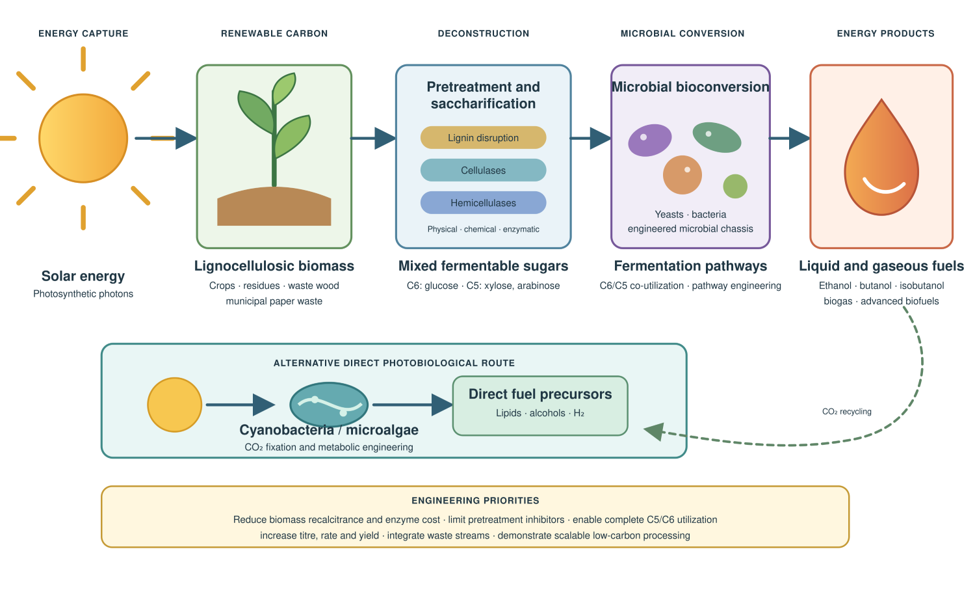
The environment gives us access to natural resources, which are the non-living or abiotic parts of nature. These resources include air, water, soil, minerals, climate, and solar energy. According to Nejat and Mantri (2017), the “biotic,” or living, parts of nature are made up of microorganisms, plants, and animals. Abiotic materials and microbial assistance are used by both plants and animals to thrive. The equilibrium of biotic and abiotic elements in the environment is significantly influenced by mi-crobes. They break down and decompose dead plants and animals, or biomass, and use the debris to recycle and reconstruct soil nutrients. One excellent and plentiful sustainable energy source is biomass. Biomasses include things like trees, crops, trash, and animal feces, but the majority of biomass comes from the lignocellulosic biomass of the plants we utilize to produce energy. Monoculture crops grown on fertile soils (such as sugarcane, corn, soya beans, oilseed rape, switch grass, willow, and hybrid poplar; Farrell et al., 2006), waste biomass (such as straw, corn, and waste wood; Kim and Dale, 2004), and municipal solid waste (such as processed paper and newspaper; Kuhad et al., 2010) are the main types of biomass for ethanol production that have been identified to date. A different kind of biomass is wood-derived cellulose, such as that found in Eichornia crassipes, Lantana camara, Prosopis juliᛀora, Saccharum spontaneum, Typha latifolia, Crofton, Chromolaena odorata, and other wood-based feedstocks that show promise and are less expensive for the generation of fuel ethanol. Through photosynthesis, plants store solar energy that can subsequently be transformed into fuel with the aid of microorganisms (Figure 1).

Biofuel is defined as fuel with biological origins. One alternative to traditional energy sources like coal, gasoline, diesel, and so on is biofuel, which is made from the plant’s lignocellulose component. According to Reddy and Yang (2005), cellulose, hemicellulose, and lignin are the major components of lignocellulose.  The primary structural component of plant cell walls is cellulose. Glycosidic connections hold the lengthy chain of glucose molecules together. Hemicellulose is a family of polysaccharides made up of monosaccharide units. It is the second most prevalent component of lignocellulosic biomass. Hemicellulose is the most effective component of biomass after cellulose in terms of its ability to produce bioethanol. A polymer comprising phenylpropanoid units, lignin has a three-dimensional structure (Van, 2001).Through acidic and enzymatic (hemicellulase/cellulase) reactions, the carbohydrate portions of plant cell walls can be transformed into fermentable monomeric sugars, which have been utilized to make biofuels such as ethanol, butanol, and osobutanol through microbial fermentation processes. Thus, microorganisms (yeast, cyanobecteria, and bacteria) transform simple carbohydrates into energy.For the creation of biofuel, lignocellulosic biomass must be broken down efficiently. Numerous species have developed to exploit this resource, such as the free-living entities and symbiotic animal–microbe consortiums that are always found in environments with high biomass. Gaining more understanding of the biochemical apparatus these organisms employ to break down biomass will open up new possibilities for the creation of biologically based systems that may be able to convert biomass on an industrial scale (Edward, 2008). The process of photosynthesis, which harnesses solar radiation, allows energy to be stored in polymers such as cellulose, hemicellulose, and lignin. The reason biologically produced fuels are so appealing as a fuel source is partly due to their high energy content, mobility, and significant compatibility with the current petroleum-based transportation infrastructure. Evidence indicates that transportation fuels based on lignocellulosic biomass constitute the most scalable alternative fuel source, notwithstanding the growing usage of biofuels like biodiesel and ethanol derived from sugar or starch (Hill et al., 2006).Plant materials containing lignocellulosic biomass present a potentially renewable, widely dispersed, and generally greenhouse gas-friendly source of sugars that can be processed into ethanol and other liquid fuels. Based in part on their capacity to flourish on marginal agricultural land, calculations of the productivity of lignocellulosic feedstocks suggest that they can likely significantly influence transportation needs without materially compromising the amount of land required to produce food crops (Tilman et al., 2006).

There are various microbial methods for breaking down lignocellulose. Our current knowledge of the enzymes involved in these biomass degrading processes is restricted to a few model organisms, such the bacteria Clostridium thermocellum and the fungus Trichoderma reesei (DelRio et al., 2007). Research is ongoing to learn more about the bacteria that break down biomass. Numerous large-scale genomic investigations will soon contribute much more to our understanding of the processes involved in biomass degradation. Consequently, there is great potential for industrial processes with enzymes obtained from thermophilic and acidophilic organisms that are known to degrade lignocellulose (Viikari et al., 2007).Those microorganisms that are difficult to cultivate contain a multitude of unique enzymes and enzyme systems that have evolved to utilize cellulosic biomass (Hugenholtz et al., 2002). The likelihood of effective enzyme optimization for industrial processes is increased by the abundance of naturally occurring lignocel-lulose-degrading enzymes. Because the expense of cellulases continues to be a major obstacle to the economically viable generation of biofuels, optimization of the saccharification process is essential

Figure 1 | Microbial conversion of solar energy into renewable fuels. Solar radiation is captured through photosynthesis and stored as chemical energy in lignocellulosic biomass derived from energy crops, agricultural and forestry residues, waste wood and cellulosic municipal waste. The biomass consists primarily of cellulose, hemicellulose and lignin. Physical, chemical or biological pretreatment disrupts the lignin–carbohydrate matrix, after which cellulases and hemicellulases hydrolyse the structural polysaccharides into fermentable six-carbon and five-carbon sugars, principally glucose, xylose and arabinose. Yeasts, bacteria and metabolically engineered microbial chassis subsequently convert these mixed sugars through fermentation or pathway-engineered metabolism into ethanol, butanol, isobutanol, biogas and other advanced biofuels. Conventional Saccharomyces cerevisiae efficiently metabolizes hexose sugars, whereas engineered organisms such as Escherichia coli can broaden substrate utilization to include pentoses and support the synthesis of non-native alcohols. Biomass-degrading microorganisms and enzyme systems—including those represented by Trichoderma reesei and Clostridium thermocellum—provide complementary strategies for improving lignocellulose deconstruction. The lower pathway depicts direct photobiological production, in which cyanobacteria or microalgae use light and CO₂ to generate lipids, alcohols, hydrogen or related fuel precursors without first producing terrestrial biomass. The dashed return pathway represents recycling of biogenic CO₂ into photosynthetic carbon fixation. Major priorities for translation include reducing biomass recalcitrance and enzyme costs, limiting pretreatment-derived inhibitors, enabling complete C5/C6 sugar utilization, increasing product titre, rate and yield, integrating waste feedstocks, and demonstrating scalable processing with verified life-cycle greenhouse-gas benefits.

(Himmel et al., 2007). Increased diversity in the pool of potential enzymes identified by combining traditional cultured microbial research with environmental prospecting techniques would increase the possibility of getting enzymes with stability and activity appropriate for a range of industrial applications. The infrastructure created for the production of ethanol based on sugar and starch will mostly be needed for the final stages of ethanol production from cellulosic material; modifications will be necessary to take advantage of the variety of sugars produced during the breakdown of biomass. On the other hand, the conversion of biomass based on starch mostly yields hexoses as well as the pentose sugars D-xylose and L-arabinose. Pentose sugars cannot be fermented by wild-type Saccharomyces cerevisiae, in contrast to hexose carbohydrates (Van Maris et al., 2007).  Due to its ability to convert all hexose and pentose sugars, genetically modified Escherichia coli is used nowadays (Görke B, Stülke, 2008). Recently, it has been possible to modify E. Coli to create additional alcohols, such isobutanol, through a non-fermentative pathway that may be easier to scale up for production. The production of biofuel and biodegradation will be greatly aided in the future by pathway-engineered bacteria and genomics research. This viewpoint has concentrated on using microbial activity to produce biofuels from lignocellulosic biomass. Therefore, biofuels made from renewable resources by microorganisms have great promise as an alternative to conventional fuels sourced from fossil fuels. Even if there is currently a large market for sustainable alternative fuels made from renewable resources, this demand will only grow in the future. The modern biofuel business mostly uses sugar cane or maize starch to manufacture ethanol, while vegetable and animal fats are used to produce biodiesel. However, the food and animal feed industries compete with these first-generation biofuels, particularly the ethanol made from starch.. On the other hand, since it is the most plentiful sustainable raw material in the world, lignocellulosic biomass, such as agricultural wastes, forestry residues, and municipal solid waste, offers a great potential as feedstock for biofuels. Microbe-produced fuels could contribute to addressing the global energy dilemma.

3. Microbial Biotechnology in Bioremediation

Microbial biotechnology is a young, quickly expanding area that has several uses in addressing environmental problems. The submission using microorganisms for bioremediation is a flexible technique that high stability, low cost, environmentally friendly, and non-interfering more widespread acceptance and ecological ecology (Sing et al, 2020). Utilizing bioremediation to clean the environment is a suitable alternative to the environmentally friendly physicochemical methods undesirable and may be the root of the secondary contamination. Contaminated places could be cleaned up using bioremediation, including as streams of water, soils, sludge, and waste (Boopathy, 2000). The US Environmental Protection Agency (USEPA) has even recognized bioremediation as an efficient and environmentally sound method for promoting sustainable development and reviving damaged areas (Bharagava & Mulla, 2020).  microorganisms that to the genera Flavobacterium, Bacillus, Aspergillus, and Alcaligenes, Phormidium, Nocardia, Ganoderma, Methosinus, and Pseudomonas . It has been noted that Rhizopus, Rhodococcus, and Stereum share a possible application in bioremediation (Verma & Kuila, 2019).  The use of bioremediation is not new to the human population, but undoubtedly the fresh methods that result from advancements process engineering and molecular biology are developing (Nduka, et al 2012).

4. Bioremediation of Heavy Metals

The elements with higher density, known as heavy metals, are a common form of environmental pollution that have gained attention recently because of the possible health implications. The primary reason for this pervasive pollution iron and steel, electroplating, and electrolysis, among other industries industries that produce gasoline, energy, fertilizer, and pesticides. Such industries' releases of heavy chemicals like lead, mercury, and uranium hazardous to land, such as arsenic, cadmium, and chromium aquatic wildlife and plants. Additionally, heavy metals are known to endanger the human life by producing weakness, breathing difficulties, skin irritation, headache, diarrhoea, anemia, and persistent cramping in the abdomen harm to the brain and kidneys. Cadmium poisoning from metals could also cause a break in DNA.Conventional techniques including chemical precipitation, electrochemical treatment, and ion exchange were being utilized to remove the heavy metals from the environment, however ,these techniques are costly, and they even remove the heavy metal at very little focused attention (Gupta, et al, 2016).  Bioremediation mediated by microorganisms is among the adopts the process for getting rid of accumulated heavy metal throughout the surroundings (Kumar, et al 2019).Many microbial species that live in various environments have been documented in the literature as being able to remove heavy metal pollution from the environment. In a study, Solanum endophytic bacteria Bacillus sp. nigrum L. were documented as the bioremediating heavy metals up to 75.78%, including lead, cadmium, and copper 80.48% and 21.25% after a 24-hour incubation period. Joshi et al (2011) have documented four distinct types of mushrooms: Aspergillus awamori, Trichoderma viride, Phanerochaete chrysosporium, and A. flavus for the bioremediation of nickel, chromium, cadmium, and lead. Within separate study, uranium biomineralization was documented by the Pseudomonas aeruginosa bacteria was identified from a polluted mine trash (Choudhary, et al 2011). A related report mentioned the bacteria Pseudomonas aeruginosa. and lichens Penicillium corylophilum separated the phylloplane and soil sampling from both the busy and quiet areas of of Sohag city, Egypt, were reported for bioremediating cadmium, zinc, and lead ion (Mohamed & Abo‐Amer, 2012).

5. Microbes and Environment

The burning of fossil fuels, incineration, vehicle exhaust, chemical spills, landfills, and industrial emissions and effluents are only a few of the possible sources of pollution for the environment. vaporous Industrial gases could be subjected to a pollution removal process by prior to the biofiltration process, a microbiological filter surface into the environment after being released (Malhautier et al, 2005).sewage cleanup carried out globally to clean up water is primarily microbe-driven approach. Decontaminating land from dangerous pollutants could be carried out in situ often using biostimulation, however the inherent the bacteria participating in the bioremediation process are typically examined by examining and testing contaminated samples and relevant microorganisms in a lab environment. Petroleum products, including gasoline and petrol, are a major source of pollution because they contain alkanes, cycloalkanes, aromatic, and heterocyclic chemicals, all of which are susceptible to enzymatic breakdown by bacteria. Research on the surroundings of petrol stations show the existence of microorganisms aggressively breaking down retired gas and petrochemicals. Microbial bioremediation is a common method used to remediate stations. Indeed, according to reports in, one of the first instances of bioremediation was put into place in the 1970s to get rid of hazardous petroleum products by provide nutrients to encourage microbial activity (Litchfield,2005). Since then, bioremediation has been used extensively throughout the world to handle pollution in the environment. Among the most noteworthy uses is reclaiming a region that was affected by in situ bioremediation significantly contaminated by a factory that stores chemicals, turning it into a Olympic Park, a secure location where the 2012 London Olympics were held took place (Mead & Sharif 2013).  Here, hazardous ammonia was changed into safe nitrogen gas, due to the land area being formed by the activity of archaea recyclable for use at public events. Long-term soil persistence of toxic pollutants including polychlorinated biphenyls (PCBs) and PAHs can endanger both human and environmental health (Ray, et al 2020).  Polycyclic aromatic hydrocarbons that are semi-volatile (PAHs) are some of the most prevalent industrial contaminants that are not limited to petroleum products, but also found in wood, industrial waste, and soil contamination can come from preservatives, among many other causes. and aquifers of water. Numerous PAH substances, such as naphthalene, Carcinogenic substances include benzanthracene, chrysene, and phenanthrene. ensuring that harmful substances are removed from contaminated surroundings near human activity essential. surroundings It is possible to break down or change PAH into less harmful forms via the actions of fungus, bacteria, and archaea. The workings of breakdown of naphthalene by Rhodococcus and Pseudomonas Ochrobactrum's breakdown of phenanthrene has been explained (Ghosal et al, 2016).Certain industrial effluents lack the necessary conditions for supporting typical microbial life, such as hypersaline habitats, which allows extremophiles like halophilic archaea to flourish and carry out the bioremediation procedure. As for the white rot fungus, Trametes versicolor has the ability to break down wood and has developed into break down hazardous substances like creosote, a wood preservative It contains PAHs in significant amounts (Lladó et al, 2013).An analysis centered on the Competition was demonstrated via bioremediation of industrially contaminated soil between fungus like Trametes and PAH-degrading bacteria. Each might benefit from particular changes that discouraged other living forms. This suggests that cautious choice and harmony of amendments are required for members to biodegrade at their best among the microbes in a community.

Non-biodegradable plastic garbage is known to have a negative impact on the ecosystem, particularly when it ends up in the ocean and threatens marine life (Sigler, 2014). Given bioremediation's success and potential, studies into the microbiological breakdown of plastic are currently in progress. As an illustration, the most widely used plastic is polyethylene (PE). is susceptible to partial degradation by the bacteria Acinetobacter sp. using laccase and alkane hydroxylase enzymes (Tokiwa et al, 2009). Above 20 genera of bacteria, such as Bacillus species and Pseudomonas as it is discovered that cyanobacteria such as Oscillatoria are able to deterioration by using it as a source of carbon; several of them work via means of biofilms growing on plastic surfaces (Ghatge et al, 2020).  Such numerous sources of microorganisms have been identified, including plastic waste dumps, seawater, sewage sludge, and the worms' intestines (Ru & Yang, 2020).  An additional widely used plastic created using Actinobacteria can be used to break down polylactic acid (Butbunchu & Pathom-Aree, 2019). One more Ideonella sakaiensis, a bacterium, is capable of enzymatic plastic degradation. Ethylene glycol, which produces polyethylene terephthalate (PET), and as terephthalic acid residues. It's interesting to note that wax worms large volumes of glycol are excreted by polyethylene, and these are probably generated by the worm's gut's plastic breakdown activity microbes (Cassone, et al 2020). Microbes are therefore essential to a bioremediation in several situations of environmental pollution.

6. Future Recommendation and Challenges

Microbial biotechnology has great potential for a number of uses, such as the production of biofuel and bioremediation. It is advised to make investments in synthetic biology and metagenomics to further this topic. The genetic potential of hitherto uncultivable microbes can be explored and utilized with the aid of metagenomics (Smith et al., 2021). When combined with synthetic biology methods, this allows for the creation of unique microorganisms for particular biotechnological uses (Jones and Brown, 2022). The creation of strong, high-yield microbial strains is also necessary to improve biofuel production (Chen et al., 2020).To increase the sustainability and economic viability of biofuels, it is imperative to enhance fermentation processes, improve metabolic engineering, and diversify feedstock sources (Wang and Lee, 2019). In order to effectively remove pollutants from the environment, the field should also prioritize advancing research in bioremediation methods, particularly focusing on novel microbes and their enzymes (Gomez et al., 2021). Reducing environmental effect can be achieved by prioritizing in-situ bioremediation techniques (Smith and Johnson, 2018). Another crucial direction is the investigation of the potential of the human microbiome in both health and disease. According to Johnson et al. (2019), this entails the creation of probiotics and tailored treatments to alter microbial ecosystems and enhance health outcomes. Finally, in order to guarantee the appropriate and safe application of microbial biotechnology, precise regulatory frameworks need to be devised (Environmental Biotechnology Regulatory Council, 2022). It is crucial to strike a balance between innovation and concerns for human and environmental safety (Smith and Green, 2020).

 However  there are a number of issues with microbial biotechnology that need to be resolved. Numerous microorganisms are either unculturable or have inadequate characterizations, making it difficult to comprehend and utilize the enormous diversity of microbes on Earth (Wong et al., 2017; Garcia and Martinez, 2018). Obstacles include preserving strain stability, limiting contamination, and refining fermentation procedures when moving from laboratory-to-industrial-scale microbial product manufacturing (Johnson and Williams, 2019; Chen and Smith, 2021). The development of sustainable methods is essential since some uses, such as large-scale biofuel production, may have unforeseen environmental repercussions, such as changing land use or competing with food crops (Environmental Impact Assessment Group, 2019; Gomez and Lee, 2020). Growing biotechnology raises ethical questions, especially in fields like synthetic biology and human microbiome modification (Ethics in Biotechnology Working Group, 2021). It is a constant struggle to strike a balance between scientific advancement and moral issues (Brown et al., 2022). The field of microbial biotechnology has numerous regulatory obstacles, thus creating regulatory frameworks that are both explicit and flexible is crucial (Environmental Biotechnology Regulatory Council, 2022). It takes careful balancing to promote innovation and ensure public safety (Smith and Green, 2020). Another major obstacle is making microbial biotechnology economically viable so that it can compete with current technologies like fossil fuels (Smith and Johnson, 2018). In order to do this, production costs must be decreased without sacrificing quality (Garcia et al., 2019). Furthermore, disagreements and patents related to intellectual property might impede cooperation and innovation in the microbiologicalbiotechnology (Smith and Brown, 2021).

Conclusion

In conculsion, microbial biotechnology has proven to be an effective instrument with a variety of uses, such as the synthesis of biofuel and bioremediation. In addition to promoting the production of sustainable energy, the use of microorganisms in these domains has provided creative approaches to environmental remediation. A number of global concerns may be addressed by microbial biotechnology thanks to further study and developments in genetic engineering. In order to ensure responsible and sustainable use of microorganisms in the future, we must take ecological and ethical considerations into account as we continue to harness their potential.

References


Bharagava, R. N., Saxena, G., & Mulla, S. I. (2020). Introduction to industrial wastes containing organic and inorganic pollutants and bioremediation approaches for environmental management. Bioremediation of Industrial Waste for Environmental Safety: Volume I: Industrial Waste and Its Management, 1-18.

Boopathy, R. (2000). Factors limiting bioremediation technologies. Bioresource technology, 74(1), 63-67.

Butbunchu, N., & Pathom-Aree, W. (2019). Actinobacteria as promising candidate for polylactic acid type bioplastic degradation. Frontiers in microbiology, 10, 2834.

Cassone, B. J., Grove, H. C., Elebute, O., Villanueva, S. M., & LeMoine, C. M. (2020). Role of the intestinal microbiome in low-density polyethylene degradation by caterpillar larvae of the greater wax moth, Galleria mellonella. Proceedings of the Royal Society B, 287(1922), 20200112.

Choudhary, S., & Sar, P. (2011). Uranium biomineralization by a metal resistant Pseudomonas aeruginosa strain isolated from contaminated mine waste. Journal of hazardous materials, 186(1), 336-343.

Das, S., Raj, R., Mangwani, N., Dash, H. R., & Chakraborty, J. (2014). Heavy metals and hydrocarbons: adverse effects and mechanism of toxicity. Microbial biodegradation and bioremediation, 23-54.

Edward M. Rubin (2008). Genomics of cellulosic biofuels. Nature 454: 841-845.3. Elanor W & Rolfes S (2005). Understanding Nutrition. Thomson-Wadsworth, 10th edition: pp 6.

Erisman, J. W., Galloway, J. N., Seitzinger, S., Bleeker, A., Dise, N. B., Petrescu, A. R., … & de Vries, W. (2013). Consequences of human modification of the global nitrogen cycle. Philosophical Transactions of the Royal Society B: Biological Sciences, 368(1621), 20130116.

 Farrell A, Plevin R, Turner B, Jones A, O’Hare M, Kammen D (2006). Ethanol can contribute to energy and environ-mental goals. Science 311:506–508.5.

Ghatge, S., Yang, Y., Ahn, J. H., & Hur, H. G. (2020). Biodegradation of polyethylene: a brief review. Applied Biological Chemistry, 63(1), 1-14.

Ghosal, D., Ghosh, S., Dutta, T. K., & Ahn, Y. (2016). Current state of knowledge in microbial degradation of polycyclic aromatic hydrocarbons (PAHs): a review. Frontiers in microbiology, 1369.

Görke B & Stülke J (2008). Carbon catabolite repression in bacteria: many ways to make the most out of nutrients. Nat Rev Microbiol 6:613–624.6.

Gupta, A., Joia, J., Sood, A., Sood, R., Sidhu, C., & Kaur, G. (2016). Microbes as potential tool for remediation of heavy metals: a review. J Microb Biochem Technol, 8(4), 364-372.

Hill J, Nelson E, Tilman D, Polasky S & Tiffany D (2006). Environmental, economic,and energetic costs and ben ts of biodiesel and ethanol biofuels. Proc. Natl Acad. Sci. USA 103: 11206–11210.7.

Himmel ME et al., (2007). Biomass recalcitrance: engineering plants and enzymes for biofuels production. Science 315: 804–807.8.

Hugenholtz, P (2002). Exploring prokaryotic diversity in the genomic era. Genome Biology 3, REVIEWS0003.9.

Ikemoto, Y., Teraguchi, M., & Kobayashi, Y. (2002). Plasma levels of nitrate in congenital heart disease: comparison with healthy children. Pediatric cardiology, 23, 132-136.

Joshi, P. K., Swarup, A., Maheshwari, S., Kumar, R., & Singh, N. (2011). Bioremediation of heavy metals in liquid media through fungi isolated from contaminated sources. Indian journal of microbiology, 51, 482-487.

Kim S, Dale EB (2004). Global potential bioethanol production from wasted crops and crop residues. Biomass Bio-energy 26:361–375.10.

Kuhad RC, Mehta G, Gupta R, Sharma KK (2010). Fed batch enzymatic sacchar cation of newspaper cellulosics improves the sugar content in the hydrolysates and eventually the ethanol fermentation by Saccharomyces cerevisiae. Biomass Bioenergy 34:1189–1194.11.

Kumar, A., Chaturvedi, A. K., Yadav, K., Arunkumar, K. P., Malyan, S. K., Raja, P., ... & Yadav, A. N. (2019). Fungal phytoremediation of heavy metal-contaminated resources: current scenario and future prospects. Recent advancement in white biotechnology through fungi: Volume 3: Perspective for sustainable environments, 437-461.

Litchfield, C. (2005). Thirty years and counting: bioremediation in its prime?. BioScience, 55(3), 273-279.

Lladó, S., Covino, S., Solanas, A. M., Viñas, M., Petruccioli, M., & D’annibale, A. (2013). Comparative assessment of bioremediation approaches to highly recalcitrant PAH degradation in a real industrial polluted soil. Journal of hazardous materials, 248, 407-414.

Malhautier, L., Khammar, N., Bayle, S., & Fanlo, J. L. (2005). Biofiltration of volatile organic compounds. Applied microbiology and biotechnology, 68, 16-22.

Mead, I., Apted, J., & Sharif, S. (2013). Delivering London 2012: Contaminated soil treatment at the olympic park. Proceedings of the Institution of Civil Engineers-Geotechnical Engineering, 166(1), 8-17.

Mohamed, R. M., & Abo-Amer, A. E. (2012). Isolation and characterization of heavy-metal resistant microbes from roadside soil and phylloplane. Journal of basic microbiology, 52(1), 53-65.

Moreira, I. T., Oliveira, O. M., Triguis, J. A., Queiroz, A. F., Barbosa, R. M., Anjos, J. A., … & Rios, M. C. (2013). Evaluation of the effects of metals on biodegradation of total petroleum hydrocarbons. Microchemical Journal, 110, 215-220.

Mustafa, Y. A., Abdul-Hameed, H. M., & Razak, Z. A. (2015). Biodegradation of 2, 4-dichlorophenoxyacetic acid contaminated soil in a roller slurry bioreactor. CLEAN–Soil, Air, Water, 43(8), 1241-1247.

Nduka, J. K., Umeh, L. N., Okerulu, I. O., Umedum, L. N., & Okoye, H. N. (2012). Utilization of different microbes in bioremediation of hydrocarbon contaminated soils stimulated with inorganic and organic fertilizers. J Pet Environ Biotechnol, 3(2), 1-9.

Nejat N, Mantri N (2017). Plant Immune System: Crosstalk Between Responses to Biotic and Abiotic Stresses the Missing Link in Understanding Plant Defence. Curr Issues Mol Biol 3;23:1-16.12.

Piskonen, R., Nyyssönen, M., Rajamäki, T., & Itävaara, M. (2005). Monitoring of accelerated naphthalene-biodegradation in a bioaugmented soil slurry. Biodegradation, 16, 127-134.

 Pradhan D, Mishra D, Kim DJ, Jong GA, Chaudhury GR, Lee SW(2010).  Bioleaching  kinetics  and  multivariate analysis of spent petroleum catalyst dissolution using two acidophiles. Journal of Hazardous Materials 175: 267–273.13.

Ray, P., Lakshmanan, V., Labbé, J. L., & Craven, K. D. (2020). Microbe to microbiome: a paradigm shift in the application of microorganisms for sustainable agriculture. Frontiers in Microbiology, 11, 622926.

 Reddy N and Yang Y (2005). Bi bers from agricultural byproducts for industrial applications. Trends Biotechnol-ogy 23: 22–27.14.

Ru, J., Huo, Y., & Yang, Y. (2020). Microbial degradation and valorization of plastic wastes. Frontiers in Microbiology, 11, 442.

Sigler, M. (2014). The effects of plastic pollution on aquatic wildlife: current situations and future solutions. Water, Air, & Soil Pollution, 225, 1-9.

Singh, C., Tiwari, S., Singh, J. S., & Yadav, A. N. (Eds.). (2020). Microbes in agriculture and environmental development. CRC Press.

Sizer F & Whitney E (2007). Nutrition: concepts and controversies. Cengage Learning pp 26. 15. Tilman D,  Hill J & Lehman  C (2006). Carbon-negative biofuels from low-input highdiversity  grassland biomass. Science 314: 1598–1600.16.

Tokiwa, Y., Calabia, B. P., Ugwu, C. U., & Aiba, S. (2009). Biodegradability of plastics. International journal of molecular sciences, 10(9), 3722-3742.

Van Maris AJ (2006). Alcoholic fermentation of carbon sources in biomass hydrolysates by Saccharomyces cerevi-siae: current status. Antonie Van Leeuwenhoek 90: 391–418.17.

Vanni M (2002). Nutrient Cycling by Animals in Freshwater Ecosystems. Annu. Rev. Ecol. Syst 33: 341-370.19.

Verma, S., & Kuila, A. (2019). Bioremediation of heavy metals by microbial process. Environmental Technology & Innovation, 14, 100369.

Viikari L, Alapuranen M, Puranen T, Vehmaanpera J & Siika-Aho M (2007). Thermostable enzymes in lignocellu-lose hydrolysis. Adv. Biochem. Eng. Biotechnol 108: 121–145.

Volpe, A., D’Arpa, S., Del Moro, G., Rossetti, S., Tandoi, V., & Uricchio, V. F. (2012). Fingerprinting hydrocarbons in a contaminated soil from an Italian natural reserve and assessment of the performance of a low-impact bioremediation approach. Water, Air, & Soil Pollution, 223, 1773-1782.

Wu, Z., Bañuelos, G. S., Lin, Z. Q., Liu, Y., Yuan, L., Yin, X., & Li, M. (2015). Biofortification and phytoremediation of selenium in China. Frontiers in plant science, 6, 136.


Article metrics
View details
0
Downloads
0
Citations
2075
Views
📖 Cite article

View Dimensions


View Plumx


View Altmetric


0
Save
0
Citation
2075
View
0
Share