1. Introduction
The commercial poultry industry has long depended on sub-therapeutic doses of antibiotic growth promoters (AGPs) to enhance feed efficiency, suppress enteric pathogens, and improve production output (Castanon, 2007; Thapa et al., 2021). However, indiscriminate and prophylactic use of AGPs has been strongly associated with the emergence of multidrug-resistant bacterial strains that can transfer resistance genes to human pathogens through meat, environment, and direct animal contact (Neu, 1992; Patterson and Burkholder, 2003; Van Boeckel et al., 2014). A landmark analysis of national pharmaceutical sales data across 71 countries confirmed that global antibiotic consumption increased by approximately 36% between 2000 and 2010, with Brazil, Russia, India, China, and South Africa together accounting for more than three-quarters of this increase (Van Boeckel et al., 2014). In recognition of this threat, the European Union implemented a comprehensive ban on the prophylactic use of AGPs in animal feed in 2006, and analogous restrictions have since been adopted or proposed across Asia, North America, and Africa (Castanon, 2007; Lillehoj et al., 2018). This global regulatory shift has created a sustained demand for effective, safe, and economically viable alternatives that can maintain broiler productivity without compromising human health or food chain integrity. Candidate non-antibiotic alternatives under active investigation include probiotics (Fuller, 1989), prebiotics (Patterson and Burkholder, 2003), organic acids (Hassan et al., 2010), and phytogenic feed additives (PFAs).
Among the most extensively evaluated AGP alternatives are phytogenic feed additives (PFAs), a heterogeneous class of botanical-derived products encompassing crude dried herbs, plant extracts, essential oils, and purified bioactive compounds such as terpenoids, polyphenols, and flavonoids (Frankič et al., 2009; Windisch et al., 2008). Interest in PFAs has grown markedly over the past two decades, driven by their perceived safety profiles, consumer acceptability, and multi-target bioactivity (Kamel, 2001; Puvača et al., 2013; Wenk, 2003). Multiple systematic reviews and meta-analyses have documented the capacity of PFAs to improve voluntary feed intake, digestive enzyme secretion, gut mucosal integrity, and intestinal microbial homeostasis in poultry, attributable to their antimicrobial, antioxidant, anti-inflammatory, and secretagogue properties (Brenes and Roura, 2010; Windisch et al., 2008; Zeng et al., 2015). The global market for phytogenic feed additives was valued at over USD 800 million and was projected to expand substantially, reflecting rapid commercial uptake in markets where AGPs have been restricted (Lillehoj et al., 2018).
The bioactivity of PFAs is principally mediated by their constituent essential oil compounds and phenolics, which disrupt bacterial membrane integrity, inhibit virulence gene expression, and interfere with quorum-sensing signaling networks in enteric pathogens (Burt, 2004; Hammer et al., 1999; Nazzaro et al., 2013). Beyond direct antimicrobial action, these bioactive molecules stimulate endogenous bile acid and digestive enzyme secretion, upregulate mucosal immune responses, and exert antioxidant effects in gut epithelial tissues (Hernandez et al., 2004; Hippenstiel et al., 2011; Sugiharto, 2016). For instance, dietary supplementation with thymol and carvacrol the principal terpenoid constituents of thyme and oregano significantly improved body weight (BW), feed conversion ratio (FCR), and antioxidant enzyme activities while reducing intestinal colonization of pathogenic bacteria in broiler chickens (Hashemipour et al., 2013). Similarly, oregano essential oil supplementation has been reported to enhance production performance and reduce lipid peroxidation in broiler breast and thigh tissues (Botsoglou et al., 2002), and combined oregano-garlic supplementation improved carcass yield and feed efficiency in commercial broilers (Kirkpinar et al., 2011). Mushroom and herb polysaccharides incorporated into broiler diets as AGP replacements likewise produced improvements in BW and feed conversion comparable to conventional antibiotics (Guo et al., 2004), underscoring the broad efficacy of PFAs across different botanical classes.
The breadth of herbal additives evaluated in broiler production is extensive. Rosemary leaf meal supplementation improved live weight gain, conversion efficiency, and oxidative stability of broiler meat (Ghazalah and Ali, 2008). Thyme inclusion enhanced live weight, gut morphology, blood biochemistry, and immunity (El-Ghousein and Al-Beitawi, 2009; Toghyani et al., 2010). Crushed and dried oregano leaves improved broiler carcass yield and meat antioxidant status (Bampidis et al., 2005). Plant extract mixtures improved digestive coefficient values, cecal microbiota composition, and production efficiency in chickens fed corn- and barley-based diets (Cross et al., 2007; Jamroz et al., 2003). These effects align with the broader mechanism reviewed by Brenes and Roura (2010), who proposed that essential oil-mediated enhancement of mucosal enzyme activity and microbial suppression accounts for many PFA-induced growth effects in non-ruminant species. In contexts where AGPs have been withdrawn, PFAs have demonstrated the ability to partially or fully offset performance losses, making them strategically important for the global poultry industry (Hassan et al., 2010; Wenk, 2003).
Lemongrass (Cymbopogon citratus DC. Stapf), a tall aromatic perennial grass native to South and Southeast Asia and widely cultivated across tropical and subtropical regions, represents a particularly promising candidate PFA owing to its broad pharmacological profile, ready availability, and low production cost in developing countries. Phytochemical characterization of C. citratus essential oil reveals a rich composition dominated by citral (70-88%), alongside myrcene (3-8%), geraniol, linalool, citronellal, and other terpenoids whose combined bioactivities have been extensively documented (Avoseh et al., 2015; Ekpenyong and Akpan, 2017; Kamatou and Viljoen, 2008). Linalool has been recognized as a multifunctional bioactive with antimicrobial, anti-inflammatory, and neuroprotective properties across numerous in vitro and in vivo models (Kamatou and Viljoen, 2008). The antimicrobial efficacy of C. citratus essential oil against clinically significant Gram-positive and Gram-negative pathogens, including Salmonella spp., Staphylococcus aureus, and Escherichia coli, has been repeatedly demonstrated in vitro (Cowan, 1999; Naik et al., 2010). The plant also contains phenylpropanoid glycosides and sesquiterpenes that inhibit prostaglandin synthesis and suppress leukocyte infiltration in inflammatory models (Murai et al., 1995), as well as flavonoids and phenolics with significant antioxidant and enzyme-inhibitory activities (Avoseh et al., 2015). The presence of sugar alcohols (sorbitol and mannitol), trace minerals, and digestible protein further contributes to its potential to improve the nutritional and physiological status of poultry (Avoseh et al., 2015; Ibrahim et al., 2005). Despite this comprehensive bioactive profile, rigorous empirical data on the dose-response effects of dietary fresh lemongrass inclusion on broiler growth performance and carcass quality particularly under tropical production conditions representative of South Asia remain scarce.
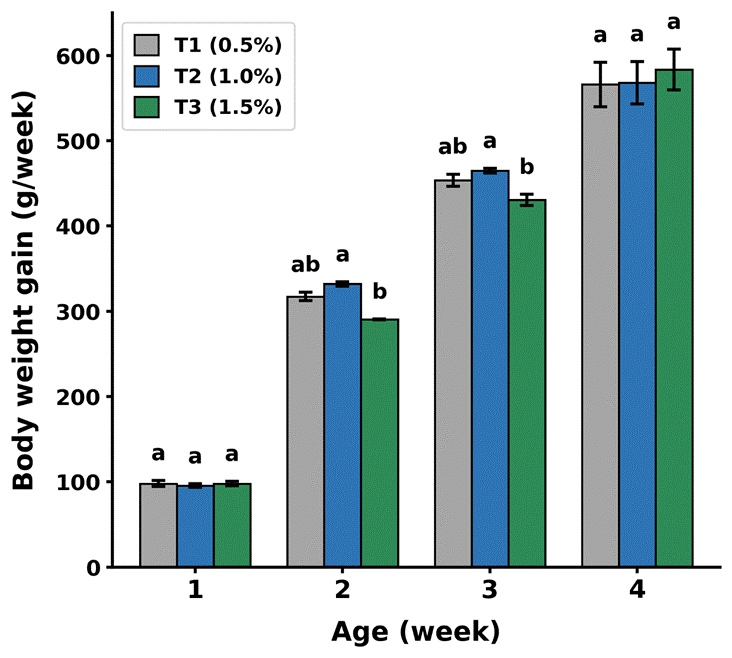
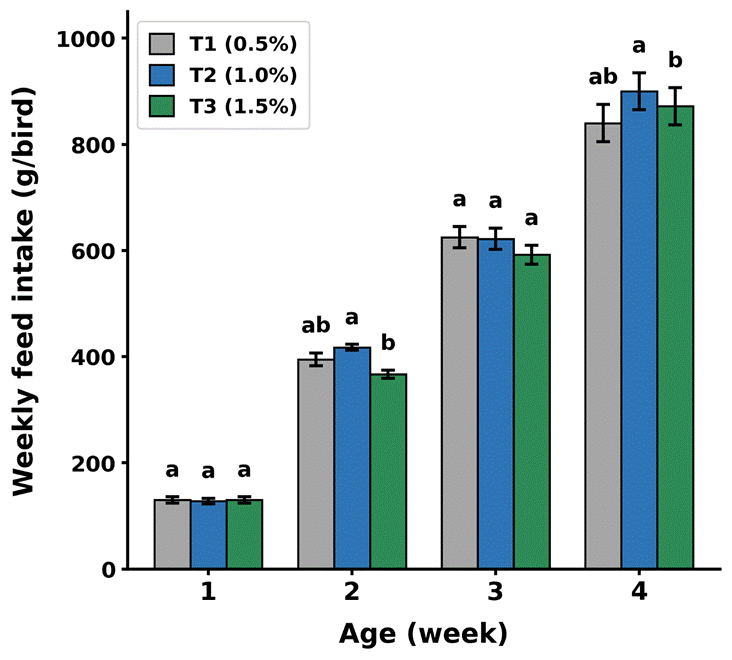
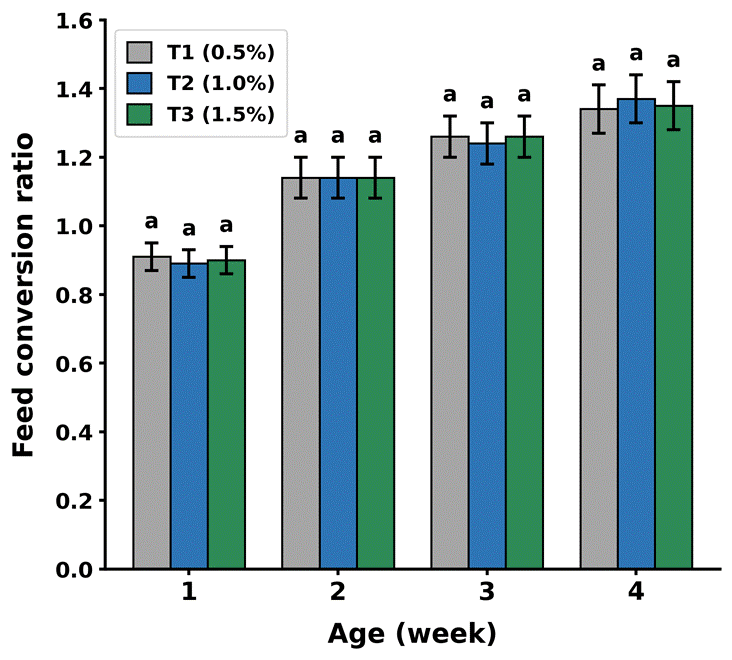
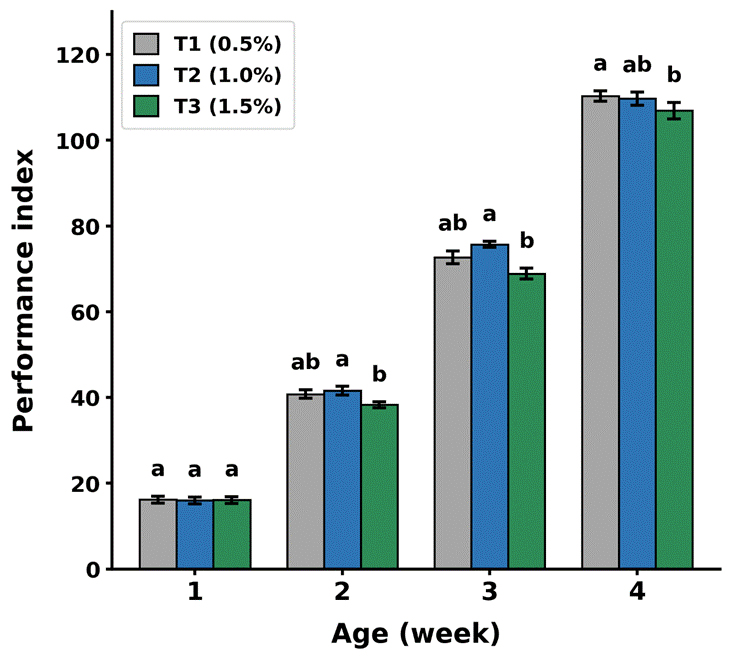
The present study was therefore undertaken to: (i) evaluate the effects of three graded dietary inclusion levels of fresh Cymbopogon citratus (0.5%, 1.0%, and 1.5% on a dry matter basis) on weekly growth performance parameters including body weight (BW), body weight gain (BWG), feed intake (FI), feed conversion ratio (FCR), and performance index (PI) in Ross-308 broiler chickens; and (ii) assess the associated carcass characteristics and economic returns under field conditions in Bangladesh to identify the biologically optimal and commercially viable supplementation level.