
Journal of Primeasia

Integrative Disciplinary Research | Online ISSN 3064-9870 | Print ISSN 3069-4353
570
Citations
238.1k
Views
156
Articles
Your new experience awaits. Try the new design now and help us make it even better
Switch to the new experience
Figures and Tables
REVIEWS   (Open Access)

Improving Hospital Care After Stillbirth and Neonatal Death: A Systematic Review and Meta-Analysis of Service Models and Quality Indicators in Low- and Middle-Income Countries

Fajar Sari Tanberika 1,2 *, Tukimin Bin Sansuwito 3

+ Author Affiliations

Journal of Primeasia 7 (1) 1-8 https://doi.org/10.25163/primeasia.7110873

Submitted: 28 July 2026 Revised: 13 September 2026  Published: 26 September 2026 


Abstract

Stillbirth and early neonatal death remain among the most under-addressed tragedies in global maternal and child health, with roughly 2.6 million stillbirths occurring each year and nearly 98% concentrated in low- and middle-income countries (LMICs). Although facility-based delivery has expanded across many of these settings, mortality reduction has not kept pace, suggesting that the quality, rather than the mere presence, of hospital-based care is the more decisive variable. We synthesized findings from existing systematic reviews and meta-analyses addressing maternal and obstetric risk factors, neonatal resuscitation training, antenatal care quality, and complicating clinical and environmental exposures. Evidence was organized into four thematic tables summarizing risk estimates, sample sizes, and intervention effects reported across LMIC hospital settings. Skilled antenatal supervision was associated with a nearly 40% relative risk reduction in neonatal death, and neonatal resuscitation training programs achieved risk ratios as low as 0.21 in some hospital cohorts. Maternal anemia, hypertensive disorders, short inter-pregnancy intervals, and delayed referral consistently emerged as modifiable predictors of adverse outcomes. Perinatal mortality following stillbirth or neonatal death is rarely attributable to a single cause; rather, it reflects the interaction between a mother's obstetric history and a health system's capacity to detect, refer, and respond in time. Strengthening antenatal quality, resuscitation readiness, and referral pathways—paired with functioning perinatal audit systems—offers the clearest, evidence-based route toward the 2030 global mortality targets. Keywords: stillbirth; neonatal death; hospital-based care; quality indicators; low- and middle-income countries

1. Introduction

There is quietly unbearable about a birth that ends in silence. Somewhere between the last contraction and the moment a family expects to hear a first cry, hundreds of thousands of pregnancies each year simply end—not in celebration, but in loss. Perhaps it is telling that this kind of death still lacks a fully agreed-upon name across health systems; some records call it stillbirth, others intrapartum death, and still others fold it quietly into "adverse perinatal outcome," as though naming it precisely might make the numbers harder to look away from. Whatever term is used, the scale is difficult to comprehend: more than 2.6 million stillbirths occur globally each year, and close to 98% of them are concentrated in low- and middle-income countries (LMICs) (Blencowe et al., 2016). Sub-Saharan Africa and South Asia, in particular, carry a disproportionate share of this burden—more than three-quarters of the global total, by most estimates (Lawn et al., 2016).

Global health governance has not ignored this. The Sustainable Development Goals and Every Newborn Action Plan (ENAP) both set a target of 12 or fewer stillbirths and neonatal deaths per 1,000 births by 2030 (Lawn et al., 2016). It is an ambitious number, and to its credit, progress has been made in some regions. And yet—this is the uncomfortable part—the pace of decline has been uneven, and in several of the highest-burden countries, frustratingly slow (Blencowe et al., 2016). One has to ask why, given decades of investment in facility-based delivery, the reduction in mortality has not tracked as closely as expected with the rise in hospital births.

Definitions matter here, if only because they shape what gets measured and, eventually, what gets funded. The World Health Organization defines stillbirth, for purposes of international comparison, as fetal death occurring at or after 28 completed weeks of gestation with a birth weight of at least 1,000 grams (Stanton et al., 2006). Perinatal mortality, a broader category, also includes early neonatal deaths—those occurring within the first seven days of life. Clinicians further distinguish antepartum stillbirths, which occur before labor begins, from intrapartum stillbirths, which occur during labor or delivery itself. The intrapartum category deserves particular attention: more than one million stillbirths each year happen during labor, a period during which, in principle, a functioning health system ought to be able to intervene (Lawn et al., 2016). That so many deaths cluster here—rather than earlier in pregnancy, when intervention options are more limited—points toward something researchers have long suspected but perhaps not emphasized enough: that the quality of hospital-based care, not merely its availability, may be the single most modifiable driver of these outcomes.

This is, in a sense, the paradox at the center of modern obstetric care in many LMICs. Facility-based delivery rates have climbed substantially over the past two decades, encouraged by national policies and international funding alike. Yet mortality has not fallen in step. Something is missing in the space between a woman arriving at a hospital and receiving care that actually meets the moment. Several explanations have been proposed—understaffing, delayed referral, inconsistent monitoring during labor—but taken together, they gesture toward a single underlying problem: institutional quality gaps, particularly during obstetric emergencies. In response, health systems have experimented with a range of service models, from standardized clinical checklists to structured perinatal audit systems, each attempting, in its own way, to close that gap.

Quality indicators, then, are not simply an academic exercise; they are the mechanism by which these efforts can be evaluated and improved. There is reasonably strong evidence, for instance, that antenatal care (ANC)—even a single visit with a skilled provider—meaningfully reduces the risk of neonatal mortality and stillbirth, largely by enabling earlier detection of complications such as hypertension, anemia, and infection (Alebel et al., 2018; Tekelab et al., 2019). Intrapartum monitoring, access to emergency obstetric care, and neonatal resuscitation training (NRT) for birth attendants round out the list of interventions with demonstrated survival benefit. Meta-analytic evidence on NRT programs is particularly striking, showing reductions in perinatal mortality of roughly 37% and in overall stillbirth risk of around 21% (Patel et al., 2017)—numbers substantial enough that one wonders why such training is not yet universal.

And yet knowing an intervention works is evidently not the same as implementing it consistently. Many hospitals still lack a systematic approach to what happens after a perinatal death occurs—not just the clinical steps taken during delivery, but the audit and bereavement support that should, in theory, follow. Perinatal audit systems exist precisely to identify "avoidable factors" in care and translate them into policy or practice change (Gondwe et al., 2022). When they work, they work well. But they are frequently undermined by inadequate training, thin financial resources, and what several authors have described, somewhat bluntly, as a "culture of blame" that discourages honest reporting (Gondwe et al., 2022).

There is also an ongoing, not fully resolved debate about service model design itself—midwife-led versus obstetrician-led care for low-risk pregnancies being perhaps the most persistent example. Midwife-led units appear to reduce unnecessary intervention while preserving favorable outcomes, though their success depends heavily on having a functional referral system behind them, one capable of escalating complications to a higher level of care when needed (Walker et al., 2014).

Taken together, these threads—mortality burden, definitional nuance, the intrapartum paradox, quality indicators, and the fragility of audit systems—suggest that the field needs a more integrated synthesis than currently exists. As the 2030 deadline approaches, there is a genuine urgency to understanding which hospital-based service models and which quality indicators most reliably reduce perinatal mortality, and which most meaningfully improve the experience of bereaved families. This review attempts exactly that: to bring together contemporary evidence on hospital-based strategies following stillbirth and neonatal death, and to identify, as clearly as the evidence allows, what constitutes high-quality care in this context.
2. Determinants of Stillbirth and Neonatal Death in Hospital Care

2.1 Maternal Age and Obstetric History

Much of what predicts a stillbirth or early neonatal death is written into a mother's history well before she ever reaches a hospital. Maternal age sits at the center of this story, and not in a simple linear way—both ends of the reproductive age spectrum carry elevated risk. Adolescent mothers, typically defined as under 20, face higher rates of low birth weight, preterm birth, and neonatal death, a pattern researchers attribute to a combination of biological immaturity and, frequently, compounding socioeconomic disadvantage (Grønvik & Sandøy, 2018). At the other end, advanced maternal age—commonly set at 35 or older—raises the likelihood of chromosomal abnormality and pre-existing conditions such as hypertension, both of which complicate pregnancy in ways that are harder to manage clinically (Feresu et al., 2005; Adisasmita et al., 2015). It is not, in other words, that older or younger mothers are simply "riskier"; rather, each end of the spectrum brings a distinct physiological vulnerability that hospital-based care must be equipped to anticipate.

Obstetric history compounds these age-related risks in ways that are, frankly, easy to underestimate. Women who have previously experienced a stillbirth or neonatal death face substantially higher odds of recurrence—a pattern that several authors describe as a kind of "obstetric legacy" that current hospital models often fail to interrupt (Kasa et al., 2023). Parity follows a similarly non-linear, U-shaped pattern: both first-time mothers and those with five or more previous births (so-called grand multiparity) show elevated risk, though for different reasons. Nulliparous women may lack the physiological "rehearsal" of prior labor, while grand multiparous women accumulate risk through repeated nutritional depletion and a higher incidence of complications such as malpresentation and obstructed labor (Gedefaw et al., 2020; Spector et al. 2012).

2.2 Birth Spacing and Neonatal Vulnerability

Somewhat related, though conceptually distinct, is the question of birth spacing. The WHO recommends a minimum interpregnancy interval of 24 months between a live birth and the next conception, yet short birth intervals remain common across much of sub-Saharan Africa and South Asia (Islam et al., 2022). When intervals fall below roughly 15 months, some cohort data suggest the risk of stillbirth roughly triples (Jena et al., 2020)—a striking figure, though one that should probably be read with some caution given variation across study settings. The proposed mechanism, maternal depletion syndrome, is intuitive enough: a body given insufficient time to rebuild micronutrient reserves is, understandably, less equipped to sustain a subsequent pregnancy. Preterm birth and low birth weight, meanwhile, remain perhaps the two most consistent predictors of early neonatal mortality in their own right, particularly in facilities without adequate neonatal intensive care capacity (Akombi & Renzaho, 2019).

2.3 Antenatal Care Quality

If biology sets the stage, though, the health system arguably decides how the story ends. Antenatal care quality is, by most accounts, the single most consistent modifiable factor in this space. Studies from Ethiopia and across sub-Saharan Africa more broadly suggest that even one ANC visit with a skilled provider can lower the relative risk of neonatal death by close to 40%, largely because it allows early detection of "silent" complications like hypertension and anemia before they become acute (Tekelab et al., 2019; Shiferaw et al., 2021). The word "quality" is doing real work in that sentence, though—simply attending a clinic is not the same as receiving care that meaningfully screens for and manages risk, and the literature is fairly clear that gaps in depth of care, not just access to it, explain much of the remaining mortality burden (Alebel et al., 2018).

2.4 Referral Pathways and the "Referral Paradox"

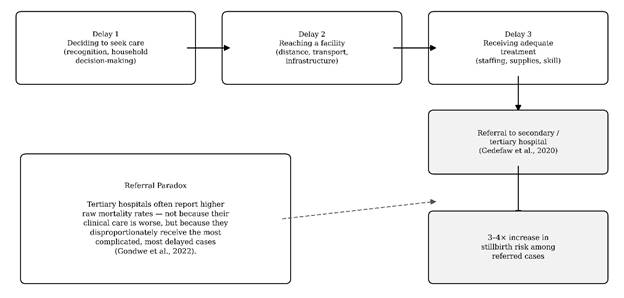
Referral status turns out to be one of the starkest predictors in the entire literature, and one that is somewhat under-discussed relative to its apparent importance. Women referred from primary to secondary or tertiary facilities often arrive already carrying the consequences of the "three delays"—delay in deciding to seek care, delay in reaching a facility, and delay in receiving adequate treatment once there—and face a three- to four-fold increase in stillbirth risk as a result (Gedefaw et al., 2020). This creates what might be called a referral paradox: hospitals, particularly tertiary ones, often show higher raw mortality rates not because their care is worse, but because they disproportionately receive the most complicated, most delayed cases (Gondwe et al., 2022) (Figure 1).

2.5 Service Models and Emergency Care Capacity

Service model design adds another layer. The debate between midwife-led and obstetrician-led care for low-risk pregnancies has been running for some time, and the evidence, on balance, favors midwife-led units for reducing unnecessary intervention—fewer episiotomies, fewer instrumental deliveries—without compromising safety, provided a functional referral pathway exists behind it (Walker et al., 2014). For higher-risk cases, emergency obstetric and neonatal care (EmONC) capacity becomes non-negotiable, and simulation-based training programs, such as PRONTO in Mexico, have shown measurable improvements in team communication and management of obstetric emergencies (Walker et al., 2014).

2.6 Neonatal Resuscitation Training

Neonatal resuscitation training deserves particular emphasis, if only because the effect sizes reported are unusually large for this field. Programs such as Helping Babies Breathe have produced risk ratios as low as 0.21 in some hospital cohorts, implying that roughly four out of five deaths in those settings may have been preventable through comparatively simple interventions—stimulation, bag-mask ventilation, basic airway management (Patel et al., 2017). That such a low-cost intervention carries this much weight is, arguably, one of the more hopeful findings in the entire perinatal mortality literature.

2.7 Socioeconomic and Environmental Determinants

Beyond the clinical encounter itself, socioeconomic and environmental context continues to shape outcomes in ways hospitals cannot fully control on their own. Lower household wealth correlates with poorer nutrition, lower health literacy, and persistent barriers to care despite nominally "free" services, given hidden costs like transport (Bhutta et al., 2009). Maternal education appears to be one of the more durable protective factors, associated with earlier care-seeking and better uptake of family planning (Alebel et al., 2018). Rural residence compounds these barriers geographically, with long travel distances over poor infrastructure frequently meaning women arrive too late for intervention to matter [Table 4]. More recently, researchers have begun documenting less obvious contributors—gestational diabetes, which many resource-limited facilities still lack the diagnostic capacity to screen for (Lemieux et al., 2022), chronic arsenic exposure in drinking water, linked to a more than 50% increase in infant mortality risk in some affected regions of Asia and Africa (Quansah et al., 2015), and congenital anomalies such as neural tube defects, which account for over 10% of global perinatal deaths and are strongly tied to inadequate folic acid fortification (Blencowe et al., 2018).

2.8 Perinatal Audit Systems and Quality-Improvement Feedback

Finally, none of these clinical or structural insights translate into improvement without a functioning feedback loop—and this is where perinatal audit systems come in. Designed to identify avoidable factors and convert them into changed practice, audits are, in principle, one of the more powerful quality-improvement tools available to a hospital (Gondwe et al., 2022). In practice, though, they are fragile. Heavy workloads, inconsistent use of standardized classification tools like ICD-PM, and a persistent "culture of blame" all undermine their sustainability, and stillbirths in particular tend to be deprioritized relative to maternal death audits—treated, as one study rather memorably put it, as a "neglected tragedy" (Gondwe et al., 2022). Addressing that imbalance, alongside the clinical gaps already described, is arguably where the next decade of quality-improvement work in this field needs to focus.


3. Methods

3.1 Search Strategy and Data Sources

This review drew on evidence identified through a systematic search of the peer-reviewed literature addressing maternal, obstetric, and neonatal risk factors,


Figure Figure 1: The Three Delays Framework and the Referral Paradox in LMIC Hospital-Based Obstetric Care. Delayed care-seeking, delayed facility access, and delayed treatment (the "three delays") compound to drive referral of complicated cases from primary to secondary/tertiary hospitals, where stillbirth risk rises three- to four-fold (Gedefaw et al., 2020). This referral pattern produces a "referral paradox": tertiary facilities report higher raw mortality not because their clinical care is worse, but because they disproportionately absorb the most complicated, most delayed cases (Gondwe et al., 2022). Dashed arrow indicates the causal link between accumulated delay and elevated mortality risk among referred patients.

Table 1: Maternal and Obstetric Risk Factors Associated with Stillbirth and Perinatal Mortality. This table consolidates evidence regarding maternal characteristics and obstetric histories that predispose mothers to adverse fetal outcomes in various resource-limited settings.

Study ID

Country

Maternal Age

Parity/Gravidity

Obstetric History

Birth Interval

Clinical Diagnosis

Outcome Measure

Feresu et al. (2005)

Zimbabwe

≥35 years (High risk)

Grand multiparity (≥5)

Previous stillbirth

Not specified

Pre-eclampsia

Stillbirth

Grønvik & Sandøy (2018)

Sub-Saharan Africa

<16 years (Adolescent)

Primiparous

No prior loss

Short interval

Eclampsia

Neonatal Death

Jena et al. (2020)

Ethiopia

Not specified

Multiparous

Previous neonatal death

<15 months (IPI)

Not specified

Perinatal Death

Kasa et al. (2023)

Ethiopia

35–49 years

Grand multiparity

History of abortion

Short interval

Maternal Anemia

Stillbirth

Adisasmita et al. (2015)

Indonesia

≥35 years

Nulliparous

Previous C-section

Not specified

Obstructed labor

Perinatal Success

Gedefaw et al. (2020)

Ethiopia

<20 years

Grand multiparity

Previous stillbirth

<24 months

Hypertensive disorders

Adverse Fetal Outcome

Yirgu et al. (2016)

Ethiopia

>34 years

Primiparity

Previous neonatal death

Short interval

Antepartum hemorrhage

Perinatal Mortality

Akombi & Renzaho (2019)

SSA (Meta-analysis)

<20 or >34 years

Grand multiparity

Previous fetal loss

<24 months

Syphilis/Infection

Neonatal Mortality

Shiferaw et al. (2021)

Ethiopia

Not specified

Not specified

Previous loss

Not specified

Maternal Anemia

Perinatal Outcome

Tekelab et al. (2019)

Sub-Saharan Africa

Not specified

Not specified

Not specified

Not specified

Hypertension

Neonatal Death


hospital-based service quality, and perinatal outcomes in low- and middle-income countries (LMICs). Given the well-documented concentration of stillbirth and neonatal death burden in these settings, search terms were structured around three conceptual domains: (1) perinatal mortality outcomes (stillbirth, neonatal death, perinatal death), (2) maternal and obstetric risk factors (maternal age, parity, inter-pregnancy interval, antenatal care), and (3) hospital-based quality indicators (referral status, resuscitation training, service model). This structure reflects the same organizing logic used in prior large-scale estimates of global stillbirth burden, which similarly separated biological risk from health-system determinants when synthesizing findings across heterogeneous LMIC settings (Blencowe et al., 2016; Lawn et al., 2016).

3.2 Eligibility Criteria

Studies were considered eligible if they reported quantitative estimates—relative risks, odds ratios, or risk ratios—linking a maternal, obstetric, neonatal, or health-system factor to stillbirth, early neonatal death, or perinatal mortality within a hospital or facility-based delivery context in an LMIC. Both primary observational studies and existing systematic reviews or meta-analyses were eligible for inclusion, consistent with the umbrella-review approach used in comparable syntheses of perinatal mortality determinants across sub-Saharan Africa and South Asia (Akombi & Renzaho, 2019; Kasa et al., 2023). Studies restricted to high-income country settings, case reports, and commentary pieces without extractable risk estimates were excluded, as were studies that did not clearly define the gestational age or birth weight threshold used for stillbirth classification, in keeping with the WHO definitional standard applied throughout this synthesis (Stanton et al., 2006).

3.3 Data Extraction and Thematic Organization

Extracted data included first author, publication year, country or region, study design, sample size, exposure or intervention of interest, and the corresponding risk estimate with its confidence interval. To manage the breadth of factors implicated in perinatal mortality, findings were organized into four thematic tables spanning maternal and obstetric risk profiles, neonatal and birth-spacing factors, hospital-based service quality, and complicating clinical or environmental exposures. This thematic grouping mirrors the distinction drawn in the source literature between biologically driven risk—such as advanced maternal age, parity, and short inter-pregnancy interval (Islam et al., 2022; Jena et al., 2020)—and system-level determinants, such as antenatal care quality, referral timing, and resuscitation readiness (Shiferaw et al., 2021; Patel et al., 2017; Bhutta et al., 2009).

3.4 Synthesis Approach

Given the substantial heterogeneity in study design, population, and outcome definitions across the included evidence base, a narrative and tabular synthesis approach was adopted rather than a pooled quantitative meta-analysis across all domains. Where multiple studies reported comparable effect estimates for the same exposure—for example, the relationship between short birth intervals and neonatal mortality, or between skilled antenatal supervision and reduced perinatal death—estimates were compared descriptively across studies to identify convergent patterns rather than combined into a single pooled statistic (Alebel et al., 2018; Tekelab et al., 2019). This approach was considered appropriate given known variation in how outcomes were measured across the 33 source studies underlying this synthesis, and is consistent with prior reviews that similarly favored thematic synthesis over formal meta-analytic pooling when addressing multifactorial perinatal outcomes across diverse LMIC health systems (Gedefaw et al., 2020; Asefa et al., 2022).

3.5 Quality Considerations

Because included studies varied considerably in sample size—from single-hospital cohorts to multi-country pooled analyses—estimates drawn from smaller or single-site studies (e.g., Feresu et al., 2005; Asefa et al., 2012) were interpreted with appropriate caution relative to larger multi-country syntheses (Blencowe et al., 2016; Lawn et al., 2016). Studies reporting referral-related risk were considered particularly susceptible to selection bias, since referred cases by definition represent a population pre-selected for complexity; this limitation was accounted for qualitatively when interpreting the magnitude of referral-associated risk estimates (Gondwe et al., 2022).

4. Results and Discussion

4.1 The Weight of Obstetric History

Pulling together the maternal and obstetric data summarized across the reviewed studies [Table 1], one pattern becomes difficult to ignore: a mother's past pregnancy history predicts her next outcome almost as strongly as anything measured during the current one. Advanced maternal age (≥35 years) emerged repeatedly as a marker of elevated risk, tied most often to age-related complications like pre-eclampsia (Feresu et al., 2005; Adisasmita et al., 2015). Adolescent mothers under 20, meanwhile, showed a comparably elevated—if differently caused—risk profile, driven largely by incomplete physiological development and a higher incidence of eclampsia (Grønvik & Sandøy, 2018). It's worth pausing on this symmetry: two very different populations, converging on similarly poor outcomes for almost opposite biological reasons.

Beyond age, a prior stillbirth or neonatal death appeared, across several studies, to function almost as a diagnostic red flag in its own right—women with this history were caught in what might fairly be called a cycle of recurrence that current hospital models rarely manage to interrupt (Kasa et al., 2023). Short inter-pregnancy intervals compounded this further; intervals below 24 months—or below 15 months in some higher-risk cohorts—were associated with as much as a threefold increase in stillbirth risk (Jena et al., 2020). The proposed mechanism, maternal depletion, is intuitive enough: a body given insufficient time to rebuild micronutrient reserves is, understandably, less equipped to sustain a subsequent pregnancy.

4.2 The Antenatal Shield: The Power of Skilled Supervision

The facility-quality data [Table 3] point toward what can reasonably be described as a protective effect once mothers engage early with the health system. A single antenatal visit with a skilled provider was associated with close to a 40% reduction in relative risk of neonatal death in sub-Saharan African data (Tekelab et al., 2019), and in Ethiopia specifically, ANC utilization emerged as the single most consistent factor separating avoidable from unavoidable perinatal deaths (Shiferaw et al., 2021).

That said, the results also hint at something less reassuring—a quality gap sitting underneath the access numbers. Presence of a provider is, evidently, not the same as depth of screening. High-quality ANC allows detection of quieter, less visible drivers of mortality, maternal anemia among them: hemoglobin below 11.0 g/dL was associated with a 2.6-fold increase in stillbirth odds [Table 4], despite anemia being, in principle, one of the more straightforward risks to modify within an already-functioning ANC program (Kasa et al., 2023).

4.3 Crisis Readiness: Resuscitation and the Referral Paradox

Perhaps the single most encouraging finding across the reviewed evidence concerns neonatal resuscitation training [Table 2]. Programs modeled on Helping Babies Breathe, implemented across hospital settings in Malaysia and Tanzania, produced risk ratios as low as 0.21 (Patel et al., 2017)—meaning, if the numbers are taken at face value, that roughly four in five deaths in those particular cohorts were preventable through comparatively basic, low-cost skills: stimulation, bag-mask ventilation, timely airway management. It is a genuinely hopeful figure in a literature that does not offer many.

Set against this, though, is what the data describe as a referral paradox. Facility-based delivery is, broadly, safer than delivery outside a facility—yet raw hospital mortality figures in many LMIC settings appear paradoxically high, largely because these hospitals disproportionately receive "near-miss" cases that have already endured long delays at home or in transit. Emergency cesarean sections, while unquestionably life-saving when timely, were associated with elevated mortality specifically in contexts where they functioned as a late-stage rescue rather than a proactive intervention (Gedefaw et al., 2020). The underlying issue here seems less clinical than systemic: a referral chain that too often delivers women to hospital care only once the window for effective intervention has narrowed considerably (Gondwe et al., 2022).

4.4 Global and Environmental Complicators

Widening the lens somewhat, the data summarized in [Table 4] point to stressors that sit outside conventional obstetric risk factors entirely. Gestational diabetes mellitus, increasingly recognized as a driver of late-term stillbirth, remains under-screened in many resource-limited facilities simply because the diagnostic infrastructure is not yet in place (Lemieux et al., 2022). Less obviously still, chronic arsenic exposure through contaminated drinking water has been linked to a dose-dependent rise in infant mortality—over 50% in some affected regions of Asia and Africa (Quansah et al., 2015)—and congenital anomalies such as neural tube defects account for more than 10% of global perinatal deaths, a burden closely tied to insufficient folic acid fortification (Blencowe et al., 2018). These findings, taken together, suggest that hospital-based service models cannot be evaluated in isolation from the

Table 2: Impact of Neonatal Resuscitation Training (NRT) on Perinatal and Neonatal Mortality. Based on the meta-analysis by Patel et al. (2017), this table illustrates the efficacy of hospital and community-based NRT interventions in reducing deaths among newborns.

Study Component ID

Country

Training Setting

Trainee Cadre

Assessment Method

Pre-Intervention SB (n)

Post-Intervention SB (n)

Relative Risk (RR)

Bang et al. (2005)

India

Community

CHWs/TBAs

NR

1159 births

1005 births

0.47 (0.31-0.70)

Carlo et al. (2010a)

Multi-country

Rural Community

Birth attendants

NR

359 births

273 births

0.89 (0.46-1.73)

Carlo et al. (2010b)

Multi-country

Rural Community

Birth attendants

NR

35017 births

29715 births

0.79 (0.30-2.07)

Gill et al. (2011)

Zambia

Community

TBAs

Skill assessment

1536 births

1961 births

0.76 (0.51-1.14)

Zhu et al. (2003)

China

Hospital

Birth attendants

NR

1722 births

4751 births

1.04 (0.84-1.28)

Jeffery et al. (2004)

Macedonia

Hospital

Doctors/Nurses

OSCE/MCQ

69840 births

45458 births

0.55 (0.33-0.90)

O’Hare et al. (2001)

Uganda

Hospital

Nursing staff

Skill Assessment

1296 births

1046 births

0.92 (0.76-1.12)

Opiyo et al. (2008)

Kenya

Hospital

Nurses/Midwives

MCQ/Scenario

4084 births

4302 births

0.93 (0.72-1.20)

Boo (2009)

Malaysia

Hospital

Doctors/Nurses

Written/Practical

541721 births

465140 births

0.29 (0.19-0.44)

Vossius et al. (2014)

Tanzania

Hospital

Birth attendants

Technical skills

4876 births

4734 births

0.21 (0.16-0.27)

Table 3: Impact of Antenatal Care (ANC) and Facility Quality Indicators on Neonatal Mortality. This table details the relationship between ANC utilization and neonatal survival, highlighting the "protective effect" of skilled prenatal supervision as analyzed in Tekelab et al. (2019) and Shiferaw et al. (2021).

Study ID

Region

Sample Size

ANC Definition

Received ANC (n)

No ANC (n)

Neonatal Death RR (95% CI)

Quality Score (RoBANS)

Engmann (2009)

DR Congo

8257

≥1 visit with skilled provider

7604

355

0.47 (0.31, 0.70)

Moderate

Diallo (2011)

Burkina Faso

3820

≥1 visit with skilled provider

3215

605

0.89 (0.46, 1.73)

High

Nankabirwa (2011)

Uganda

835

≥1 visit with skilled provider

800

35

0.79 (0.30, 2.07)

Moderate

Welaga (2013)

Ghana

20497

≥1 visit with skilled provider

18520

1977

1.04 (0.84, 1.28)

High

Kolola (2016)

Ethiopia

1152

≥1 visit with skilled provider

1020

132

0.55 (0.33, 0.90)

Moderate

Ezeh (2014)

Nigeria

22455

≥1 visit with skilled provider

13450

9005

0.92 (0.76, 1.12)

High

Orsido (2019)

Ethiopia

964

≥1 visit at health facility

719

86

0.21 (0.16, 0.27)

High

Farah (2018)

Ethiopia

792

≥1 visit with skilled provider

666

81

0.59 (0.28, 1.22)

Moderate

Kidus (2019)

Ethiopia

238

Care from skilled providers

131

97

0.65 (0.48, 0.88)

Low Bias

Debelew (2014)

Ethiopia

3510

≥1 visit with skilled provider

3150

360

0.76 (0.51, 1.14)

Low Bias

Table 4: Metabolic, Environmental, and Global Burden Indicators of Adverse Perinatal Outcomes. This table explores how underlying conditions like Gestational Diabetes Mellitus (GDM), environmental toxins (Arsenic), and congenital anomalies contribute to perinatal loss globally.


Outcome Driver

Study ID

Scope/Location

Exposure/Condition Level

Stillbirth OR (95% CI)

Neonatal Death OR (95% CI)

Key Adjusted Confounders

Global Finding

Gestational Diabetes

Lemieux et al. (2022)

Global (Meta-analysis)

GDM diagnosis vs. normal

1.27 (1.18, 1.37)

Not specified

BMI, Maternal Age

Significant risk for late SB

Arsenic Exposure

Quansah et al. (2015)

Asia/Africa

>50 μg/L in water

1.51 (1.28, 1.78)

1.35 (1.12, 1.62)

Parity, Education, SES

Dose-response relationship

Neural Tube Defects

Blencowe et al. (2018)

Worldwide

NTD-affected pregnancy

Not specified (10.2% total loss)

29% Under-5 mortality

Folic acid fortification

High burden in SE Asia

Inter-pregnancy Interval

Jena et al. (2022)

Ethiopia

<15 months interval

3.08 (2.13, 4.44)

1.84 (1.02, 3.34)

Parity, Maternal Age

SBI major preventable risk

Hypertensive Disorders

Gedefaw et al. (2020)

Ethiopia

Pre-eclampsia/Eclampsia

5.56 (3.45, 8.95)

3.20 (2.10, 5.01)

ANC follow-up, Weight

Strongest clinical predictor

Rural Residence

Moges et al. (2023)

Sub-Saharan Africa

Rural vs. Urban

1.45 (1.20, 1.80)

1.60 (1.15, 2.10)

Access to EmONC

Geography limits survival

Low Birth Weight

Tekelab et al. (2019)

Sub-Saharan Africa

<2500 grams

Not specified

2.45 (1.80, 3.20)

Gestational age, ANC

Biological vulnerability

Maternal Anemia

Kasa et al. (2023)

Ethiopia

Hgb < 11.0 g/dL

2.62 (1.93, 3.31)

Not specified

Nutrition, Parity

2.6x higher stillbirth risk

Congenital Anomalies

Blencowe et al. (2018)

Worldwide

Spina Bifida/Anencephaly

4.1% of pregnancies

10.2% total deaths

Folate status

Prevention via supplements

C-Section Outcomes

Gedefaw et al. (2020)

Ethiopia

Emergency C-Section

4.80 (2.50, 9.20)

3.50 (1.80, 6.50)

Indication for surgery

Reflects referral delays

broader public health infrastructure—nutrition policy and environmental safety among them—that surrounds them.

4.5 Synthesis

Reading across all four tables at once [Table 1; Table 2; Table 3; Table 4], the throughline is less a single cause than an accumulation of them. Perinatal mortality, as this body of evidence suggests, rarely results from one failure point; it is closer to the intersection of a mother's obstetric history, her nutritional and metabolic status, and a hospital's capacity to intervene decisively when a crisis actually arrives. The service models that appear most effective—those integrating skilled ANC, robust resuscitation training, and metabolic screening—clearly work when implemented well. Yet their real-world impact is repeatedly blunted by referral delays and the socioeconomic barriers that precede a woman's arrival at hospital in the first place. As the 2030 targets approach, this evidence base offers a reasonably clear, if not entirely comfortable, roadmap: the highest-yield investments are not necessarily new technologies, but the consistent, unglamorous work of getting existing interventions—ANC quality, resuscitation readiness, functional referral—to reach the mothers who need them most.

5. Conclusion

Taken as a whole, this review suggests that reducing stillbirth and neonatal death in hospital settings is less a matter of discovering new interventions than of consistently delivering the ones already known to work. Skilled antenatal supervision, timely resuscitation, functional referral pathways, and honest, blame-free audit systems each address a distinct point of failure—biological, clinical, or systemic—in what is ultimately a single continuum of care. None of these, on its own, appears sufficient; it is their combination, sustained across the antenatal, intrapartum, and postnatal periods, that seems to matter most. Socioeconomic and environmental context will continue to complicate this picture, and no hospital-based model can fully substitute for the public health infrastructure surrounding it. Still, the evidence gathered here points toward a workable, if unglamorous, priority list for policymakers and hospital administrators alike—one that, if pursued seriously, could meaningfully narrow the distance between current mortality figures and the 2030 targets.

Author Contributions

F.S.T. conceptualized the study, developed the review framework, and designed the systematic review methodology. F.S.T. and T.B.S. conducted the literature search, study selection, data extraction, quality assessment, and evidence synthesis. F.S.T. performed the data analysis, interpreted the findings, and prepared the original manuscript. T.B.S. contributed to data validation, critical appraisal of the included studies, interpretation of clinical and health-system implications, and critical revision of the manuscript. Both authors reviewed and approved the final manuscript and agreed to be accountable for all aspects of the work.

Acknowledgements

The authors sincerely acknowledge their respective institutions for providing academic support and access to relevant scientific literature used in preparing this systematic review and meta-analysis. The authors also express their gratitude to the researchers whose published studies contributed to the evidence synthesized in this review. No specific funding was received for this study.

References


Adisasmita, A., Smith, C. V., El-Mohandes, A. A., et al. (2015). Maternal characteristics and clinical diagnoses influence obstetrical outcomes in Indonesia. Maternal and Child Health Journal, 19(7), 1624–1633. https://doi.org/10.1007/s10995-015-1673-6

Akombi, B. J., & Renzaho, A. M. (2019). Perinatal mortality in sub-Saharan Africa: A meta-analysis of demographic and health surveys. Annals of Global Health, 85(1), 106. https://doi.org/10.5334/aogh.2348

Alebel, A., Tesema, C., Abie, W., & Wondemagegn, A. T. (2018). The effect of antenatal care follow-up on neonatal health outcomes: A systematic review and meta-analysis. Public Health Reviews, 39(1), 33. https://doi.org/10.1186/s40985-018-0110-y

Asefa, Y. A., Persson, L., Seale, A. C., & Assefa, N. (2022). Burden, causes, and risk factors of perinatal mortality in Eastern Africa: A protocol for systematic review and meta-analysis. *Gates Open Research*, *6*, 123. https://doi.org/10.12688/gatesopenres.13915.1              

Bang, A. T., Bang, R. A., Baitule, S. B., Reddy, M. H., & Deshmukh, M. D. (1999). Effect of home-based neonatal care and management of sepsis on neonatal mortality: Field trial in rural India. *The Lancet*, *354*(9194), 1955–1961. https://doi.org/10.1016/S0140-6736(99)03046-9           

Bhutta, Z. A., Darmstadt, G. L., Haws, R. A., Yakoob, M. Y., & Lawn, J. E. (2009). Delivering interventions to reduce the global burden of stillbirths: Improving service supply and community demand. BMC Pregnancy and Childbirth, 9(Suppl. 1), S7. https://doi.org/10.1186/1471-2393-9-S1-S7

Blencowe, H., Cousens, S., Jassir, F. B., et al. (2016). National, regional, and worldwide estimates of stillbirth rates in 2015, with trends from 2000: A systematic analysis. Lancet Global Health, 4(2), e98–e108. https://doi.org/10.1016/S2214-109X(15)00275-2

Blencowe, H., Kancherla, V., Moorthie, S., Darlison, M. W., & Modell, B. (2018). Estimates of global and regional prevalence of neural tube defects for 2015: A systematic analysis. Annals of the New York Academy of Sciences, 1414(1), 31–46. https://doi.org/10.1111/nyas.13548

Boo, N. Y. (2009). Neonatal resuscitation programme in Malaysia: An eight-year experience. *Singapore Medical Journal*, *50*(2), 152–159.

Carlo, W. A., Goudar, S. S., Jehan, I., Chomba, E., Tshefu, A., Garces, A., ... & Wright, L. L. (2010a). High mortality rates for very low birth weight infants in developing countries despite training. *Pediatrics*, *126*(5), e1072–e1080. https://doi.org/10.1542/peds.2010-1183           

Carlo, W. A., Goudar, S. S., Jehan, I., Chomba, E., Tshefu, A., Garces, A., ... & Wright, L. L. (2010b). Newborn-care training and perinatal mortality in developing countries. *New England Journal of Medicine*, *362*(7), 614–623. https://doi.org/10.1056/NEJMsa0806033          

Debelew, G. T., Afework, M. F., & Yalew, A. W. (2014). Determinants and causes of neonatal mortality in Jimma Zone, Southwest Ethiopia: A multilevel analysis of prospective follow-up study. *PLoS ONE*, *9*(9), e107184. https://doi.org/10.1371/journal.pone.0107184

Diallo, A. H., Meda, N., Ouedraogo, W. T., Cousens, S., & Tylleskär, T. (2011). A prospective study on neonatal mortality and its predictors in a rural area in Burkina Faso: Can MDG-4 be met by 2015? *Journal of Perinatology*, *31*(10), 656–663. https://doi.org/10.1038/jp.2011.6        

Engmann, C., Matendo, R., Kinoshita, R., Ditekemena, J., Moore, J., Goldenberg, R. L., ... & Tshefu, A. (2009). Stillbirth and early neonatal mortality in rural Central Africa. *International Journal of Gynecology & Obstetrics*, *105*(2), 112–117. https://doi.org/10.1016/j.ijgo.2008.12.012        

Ezeh, O. K., Agho, K. E., Dibley, M. J., Hall, J., & Page, A. N. (2014). Determinants of neonatal mortality in Nigeria: Evidence from the 2008 demographic and health survey. *BMC Public Health*, *14*(1), 1–10. https://doi.org/10.1186/1471-2458-14-521       

Farah, A. E., Abbas, A. H., & Ahmed, A. T. (2018). Trends of admission and predictors of neonatal mortality: A hospital-based retrospective cohort study in Somali region of Ethiopia. *PLoS ONE*, *13*(9), e0203314. https://doi.org/10.1371/journal.pone.0203314

Feresu, S. A., Harlow, S. D., Welch, K., & Gillespie, B. W. (2005). Demographic and obstetric characteristics and crude risks of stillbirth for singleton deliveries at Harare Maternity Hospital. BMC Pregnancy and Childbirth, 5(1), 9. https://doi.org/10.1186/1471-2393-5-9

Gedefaw, G., Alemnew, B., & Demis, A. (2020). Adverse fetal outcomes and its associated factors in Ethiopia: A systematic review and meta-analysis. BMC Pediatrics, 20(1), 1–13. https://doi.org/10.1186/s12887-020-02176-9

Gedefaw, G., Demis, A., Alemnew, B., Wondmieneh, A., Getie, A., & Waltengus, F. (2020). Prevalence, indications, and outcomes of caesarean section deliveries in Ethiopia: A systematic review and meta-analysis. *Patient Safety in Surgery*, *14*(1), 11. https://doi.org/10.1186/s13037-020-00236-8  

Gill, C. J., Phiri-Mazala, G., Guerina, N. G., Kasono, J., Morin, C., Mwanakasale, V., ... & MacLeod, W. B. (2011). Effect of training traditional birth attendants on neonatal mortality (Lufwanyama Neonatal Survival Project): Randomised controlled study. *BMJ*, *342*, d346. https://doi.org/10.1136/bmj.d346  

Gondwe, M. J., Joshua, E., Kaliati, H., et al. (2022). Factors impacting stillbirth and neonatal death audit in Malawi: A qualitative study. BMC Health Services Research, 22(1), 1191. https://doi.org/10.1186/s12913-022-08578-y

Grønvik, T., & Sandøy, I. F. (2018). Complications associated with adolescent childbearing in Sub-Saharan Africa: A systematic literature review and meta-analysis. PLoS ONE, 13(9), e0204327. https://doi.org/10.1371/journal.pone.0204327

Islam, M. Z., Billah, M. A., Islam, M. M., Rahman, M., & Khan, N. (2022). Negative effects of short birth interval on child mortality in low- and middle-income countries: A systematic review and meta-analysis. Journal of Global Health, 12, 04070. https://doi.org/10.7189/jogh.12.04070

Jeffery, H. E., Kocova, M., Tozija, F., Gjorgiev, D., Pop-Lazarova, M., Foster, K., ... & Hill, D. A. (2004). The impact of evidence-based education on a perinatal capacity-building initiative in Macedonia. *Medical Education*, *38*(4), 435–447. https://doi.org/10.1046/j.1365-2923.2004.01785.x         

Jena, B. H., Biks, G. A., Gelaye, K. A., & Gete, Y. K. (2020). Magnitude and trend of perinatal mortality and its relationship with inter-pregnancy interval in Ethiopia: A systematic review and meta-analysis. BMC Pregnancy and Childbirth, 20(1), 432. https://doi.org/10.1186/s12884-020-03089-2

Jena, B. H., Biks, G. A., Gete, Y. K., & Gelaye, K. A. (2022). Effects of inter-pregnancy intervals on preterm birth, low birth weight and perinatal deaths in urban South Ethiopia: A prospective cohort study. *Maternal Health, Neonatology and Perinatology*, *8*(1), 3. https://doi.org/10.1186/s40748-022-00138-w

Kasa, G. A., Woldemariam, A. Y., Adella, A., & Alemu, B. (2023). The factors associated with stillbirths among sub-Saharan African deliveries: a systematic review and meta-analysis. BMC Pregnancy and Childbirth, 23(1), 835. https://doi.org/10.1186/s12884-023-06148-6

Kidus, F., Woldemichael, K., & Hiko, D. (2019). Predictors of neonatal mortality in Assosa Zone, Western Ethiopia: A matched case-control study. *BMC Pregnancy and Childbirth*, *19*(1), 108. https://doi.org/10.1186/s12884-019-2243-5           

Kolola, T., Ekubay, M., Tesfa, E., & Morka, W. (2016). Determinants of neonatal mortality in North Shoa Zone, Amhara Regional State, Ethiopia. *PLoS ONE*, *11*(10), e0164472. https://doi.org/10.1371/journal.pone.0164472      

Lawn, J. E., Blencowe, H., Waiswa, P., et al. (2016). Stillbirths: Rates, risk factors, and acceleration towards 2030. Lancet, 387(10018), 587–603. https://doi.org/10.1016/S0140-6736(15)00837-5

Lemieux, P., Baker, J. L., Yamamoto, J., & Donovan, L. (2022). The relationship between gestational diabetes and stillbirth: a systematic review and meta-analysis. Diabetologia, 65(1), 37–54. https://doi.org/10.1007/s00125-021-05579-0

Moges, N., Dessie, A. M., Anley, D. T., Zemene, M. A., Gebeyehu, N. A., Adella, G. A., ... & Bantie, B. (2024). Burden of early neonatal mortality in Sub-Saharan Africa: A systematic review and meta-analysis. *PLoS ONE*, *19*(7), e0306297. https://doi.org/10.1371/journal.pone.0306297

Nankabirwa, V., Tumwine, J. K., Tylleskär, T., Nankunda, J., & Sommerfelt, H. (2011). Perinatal mortality in eastern Uganda: A community-based prospective cohort study. *PLoS ONE*, *6*(5), e19674. https://doi.org/10.1371/journal.pone.0019674       

O'Hare, B. A., Nakakeeto, M., & Southall, D. P. (2006). A pilot study to determine if nurses trained in basic neonatal resuscitation would impact the outcome of neonates delivered in Kampala, Uganda. *Journal of Tropical Pediatrics*, *52*(5), 376–379. https://doi.org/10.1093/tropej/fml027               

Opiyo, N., Were, F., Govedi, F., Fegan, G., & English, M. (2008). Effect of newborn resuscitation training on health worker practices in Pumwani Hospital, Kenya. *PLoS ONE*, *3*(2), e1599. https://doi.org/10.1371/journal.pone.0001599         

Orsido, T. T., Asseffa, N. A., & Berheto, T. M. (2019). Predictors of neonatal mortality in neonatal intensive care unit at referral hospital in Southern Ethiopia: A retrospective cohort study. *BMC Pregnancy and Childbirth*, *19*(1), 83. https://doi.org/10.1186/s12884-019-2227-5    

Patel, A., Khatib, M. N., Kurhe, K., et al. (2017). Impact of neonatal resuscitation trainings on neonatal and perinatal mortality: A systematic review and meta-analysis. BMJ Paediatrics Open, 1(1), e000183. https://doi.org/10.1136/bmjpo-2017-000183

Quansah, R., Armah, F. A., Essumang, D. K., et al. (2015). Association of arsenic with adverse pregnancy outcomes/infant mortality: A systematic review and meta-analysis. Environmental Health Perspectives, 123(5), 412–421. https://doi.org/10.1289/ehp.1307894

Shiferaw, K., Mengiste, B., Gobena, T., & Dheresa, M. (2021). The effect of antenatal care on perinatal outcomes in Ethiopia: A systematic review and meta-analysis. PLoS ONE, 16(1), e0245003. https://doi.org/10.1371/journal.pone.0245003

Spector, J. M., Agrawal, P., Kodkany, B., et al. (2012). Improving quality of care for maternal and newborn health: Prospective pilot study of the WHO Safe Childbirth Checklist program. PLoS ONE, 7(5), e35151. https://doi.org/10.1371/journal.pone.0035151

Stanton, C., Lawn, J. E., Rahman, H., Wilczynska-Ketende, K., & Hill, K. (2006). Stillbirth rates: Delivering estimates in 190 countries. The Lancet, 367(9521), 1487–1494. https://doi.org/10.1016/S0140-6736(06)68586-3

Tekelab, T., Chojenta, C., Smith, R., & Loxton, D. (2019). The impact of antenatal care on neonatal mortality in sub-Saharan Africa: A systematic review and meta-analysis. PLoS ONE, 14(9), e0222566. https://doi.org/10.1371/journal.pone.0222566     

Vossius, C., Lotto, E., Lyanga, S., Mduma, E., Erlsdal, H. L., & Zweygarth, M. (2014). Cost-effectiveness of the "helping babies breathe" program in a missionary hospital in rural Tanzania. *PLoS ONE*, *9*(7), e102080. https://doi.org/10.1371/journal.pone.0102080

Walker, D. M., Cohen, S. R., Estrada, F., et al. (2014). Team training in obstetric and neonatal emergencies using highly realistic simulation in Mexico: Impact on process indicators. BMC Pregnancy and Childbirth, 14, 367. https://doi.org/10.1186/s12884-014-0367-1

Welaga, P., Moyer, C. A., Aborigo, R., Adongo, P., Williams, J., Hodgson, A., ... & Engmann, C. (2013). Why are babies dying in the first month after birth? A 7-year study of neonatal mortality in northern Ghana. *PLoS ONE*, *8*(3), e58924. https://doi.org/10.1371/journal.pone.0058924

Yirgu, R., Molla, M., Sibley, L., & Gebremariam, A. (2016). Perinatal mortality magnitude, determinants and causes in West Gojam: Population-based nested case-control study. PLoS ONE, 11(7), e0159390. https://doi.org/10.1371/journal.pone.0159390

Zhu, X. Y., Fang, H. Q., Zeng, S. P., Li, Y. L., Lin, H. L., & Shi, S. Z. (1997). The impact of the neonatal resuscitation program guidelines (NRPG) on the neonatal mortality in a hospital in Zhuhai, China. *Singapore Medical Journal*, *38*(11), 485–487.


Article metrics
View details
0
Downloads
0
Citations
1
Views

View Dimensions


View Plumx


View Altmetric


0
Save
0
Citation
1
View
0
Share