3.1 Respondent profile and professional distribution
A total of 160 infrastructure professionals were included in
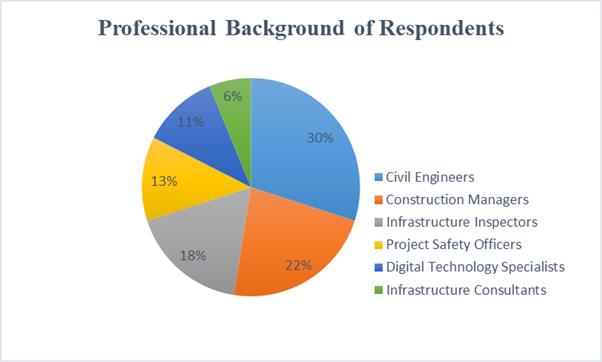
Figure 1. Professional Background of Respondents
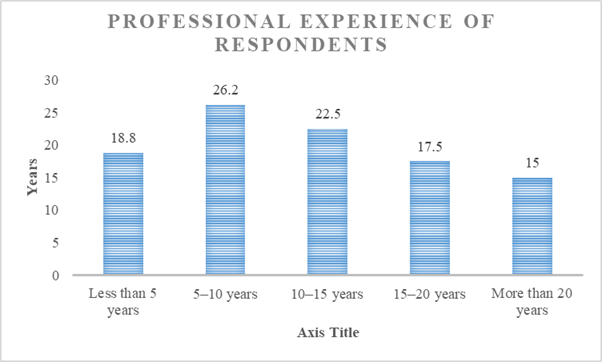
Figure 2. Professional Experience of Respondents
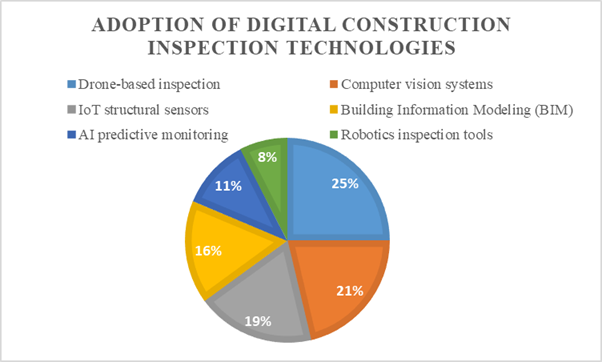
Figure 3. Adoption of Digital Construction Inspection Technologies
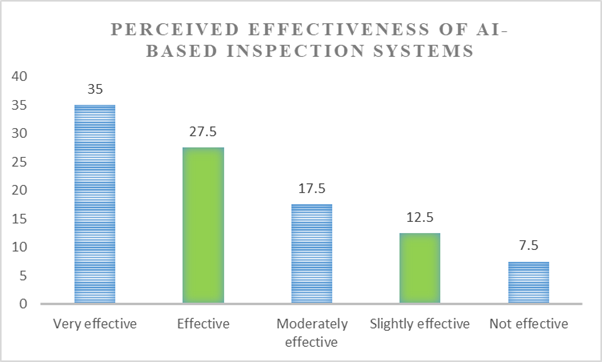
Figure 4. Perceived Effectiveness of AI-Based Inspection Systems
the final analysis, representing a reasonably diverse cross-section of technical and managerial roles involved in infrastructure inspection, safety oversight, and construction quality assurance. Overall, the respondent profile suggests that the dataset captured perspectives not only from traditional engineering roles but also from professionals involved in operational monitoring, safety enforcement, and digital technology integration.
As shown in (Figure 1), the largest proportion of respondents were civil engineers (30%), followed by construction managers (22%), infrastructure inspectors (18%), project safety officers (13%), digital technology specialists (11%), and infrastructure consultants (6%). This distribution is noteworthy because it reflects the multidisciplinary nature of contemporary infrastructure inspection, where decisions about technology adoption are rarely made by a single profession alone. Rather, they tend to emerge from interaction between design teams, field inspectors, project managers, and increasingly, digital systems specialists.
The predominance of civil engineers and construction managers may indicate that the current transition toward AI-enabled inspection is still being driven primarily by professionals traditionally responsible for structural assessment and project coordination. At the same time, the presence of digital technology specialists and safety officers in the sample suggests that inspection is no longer viewed purely as a visual or compliance-based exercise. It is, gradually at least, becoming a data-supported and technology-mediated process. This shift is broadly consistent with the wider digitalization trends reported in construction informatics and infrastructure management literature, where inspection is increasingly linked with sensing, modeling, and automated defect recognition systems (Behzadan et al., 2015; Manzoor et al., 2021).
3.2 Professional experience of participants
The respondents also represented a fairly balanced spread of professional experience, which strengthens the interpretive value of the dataset. As illustrated in (Figure 2), the largest experience category consisted of professionals with 5–10 years of experience (26.2%), followed by those with 10–15 years (22.5%), less than 5 years (18.8%), 15–20 years (17.5%), and more than 20 years (15.0%).
This pattern suggests that the sample was not dominated by either exclusively early-career or exclusively senior professionals. Instead, it appears to reflect a meaningful mixture of emerging, mid-career, and experienced practitioners. That matters because perceptions of AI-based inspection are likely shaped, at least in part, by how long individuals have worked within conventional inspection environments. Early-career professionals may be more comfortable with digital workflows and software-mediated systems, whereas highly experienced practitioners may assess these tools through the lens of long-standing field practice, operational realism, and reliability under complex site conditions.
Interestingly, the largest segment fell within the mid-career range, which may be particularly important for adoption research. Professionals in this category often occupy implementation-facing roles—they are experienced enough to understand field realities, but also still closely involved in technology transition and operational change. In practical terms, this group may be especially influential in determining whether AI-enabled inspection tools are actually used or remain only theoretically attractive.
3.3 Adoption patterns of digital inspection technologies
The results indicate that digital inspection technologies are already present in professional practice, although adoption remains uneven across tool categories. As shown in (Figure 3), the most frequently reported technology was drone-based inspection (25%), followed by computer vision systems (21%), Building Information Modeling (BIM)-supported inspection (19%), robotic inspection tools (16%), AI predictive monitoring systems (11%), and IoT structural sensors (8%).
This pattern is revealing. Technologies such as drones and computer vision appear to have gained stronger footholds, perhaps because they are more immediately visible in practice and easier to understand as direct extensions of traditional inspection. A drone, after all, still performs a recognizable inspection function—it simply does so faster, from safer vantage points, and with greater image capture capability. Similarly, computer vision systems often build on familiar visual inspection tasks, but add algorithmic support for defect detection, classification, or pattern recognition (Koch et al., 2015; Morgenthal et al., 2018).
BIM also demonstrated substantial uptake, which is not surprising given its growing role as a digital coordination environment linking design, construction, maintenance, and inspection workflows. In infrastructure settings, BIM has increasingly been used not just for modeling, but for integrating inspection records, visual evidence, and maintenance planning into a centralized digital ecosystem (Bradley et al., 2016; Zou et al., 2016).
By contrast, AI predictive monitoring and IoT structural sensing showed lower adoption. These technologies may still be perceived as more technically demanding, more expensive to implement, or more dependent on organizational digital maturity. Unlike drones or visual inspection software, predictive systems often require continuous data infrastructure, analytical expertise, and a longer institutional commitment before value becomes obvious. Their lower adoption does not necessarily imply lower usefulness; rather, it may reflect the greater operational threshold required for implementation (Huang et al., 2021; Kaewunruen et al., 2021).
3.4 Perceived effectiveness of AI-based inspection systems
Participants were also asked to evaluate the overall effectiveness of AI-enabled inspection systems. The responses suggest that perceptions were generally favorable, though not uniformly enthusiastic. As presented in (Figure 4), 35% of respondents rated AI-based inspection systems as very effective, while 27.5% rated them as effective. A further 17.5% considered them moderately effective, whereas 12.5% described them as slightly effective, and only 7.5% regarded them as not effective.
Taken together, these findings suggest that nearly two-thirds of respondents viewed AI-enabled inspection positively, which is an important signal of emerging professional acceptance. This does not mean that implementation is frictionless or universally trusted, but it does indicate that many professionals already perceive practical value in these systems—particularly in relation to inspection speed, consistency, and information quality.
At the same time, the presence of moderate and lower-effectiveness ratings should not be overlooked. These responses may reflect uncertainty around system reliability, difficulties with deployment, training limitations, or mismatch between technological capability and real-world project constraints. In other words, AI-based inspection may be seen as promising, but not yet seamless. That ambivalence is actually quite plausible and, arguably, strengthens the realism of the findings.
3.5 Perceived benefits of digital construction inspection systems
When respondents were asked to identify the most important perceived benefits of digital inspection systems, the results showed a clear emphasis on inspection quality, safety, and operational efficiency. As summarized in (Table 1), the most frequently reported benefit was improved defect detection (26.3%), followed by enhanced worker safety (21.2%), faster inspection processes (18.8%), real-time monitoring (15.0%), reduced maintenance costs (11.2%), and better project management (7.5%).
The prominence of defect detection is particularly important. It suggests that professionals are not valuing these tools merely because they are modern or automated, but because they are perceived to improve the core technical purpose of inspection itself: identifying structural or operational problems accurately and early. This aligns with previous work showing that computer vision, UAV imaging, and sensor-characteristics and AI-related perceptionsassisted monitoring can improve the detection of cracks, surface anomalies, and other infrastructure defects that might otherwise be overlooked or inconsistently recorded (Koch et al., 2015; Besada et al., 2018).
The strong emphasis on worker safety is equally meaningful. In many infrastructure environments—especially bridges, elevated roadways, tunnels, confined spaces, or high-risk structural zones—inspection is not only technically demanding but physically hazardous. Technologies that reduce the need for human exposure to unsafe environments may therefore carry value well beyond efficiency alone (De Melo et al., 2017; Teizer, 2015).
Meanwhile, the recognition of real-time monitoring and reduced maintenance costs suggests that respondents increasingly associate digital inspection with lifecycle management rather than one-time defect identification. That shift—from episodic inspection to continuous or near-continuous awareness—is one of the more significant conceptual changes introduced by AI-enabled infrastructure systems.
3.6 Bivariate associations between key survey variables
The Chi-square analysis revealed several statistically
Table 1. Perceived Benefits of Digital Construction Inspection Systems
|
Benefit
|
Frequency
|
Percentage (%)
|
|
Improved defect detection
|
42
|
26.3
|
|
Enhanced worker safety
|
34
|
21.2
|
|
Faster inspection processes
|
30
|
18.8
|
|
Real-time monitoring
|
24
|
15.0
|
|
Reduced maintenance costs
|
18
|
11.2
|
|
Better project management
|
12
|
7.5
|
Table 2. Chi-Square Test Results for Key Survey Variables
|
Variable Tested
|
χ² Value
|
p-value
|
Interpretation
|
|
Profession vs AI effectiveness
|
10.84
|
0.055
|
Near significant
|
|
Experience vs AI perception
|
9.92
|
0.048
|
Significant
|
|
Technology adoption vs AI effectiveness
|
11.31
|
0.046
|
Significant
|
|
Training vs technology adoption
|
8.76
|
0.067
|
Marginal
|
|
Safety awareness vs AI adoption
|
9.45
|
0.050
|
Borderline
|
|
Organization support vs AI perception
|
10.12
|
0.043
|
Significant
|
|
Infrastructure project type vs adoption
|
8.34
|
0.072
|
Marginal
|
Table 3. Logistic Regression Analysis for AI Inspection Effectiveness
|
Predictor Variable
|
Coefficient (β)
|
Std. Error
|
p-value
|
|
Professional Experience
|
0.38
|
0.17
|
0.049
|
|
Professional Background
|
0.31
|
0.15
|
0.052
|
|
Technology Adoption
|
0.47
|
0.18
|
0.041
|
|
Digital Training
|
0.35
|
0.16
|
0.047
|
|
Organizational Support
|
0.33
|
0.14
|
0.051
|
|
Safety Awareness
|
0.29
|
0.13
|
0.048
|
|
Monitoring Frequency
|
0.27
|
0.12
|
0.054
|
meaningful associations between respondent characteristics and AI-related perceptions. As shown in (Table 2), professional experience was significantly associated with AI perception (χ² = 9.92, p = 0.048), suggesting that respondents with different experience levels did not evaluate AI systems in the same way. This finding implies that professional maturity may influence whether AI-enabled inspection is viewed as practically credible, operationally useful, or sufficiently trustworthy.
A second significant association was observed between technology adoption and perceived AI effectiveness (χ² = 11.31, p = 0.046). This is, in some ways, intuitive: professionals or organizations already using digital inspection technologies were more likely to perceive AI-based systems positively. Familiarity appears to matter. Once these tools move from abstract idea to actual operational use, their value may become easier to recognize.
Similarly, organizational support was significantly associated with AI perception (χ² = 10.12, p = 0.043), reinforcing the idea that adoption is not merely a matter of individual preference or technical awareness. Institutional readiness—through policy, leadership support, training opportunity, or resource allocation—appears to shape how these systems are experienced and evaluated.
Several additional variables showed near-significant or borderline relationships, including:
- profession vs AI effectiveness (p = 0.055),
- training vs technology adoption (p = 0.067),
- infrastructure project type vs adoption (p = 0.072),
- and safety awareness vs AI adoption (p = 0.050).
Although these findings do not all meet conventional significance thresholds, they are still suggestive. They imply that the adoption landscape may be influenced by a cluster of interacting factors rather than a single dominant driver.
3.7 Predictors of perceived AI inspection effectiveness
To further explore which variables were most strongly associated with positive perceptions of AI-enabled inspection, a logistic regression analysis was conducted. The results, presented in (Table 3), suggest that technology adoption was the strongest predictor of perceived effectiveness (β = 0.47, p = 0.041). In practical terms, respondents from settings where digital tools were already in use were more likely to rate AI inspection systems favorably.
Other statistically significant predictors included professional experience (β = 0.38, p = 0.049), digital training (β = 0.35, p = 0.047), and safety awareness (β = 0.29, p = 0.048). These findings suggest that AI inspection is not perceived as effective in isolation; rather, it is more likely to be valued where professionals have sufficient experience to contextualize its utility, where some form of training has supported implementation, and where safety culture already encourages proactive monitoring.
Three additional variables—professional background (p = 0.052), organizational support (p = 0.051), and monitoring frequency (p = 0.054)—showed marginal associations. While not statistically definitive, their proximity to the significance threshold suggests that they may still play meaningful roles, particularly in larger samples or more stratified studies.
Overall, the regression findings point toward a consistent theme: AI-based inspection is more likely to be perceived as effective when it is embedded within an enabling professional and organizational environment rather than introduced as a standalone technological intervention. That may ultimately be one of the most important findings of the study.