Journal of Primeasia

Integrative Disciplinary Research | Online ISSN 3064-9870 | Print ISSN 3069-4353
570
Citations
198.2k
Views
122
Articles
Your new experience awaits. Try the new design now and help us make it even better
Switch to the new experience
Figures and Tables
REVIEWS   (Open Access)

Gynura procumbens as a Multi-Target Phytotherapeutic Candidate for Type 2 Diabetes Mellitus: Phytochemistry, Mechanisms, Preclinical Evidence, and Translational Prospects

Bulbul Shaikat1, Tahsin Bin Rabbani1, MD. Bedarul Islam Pranto1, Md. Abul Kashem Tang1*

+ Author Affiliations

Journal of Primeasia 7 (1) 1-16 https://doi.org/10.25163/primeasia.7110692

Submitted: 03 November 2025 Revised: 07 January 2026  Published: 12 January 2026 


Abstract

Type 2 diabetes mellitus (T2DM) remains a growing global health challenge, not only because of persistent hyperglycemia, but because of its wider metabolic, vascular, inflammatory, and organ-level consequences. Although conventional antidiabetic drugs have improved glycemic management, their long-term use is often limited by cost, tolerability issues, adverse effects, and incomplete metabolic control. In this context, medicinal plants continue to attract renewed scientific attention as potential multi-target therapeutic resources. Among them, Gynura procumbens (Lour.) Merr., commonly known as “longevity spinach,” has emerged as a particularly promising candidate. This review critically synthesizes the current evidence regarding the antidiabetic potential of G. procumbens, with emphasis on its botanical background, ethnomedicinal relevance, phytochemical composition, proposed mechanisms of action, preclinical efficacy, and toxicological profile. Available evidence indicates that the plant contains several biologically active compounds—including astragalin, chlorogenic acid, kaempferol, quercetin, and rutin—which may contribute to glucose regulation through improvements in insulin sensitivity, hepatic carbohydrate metabolism, antioxidant defense, inflammatory modulation, and pancreatic β-cell protection. In vitro and in vivo studies consistently suggest favorable effects on fasting blood glucose, glucose tolerance, glycogen storage, oxidative stress, and metabolic signaling pathways such as PI3K/Akt, AMPK, GLUT4, and GSK-3β. Nevertheless, despite encouraging preclinical findings, the current evidence remains limited by methodological heterogeneity, insufficient standardization, and the absence of well-designed human clinical trials. Overall, G. procumbens appears to be a biologically plausible and pharmacologically relevant medicinal plant with meaningful translational potential in diabetes research, although further clinical and mechanistic validation remains essential.

Keywords: Gynura procumbens, Type 2 diabetes mellitus, Medicinal plants, Phytochemicals, Insulin resistance

1. Introduction

Diabetes mellitus remains one of the most persistent and clinically complex metabolic disorders of the modern era. Although it is often discussed primarily in terms of glycemic dysregulation, its real burden extends far beyond elevated blood glucose. In practice, diabetes is a systemic disease—one that gradually reshapes vascular, neural, renal, hepatic, and retinal health, often with devastating long-term consequences. Its complications, including cardiovascular disease, nephropathy, neuropathy, and retinopathy, continue to account for a substantial share of global disability, premature mortality, and health-care expenditure. For that reason, diabetes is frequently described—perhaps not entirely metaphorically—as a “mother disease,” not because it causes all illness directly, but because it creates the biological conditions under which so many secondary pathologies emerge (Huang et al., 2025; Holman et al., 2015).

The scale of the problem is, frankly, difficult to ignore. According to the International Diabetes Federation estimates and subsequent global burden analyses, approximately 537 million adults were living with diabetes in 2021, and this number is projected to rise sharply over the coming decades, potentially reaching 783 million by 2045 (Huang et al., 2025). Type 2 diabetes mellitus (T2DM) accounts for the overwhelming majority of cases—more than 90% worldwide—and is now recognized not merely as a disease of aging, but increasingly as a consequence of dietary transition, sedentary behavior, obesity, metabolic inflammation, and urbanized lifestyles (Huang et al., 2025; Holman et al., 2015). The public health burden is further intensified by the fact that T2DM is not only prevalent but also progressive, often requiring lifelong management and multidrug intervention.

Current pharmacological therapies for T2DM have undoubtedly improved disease management, but they are far from ideal. Oral hypoglycemic agents and injectable therapies can be effective in lowering blood glucose, yet sustained glycemic control remains elusive for many patients. In real-world settings, treatment failure is often linked to poor tolerability, therapeutic inertia, limited access, escalating costs, and declining patient adherence over time. Even when glucose reduction is achieved, the trade-offs can be significant. Commonly prescribed antidiabetic drugs have been associated with adverse effects such as hypoglycemia, gastrointestinal discomfort, weight gain, fluid retention, and reduced tolerability, while less common but clinically important toxicities—including lactic acidosis, hepatitis, leukopenia, hypersensitivity reactions, and hematological abnormalities—have also been documented (Levetan, 2007; Mohiuddin et al., 2019; Blonde et al., 2014; Wentling & Kim, 2017). These limitations have, understandably, sustained interest in safer, more affordable, and biologically broader therapeutic alternatives.

It is in this context that medicinal plants continue to attract serious scientific attention. Plant-based therapeutics are not simply remnants of traditional healing systems; increasingly, they are being revisited as rational sources of bioactive compounds capable of targeting multiple metabolic pathways simultaneously. More than 350 traditional herbs have been reported in the ethnomedical management of diabetes, and many of them contain flavonoids, tannins, alkaloids, terpenoids, phenolics, and antioxidant vitamins that may influence insulin signaling, glucose uptake, β-cell preservation, oxidative stress, and inflammatory regulation (Jacob & Narendhirakannan, 2019; Balwan et al., 2022; Kooti et al., 2016). In low- and middle-income settings especially, medicinal plants often remain more accessible than long-term pharmacotherapy, and their relevance is therefore both pharmacological and socioeconomic. Notably, plant-derived compounds have already shaped modern diabetes treatment itself; metformin, the most widely prescribed first-line agent for T2DM, traces its pharmacological origins to Galega officinalis, a medicinal plant historically used in Europe for diabetic symptoms (Bailey & Day, 2004). So, in a sense, modern antidiabetic pharmacology has always had botanical roots.

Among the medicinal plants currently under renewed investigation, Gynura procumbens (Lour.) Merr. has emerged as a particularly promising candidate. Commonly referred to as “longevity spinach”, this herb is widely consumed in parts of Southeast Asia and has long been associated with various ethnomedicinal uses, especially in metabolic and inflammatory disorders. The growing scientific interest in G. procumbens appears to be well justified. Phytochemical analyses have identified a diverse array of potentially active constituents, including flavonoids, phenolic acids, terpenoids, and other antioxidant-rich metabolites, many of which are mechanistically relevant to glycemic regulation and insulin sensitivity (Tan et al., 2016; Mou & Dash, 2016; Jobaer et al., 2023). Importantly, the leaves are also consumed as food in some populations, which adds a practical nutritional dimension to its therapeutic relevance.

Preclinical evidence surrounding this plant is increasingly compelling. Experimental studies in diabetic rodent models have reported that aqueous, ethanolic, and fractionated extracts of G. procumbens leaves may reduce fasting blood glucose, improve postprandial glycemic response, enhance hepatic carbohydrate metabolism, and influence signaling pathways related to glucose transport and insulin action (Lee et al., 2012; Hassan et al., 2010; Choi et al., 2016; Guo et al., 2021; Anjum et al., 2024). Other investigations have suggested broader metabolic benefits, including antioxidant protection, anti-inflammatory effects, pancreatic histological recovery, and possible modulation of GLUT-4 and GSK-3β–related mechanisms (Gansau et al., 2012; Kim et al., 2021; Situmorang et al., 2025). At the same time, although early toxicological studies have generally been reassuring, long-term safety, organ-specific effects, dose standardization, and translational reproducibility still require more careful clarification before clinical application can be responsibly advocated (Yam et al., 2009; Algariri et al., 2014).

Against this background, the present review aims to critically synthesize the available evidence on the antidiabetic potential of Gynura procumbens. Specifically, it examines the plant’s phytochemical profile, putative mechanisms of action, and preclinical findings related to glucose homeostasis, insulin sensitivity, oxidative stress, and metabolic regulation. By consolidating the current evidence base, this review seeks to provide a clearer scientific foundation for future pharmacological, translational, and therapeutic research on G. procumbens as a medicinal plant of relevance in diabetes management.

2. Botanical Description, Ethnomedicinal Background, and Antidiabetic Evidence of Gynura procumbens

2.1. Botanical Identity and Taxonomic Characteristics of Gynura procumbens

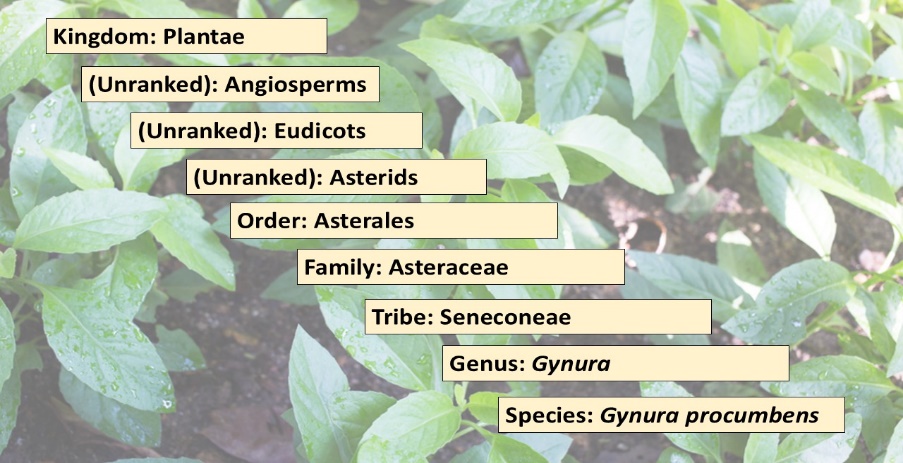
Before its pharmacological promise can be appreciated, it is important to understand what Gynura procumbens actually is—not merely as a medicinal “plant of interest,” but as a biologically distinct species with its own taxonomic and morphological identity. Gynura procumbens (Lour.) Merr. belongs to the family Asteraceae, a large and pharmacologically rich family that includes many plants known for their medicinal and phytochemical significance. Within the genus Gynura, approximately 46 species have been recognized, although the exact diversity and phylogenetic relationships within the genus continue to be refined as molecular and population-level analyses expand (Yu et al., 2024; Mou & Dash, 2016). The formal botanical name of the plant is Gynura procumbens (Lour.) Merr., 1923, and its taxonomic position is summarized in (Figure 1).

Morphologically, G. procumbens is a soft, perennial, herbaceous to semi-succulent medicinal plant, generally growing to a height of 1–3 meters under favorable conditions. It is characterized by a somewhat fleshy stem, often tinged with purple or reddish hues, and bears ovate-elliptic to lanceolate leaves with a smooth, slightly glossy appearance. The leaves, which are the most pharmacologically studied part of the plant, typically range from 3.5–8 cm in length and 0.8–3.5 cm in width (Mou & Dash, 2016; Rahman & Asad, 2013). These leaves are not only taxonomically important but also chemically central, as they appear to contain the highest concentration of bioactive metabolites associated with metabolic regulation.

Cultivation-wise, the plant is relatively undemanding, which perhaps partly explains its enduring presence in household medicinal traditions. In many regions, propagation through stem cuttings is more practical than seed-based cultivation, especially because viable seeds are not always readily available. Optimal growth tends to occur in moist but well-drained fertile soil, preferably under semi-shaded conditions, which helps maintain both vegetative vigor and phytochemical quality (Mou & Dash, 2016). This ease of cultivation may have contributed, quietly but importantly, to its persistence as a community-level medicinal resource.

2.2. Geographical Distribution and Ethnomedicinal Relevance

Although G. procumbens is now often discussed in laboratory or pharmacological terms, its story is deeply rooted in geography and traditional use. The plant is widely distributed across South and Southeast Asia, parts of East Asia, and some regions of Australasia, with broader botanical links extending to tropical ecosystems beyond those regions (Mou & Dash, 2016; Tan et al., 2016). It is commonly reported in countries such as Malaysia, Indonesia, Thailand, Vietnam, and China, where it has been integrated into local food cultures as well as medicinal traditions. The vernacular names of the plant vary considerably across countries and communities, reflecting a long-standing familiarity with the species; these are summarized in (Table 1).

Figure 1. The taxonomical classification of Gynura procumbens plant.

Table 1. The vernacular names of the Gynura procumens plant in different geographical areas.

Region

Countries

Vernacular Names

Southeast Asia

Thailand

Paetumpung

Southeast Asia

Malysia

Mollucan; Spinach; Sambung Nyawa

Southeast Asia

Indonesia

Daun Dewa; Sambung Nyawa

East Asia

China

Akar Sebiak; Kelemai Mearh; Nan fei Ye; Bai Bing Cao

South Asia

Bangladesh

Diabetes leaf

Western

United States

Longevity spinach

What makes G. procumbens particularly interesting is that it occupies a somewhat blurred but valuable space between food and medicine. In Malaysia, for example, the leaves are often consumed raw with rice or incorporated into salads, while in Thailand they may be lightly cooked and eaten as a vegetable (Kaewseejan et al., 2015). This food-based familiarity is important because it suggests not only repeated human exposure, but also a degree of cultural trust and implied safety that many pharmacologically interesting plants do not enjoy.

Traditionally, the plant has been used for a remarkably broad range of ailments. Ethnomedicinal reports describe its use in the management of diabetes mellitus, hypertension, kidney discomfort, constipation, rheumatism, migraines, eruptive fever, inflammation, reproductive disorders, and even cancer-related conditions (Tan et al., 2016; Perry & Metzger, 1980). That breadth can sometimes seem suspiciously broad from a modern biomedical standpoint, yet it also hints at something important: the plant may act not through a single narrow target, but through multi-system biological modulation, especially where inflammation, oxidative stress, vascular dysfunction, and metabolic imbalance intersect. That, in many ways, is exactly the kind of pharmacological profile one would hope to see in a plant relevant to T2DM.

3. Phytochemical Composition and Antidiabetic Relevance of Gynura procumbens

3.1. Major Phytochemical Classes and Distribution Across Plant Parts

The therapeutic relevance of G. procumbens is inseparable from its phytochemistry. A growing body of analytical work suggests that the plant contains a chemically diverse profile of bioactive constituents, many of which are highly plausible from an antidiabetic perspective. Not surprisingly, the leaves have been the most extensively studied plant part, and they consistently appear to contain the richest and most pharmacologically relevant mixture of compounds. However, this does not mean that other plant parts are chemically unimportant. In fact, some reports suggest that the roots may contain even higher concentrations of phenolic compounds, flavonoids, and ascorbic acid than the leaves, along with strong antioxidant potential (Krishnan et al., 2015).

The phytochemical composition of G. procumbens is not uniformly distributed across all tissues, nor is it equally extractable by all solvents. In general, ethanolic and methanolic extracts of leaves have yielded the highest number of detectable bioactive constituents, while flowers, stems, shoots, and roots tend to show narrower but still potentially useful phytochemical profiles. Aqueous and deionized water extractions have also been employed, especially in studies attempting to reflect traditional use patterns more closely. The full list of identified phytochemicals and their extraction sources is summarized in (Table 3), while their putative metabolic and therapeutic relevance is outlined in (Table 2).

Broadly, the major phytochemical classes reported in G. procumbens include:

  • Flavonoids and flavonoid glycosides
  • Phenolic acids
  • Terpenoids
  • Polysaccharides
  • Antioxidant vitamins and related compounds
  • Other secondary metabolites with anti-inflammatory and enzyme-modulating properties

Among these, flavonoids appear to dominate both quantitatively and mechanistically.

3.2. Bioactive Compounds Relevant to Glycemic Regulation

The antidiabetic potential of G. procumbens is not likely driven by a single “magic compound.” Rather, it appears to arise from a network of interacting phytochemicals that influence glucose metabolism, oxidative stress, inflammatory signaling, insulin sensitivity, and hepatic metabolic regulation in overlapping ways.

One of the most discussed compounds is astragalin, a flavonoid glycoside that has shown hypoglycemic potential in experimental diabetic models and has also been linked to AMPK pathway modulation and improved metabolic signaling (Li et al., 2025; Sun et al., 2023). Another important component is chlorogenic acid, which is especially interesting because of its reported effects on hepatic gluconeogenesis, insulin sensitivity, and glucose-lowering responses that, in some contexts, appear mechanistically reminiscent of metformin-like metabolic modulation (Hu et al., 2022; Shohel et al., 2024).

Table 2. Regulation of several metabolic pathways by flavonoids present in Gynura procumbens and their therapeutic effects

Flavonoid

Metabolic pathway regulated

Therapeutic effect

References (APA style)

Astragalin

Inhibits α-glucosidase and modulates the AMPK signaling pathway

Hypoglycemic activity

Li et al. (2025)

Astragalin

Upregulates PGC1α and activates AMPK pathway

Protective effect against diabetic renal injury

Sun et al. (2023)

Astragalin

Inhibits CYP1B activity

Anti-tumor effect

Meng et al. (2019)

Astragalin

Inhibits HK2 via miR-125b upregulation

Inhibits hepatocellular carcinoma proliferation

Li et al. (2017)

Astragalin

Downregulates GLUT-1, LDH-A, and HK-2 expression

Anticancer effect in triple-negative breast cancer

Zeb et al. (2026)

Astragalin

Inhibits PI3K/AKT signaling

Anti-tumor effect in gastric cancer

Wang et al. (2021)

Astragalin

Modulates ROS and MAPK signaling pathways

Preventive effect on inflammatory bone destruction

Xing et al. (2022)

Astragalin

Modulates RIPK3/MLKL and mTOR/NF-κB pathways

Anti-inflammatory and neuroprotective effects

Cao et al. (2025)

Kaempferol

Upregulates anti-inflammatory cytokines

Anti-inflammatory effect

Almatroudi et al. (2023)

Kaempferol

Suppresses MAPK/NF-κB and activates Nrf2/HO-1

Reduces atherosclerotic plaque formation

Chu et al. (2024)

Kaempferol

Activates Nrf2 pathway

Hepatoprotective effect

Li et al. (2023)

Kaempferol

Regulates Th17/Treg balance and IL-17 secretion

Therapeutic effect against gouty arthritis

Li et al. (2023)

Kaempferol

Modulates TNF-α and LXR-α signaling

Anti-cancer effect

Almatroudi et al. (2023)

Kaempferol

Inhibits NF-κB and Akt pathways

Anti-inflammatory and cardioprotective effect

Tang et al. (2015)

Myricetin

Inhibits matrix metalloproteinase-2 expression

Anti-cancer effect

Ko et al. (2005)

Myricetin

Downregulates T-bet and GATA-3 expression

Immunomodulatory effect in atopic dermatitis

Hou et al. (2022)

Myricetin

Activates Sirt1/JNK/Smad3 pathway

Ameliorates airway inflammation

Huang et al. (2024)

Myricetin

Inhibits PI3K/Akt/mTOR pathway

Anti-cancer effect in gastric cancer

Han et al. (2022)

Myricetin

Inhibits PI3K/Akt/mTOR signaling

Anti-cancer effect in colon cancer

Zhu et al. (2020)

Quercetin

Interacts with AKT1-FoxO1 and Keap1-Nrf2 pathways

Anti-inflammatory effect

Xu et al. (2024)

Quercetin

Suppresses ROS-regulated PI3K/AKT signaling

Reduces atherosclerotic plaque

Lu et al. (2017)

Quercetin

Inhibits ROS and NO production

Anti-inflammatory effect

Sun et al. (2015)

Quercetin

Inhibits NLRP3 inflammasome activation

Anti-inflammatory effect

Luo et al. (2022)

Quercetin

Promotes LC3-II and beclin-1 expression

Anti-cancer effect

Guo et al. (2021)

Quercetin

Modulates PI3K/AKT-Nrf2/ARE signaling

Protects against cognitive deficits

Srivastava et al. (2023)

Rutin

Downregulates p-AkT, p-ERK1/2, and p-mTOR

Growth arrest in melanoma cells

Pandey et al. (2021)

Rutin

Downregulates NF-κB pathway and regulates tau phosphorylation

Potential therapeutic effect in Alzheimer’s disease

Sun et al. (2021)

Rutin

Regulates AMPK/SREBP1 pathway

Improves NAFLD in diabetic conditions

Liu et al. (2024)

Rutin

Inhibits HDAC1 via PI3K/AKT/mTOR pathway

Delays diabetic kidney disease progression

Dong et al. (2023)

Rutin

Inhibits NLRP3 inflammasome signaling

Anti-inflammatory and antioxidant effect

Zhao et al. (2024)

Table 3. Phytochemicals identified from different parts of Gynura procumbens using various extraction methods

Phytochemical class/compound

Plant part

Extraction solvent

References (APA style)

Soluble sugars, amino acids, proteins, chlorophyll, flavonoids, tannins, phenols, carotenoids, alkaloids, saponins, anthraquinone glycosides, volatile oils

Leaves

Ethanol

Nasiruddin & Sinha (2020); Kaewseejan et al. (2012)

Phytol, lupeol, stigmasterol, friedelanol acetate, β-amyrin, stigmasterol, β-sitosterol

Leaves

Methanol

Jobaer et al. (2023)

Total phenolic content, total flavonoid content, ascorbic acid

Leaves

Deionized water

Krishnan et al. (2015)

β-sitosterol, aurantiamide acetate, chlorogenic acid, isochlorogenic acids A, B, and C

Flowers

Deionized water

Krishnan et al. (2015)

Gallic acid, kaempferol, ascorbic acid

Shoot, stem, root

Deionized water

Krishnan et al. (2015)

Table 4. Antidiabetic potential of Gynura procumbens in diabetes-induced experimental animal models

Experimental model

Extract type

Dose (mg/kg body weight)

Duration

Key findings

References (APA style)

STZ-induced diabetic rat

Ethanol extract

250 mg/kg/day

14 days

Reduced fasting blood glucose and increased liver glycogen level

Gansau et al. (2012)

STZ-induced diabetic rat

Ethanol extract

50, 100, 150 mg/kg/day

42 days

Reduced fasting blood glucose level

Lee et al. (2012)

STZ-induced diabetic rat

Ethanol extract

500 and 1000 mg/kg/day

14 days

Reduced fasting blood glucose level

Hassan et al. (2010)

STZ-induced diabetic rat

Aqueous extract

40 mg/kg/day

56 days

Reduced plasma glucose level and increased plasma insulin level

Pai et al. (2019)

STZ-induced diabetic rat

Aqueous extract

50, 100, 150 mg/kg/day

42 days

Reduced fasting blood glucose level

Lee et al. (2012)

STZ-induced diabetic rat

Ethanol in water extract

1 g/kg/day

14 days

Reduced fasting blood glucose level

Algariri et al. (2013)

Alloxan-induced diabetic rat

Ethanol extract

250, 500, 750 mg/kg

28 days

Reduced fasting and postprandial blood glucose levels

Anjum et al. (2024); Tahsin et al. (2022)

Steroid-induced diabetic rat

Ethanol extract

150 mg/kg

21 days

Increased blood glucose level

Borsha et al. (2020)

ther major phytochemicals include:

  • Kaempferol, which has been associated with GSK-3β regulation, anti-inflammatory signaling, and oxidative stress modulation (Sampath et al., 2020; Chu et al., 2024);
  • Quercetin, known for suppressing reactive oxygen species (ROS) generation and pro-inflammatory mediators while influencing PI3K/Akt and Nrf2-related pathways (Xu et al., 2024; Luo et al., 2022);
  • Rutin, which may support glucose utilization, hepatic metabolic regulation, and lipid–glucose homeostasis, especially through pathways involving AMPK, SREBP1, and related metabolic signaling nodes (Liu et al., 2024; Dong et al., 2023).

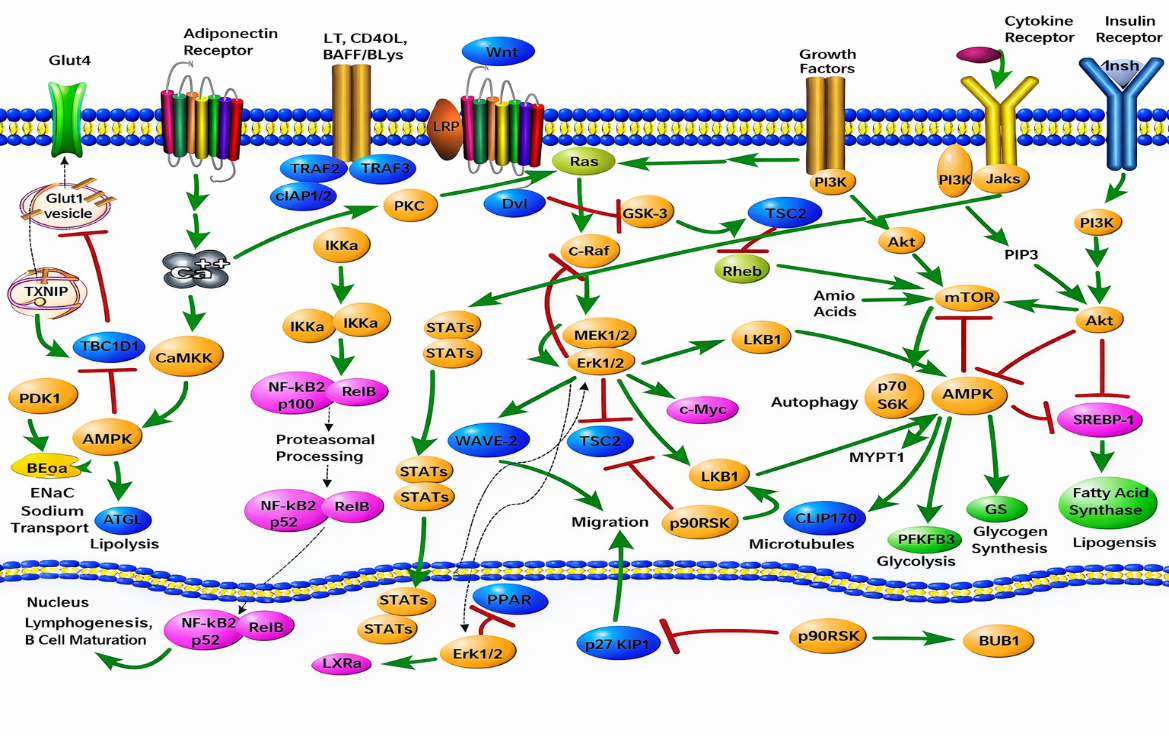
Taken together, these compounds suggest that G. procumbens may act through multi-target metabolic correction, rather than a single receptor-based mechanism. This systems-level perspective is visually summarized in (Figure 2), where key signaling axes—such as AMPK, Akt, mTOR, NF-κB, and SREBP-related pathways—are shown interacting in the broader regulation of glucose transport, lipid metabolism, autophagy, inflammation, and cellular survival.

4. Experimental Evidence Supporting Antidiabetic Activity

4.1. In Vitro and Mechanistic Evidence

A meaningful portion of the scientific case for G. procumbens comes from in vitro mechanistic studies, which help explain how the plant might influence diabetic physiology before those effects are tested in whole-animal systems.

Several studies have shown that leaf extracts of G. procumbens can inhibit α-glucosidase and α-amylase, two enzymes central to carbohydrate digestion and postprandial glucose absorption. This suggests a plausible mechanism for attenuating postprandial hyperglycemia, one of the earliest and most clinically relevant abnormalities in T2DM (Choi et al., 2016; Sathiyaseelan et al., 2021).

Additional mechanistic evidence suggests that G. procumbens may influence hepatic carbohydrate metabolism more broadly. Ethanolic leaf extracts have been associated with increased activity of enzymes involved in glucose utilization and storage, including:

  • Hexokinase
  • Phosphofructokinase
  • Fructose-1,6-bisphosphatase-related metabolic regulation
  • Liver glycogen accumulation

These observations imply that the plant may not simply slow glucose entry into the bloodstream, but may also help redirect glucose toward intracellular utilization and storage (Lee et al., 2012).

Its antioxidant profile is also difficult to overlook. Various fractions—including ethyl acetate, aqueous extracts, and the polysaccharide fraction CPGP-2-1—have shown substantial free radical scavenging activity in DPPH, ABTS, and FRAP assays, while root extracts have demonstrated especially strong antioxidant capacity (Sathiyaseelan et al., 2021; Siriamornpun et al., 2021; Krishnan et al., 2015). This is relevant because oxidative stress is not a secondary issue in diabetes—it is woven into insulin resistance, β-cell dysfunction, endothelial injury, and chronic inflammation.

Cell-based studies further strengthen the mechanistic argument. In muscle and adipocyte models, both aqueous and ethanolic extracts have been shown to enhance:

  • AMPK phosphorylation
  • GLUT4 membrane translocation
  • Cellular glucose uptake

Similarly, in HepG2 and related cellular systems, extracts have been associated with activation of Akt, PI3K, phosphorylated GSK-3β, glycogen synthase signaling, and related proteins involved in glucose handling (Aung et al., 2021; Guo et al., 2021; Hassan et al., 2010). These are not trivial observations; they suggest that G. procumbens may influence both insulin-dependent and insulin-sensitizing pathways, which is precisely what makes it relevant to T2DM rather than merely hyperglycemia alone.

4.2. In Vivo Evidence from Animal Models

Animal studies have provided the most direct evidence for the antidiabetic activity of G. procumbens. Across multiple streptozotocin (STZ)-induced, alloxan-induced, and diet-associated diabetic rodent models, both aqueous and ethanolic leaf extracts have repeatedly demonstrated favorable glycemic effects.

Figure 2. This diagram illustrates the intricate molecular signaling pathways involved in glucose transport, adiponectin signaling, lipid metabolism, and various cellular processes such as autophagy and lymphogenesis. Key molecules and pathways are shown, including interactions between AMPK, Akt, mTOR, NF-κB, and SREBPs. Arrows indicate activation (green) or inhibition (red) of different molecular components across the cellular membrane and within the cytoplasm, highlighting their role in regulating metabolic and immune responses.

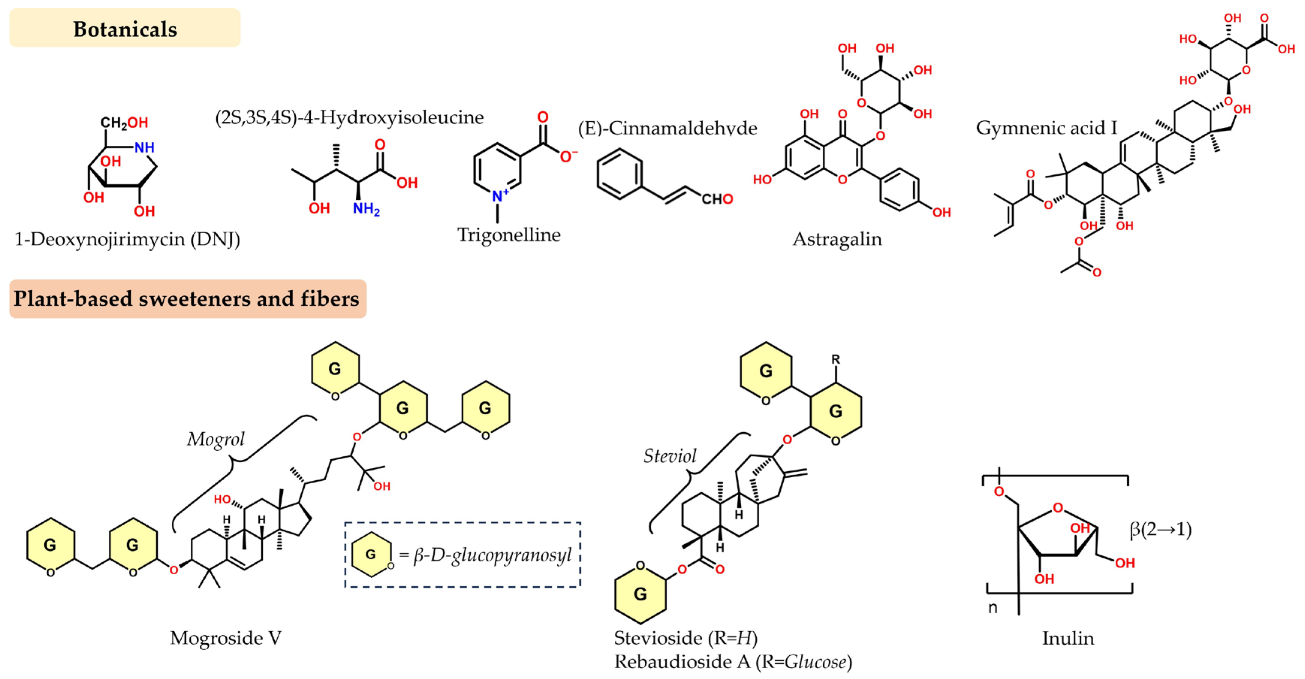
Figure 3. Chemical structures that are representative of important plant-based compounds that help control blood sugar levels. (Top): chosen botanicals and bioactives that are representative (1-deoxynojirimycin, 4-hydroxyisoleucine, trigonelline, (E)-cinnamaldehyde, astragalin/kaempferol-3-O-β-D-glucopyranoside, and gymnemic acid I). (Bottom): Examples of plant-based sweeteners and fiber/carbohydrate replacements include mogroside V, stevioside and rebaudioside A, and inulin. G (β-D-glucopyranosyl) is used to show glucose residues in mogrosides and steviol glycosides clearly. Inulin is a fermentable fructan made mostly of β(2→1)-linked fructosyl units, which is in line with how microbiota make short-chain fatty acids. Structures are like scaffolds; there are many naturally occurring congeners in each class (like mogrosides and gymnemic acids). Colors are only used to make things easier to see (Husak, V., et al.2026).

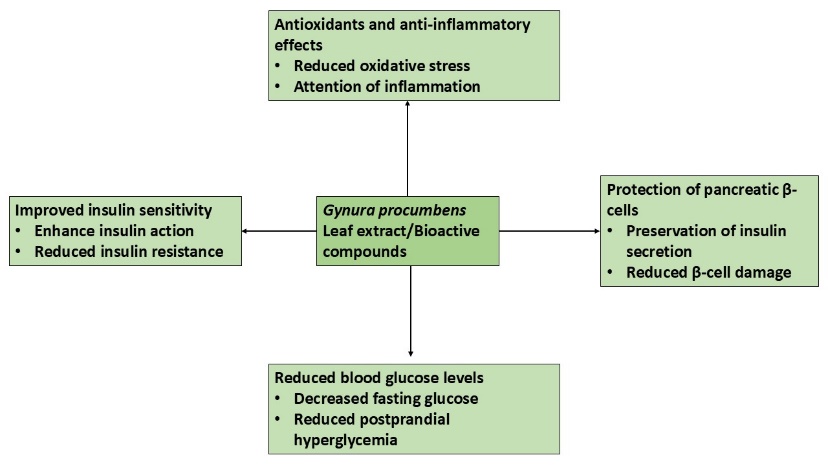
Figure 5. Proposed mechanisms underlying the antidiabetic effects of Gynura procumbens based on available preclinical evidence.

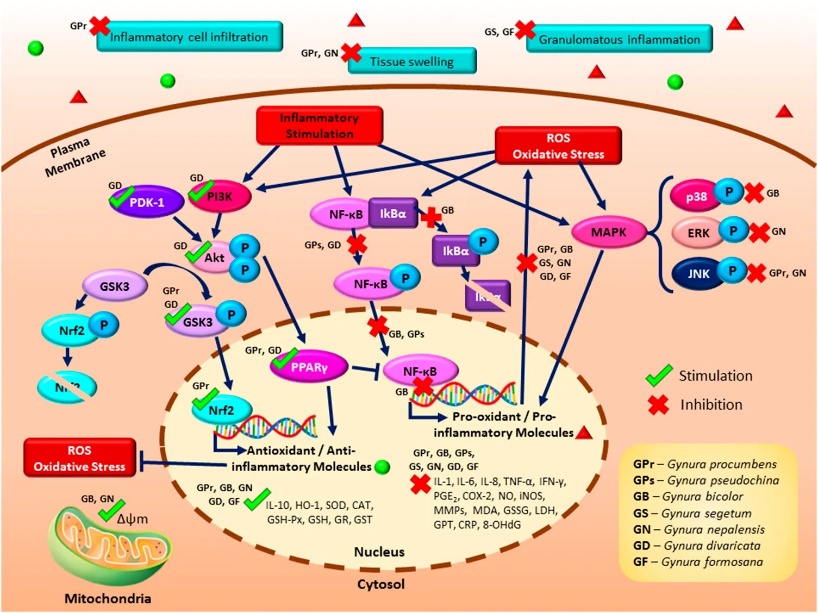
Figure 4. Schematic overview of the inflammatory response mechanisms mediated by oxidative stress and ROS in various cell types. Importantly, the figure summarizes key signaling pathway regulation of PDK-1, PI3K, Akt, NF-κB, and MAPK and PPARγ in relation to inflammatory stimulation leading to tissue swelling and granulomatous inflammation. Gynura species differentially activate (green check) and inhibit (red cross) various pathways, modulating the levels of pro-inflammatory and antioxidant molecules (Tan, J.N., et al., 2021).

The most consistently reported outcomes include:

  • Reduction of fasting blood glucose
  • Reduction of plasma glucose
  • Improved insulin levels
  • Increased hepatic glycogen storage
  • Improved oxidative and lipid-related metabolic profiles

These outcomes have been observed across different doses, extraction methods, and model systems, which adds some degree of reproducibility to the findings, even if methodological standardization remains incomplete (Lee et al., 2012; Hassan et al., 2010; Algariri et al., 2013; Ziaul Amin et al., 2021).

Some studies have also gone beyond glucose alone, reporting improvement in pancreatic histopathology, preservation of tissue architecture, and modulation of molecular markers associated with diabetic tissue injury (Situmorang et al., 2025; Uthia et al.). Others have suggested that G. procumbens may influence GLUT4-related signaling, GSK-3β phosphorylation, and broader metabolic repair mechanisms that could help explain its in vivo glucose-lowering effects (Gansau et al., 2012; Anjum et al., 2024). The consolidated findings from these animal experiments are summarized in (Table 4).

Taken together, the available evidence does not yet justify clinical overstatement—but it does justify serious scientific attention. Gynura procumbens is no longer just an ethnobotanical curiosity. Increasingly, it appears to be a multifunctional phytotherapeutic candidate with mechanistic and preclinical relevance to diabetes management.

5. Mechanistic Insights into the Antidiabetic Action of Gynura procumbens

Understanding how Gynura procumbens exerts its antidiabetic effects is, perhaps unsurprisingly, not a straightforward task. The evidence, while increasingly compelling, does not point to a single dominant pathway. Instead, what emerges—gradually, across multiple experimental systems—is a more complex picture: one in which metabolic regulation, oxidative stress control, inflammatory signaling, and cellular protection appear to intersect. In that sense, the plant’s activity may be better described as multifactorial rather than unidimensional, which is, interestingly, quite consistent with the pathophysiology of type 2 diabetes itself.

5.1 Improvement of Insulin Sensitivity and Glucose Utilization

At the core of type 2 diabetes lies insulin resistance—a condition in which peripheral tissues, particularly skeletal muscle, liver, and adipose tissue, fail to respond adequately to circulating insulin. This impaired responsiveness leads to sustained hyperglycemia and, over time, compensatory β-cell dysfunction. What is notable in the case of G. procumbens is that several experimental studies—both in vitro and in vivo—suggest that the plant may partially reverse or attenuate this resistance.

Animal studies, for instance, have consistently shown that administration of G. procumbens extracts leads to a reduction in fasting blood glucose levels, often in a dose-dependent manner (Lee et al., 2012; Hassan et al., 2010; Algariri et al., 2013; Akmar & Noor, 2020). In parallel, reductions in HbA1c levels, a more stable indicator of long-term glycemic control, have also been reported (Lee et al., 2012).

What is perhaps more mechanistically revealing is the evidence linking these effects to PI3K/Akt signaling activation, a pathway central to insulin-mediated glucose uptake. In vitro studies indicate that extracts of G. procumbens may enhance insulin signaling by promoting phosphorylation events within this pathway, thereby facilitating glucose transport into cells (Guo et al., 2021; Robiul et al., 2023). This is particularly relevant in muscle and adipocyte systems, where insulin resistance often manifests most strongly.

Additionally, increases in circulating insulin levels, improved glucose tolerance, and enhanced glucose uptake and disposal have been observed in treated animal models (Hassan et al., 2010; Badsha et al., 2024). Taken together, these findings suggest that G. procumbens does not merely lower glucose passively—it appears to actively restore metabolic responsiveness, which is arguably a more meaningful therapeutic outcome.

5.2 Modulation of Hepatic Glucose Metabolism and Enzymatic Regulation

If insulin sensitivity represents one side of the metabolic equation, hepatic glucose handling represents the other. In diabetic conditions, the liver often shifts toward excessive gluconeogenesis and glycogenolysis, contributing significantly to hyperglycemia. What emerges from studies on G. procumbens is that the plant may influence this hepatic imbalance in several ways.

Experimental evidence indicates that treatment with G. procumbens extracts leads to an increase in liver glycogen content, suggesting improved glucose storage capacity (Lee et al., 2012). This effect appears to be mediated through the upregulation of key metabolic enzymes, including:

  • Hexokinase
  • Phosphofructokinase
  • Fructose-1,6-bisphosphate-related enzymatic pathways

These enzymes are central to glycolysis and glucose utilization, and their increased activity implies a shift away from glucose overproduction toward glucose consumption and storage.

Moreover, studies involving nanoparticle-assisted delivery systems—such as chitosan-based formulations—have reported reductions in liver injury markers, including alanine transaminase (ALT) and aspartate aminotransferase (AST) (Badsha et al., 2024). This is particularly relevant because hepatic dysfunction is often both a cause and consequence of metabolic dysregulation in diabetes.

The broader metabolic interactions of plant-derived compounds are visually summarized in (Figure 3), where the interplay between bioactive molecules, metabolic enzymes, and glucose regulatory pathways is illustrated.

5.3 Antioxidant and Anti-Inflammatory Modulation

It is increasingly difficult to discuss diabetes without also addressing oxidative stress and inflammation. These processes are not peripheral—they are central drivers of disease progression. Chronic hyperglycemia promotes the generation of reactive oxygen species (ROS), which in turn activate inflammatory signaling cascades, disrupt cellular integrity, and impair insulin signaling.

In this context, G. procumbens appears to exert a significant antioxidant effect, as evidenced by its ability to:

  • Inhibit ROS production
  • Reduce lipid peroxidation
  • Enhance glutathione-related antioxidant systems
  • Increase enzymatic antioxidant activity

(Tan et al., 2016; Kim et al., 2021).

Polyphenolic compounds within the plant have demonstrated strong radical-scavenging activity, particularly in assays such as DPPH, suggesting a robust capacity to neutralize oxidative stress at the molecular level (Kim et al., 2021).

Equally important is the plant’s anti-inflammatory profile. Experimental studies have shown that G. procumbens extracts can suppress the production of:

  • Prostaglandin E2
  • Nitric oxide
  • Pro-inflammatory cytokines

while modulating key signaling pathways, including:

  • NF-κB
  • MAPK
  • PPARγ
  • PI3K/Akt

(Tan et al., 2020; Khatun et al., 2024; Amin et al., 2021). These pathways are deeply interconnected with metabolic inflammation and insulin resistance.

Additionally, the plant has shown activity in albumin denaturation inhibition assays, further supporting its anti-inflammatory potential.

The relationship between oxidative stress and inflammation—and the potential regulatory role of G. procumbens—is illustrated in (Figure 4), which highlights how oxidative triggers can initiate inflammatory cascades and how phytochemical intervention may interrupt this cycle.

5.4 Protection and Regeneration of Pancreatic β-Cells

While improving insulin sensitivity is critical, the preservation of pancreatic β-cell function is equally important in long-term diabetes management. These cells, located in the islets of Langerhans, are responsible for insulin production and are highly vulnerable to oxidative and inflammatory damage.

Evidence from animal studies suggests that G. procumbens may exert a protective effect on β-cells, potentially through anti-apoptotic mechanisms. Specifically, ethanolic extracts have been shown to:

  • Reduce cellular necrosis and vacuolization
  • Inhibit apoptosis via modulation of caspase-3, -8, and -9 pathways
  • Promote partial regeneration of pancreatic tissue

(Situmorang et al., 2025).

Histopathological analyses further support these findings, showing restoration of normal pancreatic architecture and cytoplasmic integrity following treatment (Uthia et al.). Additionally, modest improvements in β-cell function and viability have been reported in other experimental models (Hassan et al., 2010).

These mechanisms—though still under investigation—suggest that G. procumbens may not only improve glucose handling but also contribute to structural and functional recovery of insulin-producing cells.

A consolidated overview of these mechanistic interactions is presented in (Figure 5), which integrates the plant’s effects on insulin signaling, oxidative stress, inflammation, and cellular protection.

6. Safety, Toxicological Profile, and Research Limitations

Despite the promising pharmacological profile of G. procumbens, its safety remains an essential consideration. Fortunately, existing preclinical studies suggest a relatively favorable toxicological profile.

Acute toxicity studies—typically conducted over 24 hours to 14 days—have reported:

  • No treatment-related mortality
  • No significant changes in body weight
  • No major organ abnormalities
  • No significant alterations in biochemical or histopathological parameters

(Yam et al., 2009; Algariri et al., 2014).

Sub-chronic studies extending up to 13 weeks similarly indicate that the extract does not produce significant adverse effects, with a NOAEL (No Observed Adverse Effect Level) reported at approximately 500 mg/kg/day. The oral LD₅₀ in animal models has been estimated to exceed 2000 mg/kg, suggesting relatively low acute toxicity.

However, it would be premature to interpret these findings as definitive evidence of safety in humans. There are, in fact, several important limitations in the current body of research:

  • Most evidence is derived from preclinical animal models
  • Clinical trials in humans are lacking
  • Extraction methods and solvent systems vary widely
  • Dose standardization is inconsistent
  • Mechanistic studies remain incomplete
  • Long-term toxicity and chronic exposure data are limited

In addition, while multiple mechanisms have been proposed, molecular-level validation is still evolving, and many findings are based on relatively short experimental durations.

8. Conclusion

In summary, the current body of evidence suggests that Gynura procumbens holds genuine promise as a multifunctional medicinal plant relevant to the management of type 2 diabetes mellitus. Its value appears to lie not in a single isolated effect, but in a broader pharmacological profile involving insulin sensitization, modulation of glucose metabolism, antioxidant protection, anti-inflammatory activity, and possible preservation of pancreatic β-cell integrity. These findings, taken together, make the plant difficult to dismiss as merely a traditional remedy of anecdotal value. At the same time, caution remains necessary. Much of the existing evidence is still confined to preclinical models, and important questions regarding dose standardization, extract composition, long-term safety, and human efficacy remain unresolved. Thus, while G. procumbens is clearly a compelling candidate for future antidiabetic research, its transition from promising phytotherapeutic resource to clinically credible intervention will depend on more rigorous mechanistic studies and carefully designed translational trials.

Author Contributions

B.S. conceptualized the study, conducted the literature investigation, and drafted the initial manuscript. T.B.R. contributed to data collection, literature synthesis, and manuscript writing. M.B.I.P. assisted in critical interpretation of the literature, editing, and manuscript refinement. M.A.K.T. supervised the overall study, contributed to conceptual development, critically revised the manuscript, and approved the final version for publication.

References


Akmar, K., & Noor, M. M. (2020). The potential effect of Gynura procumbens aqueous extract as anti-hyperglycaemia, pro-fertility and libido agent towards diabetes-induced male rats. In Proceeding International Conference on Science and Engineering.

Alfheeaid, H. A., et al. (2023). Effect of various intermittent fasting protocols on hyperglycemia-induced cognitive dysfunction in rats. Brain Sciences, 13(2), 165.

Algariri, K., Atangwho, I. J., Asmawi, M. Z., Sadikun, A., Murugaiyah, V., & Ismail, N. (2013). Hypoglycemic and anti-hyperglycemic study of Gynura procumbens leaf extracts. Asian Pacific Journal of Tropical Biomedicine, 3(5), 358–366.

Algariri, K., Meng, K. Y., Atangwho, I. J., Asmawi, M. Z., Sadikun, A., Murugaiyah, V., & Ismail, N. (2014). Antihyperglycaemic and toxicological evaluations of extract and fractions of Gynura procumbens leaves. Tropical Life Sciences Research, 25(1), 75–93.

Almatroudi, A., et al. (2023). Effects and mechanisms of kaempferol in the management of cancers through modulation of inflammation and signal transduction pathways. International Journal of Molecular Sciences, 24(10), 8630.

Amin, M. Z., et al. (2021). Assessment of antibacterial, anti-inflammatory, and cytotoxic effects of different extracts of Gynura procumbens leaf. Current Therapeutic Research, 95, 100636.

Anjum, J., et al. (2024). Exploration of the GLUT-4 modulation potential of Gynura procumbens as a mechanism behind its antidiabetic activity. Biomedical and Pharmacology Journal, 17(4), 2769–2778.

Aung, C. L., et al. (2021). Blood glucose-lowering effect of water and ethanolic extracts of Gynura procumbens (Lour.) Merr. Traditional & Kampo Medicine, 8(2), 138–147.

Badsha, S. A., et al. (2024). Effect of Gynura procumbens leaf extract with biological nanoparticles on streptozotocin-induced hyperglycemia in a rat model. Journal of Advanced Biotechnology and Experimental Therapeutics, 7(1), 255–265.

Bailey, C. J., & Day, C. (2004). Metformin: Its botanical background. Practical Diabetes International, 21(3), 115–117.

Bakar, M. A., Deb, N., & Rahman, M. A. (2018). Advancing medical science through nanobiotechnology: Prospects, applications, and future directions. Journal of Primeasia, 1(1), 1–10.

Balwan, W. K., Saba, N., & Zargar, J. I. (2022). Burden of diabetes and role of medicinal plants in its treatment. Saudi Journal of Medical and Pharmaceutical Sciences, 8(7), 355–361.

Blonde, L., San Juan, Z. T., & Bolton, P. (2014). Fixed-dose combination therapy in type 2 diabetes mellitus. Endocrine Practice, 20(12), 1322–1332.

Bodeker, G., & Shekar, S. (2009). Health and beauty from the rainforest: Malaysian traditions of ramuan. Biotropics Ramuan.

Borsha, R. P., et al. (2020). Study of steroid induced hyperglycemia against traditional hypoglycemic plant extracts in rat model. Asian Journal of Pharmacy and Pharmacology, 6(4), 254–260.

Cao, M.-M., et al. (2025). Astragalin alleviates lipopolysaccharide-induced depressive-like behavior in mice by preserving blood-brain barrier integrity and suppressing neuroinflammation. Free Radical Biology and Medicine, 232, 340–352.

Choi, S.-I., Park, M. H., & Han, J.-S. (2016). Gynura procumbens extract alleviates postprandial hyperglycemia in diabetic mice. Preventive Nutrition and Food Science, 21(3), 181–186.

Chu, T., et al. (2024). Kaempferol regulating macrophage foaming and atherosclerosis through Piezo1-mediated MAPK/NF-κB and Nrf2/HO-1 signaling pathway. Journal of Advanced Research.

Dong, R., et al. (2023). Rutin alleviates EndMT by restoring autophagy through inhibiting HDAC1 via PI3K/AKT/mTOR pathway in diabetic kidney disease. Phytomedicine, 112, 154700.

Gansau, J. A., et al. (2012). Hypoglycemic effects of Gynura procumbens fractions on streptozotocin-induced diabetic rats involved phosphorylation of GSK3β (Ser-9) in liver. Sains Malaysiana, 41, 969–975.

Gershenzon, J., & Dudareva, N. (2007). The function of terpene natural products in the natural world. Nature Chemical Biology, 3(7), 408–414.

Guo, H., et al. (2021). Quercetin induces pro-apoptotic autophagy via SIRT1/AMPK signaling pathway in human lung cancer cell lines A549 and H1299 in vitro. Thoracic Cancer, 12(9), 1415–1422.

Guo, S., et al. (2021). Exploring the protective effect of Gynura procumbens against type 2 diabetes mellitus by network pharmacology and validation in C57BL/KsJ db/db mice. Food & Function, 12(4), 1732–1744.

Han, S.-H., et al. (2022). Myricetin induces apoptosis and autophagy in human gastric cancer cells through inhibition of the PI3K/Akt/mTOR pathway. Heliyon, 8(5).

Hassan, Z., Yam, M. F., Ahmad, M., & Yusof, A. P. M. (2010). Antidiabetic properties and mechanism of action of Gynura procumbens water extract in streptozotocin-induced diabetic rats. Molecules, 15(12), 9008–9023.

Holman, N., Young, B., & Gadsby, R. (2015). Invited editorial: Current prevalence of Type 1 and Type 2 diabetes in adults and children in the UK. Diabetic Medicine, 32, 1119–1120.

Hou, D.-D., et al. (2022). Therapeutic effects of myricetin on atopic dermatitis in vivo and in vitro. Phytomedicine, 102, 154200.

Hu, N., et al. (2022). Comparative evaluation of the effect of metformin and insulin on gut microbiota and metabolome profiles of type 2 diabetic rats induced by the combination of streptozotocin and high-fat diet. Frontiers in Pharmacology, 12, 794103.

Huang, D., et al. (2024). Myricetin ameliorates airway inflammation and remodeling in asthma by activating Sirt1 to regulate the JNK/Smad3 pathway. Phytomedicine, 135, 156044.

Huang, Q., et al. (2025). Global burden and risk factors of type 2 diabetes mellitus from 1990 to 2021, and forecasts to 2050. Frontiers in Endocrinology, 16, 1538143.

Jacob, B., & Narendhirakannan, R. (2019). Role of medicinal plants in the management of diabetes mellitus: A review. 3 Biotech, 9(1), 4.

Jang, H.-Y., et al. (2023). Fisetin inhibits UVA-induced expression of MMP-1 and MMP-3 through the NOX/ROS/MAPK pathway in human dermal fibroblasts and human epidermal keratinocytes. International Journal of Molecular Sciences, 24(24), 17358.

Jobaer, M. A., et al. (2023). Phytochemical and biological investigation of an indigenous plant of Bangladesh, Gynura procumbens (Lour.) Merr.: Drug discovery from nature. Molecules, 28(10), 4186.

Kaewseejan, N., Puangpronpitag, D., & Nakornriab, M. (2012). Evaluation of phytochemical composition and antibacterial property of Gynura procumbens extract.

Kaewseejan, N., Sutthikhum, V., & Siriamornpun, S. (2015). Potential of Gynura procumbens leaves as source of flavonoid-enriched fractions with enhanced antioxidant capacity. Journal of Functional Foods, 12, 120–128.

Ketuly, K. (2011). Acute toxicity study and wound healing potential of Gynura procumbens leaf extract in rats. Journal of Medicinal Plants Research, 5(12), 2551–2558.

Khatun, A., et al. (2024). Tanshinone IIA as a promising natural inhibitor of the STING pathway: A computational exploration toward neuroinflammatory therapy. Australian Herbal Insight, 7(1), 1–13.

Kim, H. H., et al. (2021). Potential antioxidant and anti-inflammatory function of Gynura procumbens polyphenols ligand. International Journal of Molecular Sciences, 22(16), 8716.

Ko, C.-H., et al. (2005). Myricetin inhibits matrix metalloproteinase 2 protein expression and enzyme activity in colorectal carcinoma cells. Molecular Cancer Therapeutics, 4(2), 281–290.

Kooti, W., et al. (2016). The role of medicinal plants in the treatment of diabetes: A systematic review. Electronic Physician, 8(1), 1832.

Krishnan, V., Ahmad, S., & Mahmood, M. (2015). Antioxidant potential in different parts and callus of Gynura procumbens and different parts of Gynura bicolor. BioMed Research International, 2015, 147909.

Lee, H.-W., et al. (2012). Antidiabetic effect of Gynura procumbens leaves extracts involve modulation of hepatic carbohydrate metabolism in streptozotocin-induced diabetic rats. Journal of Medicinal Plants Research, 6(5), 796–812.

Levetan, C. (2007). Oral antidiabetic agents in type 2 diabetes. Current Medical Research and Opinion, 23(4), 945–952.

Li, H., et al. (2023). Kaempferol prevents acetaminophen-induced liver injury by suppressing hepatocyte ferroptosis via Nrf2 pathway activation. Food & Function, 14(4), 1884–1896.

Li, N., et al. (2023). Kaempferol attenuates gouty arthritis by regulating the balance of Th17/Treg cells and secretion of IL-17. Inflammation, 46(5), 1901–1916.

Li, Q., et al. (2025). Astragalin exerted hypoglycemic effect by both inhibiting α-glucosidase and modulating AMPK signaling pathway. Nutrients, 17(3), 406.

Li, W., et al. (2017). Astragalin reduces hexokinase 2 through increasing miR-125b to inhibit the proliferation of hepatocellular carcinoma cells in vitro and in vivo. Journal of Agricultural and Food Chemistry, 65(29), 5961–5972.

Liu, Y., et al. (2024). Rutin ameliorated lipid metabolism dysfunction of diabetic NAFLD via AMPK/SREBP1 pathway. Phytomedicine, 126, 155437.

Lu, X.-L., et al. (2017). Quercetin attenuates high fructose feeding-induced atherosclerosis by suppressing inflammation and apoptosis via ROS-regulated PI3K/AKT signaling pathway. Biomedicine & Pharmacotherapy, 85, 658–671.

Luo, X., et al. (2022). The protective effect of quercetin on macrophage pyroptosis via TLR2/Myd88/NF-κB and ROS/AMPK pathway. Life Sciences, 291, 120064.

Mahmood, A., et al. (2010). Anti-ulcerogenic activity of Gynura procumbens leaf extract against experimentally-induced gastric lesions in rats. Journal of Medicinal Plants Research, 4(8), 685–691.

Meng, X., et al. (2019). A kaempferol-3-O-β-d-glucoside, intervention effect of astragalin on estradiol metabolism. Steroids, 149, 108413.

Mohiuddin, G. S., et al. (2019). Uncommon side effects of commonly used anti-diabetics: Time to monitor them. International Journal of Pharmaceutical Sciences and Research, 10, 4145–4148.

Mou, K. M., & Dash, P. R. (2016). A comprehensive review on Gynura procumbens leaves. International Journal of Pharmacognosy, 3(4), 167–174.

Nasiruddin, M., & Sinha, S. N. (2020). Phytochemical screening and antioxidant, antibacterial efficacy of Gynura procumbens (Lour.) Merr. Asian Journal of Medical and Biological Research, 6(2), 187–195.

Pai, P. Y., et al. (2019). Anti-diabetic effects of Gynura bicolor aqueous extract in mice. Journal of Food Science, 84(6), 1631–1637.

Pandey, P., et al. (2021). Rutin (bioflavonoid) as cell signaling pathway modulator: Prospects in treatment and chemoprevention. Pharmaceuticals, 14(11), 1069.

Perry, L. M., & Metzger, J. (1980). Medicinal plants of East and Southeast Asia: Attributed properties and uses.

Rahman, A. M., & Asad, M. A. (2013). Chemical and biological investigations of the leaves of Gynura procumbens.

Robiul, M., et al. (2023). In silico drug-likeness and safety profiling of tinosporaside: A natural alternative to celecoxib for COX-2 inhibition. Journal of Primeasia, 4(1), 1–11.

Rui, L. (2014). Energy metabolism in the liver. Comprehensive Physiology, 4(1), 177–197.

Sampath, C., et al. (2020). Inhibition of GSK-3β restores delayed gastric emptying in obesity-induced diabetic female mice. American Journal of Physiology-Gastrointestinal and Liver Physiology, 319(4), G481–G493.

Sathiyaseelan, A., et al. (2021). Evaluation of phytochemicals, antioxidants, and antidiabetic efficacy of various solvent fractions of Gynura procumbens (Lour.) Merr. Process Biochemistry, 111, 51–62.

Shohel, M. A., et al. (2024). Anthelmintic potential of discarded Litchi chinensis seeds: A sustainable approach to agricultural by-product utilization. Journal of Pharmacopuncture, 27(4), 340.

Shohel, M. A., et al. (2024). Natural diabetes treatment with Litchi seeds extract in vivo. Journal of Angiotherapy, 8(7), 1–13.

Siriamornpun, S., et al. (2021). Characterization of polysaccharides from Gynura procumbens with relation to their antioxidant and anti-glycation potentials. Biocatalysis and Agricultural Biotechnology, 32, 101957.

Situmorang, P. C., et al. (2025). Effect of Gynura procumbens (Lour.) Merr. on the histopathology of the diabetic pancreas via caspase family expression. Journal of Pharmacy and Pharmacognosy Research, 13(3), 836–847.

Srivastava, A., et al. (2023). Potential of quercetin to protect cadmium induced cognitive deficits in rats by modulating NMDA-R mediated downstream signaling and PI3K/AKT–Nrf2/ARE signaling pathways in hippocampus. NeuroMolecular Medicine, 25(3), 426–440.

Sun, G. Y., et al. (2015). Quercetin attenuates inflammatory responses in BV-2 microglial cells: Role of MAPKs on the Nrf2 pathway and induction of heme oxygenase-1. PLOS ONE, 10(10), e0141509.

Sun, M.-Y., et al. (2023). Astragalin ameliorates renal injury in diabetic mice by modulating mitochondrial quality control via AMPK-dependent PGC1α pathway. Acta Pharmacologica Sinica, 44(8), 1676–1686.

Sun, X.-Y., et al. (2021). Rutin prevents tau pathology and neuroinflammation in a mouse model of Alzheimer’s disease. Journal of Neuroinflammation, 18(1), 131.

Tahsin, M. R., et al. (2022). In vivo and in silico assessment of diabetes ameliorating potentiality and safety profile of Gynura procumbens leaves. Evidence-Based Complementary and Alternative Medicine, 2022, 9095504.

Tan, H.-L., et al. (2016). Gynura procumbens: An overview of the biological activities. Frontiers in Pharmacology, 7, 52.

Tan, J. N., et al. (2020). Antioxidant and anti-inflammatory effects of genus Gynura: A systematic review. Frontiers in Pharmacology, 11, 504624.

Tang, X.-L., et al. (2015). Protective effect of kaempferol on LPS plus ATP-induced inflammatory response in cardiac fibroblasts. Inflammation, 38(1), 94–101.

Uthia, R., et al. (n.d.). Activity of ethanol extract of Gynura procumbens (Lour.) Merr. leaf to decrease blood glucose level and recover pancreatic histopathology in white male mice induced by alloxan.

Wang, Z., et al. (2021). The flavonoid astragalin shows anti-tumor activity and inhibits PI3K/AKT signaling in gastric cancer. Chemical Biology & Drug Design, 98(5), 779–786.

Wentling, G., & Kim, E. (2017). Glucophage® (metformin hydrochloride), the wonder drug: A biguanide class treatment of type 2 diabetes. Monarch Review, 4, 112–128.

Wong, S. K., et al. (2015). Anti-malarial and anti-inflammatory effects of Gynura procumbens are mediated by kaempferol via inhibition of glycogen synthase kinase-3β (GSK3β). Sains Malaysiana, 44(10), 1489–1500.

Xu, J., et al. (2024). Quercetin inhibited LPS-induced cytokine storm by interacting with the AKT1-FoxO1 and Keap1-Nrf2 signaling pathway in macrophages. Scientific Reports, 14(1), 20913.

Yam, M. F., et al. (2009). Toxicology evaluation of standardized methanol extract of Gynura procumbens. Journal of Ethnopharmacology, 123(2), 244–249.

Yu, J., et al. (2024). Genetic differences among populations of Gynura procumbens (Lour.) Merr. Genetic Resources and Crop Evolution, 71(5), 1687–1693.

Zeb, A., et al. (2026). Exploring the anticancer potential of astragalin in triple negative breast cancer cells by attenuating glycolytic pathway through AMPK/mTOR. Current Medicinal Chemistry, 33(7), 1405–1418.

Zhao, X., Chen, X., & Yue, C. (2024). Rutin ameliorates inflammation and oxidative stress in ulcerative colitis by inhibiting NLRP3 inflammasome signaling pathway. Cell Biochemistry and Biophysics, 82(4), 3715–3726.

Zhu, M.-L., et al. (2020). Myricetin induces apoptosis and autophagy by inhibiting PI3K/Akt/mTOR signalling in human colon cancer cells. BMC Complementary Medicine and Therapies, 20(1), 209.

Ziaul Amin, M., et al. (2021). Evaluation of medicinal effects of Gynura procumbens leave extracts on oxidative, glycemic, lipidomics, and enzymatic profiles in alloxan-induced diabetic mice. Journal of Diabetes & Metabolism, 12, 876.

Article metrics
View details
0
Downloads
0
Citations
532
Views
📖 Cite article

View Dimensions


View Plumx


View Altmetric


0
Save
0
Citation
532
View
5
Share